A vegan grocery budget can fit any income when you set the limit from your own take-home pay and local prices, rather than copying a national average.
Track what you actually buy, plan meals around ingredients already at home, price the list, and adjust the amount before shopping.
Start with the money left after bills
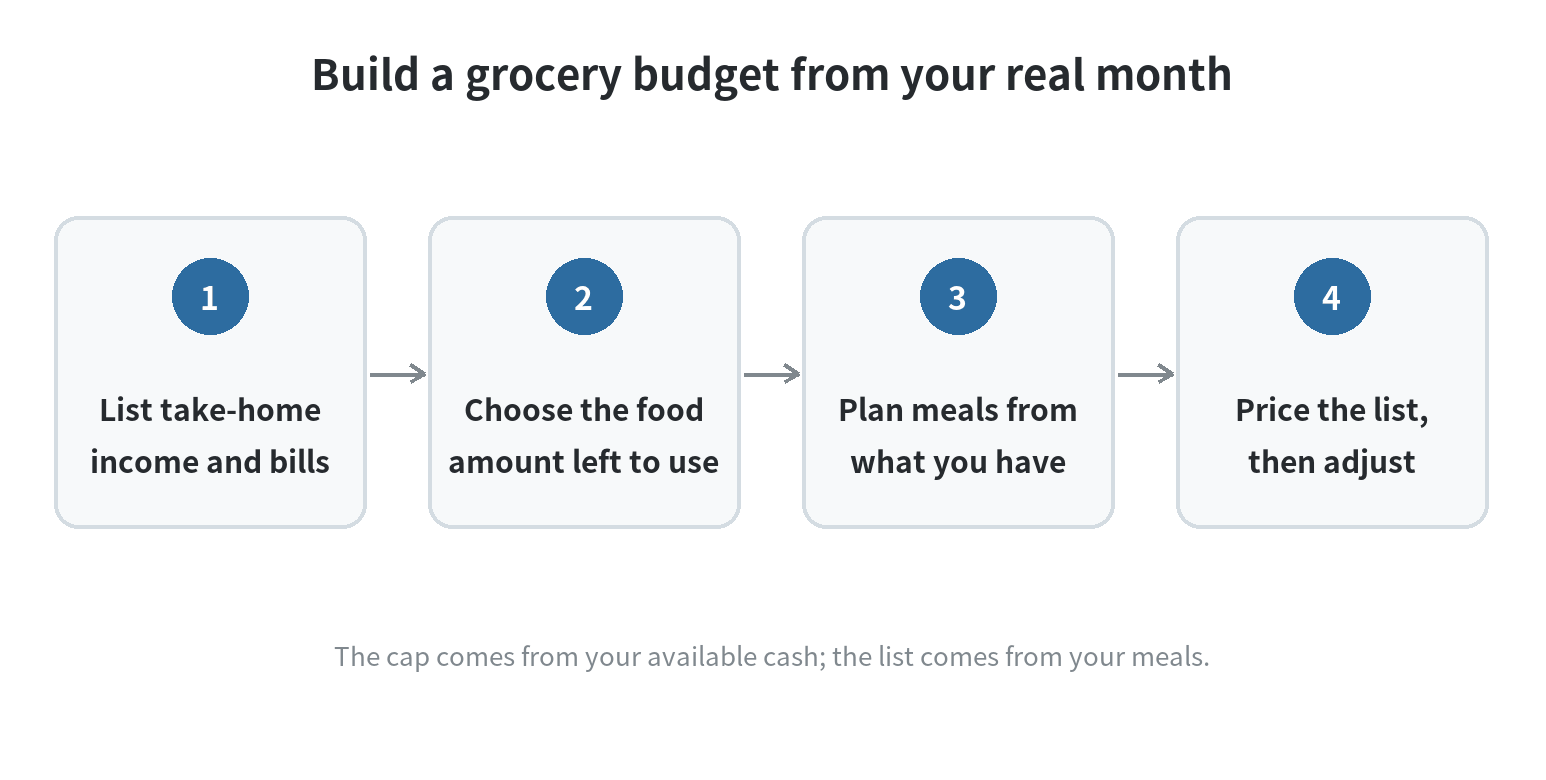
Begin with take-home income: the money available after payroll deductions.
List rent, utilities, transportation, debt payments, and other commitments that must be paid from that income.
Then choose a food amount from what remains.
If the remaining cash cannot cover the basket you priced, revise the plan and the cap together; a budget cannot create money that is not there.
The CFPB says review card records, receipts, or a tracker to see where money goes (checked 2026-10-01).
Its guidance says to look across several months for less frequent expenses.
Use those records to set a starting grocery limit.
Track restaurant meals, household supplies, and toiletries separately from groceries.
For an irregular paycheck, make the grocery amount a planned line in the month’s cash-flow calendar.
Put bill due dates and expected pay dates beside planned shopping trips.
If a check is smaller than expected, recalculate the remaining food amount after required bills before making the next list.
For a steady paycheck, use the same sequence when a fixed expense changes.
Set a baseline from your own receipts
Make a few lines that fit your shopping: produce, grains and bread, beans and lentils, and tofu or other protein foods.
Track dairy-free alternatives, seasonings, and convenience items separately if they affect your total.
Add the foods you buy for planned meals.
Do not create a long list of categories if you will not keep using it; the goal is to see which part of your own basket is taking the largest share.
Look at recent receipts and card statements, then compare them with what remains in your pantry and freezer.
A receipt tells you what you paid on that trip; it does not tell you whether the purchase fed one meal or several.
Add a short note beside items that lasted beyond the week, were wasted, or were bought for a specific recipe.
The CFPB recommends collecting receipts and totaling spending by category (checked October 1, 2026).
Its toolkit includes spending-tracker and monthly-budget tools.
Use your own records to answer practical questions: Which staples recur?
Which specialty substitutes are occasional?
Which fresh items spoil before you use them?
If your household is new to vegan meals, make the first list from familiar dishes and ingredients you already know how to prepare.
You can add unfamiliar items after you have a price and a clear use for them.
Do not set your cap from a generic sample basket.
Your quote should reflect the package sizes, substitutes, household portions, and prices you can actually access.
Write down the quantity you expect to use and price that amount, especially for items sold in large packages or used across several meals.
A receipt and a planned menu make the estimate personal; a guessed national average does not.
Build meals around ingredients that repeat
Pick meals that share ingredients without making every dinner identical.
For example, cook a pot of beans for a bowl one night, then use the remainder in tacos or soup.
Pair grains and legumes with fresh or frozen vegetables you already use.
Keep the example flexible.
A rice, lentil, and frozen-greens menu leads to a different list than one built around pasta, chickpeas, and fresh vegetables.
Start with a short menu for the days you need to cover.
Mark ingredients that repeat, then check the refrigerator, freezer, and cabinets before adding anything to the list.
If a staple is already open or has enough for another recipe, count it as available food rather than buying a backup.
Add fresh items only when you have a meal in mind and a time to prepare them.
Put a demanding cooking day beside a simple meal that uses pantry or freezer items.
If work hours or caregiving leave little time, include a prepared or ready-to-eat option in the plan and price it like any other item.
The point is to budget for the food you can realistically prepare, not an ideal menu that sends unused produce to the bin.
If weekday lunches are part of the same grocery cap, estimate them as meals rather than treating them as invisible extras.
A batch of leftovers, a packed sandwich, or a separate prepared option can each have a place.
See how to budget for work lunches for a separate way to account for that line.
Price the list before choosing a trip limit
Use the current price shown for the exact size and variety you intend to buy.
When two items serve the same role, compare their unit prices and package sizes; a lower sticker price can still mean less food.
Record the price beside each item, total the list, and compare that total with the food amount left in your budget.
Repeat this with the places you can realistically reach, including any delivery or transportation cost you would pay.
Do not treat a sale price as the permanent baseline.
If a planned item is discounted, record the regular price separately or use your recent receipts to set a normal estimate.
For a specialty product with no clear comparable option, price the amount you actually expect to use instead of assuming a substitute will cost less.
If the total is too high, remove items that have no planned meal, use food already at home, or swap one ingredient for another you already buy.
Then price the revised list again.
Keep the meal plan intact where possible so trimming the cart does not leave you short of ingredients for the meals you scheduled.
| What to check | What to write down |
|---|---|
| Produce | Planned quantity, current price, and when you expect to use it |
| Beans, grains, and staples | Package size, unit price, and meals that use the item |
| Plant-based alternatives | Exact product size, planned servings, and whether it is essential to the recipe |
| Convenience items | Use occasion and whether a lower-prep pantry meal could fill the same slot |
Adjust the plan when income changes
Keep a monthly cap, then divide it into the shopping periods that fit your household.
If you shop more than once, reserve the amount for later trips instead of spending the whole month’s food money at the first stop.
Leave room for a less predictable trip by keeping a small unassigned balance in the grocery line, if your cash flow allows it.
When income rises or falls, change the cap after checking bills and other necessities.
Do not assume that every extra dollar belongs in the grocery line, or that a lower-income month requires the same menu at a smaller quantity.
Start with the recipes you can repeat, compare their ingredient list with current prices, and decide what fits before the month begins.
If the planned amount still exceeds available cash, list the gap plainly.
Mark the foods that are essential to meals you will make, then the items you can replace or postpone.
The CFPB advises comparing expenses with take-home income and checking account records for a realistic picture (checked October 1, 2026).
If your own grocery figure does not match the money left in your account, revise the plan rather than relying on an invented average.
For a no-app way to carry this process forward, use a paper-based monthly budget to keep the grocery line beside bills and other spending.
The grocery cap should be easy to find when you make a list, not buried in a spreadsheet you do not revisit.
FAQ
Should pantry staples count in my vegan grocery budget?
Yes, include them when you buy them for meals at home.
Track household supplies separately so a large paper-goods trip does not make the food line look unusually high.
How should I budget if I shop every other week?
Set one monthly food limit, then reserve enough of it for each planned trip.
Before the next trip, check what is still in the pantry and freezer so you do not buy the same staple twice.
Are vegan groceries more expensive than other groceries?
There is no single price that answers that for every household.
Compare your planned basket using local prices and receipts.
Your total comes from the items and quantities you choose.
When should I revisit my grocery amount after a pay change?
Recalculate it when take-home income or a required bill changes, then compare the plan with account records.
The CFPB recommends reviewing actual spending and checking how the total compares with take-home pay (checked October 1, 2026).
Last updated: 2026-10