A doorway flood barrier is useful only when its size, seal, and setup match the opening in front of you. For one exterior doorway, a removable door dam focuses on fit and floor contact at that opening. Sandbags and water-activated bags use different placement and storage instructions, so compare the setup each type requires. Treat all of them as temporary measures, and follow local evacuation instructions before trying to protect property.
FEMA’s Floodproofing Non-Residential Buildings describes sandbags and temporary barriers as emergency measures used between a flood warning and the event. It also says barriers must be sized for the site and stored correctly. That distinction matters: a product label or a familiar-looking doorway does not tell you whether a barrier matches your sill, frame, surface, or expected water exposure.
Start with the opening, not the product category
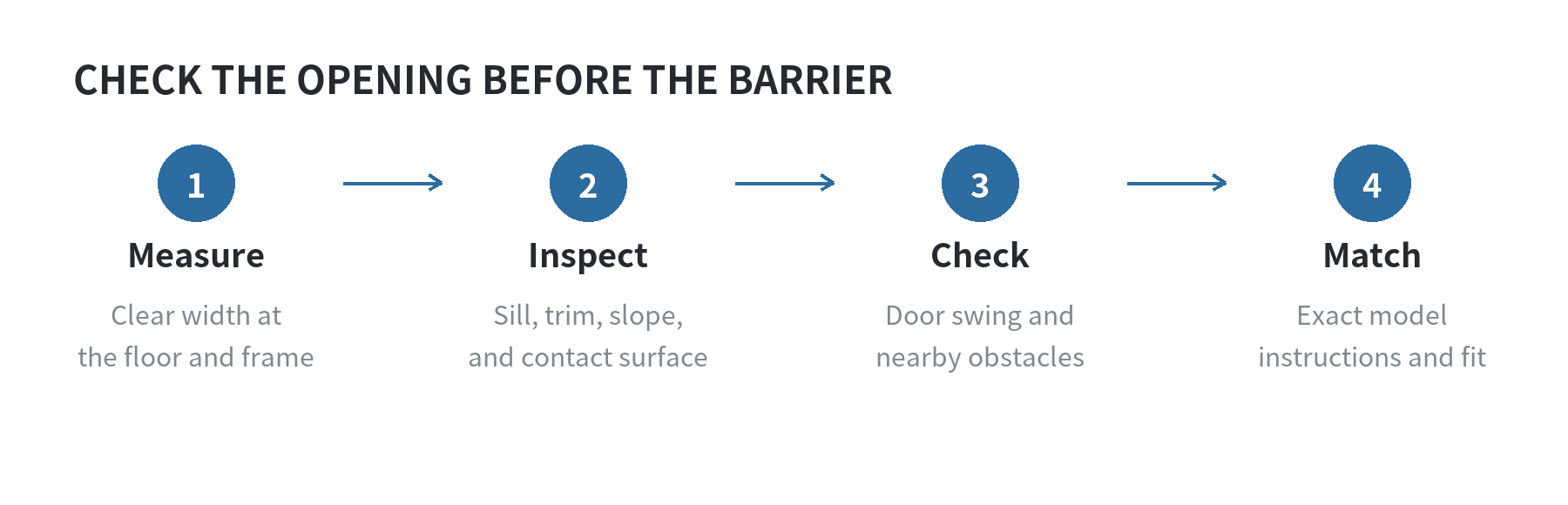
Measure the clear opening where the barrier will actually sit. Check the width near the floor and higher up, since trim, stops, or a sloped threshold can change the usable space. Note whether the door swings inward or outward, whether the surface is level, and whether a mat, screen door, or hardware gets in the way.
Then read the maker’s fit and installation instructions for that exact model. For example, AS FRIIS describes its Dam Easy door barrier as an adjustable center panel with sliding wings and an inflatable rubber seal. Its setup sequence is to position the panel, extend it firmly across the opening, and inflate the seal with the built-in hand pump. That design depends on the jambs and floor being suitable for the unit; it is not a universal fit for every entry. FEMA’s guidance for homeowners also describes temporary barriers across doors and windows as useful only when they are properly placed.
Write the measurements beside the doorway’s name, such as “front entry” or “garage side door,” and keep them with the model instructions. If the barrier uses a removable seal or pump, note where that part is stored. This small record helps another household member identify which unit belongs at which opening without comparing products during a warning. It also makes a later fit check concrete: compare the actual opening and contact points with the instructions instead of relying on a remembered measurement.
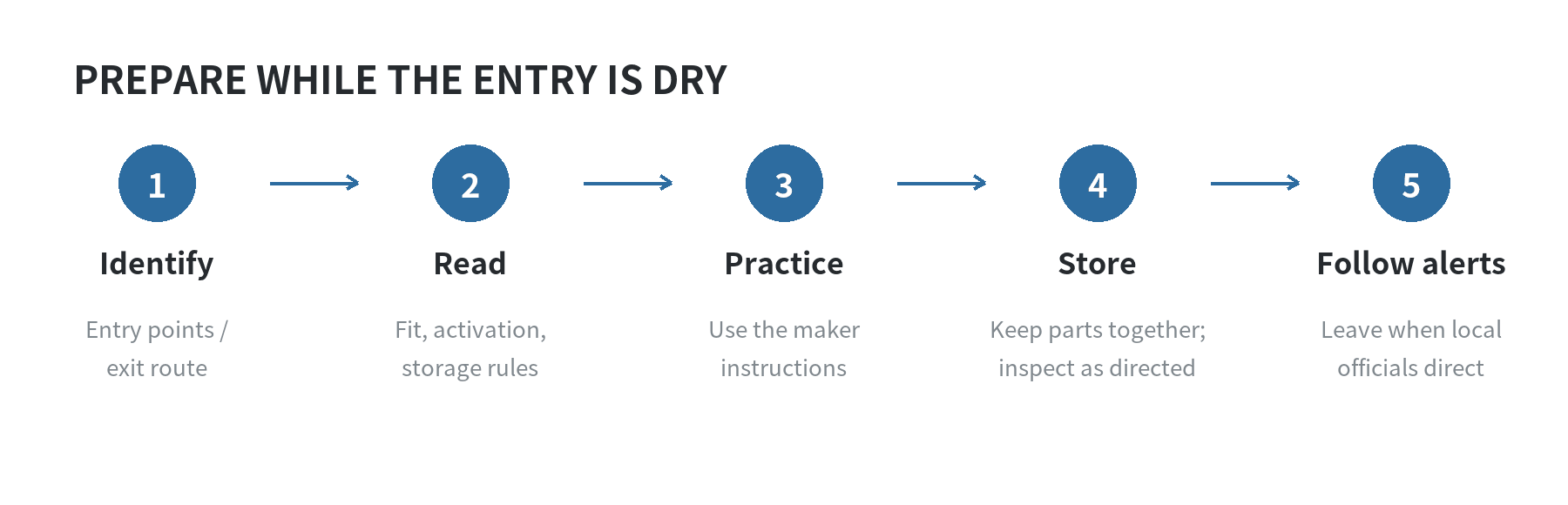
Use a dry day to test the sequence. Put the barrier in place, check whether the door and frame allow it to seat as instructed, and make sure each person who may deploy it can do the same. Store any required parts together. FEMA’s guidance emphasizes planning, training, and proper storage for temporary barriers; a device that is still boxed when a warning arrives is not ready to deploy.
How a door dam differs from bags
| Type | What it does | Check before relying on it |
|---|---|---|
| Removable door dam | Braces across a specific doorway and seals at its contact points. | Opening width, frame and sill shape, floor surface, door swing, maker’s installation limits. |
| Conventional sandbags | Build a temporary line that can turn or extend beyond one doorway. | Labor, fill material, storage, layout, and a plan for seepage and disposal. |
| Water-activated bags | Absorb fresh water and expand into a heavier bag; they can be stored dry when their maker permits. | Activation method, water type, storage seal, expansion time, and stacking instructions for that product. |
The table is a starting point, not a performance ranking. FEMA notes that even properly planned sandbag walls take substantial time and effort, and that poor placement can lead to leakage or failure. The agency also describes temporary barriers that are anchored and filled with water or sand. Compare the actual setup requirements instead of assuming that a compact product or a taller stack will fit your home’s risk.
What the instructions say about water-activated bags
“Water-activated” does not mean that every bag behaves the same way. Base Products Corporation’s AquaBag instructions say to immerse that product in fresh water, and explain that its polymer absorbs moisture as the bag expands. The same instructions give a product-specific storage method and explain one doorway layout using plastic sheeting and staggered rows. Those are directions for that product, not a universal recipe for every expanding bag.
Read the package before storing or deploying any water-activated unit. Confirm whether it needs a sealed wrapper, whether it can be activated in advance, which water is suitable, how the expanded units should be joined or stacked, and what the maker says to do after use. FEMA’s floodproofing guidance cautions that saltwater can affect some temporary barriers, so a fresh-water activation claim should not be carried over to coastal flooding. If the instructions do not cover your water conditions, do not assume the bag will perform as expected.
Conventional sandbags involve different preparation. FEMA’s floodproofing guide describes filling bags about two-thirds full and placing them in a staggered arrangement; it also explains that construction quality and available labor affect the result. A sandbag wall needs a planned footprint and a way to deal with water that passes through or collects behind it. It is not simply a row of full bags pressed against a door.
Make a setup plan before a warning
- Map the likely entry points. Look at exterior doors, low garage openings, and other ground-level openings. Choose one location at a time and record what makes its sill or frame unusual.
- Match the barrier to the location. A door dam is tied to a particular opening. A bag line can extend around a wider area, but needs room, material, and hands to place it. FEMA says temporary barriers must be sized for the site.
- Practice the maker’s sequence. Set the equipment out, confirm its components, and rehearse the fitting or placement steps while the area is dry. Follow the instructions about anchoring, inflation, stacking, and surface preparation.
- Plan for water and people. Know where seepage would collect and how you would respond without entering floodwater. Keep the path to an exit clear. Ready.gov and FEMA tell households to follow local alerts and evacuate when ordered; a barrier does not replace that direction.
- Store and inspect. Keep the parts dry and accessible, and check them on a schedule that matches the manufacturer’s storage directions. FEMA recommends protected storage and regular inspection for sandbags, and proper cleaning and storage for temporary barriers.
A temporary threshold barrier is one part of a home’s preparation. The site’s sump pump guide covers pumping systems as a separate topic. This article covers the opening where water may enter; it does not cover cleanup once water is inside. FEMA advises people to follow emergency alerts and local officials’ instructions, including evacuation orders.
When a temporary barrier is the wrong first move
Do not stop to place equipment if local officials have told you to evacuate or conditions make the approach unsafe. Ready.gov says to evacuate immediately when ordered, avoid walking or driving through floodwater, and move to higher ground. Floodwater can rise, move debris, and conceal hazards; a door barrier does not make the area outside the home safe.
Also pause if the planned barrier does not fit its instructions, the sill is damaged or uneven beyond the maker’s stated limits, or the flood exposure exceeds the documented use. FEMA’s building guidance says temporary barriers must be sized for the site and points readers to manufacturer specifications for limitations. A barrier that cannot be installed as designed is not a substitute for a different plan.
FAQ
Can a door dam protect a garage opening?
Only if the specific model is designed for that opening and its width, contact surfaces, and setup match the manufacturer’s instructions. A garage threshold can differ from a standard door sill, so measure and check the model’s limits before planning around it.
Can I leave water-activated bags outside before a storm?
Use the storage directions for the exact product. For example, AquaBag’s maker says to keep its units sealed in their original container in a clean, dry place; other products may specify different packaging and storage conditions.
Should I stack more bags to make a taller barrier?
Do not add height without following the maker’s layout instructions. FEMA’s sandbag guidance shows a broad base and staggered placement; the footprint and construction matter along with the height.
What if a flood warning arrives while I am still setting up?
Follow local alerts and evacuation orders first. Ready.gov says to evacuate immediately when ordered and not to cross floodwater; protecting an opening should never delay a safe departure.