A standby generator project starts with three checks: what you need powered, where the unit can sit, and which local approvals apply. Treat installation as a coordinated electrical, fuel, and site project. Generac recommends a licensed contractor for code compliance, and the Consumer Product Safety Commission describes stationary units as commonly installed by licensed tradespeople. For a broader overview of backup options, see how generators fit among home backup-power choices.
Decide what “backup power” means at your house
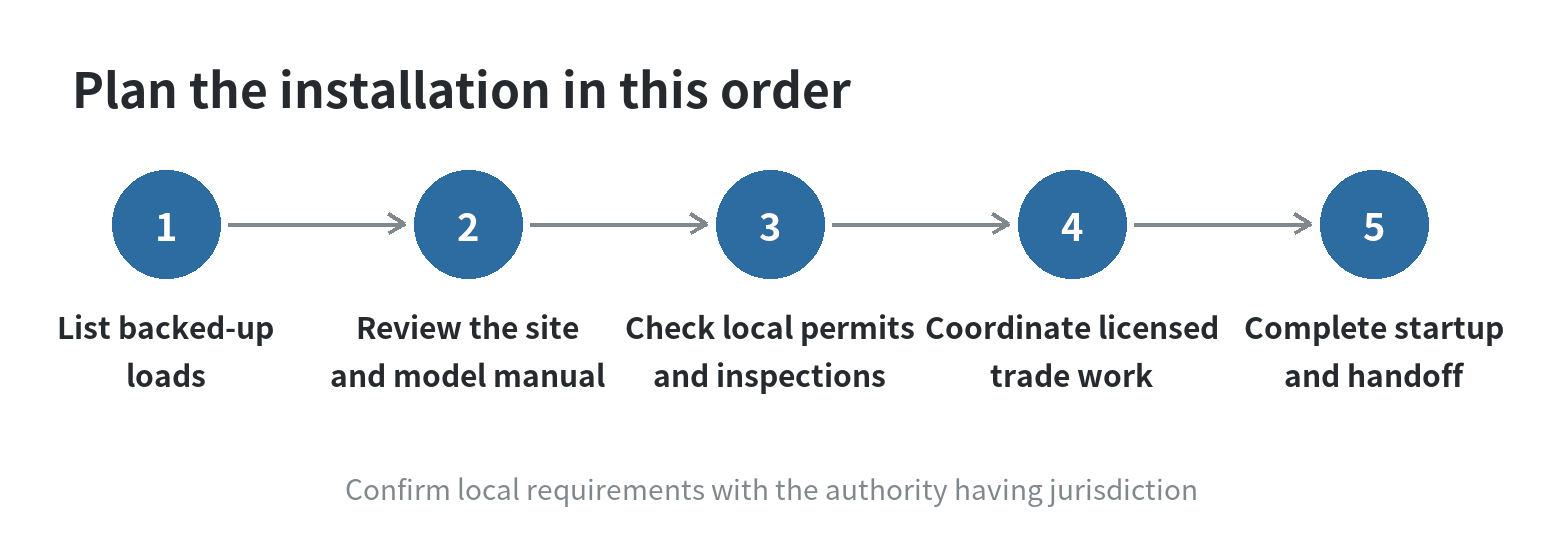
Write down the circuits or equipment you want available during an outage before comparing generator sizes. A plan for a refrigerator, a few lights, and a heating system is different from a plan intended to serve most of a home. Generac’s installation guidance lists generator sizing and load management among the planning topics. Have a qualified installer translate your list into a system design.
Separate essential loads from convenient ones. Note equipment that starts with a motor, such as a well pump or air conditioner, because the installer needs its electrical requirements, not just its everyday use. Gather model labels, panel information, and recent utility details if available. Do not assume that a generator marketed for “whole home” use will support every appliance at once. If you are still narrowing down backup capacity, review the separate portable-generator sizing overview; this article focuses on fixed installations.
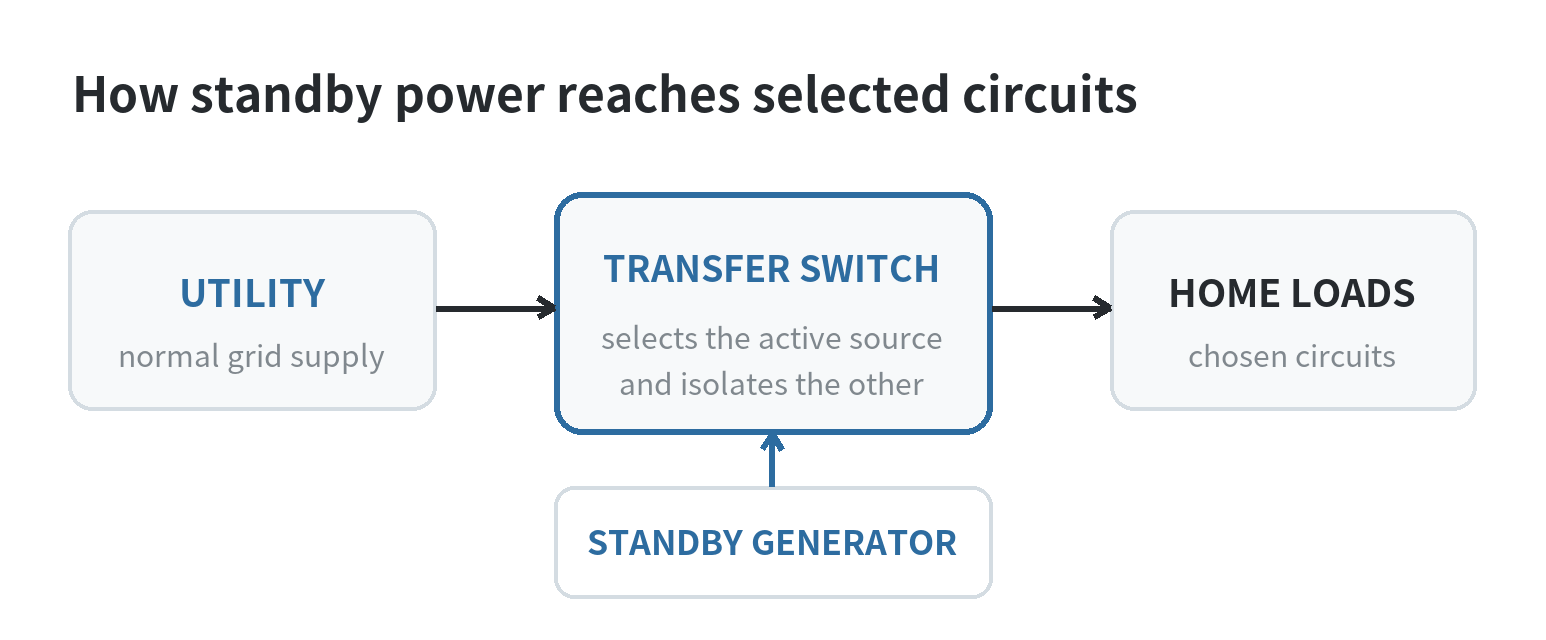
A transfer switch manages the connection between utility power and generator power. The CPSC describes an automatic transfer switch as detecting a utility interruption, isolating the home from utility power, and signaling the generator; a manual switch requires the user to operate it. Either arrangement has to match the generator and the home’s electrical system.
Walk the property before choosing a location
Make a simple site sketch showing the electrical panel, gas meter or fuel tank, doors, windows, vents, property lines, and likely equipment location. The unit needs a stable outdoor location and routes for both electrical connections and fuel. The generator’s installation manual sets model-specific placement and clearance requirements; use that document for the exact unit under consideration.
Keep the sketch practical. Mark narrow side yards, slopes, fences, landscaping, and places where snow, leaves, or stored items could block access. Show how a service technician could reach the unit. The CPSC notes that stationary generators have hard connections to the home and sit outside, while Generac directs owners to its site-selection instructions for the chosen model.
Do not copy a clearance figure from a different model’s guide. Measure the available space and have the installer compare it with the correct manual and local rules. If the best-looking spot conflicts with a window, vent, walkway, or required access area, move the proposed location on the sketch before work is scheduled.
Ask the permitting office before work is scheduled
Permit and inspection requirements depend on the local authority having jurisdiction and the codes adopted there. Ask the city or county building department which permits apply to a permanently installed generator, transfer switch, wiring, and fuel connection. Also ask whether inspections are required before the system can be placed in service.
Request the answer in writing or save the department’s official checklist. Give the installer the property address and a short scope: fixed generator, fuel type, transfer equipment, and intended circuits. A permit rule for one town should not be treated as a rule for another. The CPSC’s stationary-generator report says the authority having jurisdiction may require permits and inspections; its report describes jurisdiction-specific requirements.
Ask who will apply for each permit and who will arrange inspections. Put those responsibilities in the project scope. If a utility needs to review the connection or meter area, ask the installer and utility who contacts them and when that review happens.
Use a licensed installer for the connected system
Electrical panel work and fuel piping may involve different trades, even when one contractor coordinates both. Generac recommends an authorized dealer or licensed contractor for safety and electrical-code compliance, particularly for larger or non-prewired systems. The CPSC report says stationary generators are typically installed by licensed tradespeople. Confirm that the people handling electrical and fuel work hold the licenses required where the home is located.
Ask for the proposed scope in plain language: site preparation, generator and transfer-switch connection, fuel work, permits, inspection scheduling, startup, and handoff. Ask which tasks are included and which require another contractor. A written scope makes it easier to spot gaps, such as fuel-line work being assumed by the electrical contractor or inspection scheduling being left to the homeowner.
For a sample planning worksheet, imagine a home where the owners want a refrigerator, a sump pump, selected lighting, and heat controls backed up. They can list those loads, attach equipment labels, mark the panel and fuel source on a sketch, and ask the installer to confirm the design. This is a planning example, not a capacity estimate: actual electrical demand and equipment compatibility need a site-specific review.
Compare proposals by scope, not just the generator label
Read each proposal for the same items: generator model and output, transfer equipment, supported circuits, fuel connection, site preparation, permit fees, inspections, startup checks, and maintenance handoff. If two proposals describe different supported loads or omit different work, ask for a revised scope before comparing them.
Ask how the installer will verify that the transfer equipment switches between utility and generator power as designed. The CPSC describes the transfer switch as the component connecting the generator to the home’s distribution system. The Department of Energy explains that an automatic transfer switch moves a load between utility and standby power without backfeeding the utility grid.
Get the equipment manuals and a clear explanation of routine checks at handoff. Ask who to call for service, what records to keep, and how the unit’s exercise or maintenance schedule is set. Follow the specific owner’s manual; schedules and procedures differ by equipment.
Questions to settle before approving the project
- Which circuits will the proposed system serve, and what loads were used to size it?
- Does the site meet the selected model’s installation instructions and local placement rules?
- Which permits and inspections apply, and who will obtain and schedule them?
- Who performs electrical work, fuel work, startup, and the final transfer test?
- What manuals, maintenance instructions, and service contacts will be provided at handoff?
Once those answers are documented, you can judge proposals on the same work scope and identify unresolved approvals before installation begins. Keep the approved plan, inspection records, model information, and operating instructions together so future service visits start with the same project facts.
FAQ
Can a homeowner prepare the site before an installer arrives?
Possibly, but agree on the boundary with the contractor first. Generac’s guidance separates site preparation from electrical-panel and fuel connections in its homeowner FAQ. Ask the installer which site tasks are appropriate for you and which must be completed by a licensed trade.
Does a standby generator need its own transfer switch?
The system needs transfer equipment that is compatible with the generator and home wiring. The CPSC describes transfer switches as the connection between a stationary generator and the home’s electrical distribution system; the installer should specify the correct equipment for the design.
Can the generator go beside a window or vent?
Use the selected unit’s installation manual and local placement rules to answer that question. Clearance requirements differ by model and site, so provide the installer with a sketch of nearby openings and the proposed location before placement is decided.
What should I keep after the installation?
Keep the permits, inspection sign-off, equipment and transfer-switch manuals, service information, and the final circuit list. Those records help you identify the installed configuration when arranging future maintenance or repairs.
Last updated: 2026-10