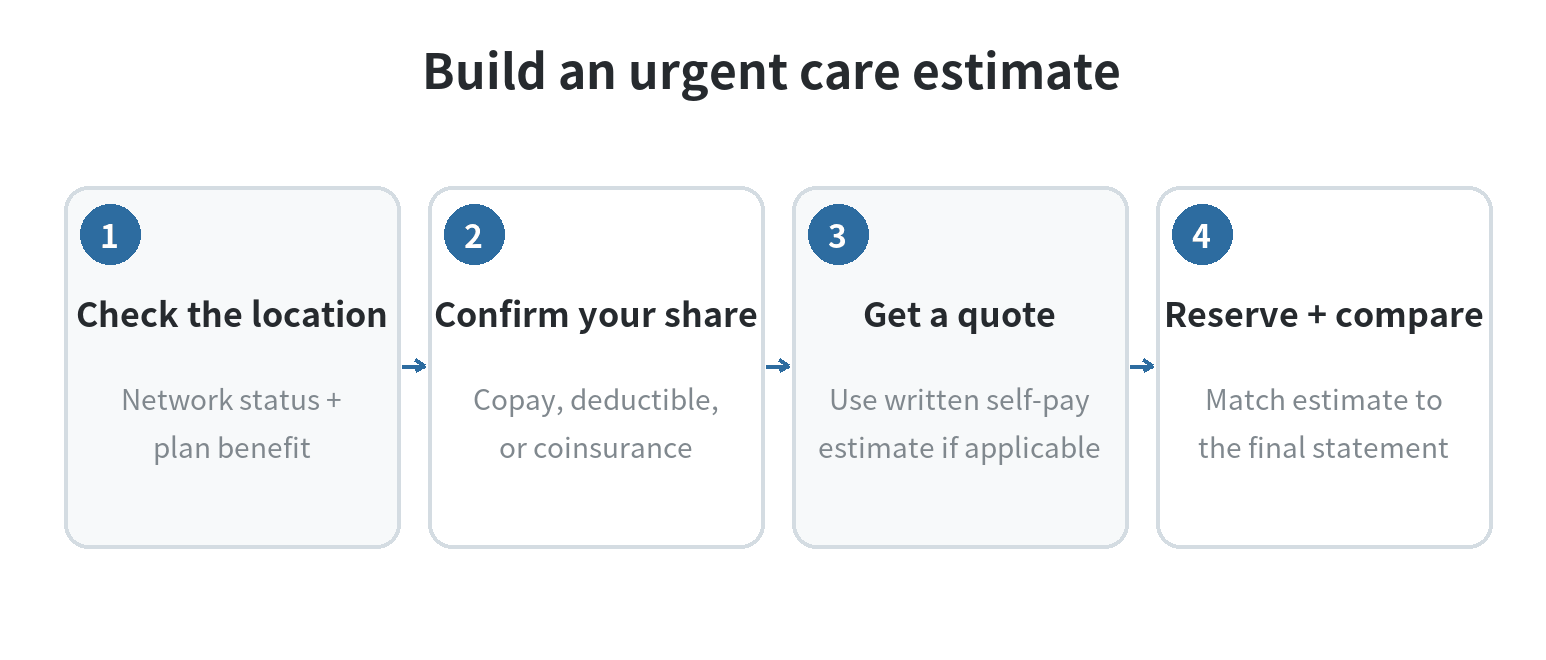
Budget an urgent care visit from your own plan or a written self-pay quote, not from a national average. Before you go, check whether the location is in network, what the plan says for urgent care, and whether the quoted amount includes any separate facility charge. If you pay without insurance, ask the center for a written estimate.
Start with the amount your plan says you owe
An urgent care visit can land in different cost-sharing buckets depending on your coverage and the service billed. HealthCare.gov explains that a plan may involve a deductible, copayment, coinsurance, and an out-of-pocket maximum; CMS defines those terms and explains how a deductible can affect a copay or coinsurance amount. NAIC describes the Summary of Benefits and Coverage as a place to check plan benefits and cost-sharing amounts. Check that summary and your current plan account, then ask the insurer to confirm the urgent care benefit for the specific location.
Use the plan’s exact wording. A listed copay may apply only after other plan rules are met, or the visit may be subject to a deductible. If the clinic cannot confirm how it will bill a service, ask the insurer which cost-sharing rule applies and what information the clinic needs to submit. Write down the call date and any reference number so you can compare the answer with the claim later.
Keep the visit separate from the monthly premium. The premium keeps coverage active; the amount due for a visit depends on the covered service and plan rules. HealthCare.gov’s plan-cost page separates premiums from deductibles, copayments, coinsurance, and the out-of-pocket maximum. A budget estimate should include the visit’s expected patient share, rather than treating the premium as if it prepaid every appointment.
Ask the clinic and insurer the same specific questions
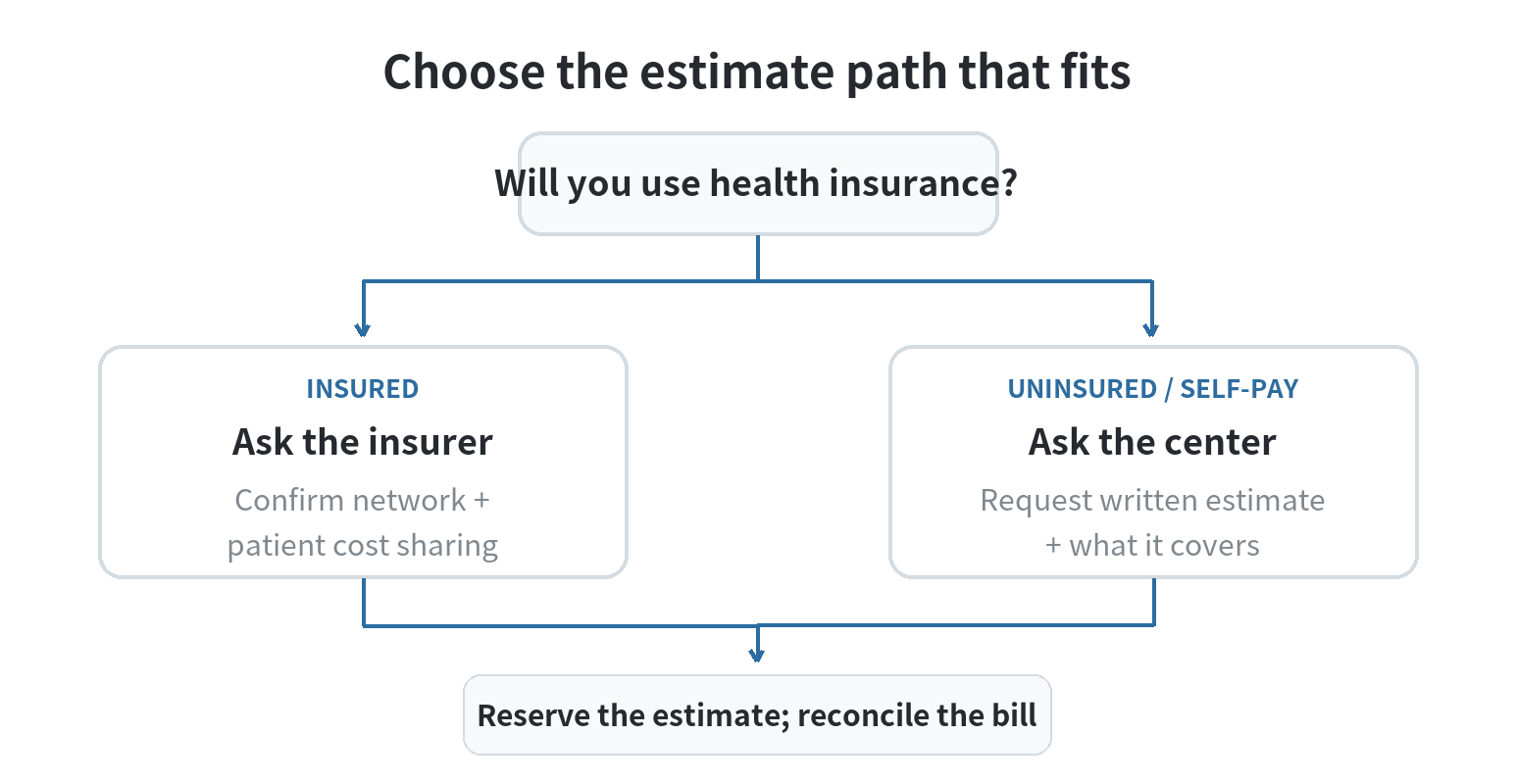
“What does urgent care cost?” can produce an estimate that leaves out the details you need. Give the clinic’s name and location to your insurer, and ask whether that exact site is in network. Ask the clinic what its estimate covers and whether another provider or facility may bill separately. Then compare the answers before putting a number in your budget.
| Ask | Why it belongs in your estimate |
|---|---|
| Is this exact location in my plan’s network? | A different location may have a different network status. |
| Does the urgent care benefit use a copay, deductible, or coinsurance? | The amount depends on the rule and your plan-year progress. |
| Does the estimate include a facility charge or other provider? | A separate bill may not be included in the first quote. |
| What amount should I reserve, and what assumptions did you use? | You can record the figure and later compare it with the claim. |
Ask the insurer to look up the location by name and address, not just by the clinic brand. Keep the clinic’s estimate, insurer response, and any written benefit summary together. If the expected charge changes after a claim is processed, those notes show whether the estimate assumed a different network status, deductible balance, or service description.
Ask whether the quoted amount covers only the visit or also any separately billed service the clinic expects to provide. If a charge is outside the clinic’s estimate, ask the insurer how the plan processes that service and whether the clinic can give you a separate estimate. This keeps the budget tied to the quote you received instead of adding a blanket “miscellaneous medical” amount that has no clear source.
Set a monthly line without guessing visit frequency
Urgent care is an irregular expense, so do not invent a monthly visit count. Create a “medical visits” reserve and add an amount that fits your cash flow. If you already have a likely visit, use the insurer’s patient-share estimate or the clinic’s quote as the planning figure. If you are building a general cushion, choose an amount you can set aside, label it as a reserve rather than a forecast, and review it when a real bill arrives.
For example, suppose your insurer confirms a $45 copay and you decide to reserve $15 from each of three paychecks. The example reserve totals $45; those are sample numbers, not a typical urgent care price. If your paycheck schedule or budget categories need adjustment, see our phone budget tracker guide for a way to keep a running category balance.
Keep a separate line for a confirmed amount due after insurance processes the claim. Do not count the same dollars both as a medical reserve and as money available for groceries or another bill. If the eventual patient share is less than the estimate, leave the extra in the reserve until you decide where it belongs in your next budget review.
A small reserve can also sit alongside a broader household cushion. Our emergency fund planning article covers a general cash buffer; an urgent care category gives you a place to track a specific bill without assuming when another visit will happen.
If you want the category to grow gradually, set a balance goal that fits your current budget and divide the gap across the paychecks before your review date. For example, a $120 reserve goal funded over four paychecks means setting aside $30 from each paycheck. If that amount competes with rent, utilities, or another due bill, extend the timeline or choose a smaller goal.
When your pay dates do not line up with the date you expect to settle a bill, keep the money in the reserve until the provider confirms the balance and due date. A category can show both “available for a future visit” and “held for a processed claim” in separate notes. That makes the cash already committed visible without treating a pending claim as money you can spend twice.
Paying out of pocket? Request the estimate in writing
If you are uninsured or choose not to use insurance, ask the urgent care center for a written Good Faith Estimate. CMS says providers and facilities generally must provide one when you ask or schedule care at least 3 business days ahead; the federal rule also describes the estimate and its timing. A Good Faith Estimate is an expected-charge list, not a bill, and it may not include care the provider could not anticipate.
Ask what is included: the visit itself, facility charges, and any other provider expected to bill for the planned service. CMS explains that estimates can be limited to the provider or facility issuing them, so ask whether another estimate is needed for a separate biller. Save the estimate with the date, location, service description, and the name of the person who gave it.
CMS says an uninsured or self-pay patient may be eligible to dispute a bill if a provider charges at least $400 more than that provider’s Good Faith Estimate; the initial bill must also meet the timing and other eligibility rules. This is a specific federal process with conditions, not a general cap on every urgent care bill. Keep the estimate and bill together, and use CMS’s current dispute instructions to check eligibility.
Reconcile the claim before closing the budget line
When paperwork arrives, separate the insurer’s Explanation of Benefits from the provider’s bill. CMS says an EOB summarizes charges and how the plan and patient share them; it is not a bill. Compare the service date, location, billed service, plan payment, and patient responsibility across the EOB and the provider statement. If the figures do not match, contact the insurer or billing office and keep the disputed amount reserved while you wait for the explanation.
Once you know what you owe, record the final amount and payment date in your budget. If you need more time, call the billing office and ask what payment arrangements or financial assistance are available. Do not add an unconfirmed payment plan or fee to your budget until the office explains the terms.
FAQ
Does urgent care use the same copay as a primary care visit?
Not necessarily; use the urgent care benefit listed for your own plan and confirm it with the insurer. HealthCare.gov describes urgent care as a copay service for certain “easy pricing” Marketplace plans, while CMS explains that cost sharing depends on a plan’s covered service terms.
Can I request an estimate if I have insurance but plan to pay cash?
Tell the provider in advance that you will not use insurance and ask for a written Good Faith Estimate. CMS says its estimate rules apply to people who are uninsured or choose not to use insurance, subject to the rule’s conditions.
Is an Explanation of Benefits a payment notice?
No. CMS describes an EOB as a plan summary, not a bill; compare it with the separate provider statement before treating an amount as due.
What if my self-pay bill is higher than its estimate?
Compare the bill with the written estimate and check CMS’s dispute eligibility rules. CMS says the process may apply when the provider’s bill is at least $400 above its estimate, with additional conditions and a filing deadline.
Last updated: 2026-09