To budget for property taxes without a year-end scramble, start with the latest bill or escrow statement, turn the amount you need to cover into a monthly line in your budget, and set that money aside as soon as income arrives. If taxes are already included in your mortgage payment, track the escrow portion and watch for a payment change; if you pay the tax office yourself, keep the monthly set-aside in a separate savings bucket.
The Consumer Financial Protection Bureau (CFPB) explains that an escrow account lets a mortgage servicer collect money with mortgage payments and pay property-related bills for you. The CFPB also says property taxes and insurance premiums can change from year to year, which can change the escrow payment (checked October 1, 2026). Your plan needs to account for both the bill and the way it is paid.
First find out who will pay the tax bill
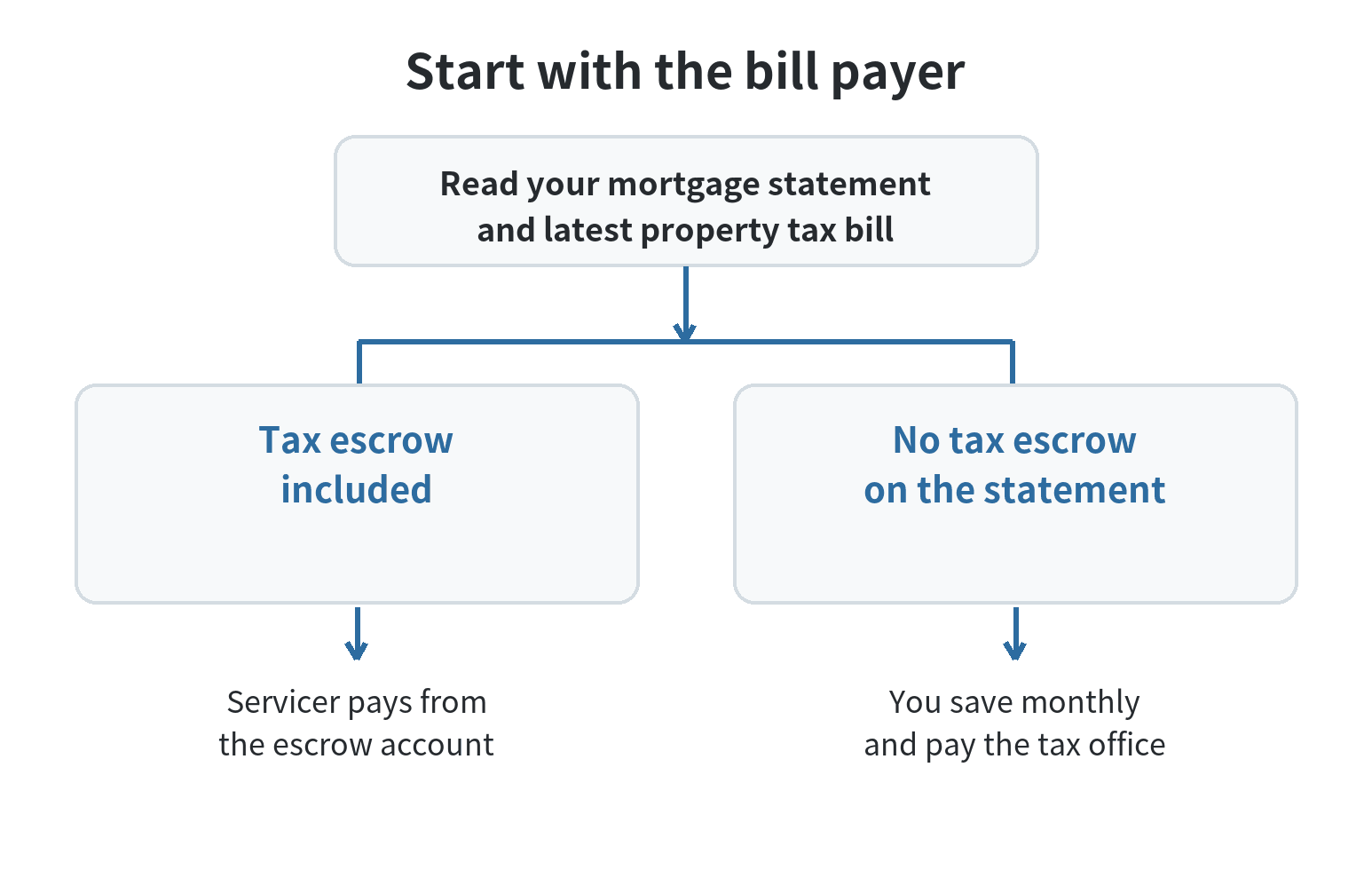
Look at your latest mortgage statement and property tax bill. If the statement includes an escrow deposit for taxes, your servicer is collecting money toward a bill it pays from the account. If there is no tax escrow, you are responsible for setting aside the money and paying the tax authority directly. The CFPB describes both arrangements and says that a mortgage without escrow leaves you to plan for the bill yourself (checked October 1, 2026).
Do not use the principal-and-interest figure as your full housing cost. A mortgage statement may show escrow separately, and a tax bill may come from a local government office rather than the mortgage company. Keep the statement and bill together so the amount and payer are visible in one place.
Turn the bill into a monthly budget line
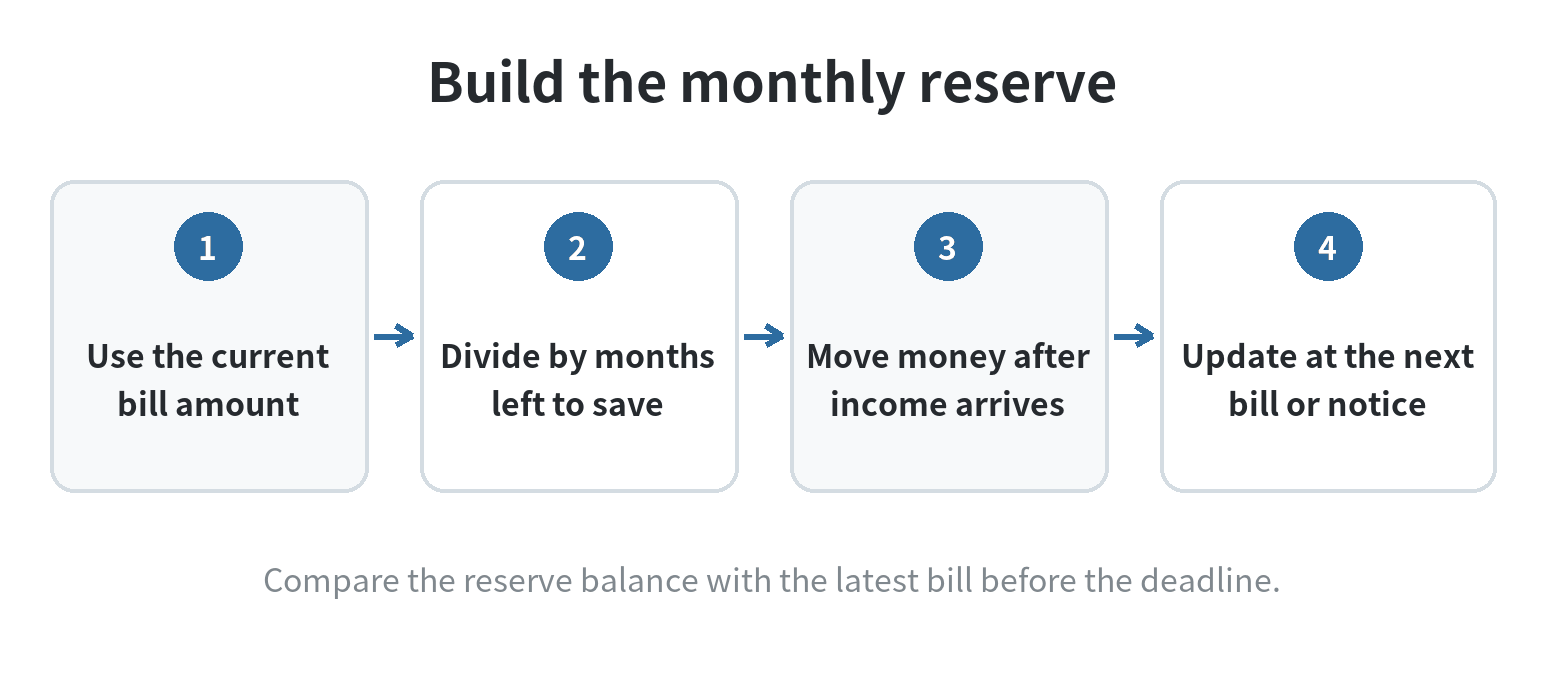
For a direct-pay bill, use the current bill as your starting point. Divide the amount by the number of months you want to save before its due date. Put that monthly amount in your budget under a name such as “property tax reserve,” then move the money to a separate savings bucket when you receive income. A separate bucket makes it easier to see that the balance is already committed.
Here is sample arithmetic, not a typical tax bill: if a household expects a $3,600 bill and chooses to save across 12 months, $3,600 divided by 12 is $300 per month. If the bill is due sooner, divide by the months remaining and use the new monthly amount. If you already have money set aside, subtract that balance from the bill first, then divide what remains by the months left.
Use the due date printed on your bill or the local tax office’s current instructions. Do not copy a neighbor’s deadline or an old calendar entry. Add a reminder ahead of the due date to check the amount, payment method, and whether the local office has posted a revised bill.
If your budget starts partway through the saving period, write down the amount already reserved before you set a transfer. For instance, subtracting a saved balance from the new bill gives you the remaining goal; divide that remainder by the pay periods left before the due date. Put the transfer after a paycheck reaches checking and before the next group of bills clears. If that schedule leaves too little for rent or utilities, use a longer runway for the next bill and contact the local tax office about the payment options it lists for your account.
Make room for the reserve in a real household budget
A monthly tax reserve competes with ordinary bills, so give it a place before deciding what is left for flexible spending. Start with take-home pay. List housing, utilities, food, transportation, debt payments, and other bills with their due dates. Add the tax reserve beside those obligations rather than treating the tax bill as a surprise expense when it arrives.
If the reserve does not fit, review the full list before lowering it. Separate bills that cannot move from flexible categories, then look for a change you can sustain: a subscription you no longer use, a planned purchase you can delay, or a different amount for discretionary spending. Avoid pulling from the tax bucket to cover routine purchases; doing so hides a shortfall until the due date is close.
A written calendar can help when several bills land near the same payday. The site’s bill-timing budget explains how to map due dates against paydays. If you prefer to manage the plan on paper, the site’s guide to budgeting without an app covers a simple offline record. Use either method to note the reserve balance and the next tax deadline.
Read an escrow change before adjusting the rest
If your mortgage payment changes, check the statement and the escrow notice before cutting other budget lines. The CFPB says taxes or homeowners insurance can change the escrow portion of a monthly mortgage payment; other causes can also change a payment, so review the itemized charges (checked October 1, 2026). Compare the new tax amount with the prior bill and check whether an insurance charge is included in the same account.
Read the annual escrow statement as a planning document. The CFPB says it shows the account history and a projection for the next year (checked October 1, 2026). Compare the projected tax disbursement with the latest bill you have, then note any change in the monthly escrow amount before you revise the rest of your household budget.
For an escrow account, record the new monthly payment in your budget when the servicer sends its notice. Keep the notice with the tax bill and mortgage statement. The escrow amount is not a second tax bill to pay directly if the servicer is handling that bill, but your local bill is still useful for checking what was charged and whether the payment appears on the account.
For a direct-pay account, keep the monthly reserve steady when the bill arrives, then compare the new bill with the amount you used to set the prior budget. If the bill changes, recalculate the monthly reserve using the remaining months before the next deadline. Update the calendar and savings transfer together so the written plan and the account balance do not drift apart.
Use a short review routine, not a year-end guess
When a new bill or escrow notice arrives, write down the amount, the due date or payment schedule shown, and who is responsible for sending payment. Confirm the previous bill was paid by checking the local tax account or the escrow record available to you. Save the notice where you keep your housing papers, and update the budget entry immediately.
The CFPB advises homeowners to monitor mortgage statements and tax and insurance bills to spot escrow problems. It also says to contact the servicer if a payment change or unpaid-tax notice raises a question (checked October 1, 2026). If you receive a delinquency notice even though your mortgage has tax escrow, contact the servicer promptly and share a copy of the bill. Questions about a local bill belong with the taxing office; questions about an escrow payment belong with the servicer.
At the next budget review, compare the reserve balance with the latest bill and the months remaining. If your income arrives on different dates, split the planned monthly reserve across paydays in a way that matches your cash flow. For example, you could move half from each of two monthly paychecks; choose a schedule that leaves enough in checking for bills due before the next deposit.
The goal is a visible line in the household budget, a matching balance in the right account, and a calendar reminder tied to the real bill. That gives you a chance to adjust the monthly plan when a tax bill or escrow notice changes instead of discovering the gap at the deadline.
FAQ
Should I keep a separate savings account for property taxes?
A separate savings bucket can make a direct-pay tax reserve easier to track. Label it clearly and record each deposit and payment; if taxes are included in mortgage escrow, track the escrow instead of saving a second copy of the same bill.
What should I do if my property tax bill and escrow statement show different amounts?
Compare the bill period, tax amount, and payment date shown on each document, then ask the servicer to explain any remaining difference. Keep a copy of the tax bill and the servicer’s response with your mortgage records.
Can I budget property taxes using last year’s bill?
Use last year’s bill only as a temporary planning reference; replace it when the local tax office issues the current bill or the servicer provides a new escrow analysis. The CFPB says property taxes can change from year to year, so the older amount may no longer match the current bill (checked October 1, 2026).
Where can I check whether a property tax payment was received?
For a direct payment, check the payment record with your local tax office. For escrow, check the servicer’s account records and contact the servicer if the local office shows the bill as unpaid.
Last updated: October 2026
Last updated: 2026-10