Choose a smoker by the kind of attention you want to give the cook. A pellet unit handles fuel feeding and temperature controls for you, a vertical propane cabinet uses a gas burner with wood chips for smoke, and an offset charcoal smoker asks you to manage a live fire. Before comparing features, measure the outdoor spot and check the exact model’s manual: clearance rules differ by appliance.
Match the fuel system to your routine, then confirm the footprint, power or tank needs, and cleanup. The fuel label alone does not tell you how much room your yard has or how much tending you prefer.
Start with the cook you want to manage
| Style | Heat and smoke source | What you manage | Check before choosing |
|---|---|---|---|
| Pellet | Wood pellets burn in a powered fire pot; an auger feeds fuel. | Power, pellet supply, controller, ash and grease cleanup. | Outlet access, approved pellet type, shutdown steps. |
| Vertical propane | A gas burner heats a cabinet; a chip tray supplies smoke. | Propane cylinder, burner and hose checks, chip tray. | Cylinder placement, leak-test directions, cabinet capacity. |
| Offset charcoal | A separate firebox sends heat and smoke through the cooking chamber. | Charcoal, airflow, fire tending, ash disposal. | Room for the firebox door, chimney path, stable noncombustible surface. |
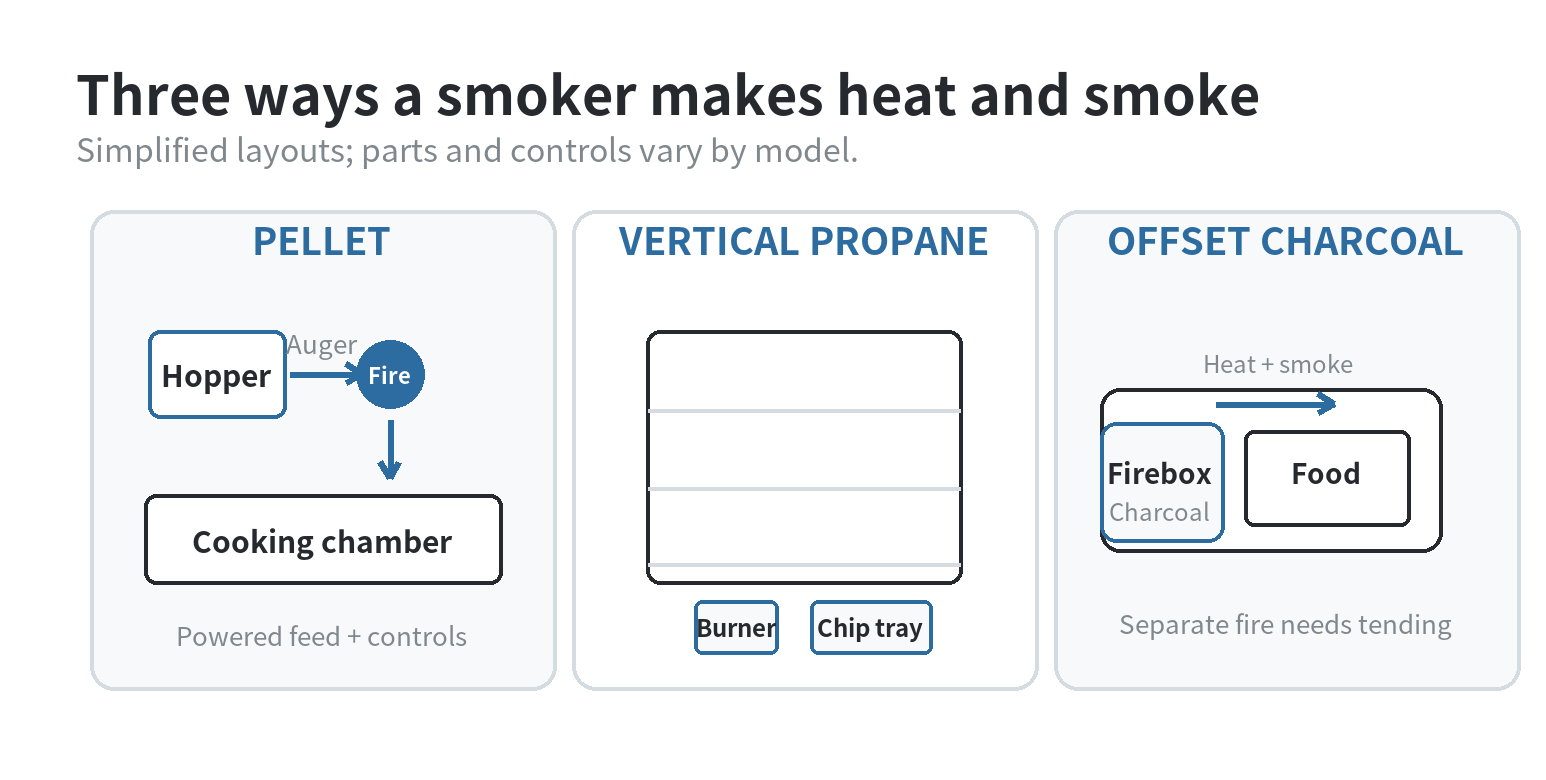
Traeger’s auger guidance describes pellets moving from a hopper through a powered auger toward the fire pot. Masterbuilt’s propane cabinet instructions describe a burner and chip tray, while the Broil King offset manual shows a separate firebox feeding the cooking chamber. Check the exact unit’s manual for its parts and operating steps.
Think through a typical cooking day before buying. If the outlet is across a walking route, a pellet unit may need a safer cord path or a different location. If you have no convenient place for a cylinder, propane storage and handling may become the deciding task. An offset smoker needs a spot where you can tend the fire without blocking a door or walkway.
Also consider when the appliance is idle. Keep pellets dry in a sealed container, store charcoal away from moisture, and follow the propane supplier’s instructions for cylinder storage. Leave enough access to inspect the fuel area and clean spilled grease or ash. A storage plan makes setup easier and keeps fuel from becoming an afterthought.
Pellets suit cooks who want fewer fire adjustments
A pellet smoker uses electricity as well as wood pellets. Traeger’s auger guidance describes a motorized feed from the hopper, while the Camp Chef owner’s manual describes the controller and cooking modes. This reduces hands-on fire adjustment but adds powered parts to clean and maintain.
Plan the cord route so it does not cross a walkway. Check the required outlet or circuit protection and permitted fuel; the Camp Chef owner’s manual restricts fuel to pellets made for pellet grills. Its instructions also say to store pellets dry.
After cooking, follow the shutdown instructions and check how easily you can reach the ash cup, fire pot and grease tray. These cleanup steps may matter more to your routine than extra controller modes.
Propane cabinets trade a smaller fire for tank checks
A vertical propane smoker has a burner below its racks and a wood-chip tray for smoke. Measure the height and door swing as well as the width; leave room to reach the burner and remove trays.
Include the propane cylinder in your layout. The Masterbuilt propane cabinet manual specifies upright cylinder placement, clearances and a leak test after connection. Follow its procedure outdoors before lighting; never use a flame to check for a leak.
Check the connection, hose routing, burner inspection and shutoff steps in the manual. Place the cylinder as directed and keep its hose clear of walkways. Required space around a cabinet can exceed its base footprint.
Offset charcoal rewards active fire tending
An offset smoker separates the firebox from the food chamber. Heat and smoke move from the firebox through the cooking chamber and out through a chimney. That layout gives you direct access to a charcoal fire, but it also means the cooking session involves watching fuel and airflow rather than setting a control and walking away.
Check the firebox lid swing, ash drop and chimney direction. The Broil King offset manual says to keep the grill level and gives model-specific clearance instructions. CPSC advises never leaving a hot grill unattended. The Broil King manual says to remove ash only after the charcoal is completely burned out and extinguished.
Choose this format when you are comfortable checking the fire and adjusting airflow during a cook. That active routine may not fit a household that wants to leave the patio unattended.
Consider whether you cook one meal or prepare food for several days. A smaller cooking load can be easier to arrange and monitor, while a larger session needs more fuel, cleanup and room for trays. Use the rack dimensions and capacity information in the product manual, and leave space to pull a hot rack out safely.
Measure the whole operating space, not just the body
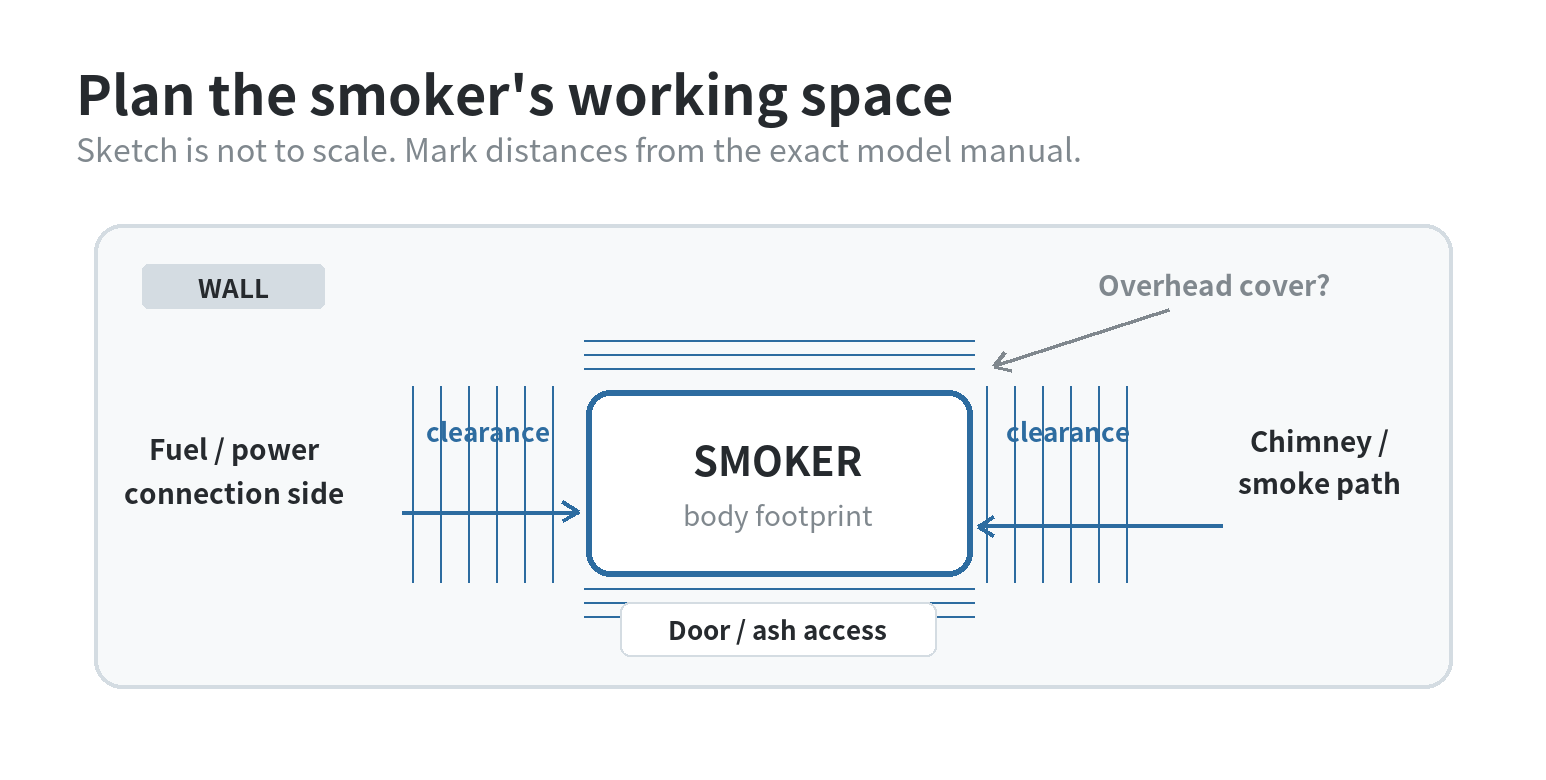
Sketch the body, opened doors, chimney direction, fuel storage and a clear path around it. Compare the layout with the manual’s clearances from walls, rails, overhead structures and combustible surfaces. Instructions vary by model, so a covered porch, wood deck or tight corner may rule out a unit that appears to fit.
Keep all fuel-burning smokers outdoors in an open, well-ventilated location. The Consumer Product Safety Commission says grills should not be used indoors, in garages, on porches, or under a surface that can burn. The USDA’s smoking guidance also calls for a well-lit, well-ventilated location. A shed, garage, enclosed porch or tent is not a substitute for outdoor clearance.
If you are weighing other outdoor cooking formats, the site’s gas-versus-charcoal grill overview covers a different heat-source decision. For patio layout ideas, see the outdoor fire pit fuel guide; its clearance needs are not a substitute for a smoker’s manual.
Before the first cook, read the assembly, seasoning and shutdown sections in order. Check that removable trays sit correctly, grease has a safe path into its collection point, and the chimney or vents are unobstructed. Keep a heat-resistant place nearby for hot racks and tools. These small setup choices reduce interruptions once food is cooking.
Plan cleanup while comparing models. A removable ash cup or grease tray can be easier to empty than a chamber that requires scraping by hand. Let fuel and cooking surfaces cool as directed, then dispose of ash in the way the manual specifies. Do not put warm ash into household trash or against combustible storage.
Use thermometers for the smoker and the food
Smoker settings tell you about the cooking chamber; they do not show whether food has reached a safe internal temperature. USDA Food Safety and Inspection Service guidance recommends a thermometer for the smoker air and another for the food, with the smoker maintained between 225°F and 300°F during smoking. For whole cuts of beef, pork, lamb and veal, FoodSafety.gov lists 145°F with a three-minute rest; for ground meats, 160°F; and for poultry, 165°F.
Check the thickest portion with a food thermometer and follow the temperature for the food you are cooking. FDA guidance says color and texture are unreliable indicators; FoodSafety.gov notes that grill marks can make food look done before it is. If you are smoking fish, eggs, leftovers or a stuffed dish, use the FDA or USDA guidance for that specific food rather than applying the meat figures across the board.
In a shared yard, consider smoke direction and neighbor-facing windows when you choose a location. The chimney or exhaust should not point toward a doorway or a place where people gather. Keep the route from the cooking area clear so someone carrying food does not have to pass close to hot surfaces or fuel.
Make the final choice with a short site check
Write down the available ground dimensions, overhead cover, nearest doors and windows, outlet reach, and where a propane cylinder or charcoal can be stored. Compare those facts against each candidate’s manual. Then decide how much attention you want during the cook: controller and pellet checks, burner and tank checks, or active charcoal tending.
For a compact routine with powered controls, a pellet model may fit the job if you have the right outlet and room for its manual’s clearances. A vertical propane cabinet can suit a narrow footprint if the cylinder setup and cabinet access work. An offset charcoal unit takes more room and asks for active fire management. The best fit is the one whose fuel routine, cleanup and safety clearances match the space you can actually use.
Frequently Asked Questions
Can I use a smoker under a covered patio if the sides are open?
Use it only where the smoker’s manual permits, and do not assume open sides make an overhead cover acceptable. CPSC warns against using grills under surfaces that can burn; the exact manual also controls clearances.
Do I need two thermometers when smoking meat?
Yes. USDA FSIS guidance recommends one thermometer for the smoker air and another for the food so you can monitor chamber heat and internal doneness separately.
Can I rely on grill marks or color to tell if smoked meat is done?
No. FDA guidance says color and texture are unreliable indicators, and FoodSafety.gov notes that grill marks can make food look done too early. Use a food thermometer and the recommended internal temperature for that food.
Can one smoker use pellets, propane, and charcoal?
Do not switch fuels unless the exact model’s manual lists those fuels as approved. A smoker is designed around a particular burner, firebox, fuel feed and ventilation arrangement.