An ice dam is a ridge of ice at the roof edge that traps meltwater above it, as described by University of Minnesota Extension (checked October 21, 2026). For a safer plan, start with the cause: reduce heat escaping into the attic, use a roof rake from the ground only when the setup is safe, and treat heat cable as a limited drainage aid. None of these steps guarantees an ice-dam-free roof.
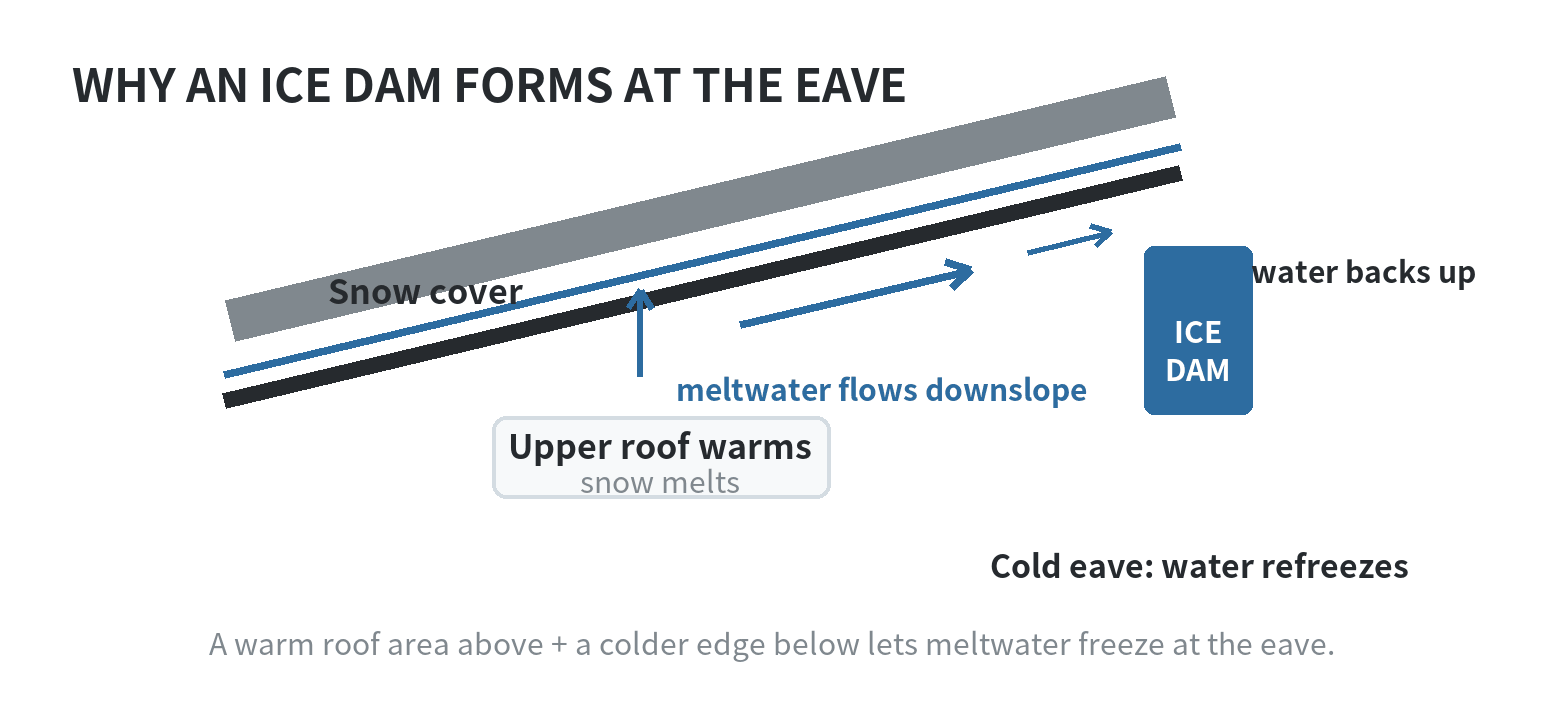
Why the roof edge freezes while snow melts above
Snow on a roof does not melt evenly when the roof surface has different temperatures. The University of Minnesota Extension explains that snow can melt over a warmer upper section, then refreeze where the water reaches a colder eave. The ice ridge can hold water against the roof covering, where it may find openings and leak into the attic or walls. Its ice-dam explanation (checked October 21, 2026) shows this sequence.
Heat moving from the home is a key part of that temperature difference. Warm air can leak through ceiling openings around lights, attic hatches, plumbing, or wiring; heat also passes through insufficient or uneven insulation. The Extension notes that ducts, chimneys, and exhaust outlets in or near the attic can add heat. Icicles can be a clue, but they do not tell you which pathway is responsible.
Think of the roof rake, attic insulation, and heat cable as tools for different moments. A rake can remove some snow from the edge; insulation and air sealing address heat loss; a cable can keep a meltwater route open in a specific roof-edge area. They solve different parts of the problem.
Choose a roof rake only for ground-based snow removal
A roof rake is a long-handled tool for pulling snow down from the roof while you remain on the ground. It may reduce the snow available to melt, but it does not correct attic heat loss. The University of Minnesota Extension warns that a rake or push broom can damage roofing materials; the same guidance (checked October 21, 2026) says winter roof work can injure people and damage a house.
Before using one, look for a clear place where snow can fall, away from doors, walkways, parked vehicles, and people. Keep your footing on stable ground, stay outside the likely slide path, and avoid pulling hard against shingles, gutters, vents, or flashing. A long handle does not remove the risk of falling snow or ice. Stop if the roof edge is buried, the rake catches on the covering, electrical lines are near the work area, or you cannot control where the snow will land.
Do not climb onto the roof to use a rake or shovel. Use a roof rake from the ground and stay clear of falling snow and ice. Its roof ice-dam guidance (checked October 21, 2026) pairs snow removal with evaluating attic insulation and ventilation. If snow load or structural safety is a concern, contact a qualified roofing or structural professional rather than trying to clear it yourself.
Use heat cable as a narrow drainage measure
Roof deicing cable is an electrical cable routed along selected roof edges and drainage paths. A manufacturer’s installation guide describes roof-and-gutter heating cable as a way to create or maintain meltwater drain paths, with the route continuing from the roof edge into the gutter and downspout. Read the instructions for the exact system and roof; its layout and attachment details are product-specific. The cable does not cool a warm attic, seal ceiling leaks, or remove the underlying condition that creates uneven roof temperatures. The manufacturer’s installation guide (checked October 21, 2026) illustrates these routes.
Check the cable’s installation instructions for roof-covering compatibility, approved layout, electrical connection, controls, and whether the product is intended for the roof and gutter configuration in question. Do not improvise a pattern, splice parts, or run a cable across a walking surface. Use a qualified electrician or roofing professional if the circuit, grounding, attachment, or roof access is uncertain. Avoid plugging in a damaged cable or one with exposed conductors.
Heat cable can leave ice outside its heated path, and drainage still depends on where water can flow. A cable that ends before a safe outlet can shift the ice problem to a gutter, downspout, or another cold section. Ask an installer to trace the whole route from the roof area to a place where water can drain, then identify how the cable will be inspected and disconnected when not needed. Treat it as one part of a roof plan, not a substitute for fixing heat loss.
Prioritize attic air sealing before adding insulation
For recurring ice at the same roof edge, the University of Minnesota Extension recommends investigating heat loss in the attic (checked October 21, 2026). The U.S. Department of Energy’s Building Science Education guidance says to air-seal attic-floor penetrations before insulating an existing vented attic. Its examples include ceiling joints, open soffits, hot flues, and non-ICAT recessed can lights. The DOE page (checked October 21, 2026) describes sealing small gaps and blocking larger openings with suitable materials.
Air sealing and insulation are related but not interchangeable. Sealing limits warm indoor air moving into the attic; insulation slows heat transfer through the ceiling. A contractor can check both, along with attic ventilation and any ductwork. Minnesota Extension recommends a blower-door test to assess ceiling tightness and notes that an infrared camera may help locate areas of excess heat loss. That assessment (checked October 21, 2026) is useful when the attic is difficult to inspect or the roof shape is complex.
Do not cover soffit vents or bury heat-producing equipment while adding insulation. Keep required clearances around chimneys, flues, recessed fixtures, and other hot components. If the insulation is wet, compressed, or uneven, ask a qualified contractor how to address the moisture source and restore the attic assembly. Adding more material without preserving ventilation paths or correcting leaks can create new moisture problems.
Plan by symptom, not by the product aisle
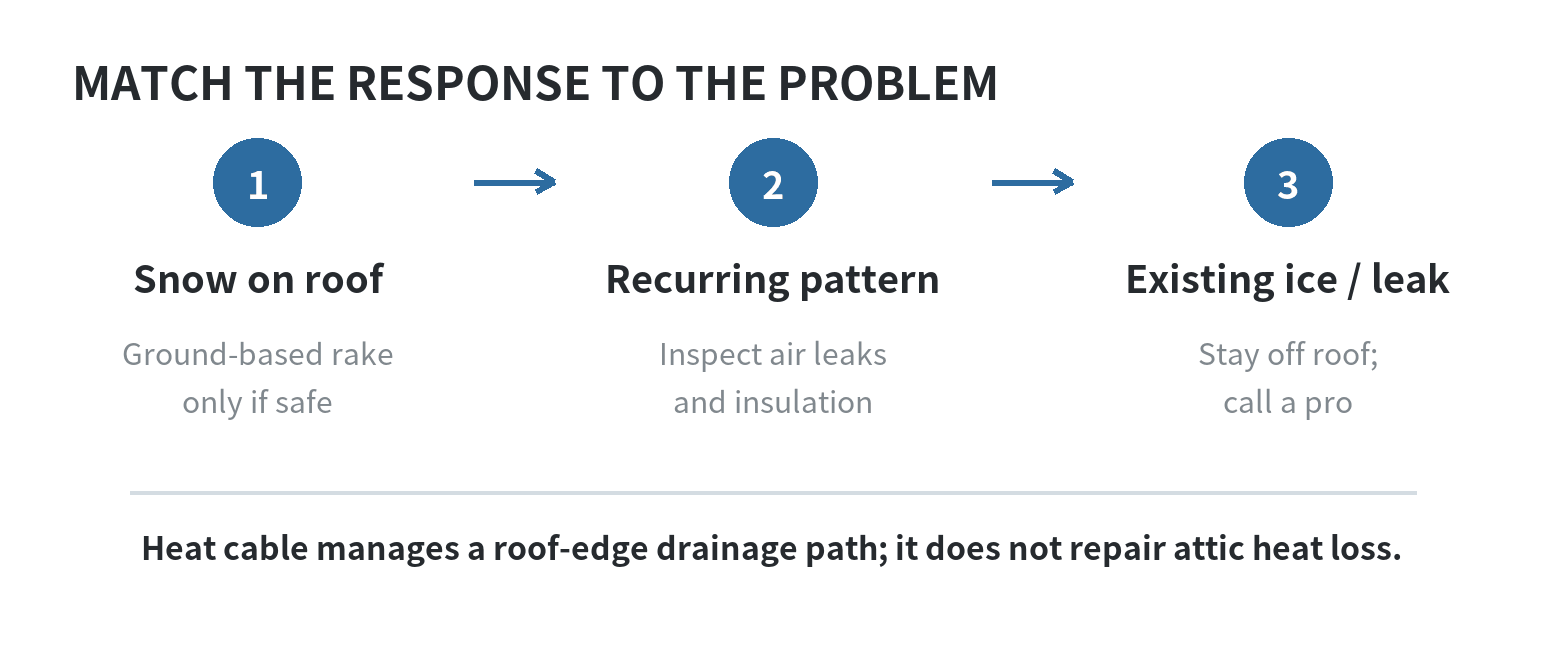
If snow is sitting on an otherwise dry roof, a ground-based rake may be a limited short-term option when the area and conditions are safe. If the same eave repeatedly forms thick ice after snow, investigate heat loss and attic conditions. If water is entering the home, ice is already built up, or the roof structure appears stressed, keep people away from the area and call a qualified professional. Water stains, damp insulation, and peeling interior finishes also deserve attention after the immediate leak is controlled.
Before any work, note which roof edges develop ice, whether rooms below them have ceiling penetrations, and whether the attic contains ducts, exhaust equipment, or a complicated roof-to-wall junction. These observations help a contractor assess the assembly without sending you onto a slippery roof. The Minnesota Extension warns that winter roof work from above or below carries injury and property-damage risks.
Prevention is not a single purchase. A roof rake removes snow from the ground; insulation and air sealing address heat movement, while heat cable can guide meltwater in a limited area. The best next step depends on whether you see snow, a recurring ice pattern, or active water intrusion. Choose the response that fits that condition, and leave roof access and electrical work to qualified people.
FAQ
Can a roof rake remove an ice dam?
No. A roof rake is intended for snow removal, not breaking or chipping ice. Minnesota Extension warns that roof tools can damage roofing; contact a qualified professional for an existing ice dam or leak.
Should I install heat cable before insulation?
First identify the source of the recurring roof warming. Heat cable manages a drainage path, while air sealing and insulation address heat transfer from the house. A contractor can assess how those measures fit your roof.
Can I use a metal roof rake near power lines?
Use a rake from the ground and stay clear of falling snow and ice. Keep clear of electrical lines and leave roof work to a qualified professional.
Does more attic insulation always solve ice dams?
No. Insulation does not seal air leaks, and an attic needs its ventilation paths and heat clearances preserved. Have the full attic assembly checked before adding material.
Last updated: 2026-10