A pay period budget gives every paycheck a job before you spend it. Start with your take-home deposit, list the bills due before the next payday, and assign the rest to groceries, fuel, savings, and a small cushion. The result is a plan based on when money arrives, not only on a monthly total.
What a pay period budget changes
A monthly budget tells you whether income can cover the month’s expenses. A pay period budget answers a different question: which incoming deposit will cover each expense, and will the money be in your account by its due date?
That timing matters when rent, utilities, debt payments, and groceries all draw from the same checking balance. A month can fit on paper and still feel tight if several bills land before your next deposit. A paycheck plan puts dates beside the amounts so you can see that pinch before it happens.
The Federal Trade Commission’s consumer.gov budget worksheet starts with income and expenses, then subtracts expenses from income. The Consumer Financial Protection Bureau’s bill calendar adds due dates and income dates to the picture. Together, those tools describe the core of a pay period budget: plan the month, then assign the actual deposits against the calendar. Checked October 1, 2026.
The CFPB’s cash flow budget tool tracks income, bills, everyday spending, and savings by week, then carries one week’s ending balance into the next week’s starting balance. That rolling balance is useful when one paycheck must cover expenses before the next deposit arrives. Checked October 1, 2026.
Start with bills and actual take-home deposits
Use the amount that reaches your account, not your salary before deductions. Check recent pay statements for the deposit amount and pay date. If the deposit changes because of hours, commissions, or deductions, record the actual amount rather than budgeting from a hoped-for figure.
Next, gather statements, account notices, and payment reminders. Write each bill’s name, amount, and due date. Include rent, utilities, insurance, debt payments, childcare, subscriptions, and any bill that arrives less often than monthly. Add variable spending too: groceries, gas, household supplies, and cash purchases.
Consumer.gov advises including both bills and other spending, then comparing their total with income. The CFPB’s bill calendar asks you to place bill amounts and due dates on a calendar beside income. Those details help catch the annual car registration, school cost, or insurance premium that a simple monthly list can miss. Checked October 1, 2026.
For a bill that changes, use the statement for the amount currently due and leave room for a higher month if the change is predictable. The FDIC Money Smart expense guide converts an annual expense to a monthly amount by dividing by 12, and a quarterly expense by dividing by 3; checked October 1, 2026. Set aside that monthly portion from your paychecks so the estimate is ready when the bill comes due.
Give each deposit a written job
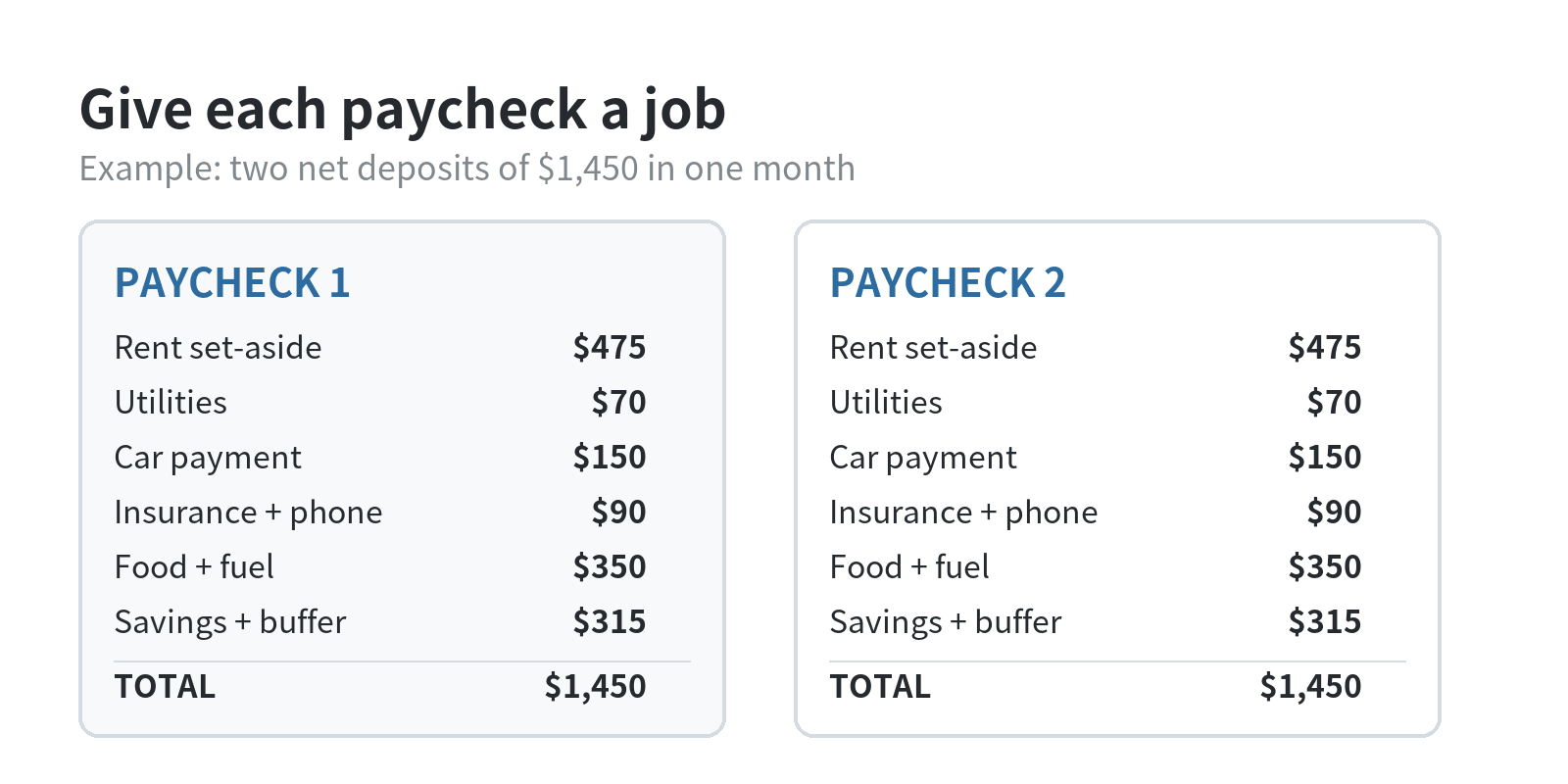
Here is a made-up example to show the arithmetic. In a two-paycheck month, a person receives two net deposits of $1,450. The monthly amounts below match that $2,900 total and show one way to split assignments across the deposits.
| Category | Monthly plan | Set aside per check |
|---|---|---|
| Rent | $950 | $475 |
| Utilities | $140 | $70 |
| Car payment | $300 | $150 |
| Insurance | $120 | $60 |
| Phone | $60 | $30 |
| Food and fuel | $700 | $350 |
| Savings | $200 | $100 |
| Flexible spending or cushion | $430 | $215 |
| Total | $2,900 | $1,450 |
Replace every figure with your own statement amounts and deposit dates. If a bill cannot be divided in practice, reserve part of each check for it; the money stays set aside until the bill is due.
A written plan also makes a shortfall visible. If your assignments add up to more than the deposit, change the plan before the money is spent. Check whether a bill amount is wrong, a nonmonthly expense needs a smaller reserve, or a flexible category can wait. If essential bills alone exceed take-home income, the worksheet shows the gap; it does not create money to fill it.
Match due dates to deposit dates
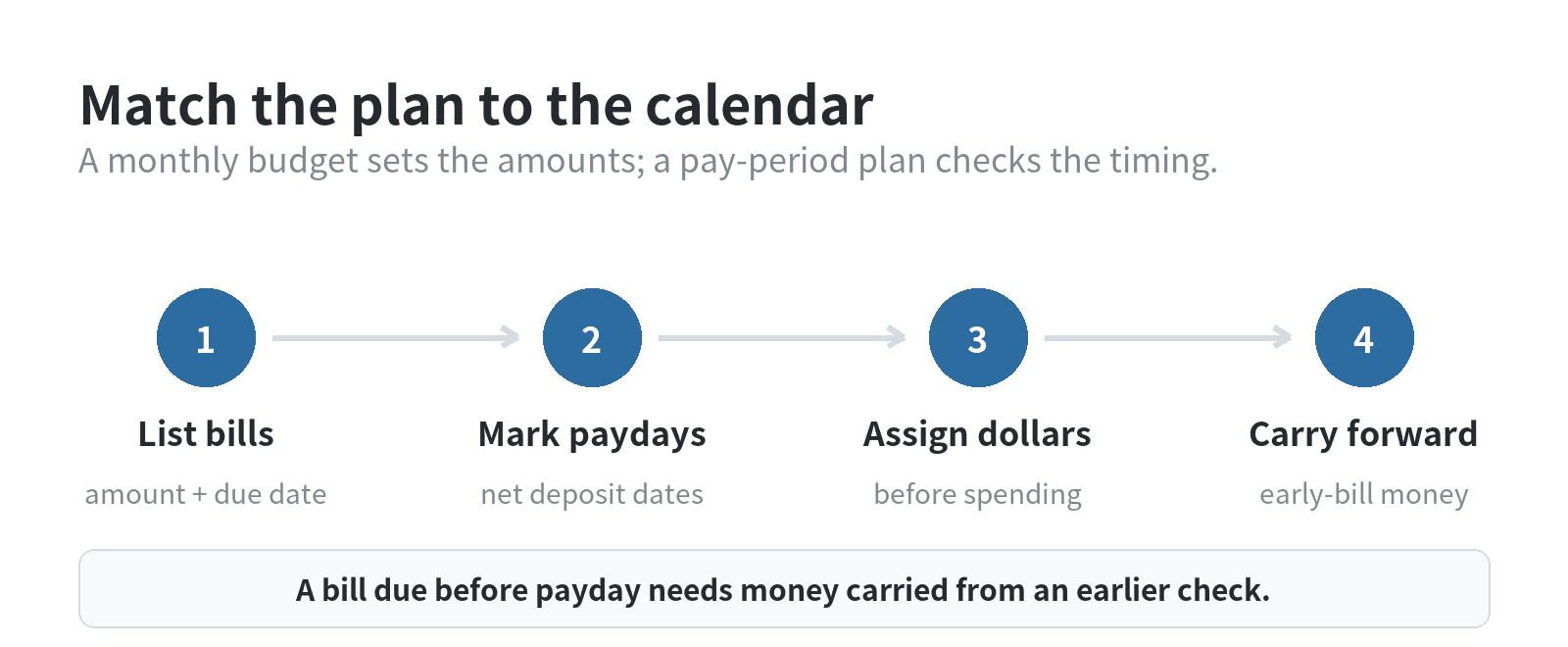
Put the paydays and bill due dates on one calendar. Then assign each bill to a deposit that arrives before the payment must leave your account. Leave enough time for the payment method you use to process. For automatic payments, check the scheduled withdrawal date as well as the bill’s due date.
Suppose rent is due on the first and your first paycheck of the month arrives on the fifth. That paycheck cannot fund a payment that has already come due. The rent must be held from an earlier deposit. In the example above, reserving $475 from each previous paycheck builds the $950 needed for the next rent payment.
The CFPB bill calendar asks people to record bill dates and income, then compare income and bills across the calendar. Its calendar worksheet also includes instructions for marking payment dates ahead of the due date according to the payment method. Treat the date you submit a payment and the date it is due as separate entries; check the biller’s instructions for the current processing time. Checked October 1, 2026.
If a due date falls before payday, contact the biller to ask what options it offers. Update your calendar after you have a confirmed arrangement.
Handle a smaller or irregular check
When take-home pay changes, make the plan from the deposit that arrived. Cover bills and essentials due before the next paycheck first. Then fund the next set of bills, set aside money for nonmonthly expenses, and decide what remains for flexible spending or savings. Keep the categories visible so that a lower deposit does not silently push a bill past its due date.
For commission, freelance, or shift income, use confirmed deposits rather than a projected high month. Consumer.gov suggests adding prior-year income and dividing by 12 to estimate monthly income when someone is not paid monthly; checked October 1, 2026. That estimate does not tell you which week cash will arrive, so keep the actual deposit dates on your calendar. If the amount is uncertain, assign only money already received.
For a month with an extra paycheck, do not count it before the deposit appears. Once received, check the next rent date, upcoming annual bills, and any balance you carried from a prior short month. Assign the deposit to those real needs or goals instead of treating the full check as unplanned spending money. The right assignment depends on your own due dates and balances.
Review the plan after payday
After each deposit, compare the amount received with the amount you planned. Update the plan if a deduction, work schedule, or bill changed. Mark payments when submitted and note purchases in the category they belong to. This keeps the remaining balance meaningful; a budget based on an old deposit amount can give you a false picture of what is available.
At month end, compare planned and actual amounts. If groceries ran over but transportation stayed under, use the actual pattern to revise next month’s categories. If a bill was late because it fell between paydays, change the deposit assignment or contact the biller about a different due date. The goal is a calendar and set of amounts that match the money you receive and the obligations you need to cover.
Keep the plan simple enough to update when a paycheck arrives. A notebook, spreadsheet, or calendar can hold the same essentials: deposit date, take-home amount, bills before the next deposit, variable spending, and the amount carried forward. The format matters less than keeping the assignments current and checking that the remaining balance agrees with your account.
FAQ
How should I budget when my paycheck arrives every other week?
Build assignments around each deposit date, then check the calendar for months when the dates create a different cash flow. Use money from a third deposit only after it arrives, and give it a job such as a bill reserve or a goal you have already listed.
Should I budget gross pay or the amount deposited?
Use take-home pay for a spending plan because that is the amount available in your account. Keep the pay statement if you need to understand the deductions that explain the difference.
What if I cannot cover every bill with my next check?
List the bills due before the following deposit and compare them with the cash you have available. Contact the company before a missed payment to ask what options it offers, and update your calendar when you have confirmed an arrangement.
Can I use a pay period budget if I am paid on different days each month?
Yes. Write down the deposit dates shown by your employer or bank and assign bills against those dates. If a date or amount is not confirmed, leave it out of the available balance until it arrives.
Last updated: 2026-10