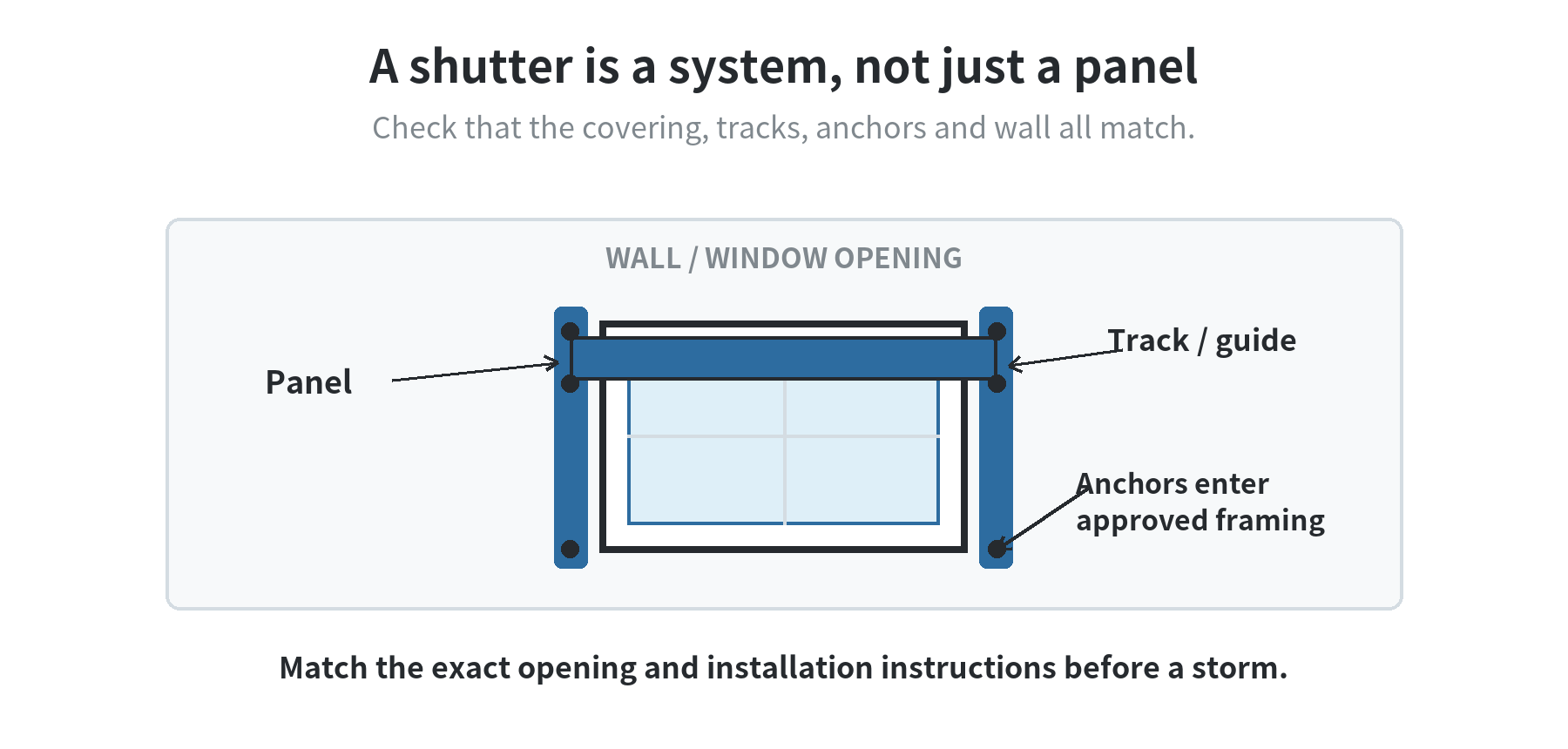
Plan hurricane shutters before a storm is named: list every window and exterior glass door, confirm which system fits each opening, and keep its panels and hardware labeled together. Treat the covering, tracks, anchors, and supporting structure as one system; match the exact product to the opening and local requirements. Keep a separate emergency kit ready for evacuation or a power and water outage.
Start with the openings, not a product type
Walk the outside of the house and make a simple opening list: bedroom windows, large picture windows, sliding glass doors, entry doors with glass, and any other exposed glazing. Write down the width and height of each opening, its frame or wall material, and whether there is room for a panel or permanently attached shutter to operate. A single house can need different solutions for a small window and a wide patio door.
Then check what is already installed. Look for a label, approval paperwork, product manual, and the fasteners that belong to the system. A rail left on the wall does not prove that every panel is present or that the hardware still fits. Put each panel beside its opening on a sketch, mark missing pieces, and photograph the setup before storing anything.
Ask the local building department which product approvals and installation details apply to your address. Coastal wind exposure, building construction, and local code can change what is accepted. If you rent or live under an association, ask the property manager about approved attachment points and who is responsible for installation. Do not drill into siding, masonry, or a window frame based on a generic diagram.
Know what the shutter styles ask of you
Shutter styles differ most in how they attach, where they live when unused, and how much preparation is needed before closing an opening. A National Weather Service hurricane guide distinguishes permanent shutters from fitted plywood as options for covering windows. Product guides also describe several permanent or removable designs; compare the installation method and storage needs before weighing appearance.
| Style | How it is set up | What to plan for |
|---|---|---|
| Storm panels | Separate metal or polycarbonate panels attach to tracks or anchors. | Label panels by opening and store them with the matching fasteners. Lifting and fitting them takes advance practice. |
| Accordion shutters | Attached sections fold across the opening and close together. | Keep the track clear; learn how its lock and closure work. |
| Roll-down shutters | A permanently mounted curtain lowers from a housing. | Check the manual operation and power requirements, then test the mechanism before the season. |
| Colonial or Bahama shutters | Hinged panels swing over the window and secure in place. | Confirm the hardware, holdbacks, and closure points are intact and accessible. |
| Fitted plywood | Cut-to-fit panels cover an opening as a temporary board-up option. | Measure and prepare the boards and attachment method ahead of time; do not improvise fasteners during a warning. |
Ask for the exact product’s approval information and installation manual, and have a qualified installer assess a system when the structure or attachment method is unclear. Impact-resistant glazing is another type of opening protection; it is not interchangeable with a shutter panel unless its documentation and local approval say so.
For a removable panel system, check how panels overlap, which side faces outward, and where the first and last fasteners go. Keep a photo or labeled sketch with the set so another household member can identify each opening. If the manual calls for a tool or closure key, store it with the corresponding hardware rather than in a general toolbox.
Make installation repeatable before the forecast
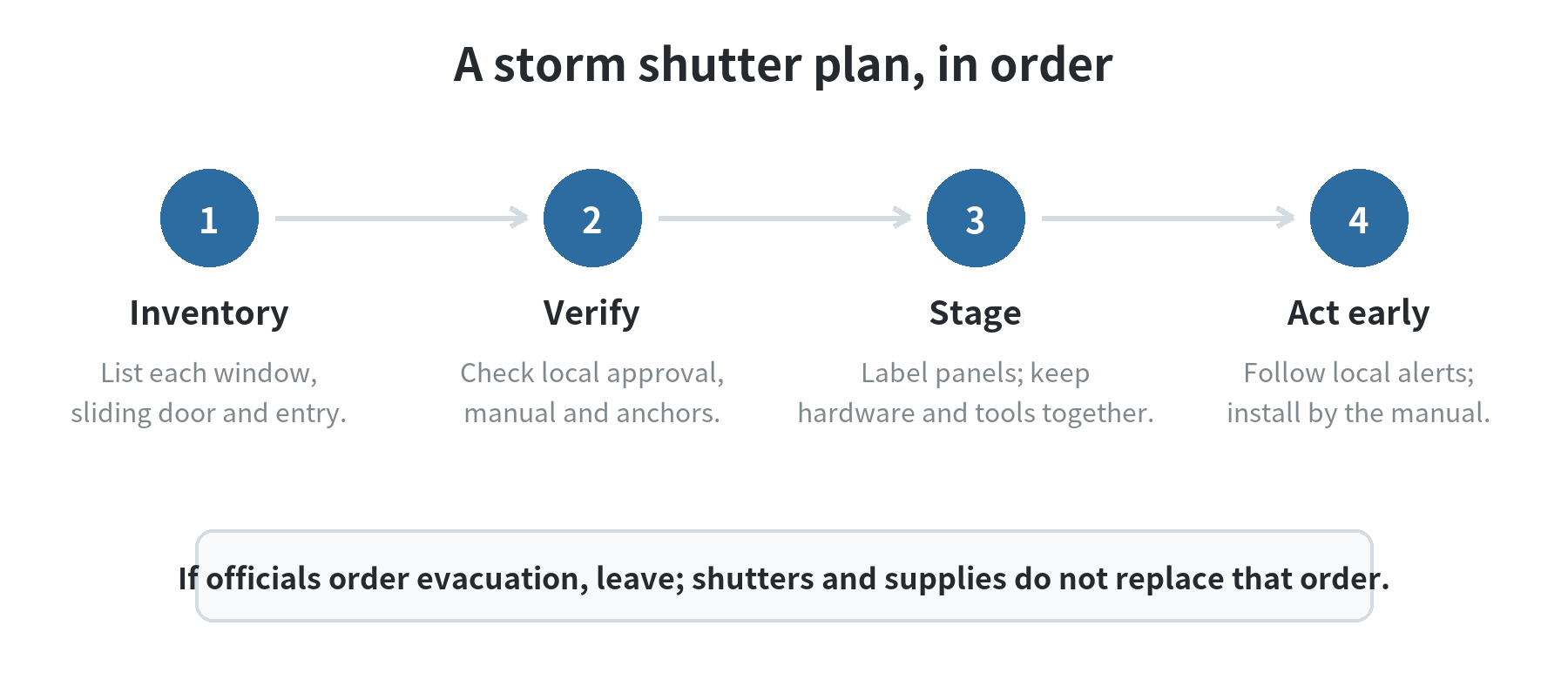
For each opening, keep the matching panels, screws or bolts, keys, and operating tool in one labeled location. Mark the panel with a room or window name that matches your sketch. Store panels flat and dry as the manual directs, and keep the hardware bag attached or stored beside them. This prevents a pile of similar pieces from becoming a sorting job when the weather is changing.
Practice the sequence on a calm day. Check that you can reach the fasteners, operate the shutter, and secure its final latch without moving furniture or finding a missing tool. If the process needs a ladder, heavy lifting, or two people, put that in the written plan and arrange help early. Do not wait until high winds or an evacuation notice to learn how a system opens.
Use the practice run to find bottlenecks: a blocked storage shelf, a panel that is too heavy to carry alone, or a latch hidden behind a screen. Write down the order for each side of the house and leave that note with the labeled panels. For shared housing, agree who checks alerts, who handles the panels, and who takes the portable kit if the household must leave.
Inspect panels for bends, tracks for cracks, anchors for corrosion, and locks for binding before installing the system. Follow the manufacturer’s cleaning and lubrication directions; household oil or an abrasive cleaner may not suit the material. Record what needs repair and resolve it before the next storm threat. Keep replacement fasteners with the system only when the manual identifies the correct parts.
Keep the rest of the storm kit separate
Window hardware is only one part of preparation. The National Weather Service supply guidance recommends food, water, and medicine for at least three days, along with a battery-powered radio and flashlights; the American Red Cross hurricane checklist also calls for a three-day go-kit, extra batteries, first-aid supplies, and a phone charger. Check the lists against household needs, including prescriptions, infant supplies, mobility equipment, and pet food.
Keep these items in a portable container that household members can find, and place copies of important contacts and insurance records in a dry, protected pouch. A battery bank and charging cable can keep a phone usable for alerts; see this site’s phone power-outage checklist for device preparation. For contact roles and meeting arrangements, the site’s family phone emergency-plan guide has a separate walkthrough. Keep the family’s alert and contact plan with the kit.
Before a storm threatens, also set aside work gloves, a headlamp, and the shutter-specific tool identified by the manual. Keep tie-downs for loose outdoor items in a different bin from shutter hardware so the two jobs do not compete for the same parts. Store the bins where they stay dry and accessible, not behind panels or furniture that must be moved first.
When a warning arrives, follow the local plan
Check alerts from your local emergency management office and follow evacuation instructions first. The National Weather Service guidance says permanent storm shutters offer the best window protection and describes fitted exterior-grade or marine plywood as another option; it also advises preparing supplies before a hurricane threat rather than waiting for a rush. If you are not ordered to leave, close shutters according to their manuals, bring loose outdoor items inside, and move to an interior room away from windows.
Do not treat window coverings as a reason to stay in an evacuation zone. If you need to leave, take the portable kit, medications, documents, and pet supplies you planned for. If your home has an unfamiliar shutter system, an incomplete set, or damaged attachment points, do not attempt a last-minute repair in dangerous weather; follow local officials’ shelter or evacuation guidance.
FAQ
Can plywood replace permanent hurricane shutters?
Fitted plywood is a temporary board-up option, but it requires advance measuring, cutting, and a suitable attachment plan. The National Weather Service lists exterior-grade or marine plywood built to fit as a second option to permanent shutters; confirm the appropriate method for your home and local rules.
How should I store removable shutter panels between storms?
Follow the product manual, label each panel by opening, and store its matching fasteners and tool together. Keep panels dry and arranged so you can retrieve them without lifting or sorting a mixed stack during a warning.
What should renters do about window protection?
Ask the landlord or property manager what protection is installed, who is responsible for deploying it, and where panels and hardware are kept. Get approval before drilling or attaching anything, and keep a separate evacuation plan and portable supply kit.
Last updated: 2026-10