Budget for quitting smoking by pricing your current habit from your own receipts, then checking what your health plan covers before you set aside money for support. The amount left in your monthly budget depends on the price and quantity you actually buy and any new costs you take on.
Start with the amount you already spend
Use recent purchases instead of a national average. Gather the last four weeks of card transactions, receipts, or cash notes. Record cigarettes or other tobacco purchases you want included, then total them by week. Keep unrelated convenience-store purchases out of the number.
If cash purchases are hard to remember, write down each purchase for the next four weeks. A short record is more useful than a confident guess: it shows the price you paid, how often you bought, and whether spending changed across the month.
For a quick monthly estimate, multiply a typical weekly total by 52 and divide by 12. For example, if your own notes show $84 a week, the monthly planning figure is $364: $84 × 52 ÷ 12. The $84 is only an example input, not a claimed typical spend.
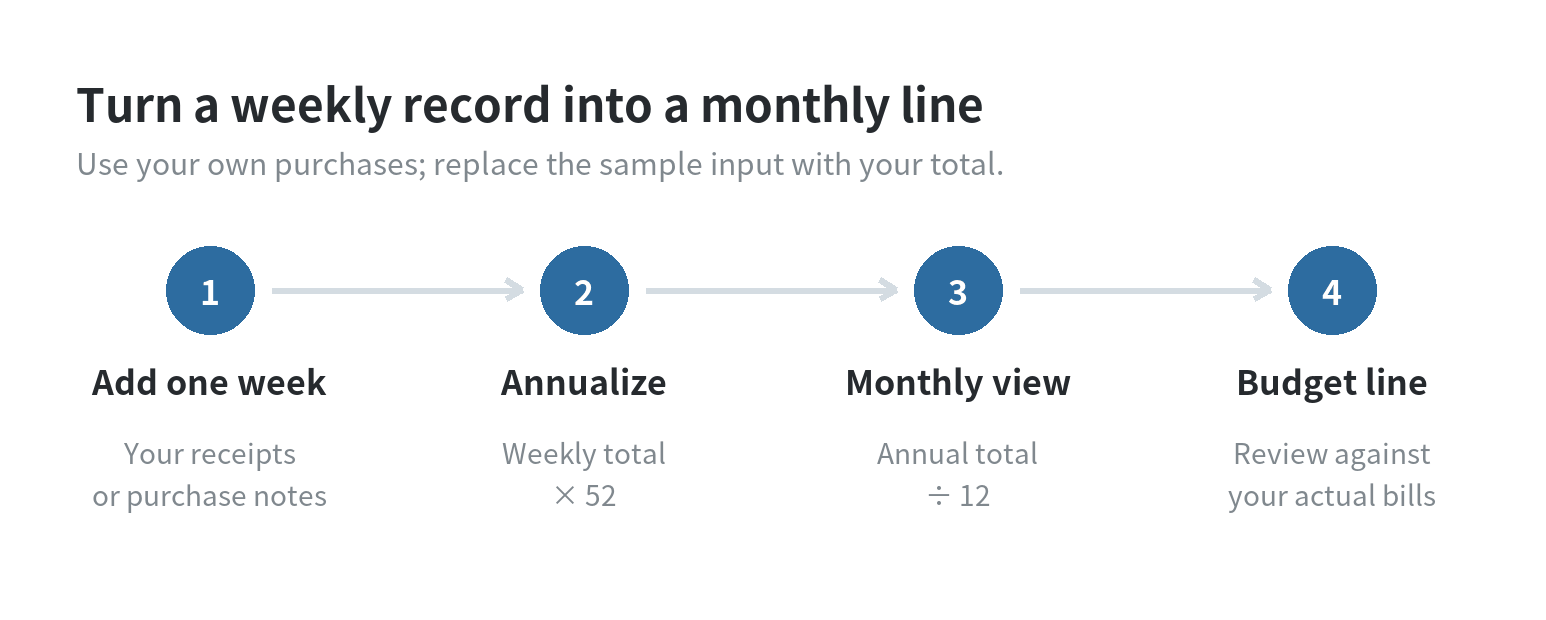
Keep the weekly and monthly numbers separate in your notes. Weekly totals help you compare actual spending with the record; the monthly equivalent fits a monthly budget. Do not count the same purchases again under groceries or cash spending.
Separate support costs from coverage
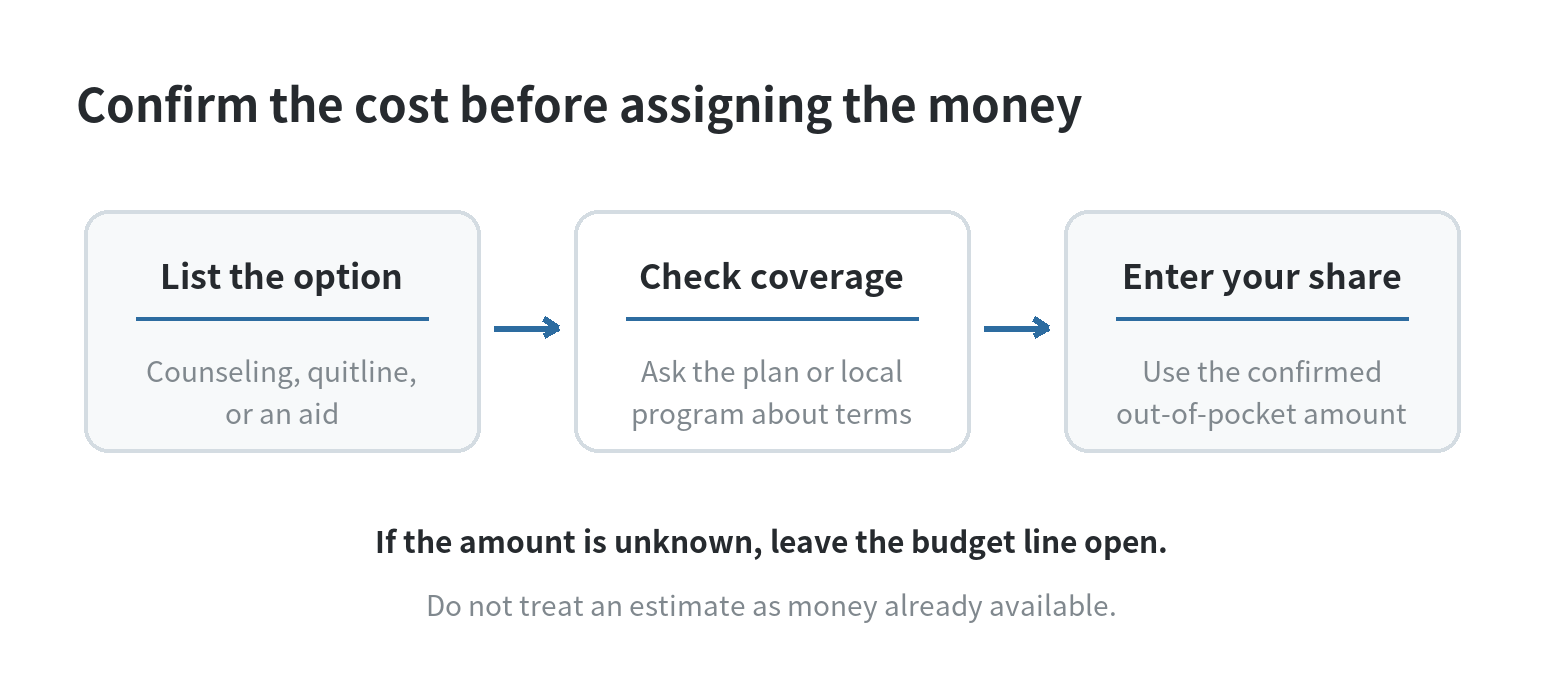
Write down the kinds of help you are considering—such as a counseling visit, a quitline, or an approved cessation aid—without assuming each item has a fee. Ask your health plan which services and products it covers, what network or prescription rules apply, and whether you owe a copayment or deductible.
HealthCare.gov (checked September 30, 2026) includes tobacco-use screening and cessation interventions in its adult preventive-care list and says coverage may vary; a $0 cost is not guaranteed in every case. The American Lung Association’s coverage summary, last updated September 10, 2024, also describes cessation coverage requirements for many plans and advises patients to confirm covered treatments with their plan. Read HealthCare.gov’s preventive-care guidance and the American Lung Association’s coverage overview.
If you have Medicare Part B, Medicare (checked September 30, 2026) says covered tobacco-cessation counseling costs you nothing when the provider accepts assignment. Ask whether a proposed visit is the covered counseling service and whether the provider accepts assignment; Medicare says your costs for other services can depend on the provider, facility, and setting. Medicare explains the counseling benefit and cost conditions.
Get the plan’s answer before choosing a monthly target
Call the member-services number on your insurance card or use the plan’s secure benefits channel. Ask these questions in one conversation:
- Which counseling services and cessation aids are covered under my plan?
- Do I need an in-network provider, prescription, referral, or prior authorization?
- What will I pay for each covered option, and does a deductible apply?
- Are there quantity, time-period, or eligibility limits?
- Can you send me the benefit details in writing or point me to the plan document?
Record the date, the representative’s name or reference number, the exact service discussed, and the quoted member cost. If the answer is unclear, ask the plan to identify the relevant benefit document. A general preventive-care page cannot tell you the terms of your individual plan.
If you do not have insurance, or the plan does not cover an option you are considering, ask a local health department or state quitline whether it offers a no-cost service or can explain local options. Availability and eligibility differ by program, so do not place an assumed amount in the budget until you get the program’s current terms.
Build a budget with separate lines
Use three lines so the math stays visible:
| Budget line | What to enter | Where the number comes from |
|---|---|---|
| Current tobacco spending | Your weekly record, converted to a monthly figure | Your receipts or purchase log |
| Support you may use | Only your confirmed share of a service or aid | Your plan or program’s written terms |
| Unassigned money | Leave blank until you know how the month’s spending settles | Your actual account balance after bills |
Suppose your own purchase log works out to $364 a month, and your plan confirms a $20 copay for an option you are considering. Those are example inputs, not a typical price or expected outcome. You could temporarily budget $20 for that support and leave the remaining $344 unassigned. After you review actual bills, choose where any remaining cash belongs: groceries, a utility cushion, debt payments, or a separate savings category.
Keeping the unassigned amount open prevents a forecast from becoming a promise. If your purchases continue during part of the month, record them as they happen and update the available amount. If support costs change, revise that line using the plan’s current answer.
Account for costs around an appointment
A plan’s benefit summary may describe the service itself but not every expense around getting to it. If you expect to travel, arrange childcare, pay for parking, or miss unpaid work, write those items on separate lines. Add them only when they apply to your situation; a reader with a remote visit or flexible paid time may have none of these expenses.
Separate one-time setup costs from repeating costs. If a confirmed item is due once, place it on the month it is due rather than treating it as a monthly bill. If a program gives you a recurring schedule, note each due date and the amount the program confirmed. This makes the amount reserved for the next bill visible without implying that every month will cost the same.
Before an appointment or purchase, ask for the expected amount you will owe and what could change it. Afterward, compare the invoice or account activity with that estimate. Put any difference in the next review instead of silently changing the monthly number; that leaves a clear record of why your plan moved.
Keep a copy of the plan’s written answer with the relevant budget line. When an explanation of benefits or bill arrives, check that it names the service and provider you asked about. If the amount does not match, ask the plan or provider what part of the claim is still unresolved, and keep that amount reserved until you know what you owe.
Put the money on the calendar
Timing matters as much as the monthly total. Mark paydays, rent, utilities, debt minimums, and any confirmed appointment or prescription costs. If a cost falls before payday, reserve that amount from the earlier check instead of treating the full month’s estimate as available today.
For irregular income, start with the money already received and add confirmed expenses before assigning the remaining dollars. The site’s guide to sinking funds by category can help you choose a home for a confirmed future expense, while its biweekly-pay budgeting guide covers fitting bills around alternating pay dates.
A monthly review keeps the estimate honest
At month-end, compare the budget lines with receipts and account activity. Update the tobacco-spending estimate from purchases actually made, replace any estimated support charge with the bill you received, and move only the cash that is truly left after required expenses.
For example, an unused $20 copay line is not automatically a $20 saving; it is money still in the account until you decide how to assign it. That distinction helps keep a household plan useful even when the month does not follow the first estimate.
FAQ
Can I budget for quit support before I choose a service?
Yes. Start with a placeholder, then replace it after your insurer or program confirms eligibility and your out-of-pocket amount. Do not treat a general coverage summary as a personal quote.
Does preventive coverage mean every quit-related cost is free?
No. HealthCare.gov says coverage may vary and $0 is not guaranteed in every case. Check the exact service, provider network, and cost-sharing terms with your plan.
How should I handle a purchase that happens in cash?
Record the date and amount when you make it, then include it in the same weekly total as card purchases. This keeps cash spending from disappearing from the estimate.
What if the support bill arrives after the month ends?
Keep the expected amount reserved until the claim or invoice is settled. Then update the support line with the amount you actually owe and assign any difference in a later budget review.
Last updated: September 2026
Last updated: 2026-09