Give a bonus a job before you spend it: start with the amount that actually lands in your account, cover any near-term cash gap, then assign the rest to a short list of priorities. A bonus can make progress on several goals, but treating it as extra monthly income can leave your regular bills short after the money is gone.
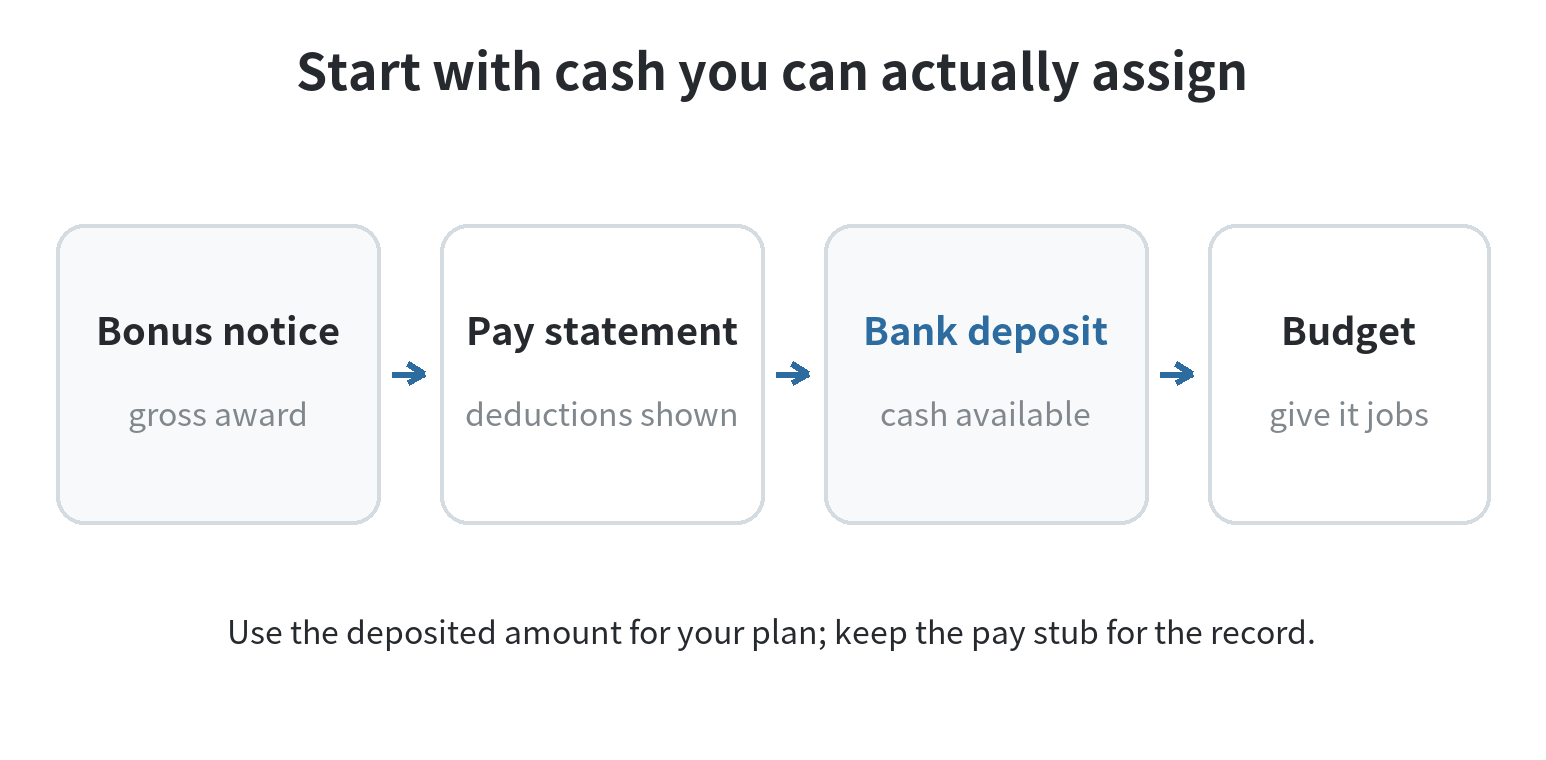
Start with the deposit, not the award headline
Your employer may announce a gross award, while your budget runs on money available to spend. The IRS’s 2026 Publication 15 classifies bonuses as supplemental wages and describes withholding methods employers may use; the method depends on how the bonus is paid and reported. Checked September 30, 2026. Read the pay statement and use the deposited amount as your starting point.
Withholding is not a personalized estimate of your final tax bill. The IRS explains that federal income tax is paid as income is received during the year, and its Tax Withholding Estimator compares withholding with an estimated tax liability. Checked September 30, 2026. If the deposit looks unexpected, keep the pay statement and use the IRS estimator or a qualified tax professional for questions about your own return.
Separate the bonus deposit from your normal paycheck in your notes or budget. That makes it easier to see which bills your regular income still needs to cover. If the award is promised but not deposited, leave it out of the spendable balance for now.
Make a short list before dividing the money
Write down what needs attention now, what is due soon, and what you want to fund later. Start with your account balance, bills, and pay dates. Consumer.gov recommends gathering bills and pay stubs, listing expenses and amounts, and comparing expenses with income when making a budget; FDIC Money Smart’s pay statement worksheet distinguishes gross pay, deductions, and net pay. Checked September 30, 2026.
- Near-term gap: an essential bill due before the next regular deposit, or an overdue amount you need to resolve.
- Known upcoming cost: a planned repair, insurance payment, school expense, or annual bill with an expected date.
- Money goal: a cash reserve, a debt payment beyond the required minimum, or another goal you already track.
- Optional spending: an amount you can enjoy without borrowing from rent, groceries, or a bill due later.
Give each item a name and an amount. “Save some” is hard to track; “hold $300 for the car registration due next month” can be checked against a real date and bill. Leave a small unassigned cushion if the next few weeks include expenses you have not priced yet.
Use a worked example to test the plan
Suppose a household receives a hypothetical $1,800 bonus deposit. Rent and usual monthly bills are already included in the household budget, but a utility balance and a car cost need attention. The household also wants to make a debt payment, set aside cash, and keep a modest amount for something enjoyable.
| Job for the deposit | Example amount | What to check |
|---|---|---|
| Utility balance | $400 | Current bill and due date |
| Car cost reserve | $350 | Estimate or scheduled service |
| Debt payment | $300 | Balance and required minimum |
| Cash reserve | $400 | Keep it accessible for a real gap |
| Optional spending | $200 | Spend only after planned amounts are set |
| Unassigned cushion | $150 | Revisit after upcoming bills clear |
| Total | $1,800 | Matches the example deposit |
These are sample figures, not national averages or a recommended split. Replace them with your own statement balances, due dates, and estimates. If the utility amount is already current, move that line to another item on your list rather than letting the full amount disappear into everyday spending.
A cash-flow calendar can help when the due date matters more than the monthly total. The CFPB’s cash-flow budget tool has you record a starting balance, add money received, subtract bills and other spending, and carry the ending balance into the next week. Checked September 30, 2026. For more on building a month’s categories, see our monthly budget planning guide.
Match the plan to the next pay date
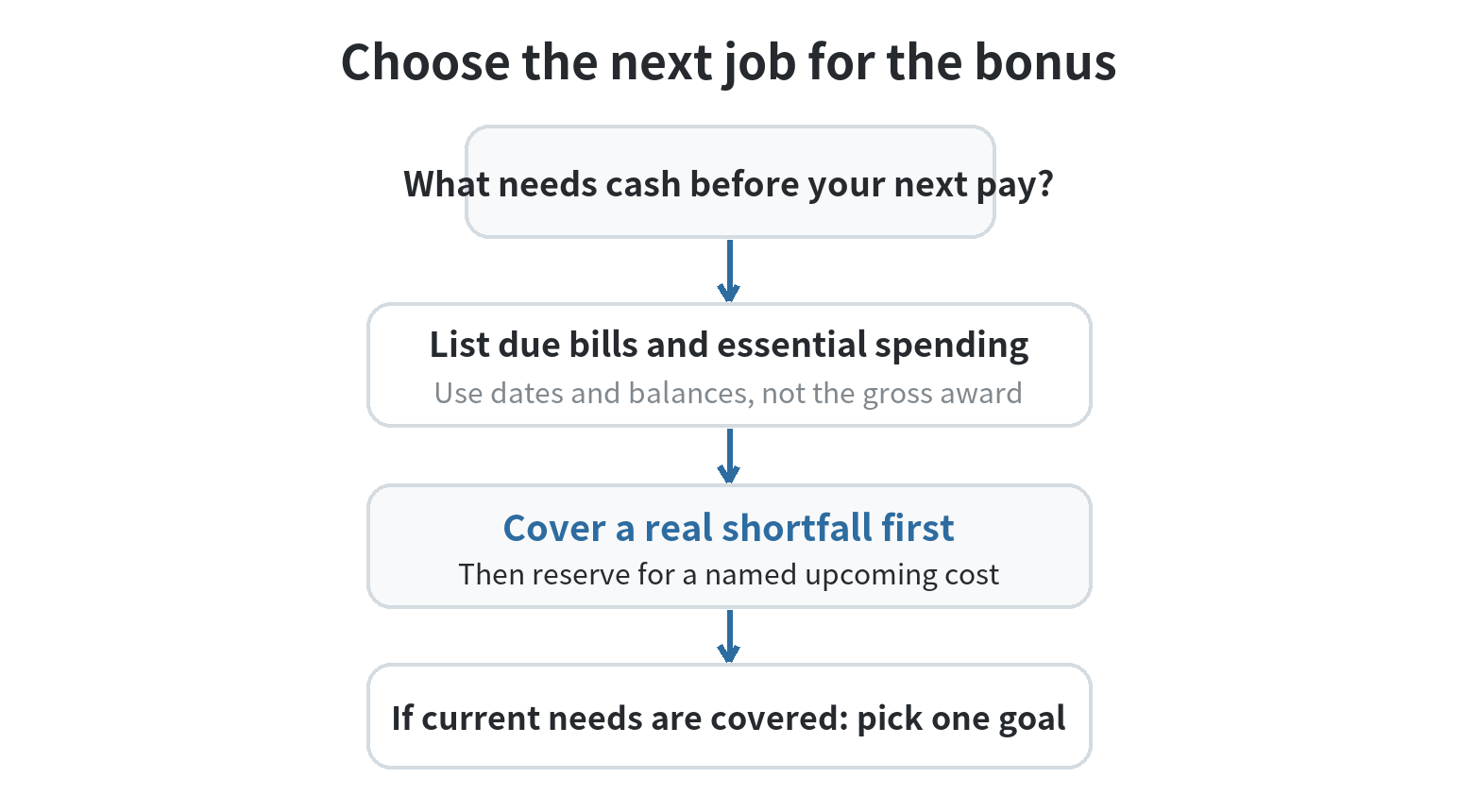
A one-time deposit can make the account balance look larger without changing when your next paycheck arrives. Put the next regular payday and the next bill due dates on the same calendar. Then ask a simple question: will the checking balance cover essential spending until that payday after you reserve money for bills that clear first?
If not, hold enough of the bonus for that gap before assigning money to a later goal. If the next pay cycle is covered, assign the remaining amount to dated expenses or priorities. Avoid moving the same dollars between several categories on paper; each dollar should have one current job.
If the issue is timing rather than the total amount, mark the bill’s due date beside your payday and check whether the biller accepts a different date. The CFPB’s bill-due-date worksheet recommends mapping inflows and outflows before considering a request to change a due date; checked September 30, 2026. Ask the company what it can offer and record the confirmed date. Do not budget around a change until the biller confirms it.
This step matters when a bonus arrives after a bill has already become due. Set aside the amount needed to bring that bill current, then use the remaining deposit for later items. If you cannot cover every bill, list the due dates and consequences in front of you and contact the companies involved about available options. A possible date change is a question to ask, not a promised result.
When a large cost is not due yet, divide the amount by the deposits remaining before its due date. For example, if a known $600 expense is due in three months, you could mark $200 from each of the next three monthly deposits for it. If the bill amount or due date changes, update the set-aside before spending from the balance. A separate labeled savings bucket or a line in your budget can help you avoid spending the reserved amount twice.
If a bonus arrives in a month with other unusual expenses, compare the whole month’s income and outflow rather than treating the award as a windfall. FDIC Money Smart’s spending plan asks readers to compare net income with expenses and adjust planned amounts if expenses exceed income. Checked September 30, 2026. A timing worksheet can reveal that money is available for a bill next month but not for a bill due tomorrow.
Keep the bonus from quietly becoming monthly income
Leave recurring expenses in the regular budget unless your ongoing income has changed. A one-time award can pay a one-time bill or give a temporary cushion; it cannot reliably cover a new subscription or monthly payment after the balance is spent. If you want to raise a recurring expense, first check whether your regular take-home pay covers it without the bonus.
Keep a note of what you assigned and what you actually spent. Consumer.gov suggests recording spending through the month and using the result to plan the next month; FDIC Money Smart also uses pay statements and expense records to build a spending plan. Checked September 30, 2026. A quick review after the next set of bills clear can show whether your estimates were close and whether the unassigned cushion should go to another goal.
If your first priority is building cash for future surprises, decide where that reserve belongs in your household budget and how you will track it. Our emergency savings overview covers ways to set a savings goal and monitor contributions. Keep this bonus plan simple enough that you can explain where every assigned amount went.
FAQ
Should I budget a bonus before it reaches my account?
Draft the list of priorities before the deposit, but wait to assign spendable amounts until you know the net deposit. Compare the pay statement with the amount received, then update your plan using the available balance.
What if my bonus is paid with my regular paycheck?
Use the net amount shown on the combined pay statement and separate the bonus in your own budget notes. The IRS’s 2026 Publication 15 describes withholding methods for supplemental wages and how payment setup affects the method; checked September 30, 2026.
How should I budget a bonus when a bill amount is still unknown?
Reserve a cautious estimate based on a quote, prior statement, or scheduled notice, and leave the rest unassigned until you have a firmer amount. Revisit the line when the bill or estimate arrives instead of counting the same dollars toward another goal.
Last updated: 2026-09