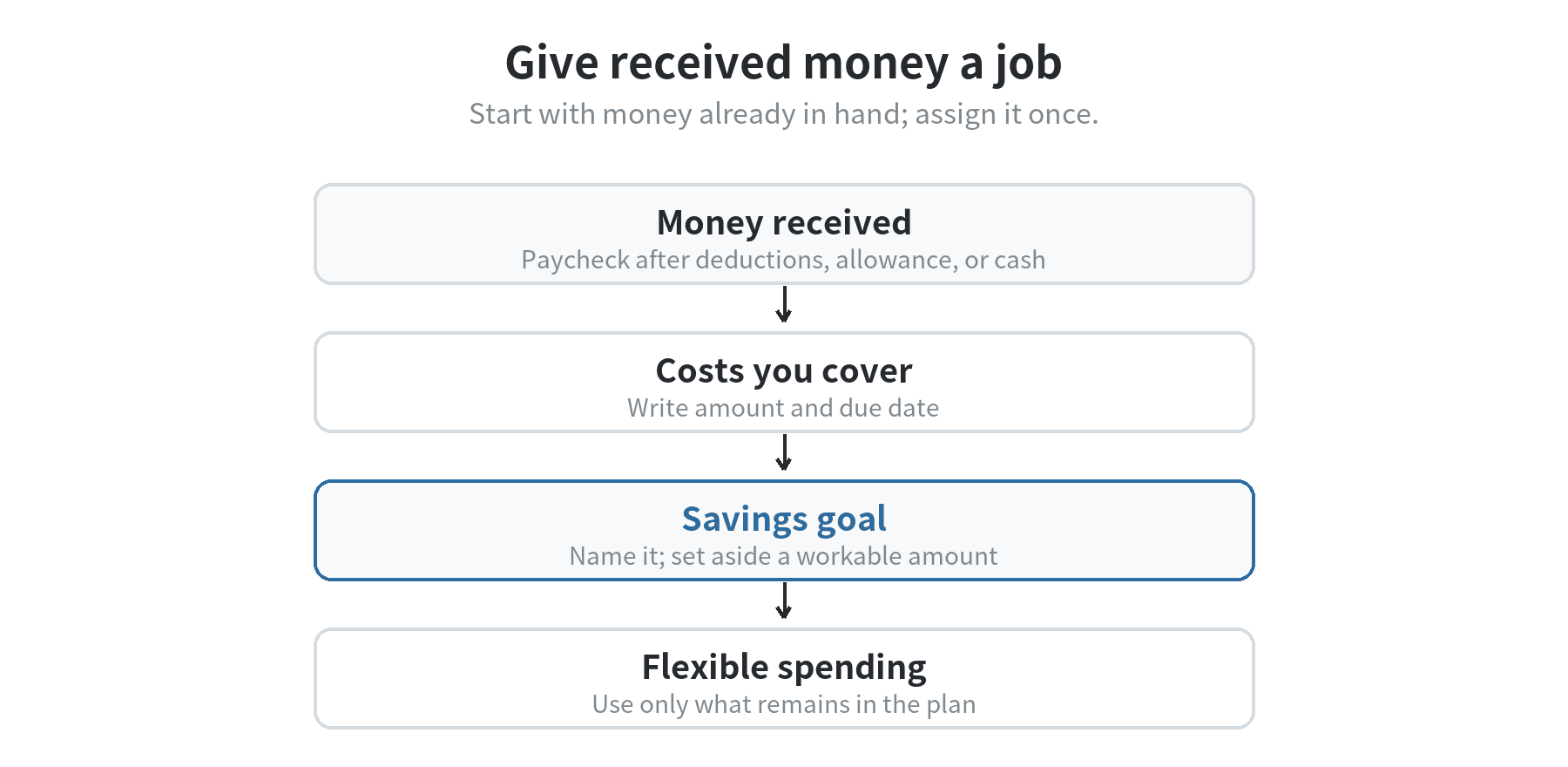
Start with the money you can actually spend, then give it jobs before the month gets busy. A high school student budget can be a one-page plan for paychecks, allowance, gifts, and school costs; it does not need to copy an adult household budget. Use take-home pay or money already received, list expenses you cover, and decide what to save toward a goal.
The CFPB’s youth budgeting lessons describe a budget as a way to plan for needs, wants, and savings. Consumer.gov’s budget worksheet starts with money coming in, lists expenses, then subtracts expenses from income. Both pages were checked September 30, 2026.
Count money that belongs in your plan
Write down each source of money you control: a paycheck after deductions, a regular allowance, cash from a family occasion, or a one-time job. Keep dependable money separate from uncertain money. If your work hours change, build the plan from the amount deposited in a lower-hours month, then decide what to do with any extra after it arrives.
Do not count the full amount on a pay stub if some has already been withheld. Use the deposit amount. If you receive cash, write down what came in and when. A gift you have not received yet does not need a spending assignment today.
Decide the time period that matches your money. A monthly plan can hold a monthly phone contribution or club fee, while a paycheck plan can help divide money between paydays. If you are paid every other week, do not treat one paycheck as two weeks of free spending: first reserve the part meant for costs due before the next deposit.
If your shifts or chores change, keep an income calendar beside the category list. Mark the date money is expected, the amount you can safely count on, and any cost due before the next date. Keep unconfirmed hours outside the available balance. When a larger deposit arrives, first cover the commitments already on the calendar; then assign the remainder to a goal or flexible spending.
This timing check matters when you have money in total but it arrives after a payment date. If a club fee is due before payday, ask about its due date early and set money aside from the prior deposit. A calendar also shows whether one month contains an extra shift or a one-time gift, so you can keep recurring choices tied to dependable income.
Separate costs you cover from costs your family covers
Make a short list of expenses you pay yourself. For a student, that might include transportation, snacks or lunches, school activities, personal items, gifts, entertainment, or part of a phone bill. Leave rent, groceries, insurance, or other household bills off your personal budget if someone else pays them. If you are expected to contribute, write down the agreed amount and due date with a parent or guardian.
Mark each item as fixed or flexible. A fixed cost is due at a set amount or date, such as a club fee. A flexible cost changes with your choices, such as snacks after school. A planned cost that does not happen each month—such as a team uniform or a class trip—still belongs in the plan. Note the expected total and the date you need it, then set aside a piece of it from the money you receive before that date.
Give each dollar a job before spending
Suppose you have $240 available for this month after work deductions. The example below is invented to show the arithmetic; replace every amount with your own. The aim is to cover your obligations, make room for a goal, and leave a clear limit for flexible spending.
| Job | Example amount | What to check |
|---|---|---|
| Transportation | $48 | Passes, rides, or other costs you personally cover |
| Lunch and snacks | $60 | School days when you bring or buy food |
| Phone contribution | $30 | Only if your family agreed you pay this part |
| Savings goal | $40 | Name the goal and keep the amount separate |
| Activities and gifts | $35 | Team, club, social, or gift spending |
| Flexible spending | $27 | Small purchases that do not fit another line |
| Total assigned | $240 | Income less assigned money: $0 |
In this sample, transportation, food, the phone contribution, savings, activities, and flexible spending add to $240. That does not make these amounts a recommended split. Your family may cover food or the phone, your commute may cost more, and you may have no job income this month. Keep the categories that match your life and change the amounts.
The point is to make trade-offs visible before they happen. If you add a concert ticket, decide which flexible line changes or how much you will set aside beforehand. Do not spend the same dollars once in the plan and again in your head.
Turn a savings wish into a target
Write the goal, its price, and the date you want the money ready. Then divide the amount still needed by the number of times you expect to receive money before that date. For example, if a school trip costs $90 and you have $30 set aside, you need another $60. If four paydays remain before the payment date, that is $15 from each payday. These are sample figures, not a forecast about what a trip costs.
If the required amount is larger than what your plan can spare, adjust the date, choose a lower-cost version of the goal, or ask the organizer whether payment can be split. Do not erase food, transportation, or an agreed family contribution to make the math look balanced. CFPB’s teen savings material suggests tracking actual spending and discussing what a savings goal may require giving up; checked September 30, 2026.
Check the plan when money moves
Keep a simple record in a notebook, phone note, or spreadsheet: date, what the money was for, and the amount. After each purchase, compare the remaining amount in that category with the money left in your wallet or account. A category balance is a limit for what remains, not a second allowance.
Pick a regular review point, such as the evening you receive pay or a weekend day. Compare what you expected with what you spent, and update the next plan. If lunch costs more during a week with a late practice, move money from a flexible line before spending it. The review is for adjusting the plan, not criticizing yourself for a number that turned out differently.
Keep records private if that matters to you, and ask a trusted adult for help with account access or a family bill arrangement. A budget can show what you plan to do; it does not change who owns an account or who is responsible for a bill.
When the numbers do not balance
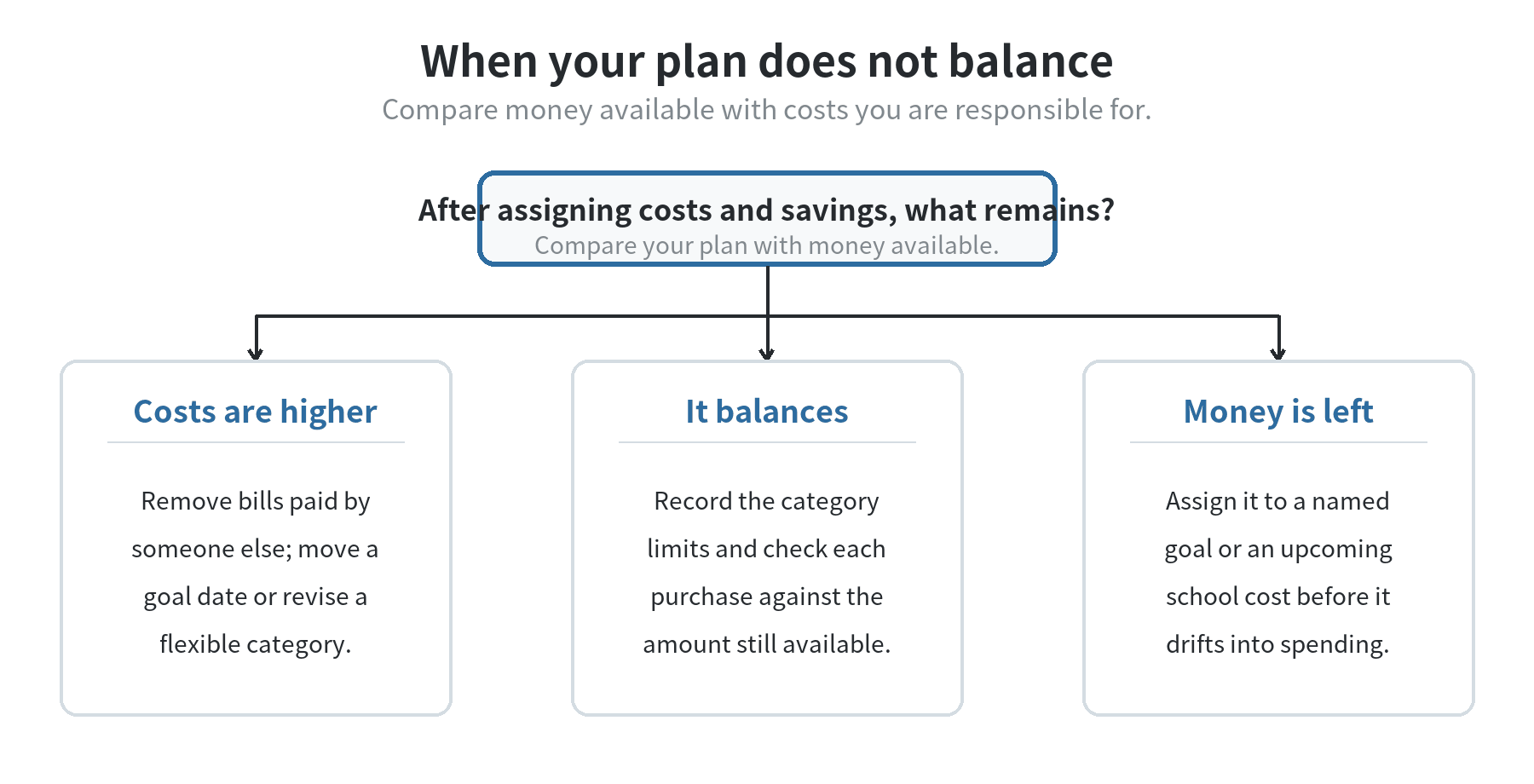
If planned expenses exceed money coming in, first remove any cost someone else has agreed to cover from your personal total. Next, check one-time purchases and subscriptions you no longer use, and see whether a goal can move to a later date. If core costs still exceed your income, show the list to a parent, guardian, or school counselor and discuss which expense needs another arrangement.
If money remains unassigned, decide before spending it. You could add it to a named savings goal, hold it for an upcoming school cost, or keep it available for a cost you have not estimated yet. Record that choice so the extra does not quietly turn into several small purchases.
A useful plan is one you can explain: how much came in, what you need to cover, what you are saving for, and what remains available. Start with the next amount you receive, then carry forward the parts that still fit.
FAQ
How can I budget if I only get money for chores or gifts?
Make a plan from money after you receive it, because those amounts may not arrive on a set schedule. Keep a note of each amount, cover a cost you already agreed to pay, then assign what remains to spending or a savings goal.
Should I use a budgeting app for school and personal spending?
A notebook or spreadsheet can do the job if you can record money in and out. If you consider an app, check what information it asks you to enter and whether you need a parent or guardian to set up or supervise an account.
What should I do with a bigger paycheck than I planned for?
Wait until the deposit arrives, cover costs due before your next paycheck, then direct the extra to a goal or a future school expense. Keep the regular plan based on income you can count on.
How do I make a budget with a parent or guardian?
Bring a written list of the costs you pay and the money you receive. Agree on which household costs are yours, the amount and due date, and how you will handle a month when your income changes.
Last updated: September 2026.
Last updated: 2026-09