If you want to cut back on drinking and free up cash, give the spending its own line in your budget, then set a limit from your actual transactions. Start with what you spend now, decide what amount you want available for the coming month, and give any difference a specific job such as a bill or savings. The example below uses made-up amounts; replace them with yours.
Find the full cost in your own records
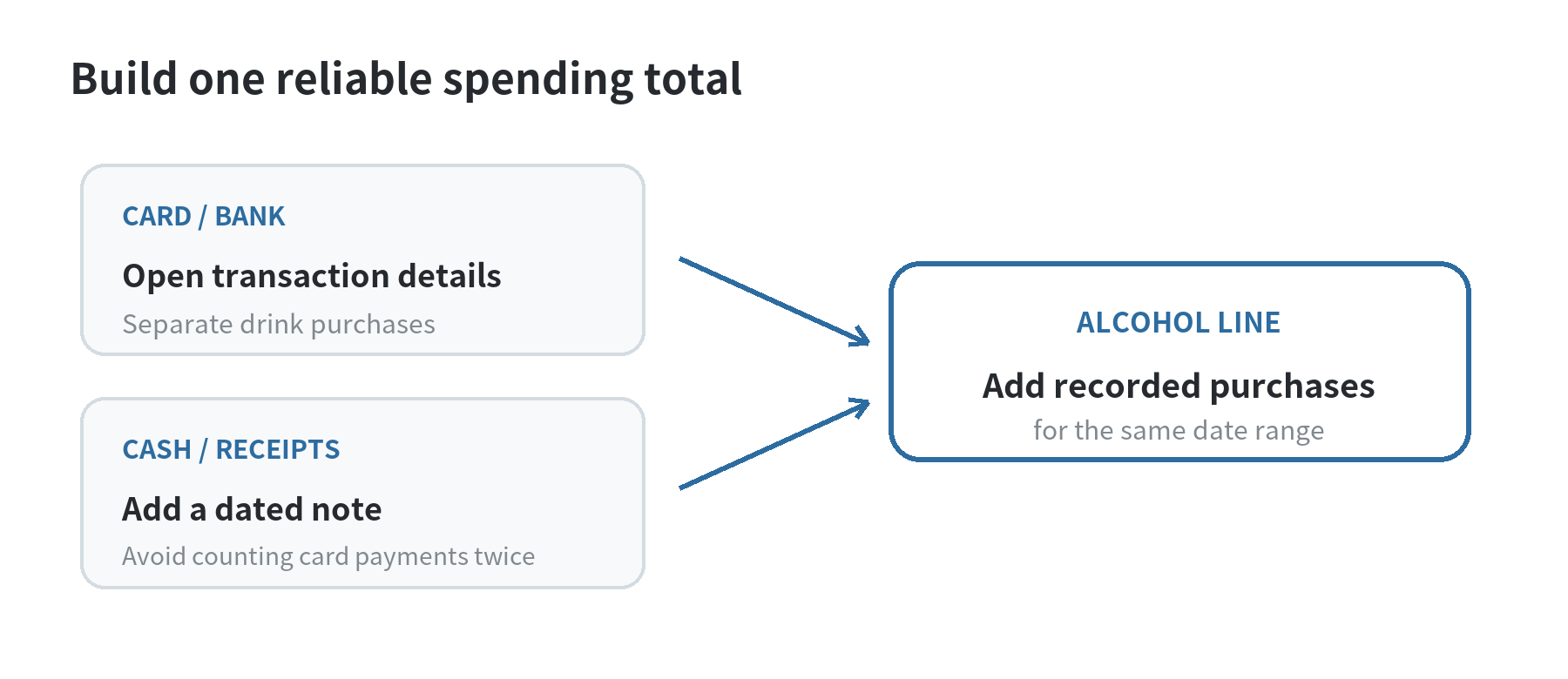
Look through bank and card statements, receipts, and cash notes. Include drinks bought at a bar or restaurant, store purchases, delivery charges, and any separate tip or cover charge. A purchase can hide in a general “dining” category, so open the transaction details and add a note when the merchant name does not tell you what it was.
The CFPB’s spending tracker recommends recording expenses and sorting them into categories before deciding what to change (checked September 30, 2026). For alcohol spending, NIAAA’s alcohol spending calculator uses your drinking days, drinks on a typical day, and average price per drink to estimate spending over a week, month, or year (checked September 30, 2026). For a budget, use the amounts you actually paid: a restaurant tab and a take-home purchase can have very different totals.
Separate the purchase from the occasion if that helps you see the pattern. A restaurant check may include food and drinks; record only the part you want to track. If you cannot split a receipt accurately, mark the estimate as approximate and use the same method next time. Consistent records are more useful than false precision.
Watch for duplicate entries when you pay a credit card bill. The CFPB’s sample statement lists purchases separately from payments and credits (checked September 30, 2026). The card transaction is the purchase; the later bank withdrawal is a payment toward the card balance. If your budget records both as new spending, one meal appears twice. For a cash purchase that came from an ATM withdrawal, use the receipt or your note for the drink purchase rather than counting the full withdrawal as alcohol.
For a shared restaurant check, decide on one method and keep using it. You might record only the drinks you paid for, or split the drink total by the amount each person owes. If the receipt combines tax and tip, a reasonable estimate is enough for a category budget; label it so you remember how you arrived at the total.
Turn the total into a monthly line
Add the transactions for a statement cycle, then make that total the starting point of your plan. A national household average cannot set your personal line: household size, local prices, and what you count as an alcohol purchase differ. Use the records from the accounts and cash you actually use.
Suppose your made-up example month includes $48 in store purchases and $72 in restaurant drinks. The starting line is $120. If you want to set aside $80 next month, write $80 as the planned amount and $40 as the difference from this example’s starting point. Those figures are arithmetic for illustration, not typical costs or a savings promise.
Choose the planned amount yourself. It might be a firm cap, or a spending limit you review against purchases as they happen. If the amount needs to change, edit the budget before spending rather than silently borrowing from rent, groceries, utilities, or a bill due soon.
Match the date range to the way you budget. If you budget by calendar month but your card statement closes on a different day, use transaction dates to move purchases into the right month. If that is too much work, use the statement period for both the actual total and the next planned amount. Avoid comparing a full statement period with a partial calendar month.
Give the freed-up dollars a destination
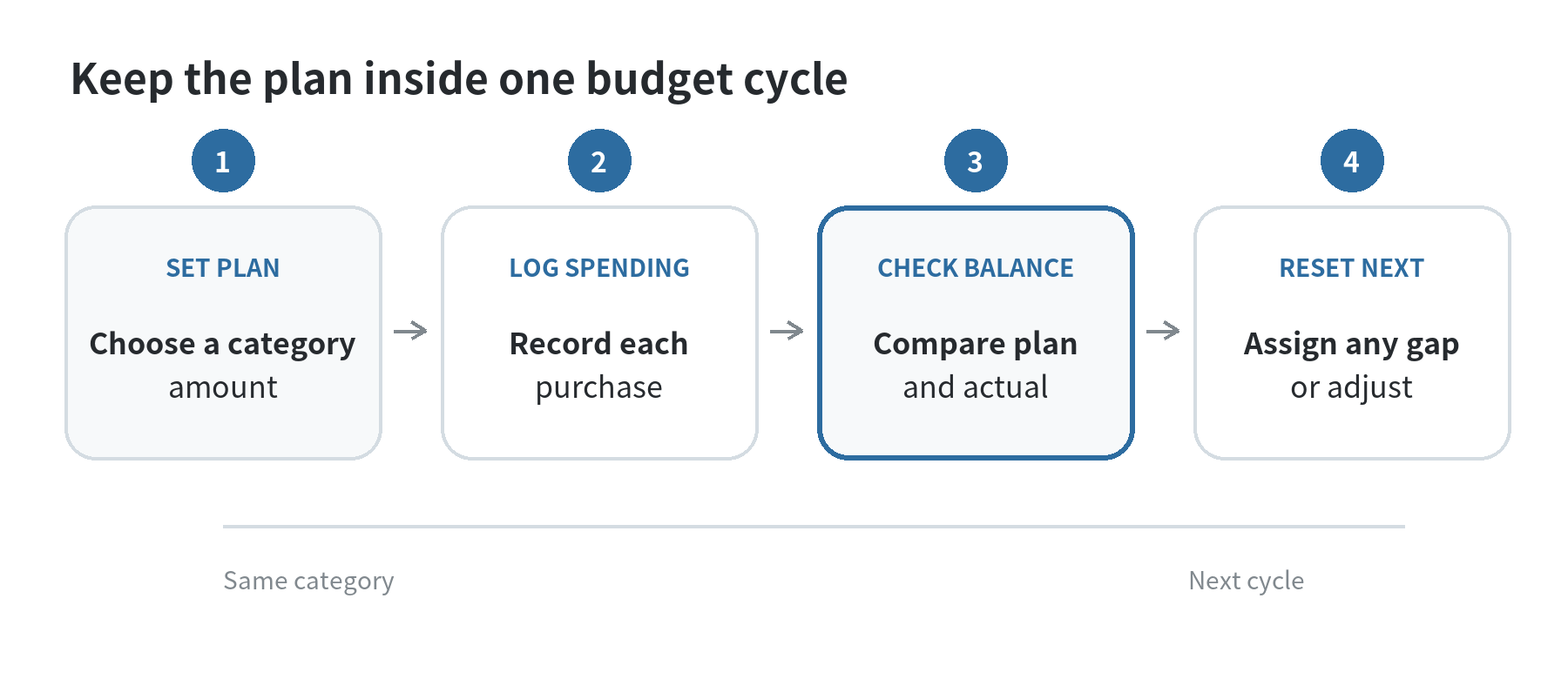
A lower budget line only changes your plan if the difference goes somewhere else. Name the destination in the budget, such as a utility bill, a credit-card payment, or a general savings category. CFPB cash-flow materials describe listing income and expenses by time period and carrying the ending balance forward; Consumer.gov’s budget guide also has readers compare planned and actual spending, then use that information for the next month (both checked September 30, 2026). The same bookkeeping keeps a spending adjustment from disappearing into an untracked balance.
For example, if your illustrative line moves from $120 to $80, you could enter $40 in a separate “next bill” line. The total budget still has to balance against take-home income. If another bill changes, revise the plan instead of assuming that the difference will remain available.
If you already use a budgeting app, create a category with a plain label such as “Alcohol.” Enter cash spending manually, and check uncategorized transactions before relying on the total. If a shared account includes another person’s purchases, agree on whether the budget line covers one person or the household. That keeps a shared total from being mistaken for an individual amount.
Set a spending checkpoint that fits your pay cycle
A monthly cap can be hard to use if several bills fall before payday. Divide the planned line across the pay periods in your calendar, then keep the remaining amount visible. In a made-up example, an $80 monthly line split across two paychecks gives $40 per paycheck. This is a budgeting split, not a suggested amount to spend.
For a week with a birthday dinner or a trip, note the expected expense before it happens and decide which other planned spending will move. Do not count a future discount, refund, or unconfirmed reimbursement as available money. If your income arrives on uneven dates, review the calendar and protect essential bills first; the CFPB’s cash-flow budget tool uses starting and ending balances to show when money is available.
Set a buffer for a planned social occasion, or use a firm stop when the category is spent. Write down which approach you chose. A planned buffer is different from adding money afterward without changing another line, because the latter can leave the rest of the budget out of balance.
Keep a short transaction note when a purchase is difficult to classify. “Dinner with friends, drinks included” is enough to identify why the amount landed in that line. You can then decide whether next month’s budget needs a separate social meal category or whether one combined category is easier to maintain.
Review the plan without turning it into a penalty
At the end of the statement cycle, compare the planned line with recorded transactions. If actual spending went over, identify the transaction that was missing, miscategorized, or larger than expected. Then make a specific change: update the next amount, record cash purchases sooner, or plan for a known occasion in another category.
If the line came in below the plan, assign the unspent amount rather than treating it as a reason to raise the next cap automatically. You could leave it in the destination category, move it to a bill, or keep it in savings. The point is to make that choice deliberately and keep the ledger consistent with your bank balance.
For a broader system, see our monthly budget planning overview. If you are deciding where a budget surplus should go, our emergency fund overview covers that separate task.
When budgeting is not the only support you need
A spending plan can organize money, but it cannot assess a health concern or replace medical care. If you have questions about drinking or find that a change feels difficult to manage, speak with a qualified health professional. For immediate danger or an emergency, contact local emergency services.
FAQ
How should I count drinks included in a restaurant bill?
Track the drink portion separately when the receipt makes that practical. If the receipt combines food and drinks, use a consistent estimate and mark it as approximate so the budget does not suggest more precision than the record supports.
What if I pay cash and do not keep receipts?
Write down the amount and date as soon as you can, then add it to the same category as card purchases. A note on your phone or a paper list is enough if it captures every cash purchase you want included.
Should roommates or partners share one alcohol budget?
Use one shared line only when the account and spending plan are shared. Otherwise, keep separate amounts so a household total does not hide who paid or which budget is responsible.
What should I do if spending exceeds the amount I planned?
Check for missing or misclassified transactions, then adjust the next plan using the corrected total. Protect bills and essentials first, and do not count the same dollars both as available spending and as money assigned to another goal.
Last updated: 2026-09