Budget from the money that actually lands in your account, then assign it to bills by due date. A minimum-wage budget works best as a cash-flow plan: it shows not only whether the month adds up, but whether rent, food, and transportation can be covered before the next deposit.
As of September 30, 2026, the U.S. Department of Labor lists the federal minimum wage as $7.25 an hour for employers covered by the FLSA; state and local rules can set a higher applicable rate. Use the current DOL table for your location before estimating gross pay, then use your pay stub for budgeting. The CFPB explains that gross earnings and the take-home amount differ because taxes and other deductions come out of a paycheck.
Start with take-home pay, not an hourly estimate
Write down the amount deposited in your checking account and the date it arrives. If your hours change, do not build the plan around a week with extra shifts. Use a smaller recent check as the working amount, and treat any extra income as unassigned until essential bills are covered.
Minimum-wage rules depend on location and coverage. The Department of Labor’s consolidated table, effective July 1, 2026, lists the federal figure and state rates, and says employers must pay the highest applicable federal, state, or local rate. The Congressional Research Service also describes how federal and state rates interact. Check the DOL table for the current year and your state labor agency for local details; rates, occupations, and local rules can differ.
Do not multiply an hourly rate by a full-time schedule and treat the result as spendable cash. Your actual check reflects hours paid and deductions shown on that pay statement. Use the deposit amount for the budget, and keep the wage-rate check separate from spending decisions.
Put bills in the order money arrives
Write each deposit date and each bill due date on one calendar. Mark rent, utilities, phone, transit or fuel, groceries, and required debt payments. Then assign a deposit to the bills that fall before the next deposit. A monthly total can look affordable while one week still runs short.
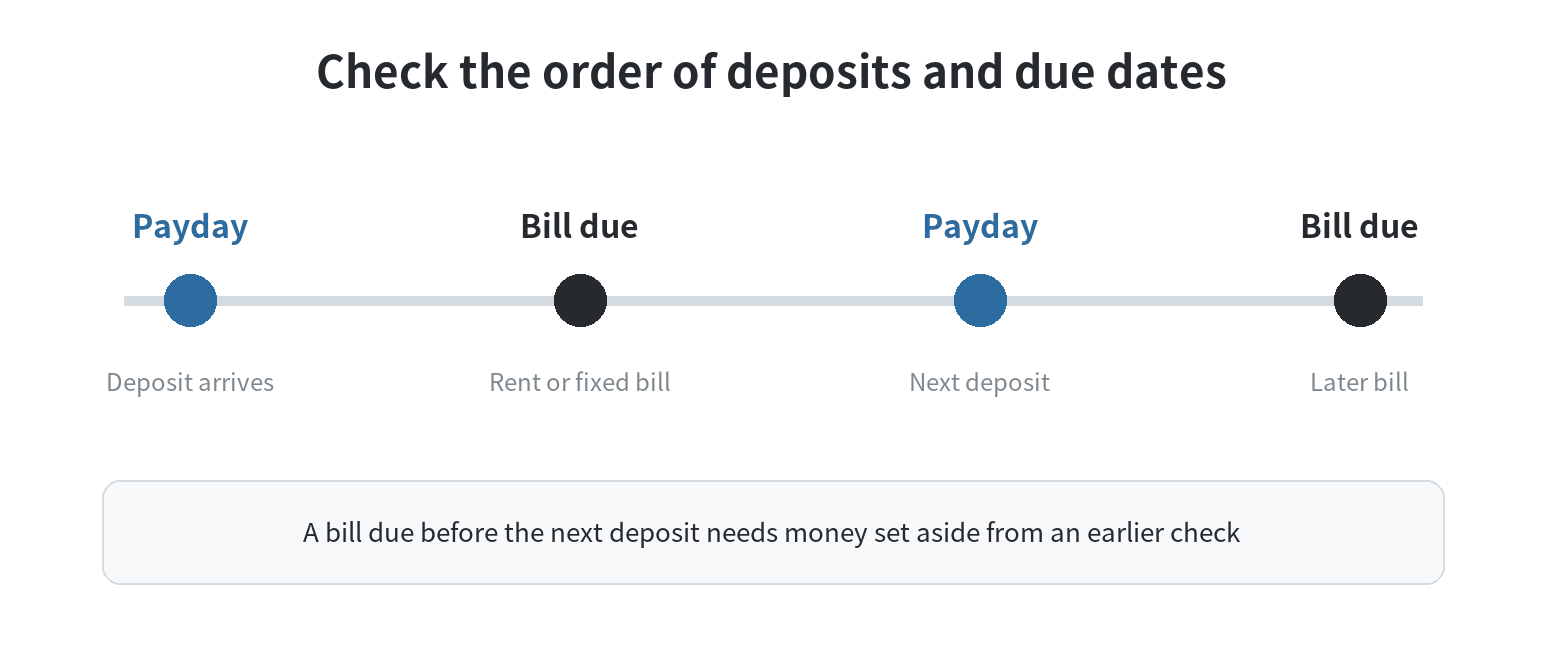
The Consumer Financial Protection Bureau describes a cash-flow budget as tracking income and expenses week to week. Its worksheet asks users to track income, resources, and expenses for at least one month before building the plan. Use a notebook, spreadsheet, or budgeting app; the useful part is seeing the dates and balances together.
When a pay period crosses into a new month, carry the planned ending balance forward instead of starting the page at zero. CFPB’s worksheet adds income and expenses to a beginning balance, then uses that ending balance as the next period’s starting point. This makes money already reserved for rent visible when you plan groceries or a transit pass.
If a bill comes due before the next deposit, reserve its share from the previous check. For example, if rent is due near the start of the month but a deposit arrives later, split the rent across earlier checks in your plan. Keep that reserved amount separate in your notes or account balance so it does not look like free spending money.
Give every deposit a job
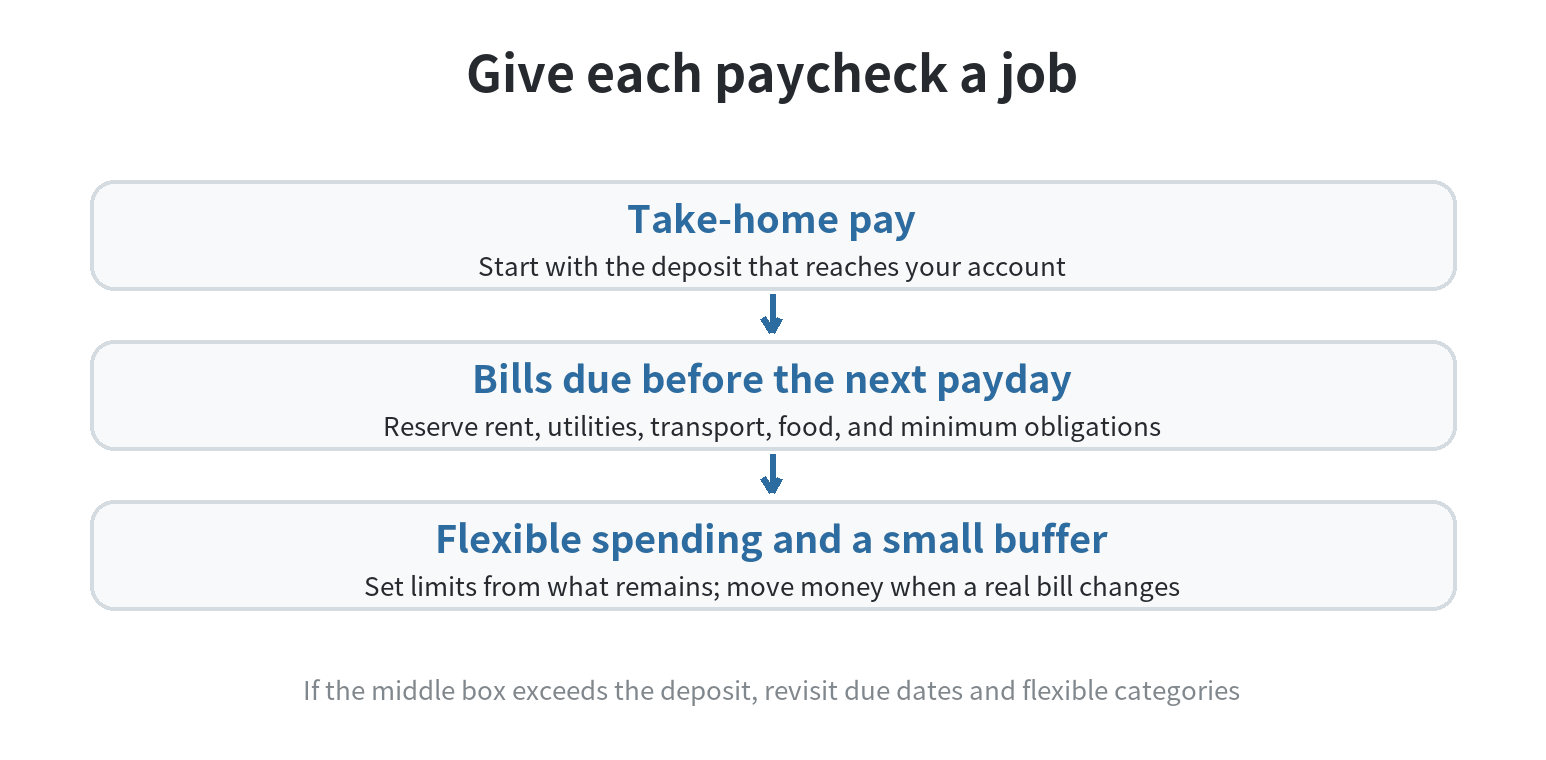
After listing due dates, divide the available deposit into three groups: bills that cannot wait, everyday essentials, and flexible spending. Put food and the transportation needed to get to work in the essentials group. Flexible money can cover nonessential purchases and small treats, but it should not borrow from rent or the next electric bill.
Here is a fictional monthly example with $2,000 in take-home pay. These are sample numbers, not a recommended spending split or a cost-of-living estimate.
| Category | Example amount | What to include |
|---|---|---|
| Rent and utilities | $900 | Rent, power, water, and required housing charges |
| Food | $300 | Groceries and basic household food |
| Work transportation | $180 | Transit, fuel, parking, or other commute costs |
| Phone | $60 | Current service bill |
| Required debt payments | $100 | Minimum payments due during the month |
| Small savings reserve | $40 | Set aside only after current essentials are covered |
| Flexible spending | $420 | Personal spending and irregular needs |
| Total | $2,000 | Matches the example take-home amount |
Your own rent, utility bills, commute, and household size may make this example look very different. Pull figures from recent statements, receipts, and pay stubs rather than copying a percentage rule. The FDIC’s Money Smart materials use income and expenses to build a spending and saving plan, including prioritizing bills when money is short.
If you want a spending pace inside the example, divide its flexible $420 across the weeks you need it to cover. The FDIC suggests dividing a monthly amount by four for a quick weekly estimate; applied to this fictional line, that gives $105 per week. This is only a way to pace the invented example, not a standard national weekly amount. Leave the amount unspent in the plan if an irregular bill is coming up.
Variable bills need their own notes. Put the latest utility bill beside an older one, write down the current amount and due date, and use the higher recent bill as the planning figure if a low month would leave you short. For a cost that arrives once or twice a year, divide the amount by the deposits before it is due and reserve a share from those checks. If no amount is known yet, keep a blank line and replace it when the bill or renewal notice arrives.
When the essentials cost more than the deposit
If rent, food, utilities, transportation, and required payments exceed income, the plan has exposed a shortfall; it has not created extra cash. Recheck the amounts and due dates first. Then mark which costs can be reduced, delayed, or discussed with the biller, and which costs protect housing, food, work access, or service needed for daily life.
- Compare the current bill with the last statement and remove charges you do not recognize only after checking with the provider.
- Ask a utility, landlord, lender, or service provider what payment arrangements or due-date options it offers. Record the answer and any fee before agreeing.
- Look at work transportation and food purchases for changes you can actually maintain, such as a cheaper route or planned meals built around what you already have.
- If the shortfall remains, contact a nonprofit financial counselor or local assistance office and bring your income dates, bills, and account balances.
When deciding which bill to pay first, do not assume every company uses the same late-fee or shutoff policy. Read the current notice and ask the provider directly about deadlines and available arrangements.
Make the plan easy to update
Keep the budget in a format you will reopen: paper, a simple spreadsheet, or a phone tracker. If you prefer a spreadsheet, our guide to building a simple budget tracker on a smartphone covers a basic way to list spending. Our overview of monthly budgeting apps discusses app-based tracking.
When income or a bill changes, update the affected line and recalculate the remaining amount. Keep irregular expenses visible, including school costs, work clothes, car maintenance, and annual fees. Divide a known upcoming bill into the deposits before its due date instead of letting it arrive as a surprise. If one paycheck is larger than another, assign the larger check to the earliest uncovered bills before adding anything to flexible spending.
Give yourself a small buffer only when the essentials fit. If the budget cannot support savings right now, keep the plan focused on current bills and revisit the reserve after a cost falls or income changes. A budget is a map of the cash available and the dates it must cover.
FAQ
How should I split a grocery budget between paychecks?
Set aside a share from each deposit that must cover groceries before the next one arrives. Keep that share in a grocery line or envelope so rent and other bills do not use it by accident.
What is the envelope method for groceries?
Assign a grocery amount for the week, put that amount in a labeled envelope or separate ledger line, and stop spending from it when the balance is gone. The FDIC describes this weekly category approach as one way to limit spending.
Can grocery money left in an envelope carry into the next week?
Yes. Keep the remainder with the grocery category or lower the next week’s amount by the leftover, then write down which method you used. That keeps the plan’s total grocery money visible instead of counting the same cash twice.
What should I do with a paycheck that arrives in addition to my regular deposits?
Use the calendar to find which future bills and irregular costs still have no money assigned. Put the extra deposit toward those items or a cash buffer before raising flexible spending for the month.
Last updated: 2026-09