Build parking and tolls into a monthly budget planned on your phone, using your actual route and parking arrangement. Do not start with a national average: your bill depends on where you park, which roads you use, how often you travel, and the rate rules for those facilities. The Federal Highway Administration’s toll-facility data describes rates that may vary by facility, vehicle class, distance, or time; check the current operator quote for your own trip (checked September 2026).
Start with the charges that actually reach you
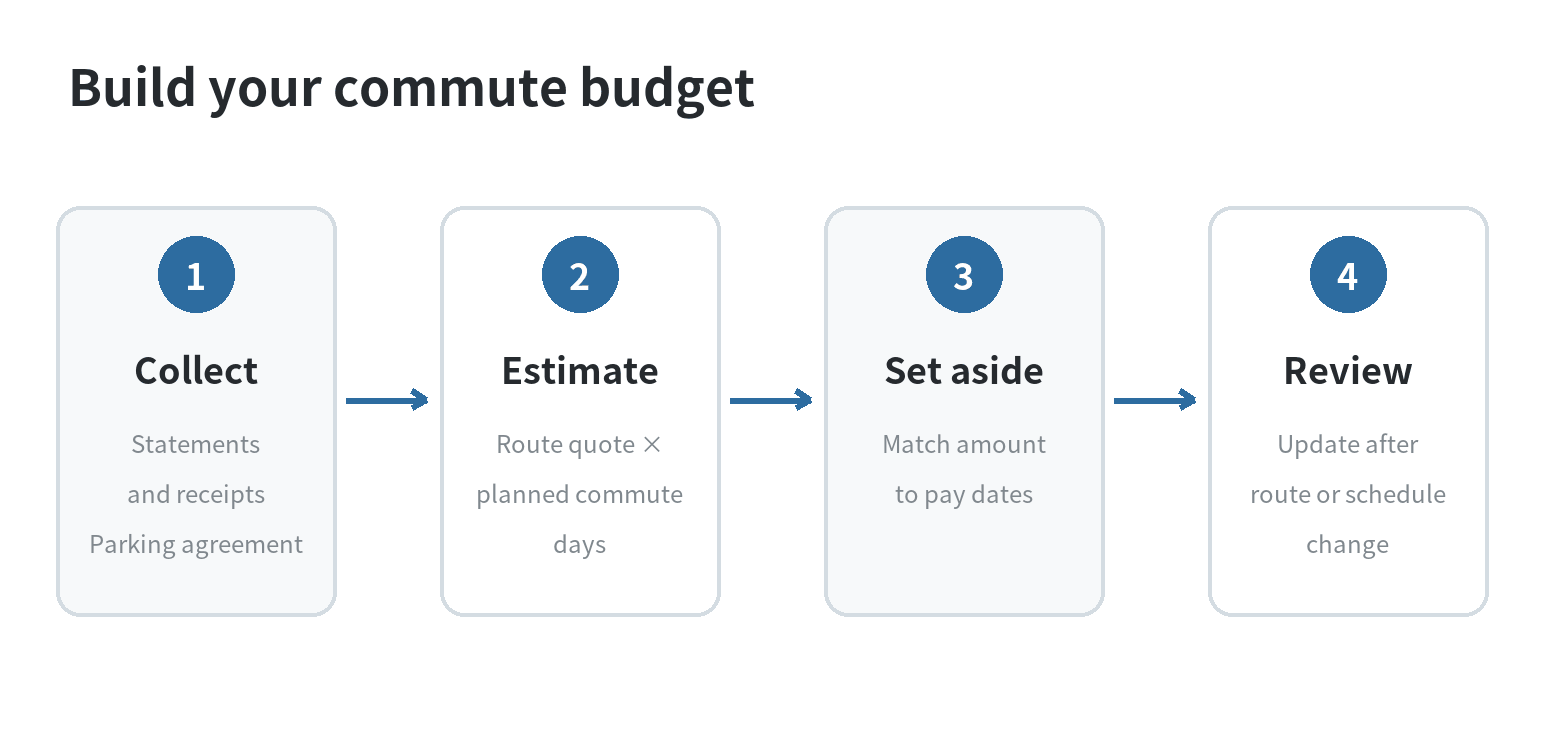
Look at the last few toll statements, account history, card transactions, parking receipts, and any work parking invoice. Include charges that are easy to miss: a workday garage, a station lot, a bridge on one route, or a toll road used only on certain shifts. Keep parking and tolls separate at first. They may be paid to different operators and follow different billing cycles.
Make a short list with the date, amount, place, and reason for each charge. Mark whether it is a fixed commitment, such as a monthly parking arrangement, or varies with each trip. If you share a vehicle, count only the trips and charges your household budget actually pays. Do not treat an employer reimbursement as money available for other spending; record the expense and reimbursement separately so you can see the cash timing. A phone budget tracker can keep the list with your other spending notes.
Turn a variable commute into a monthly line
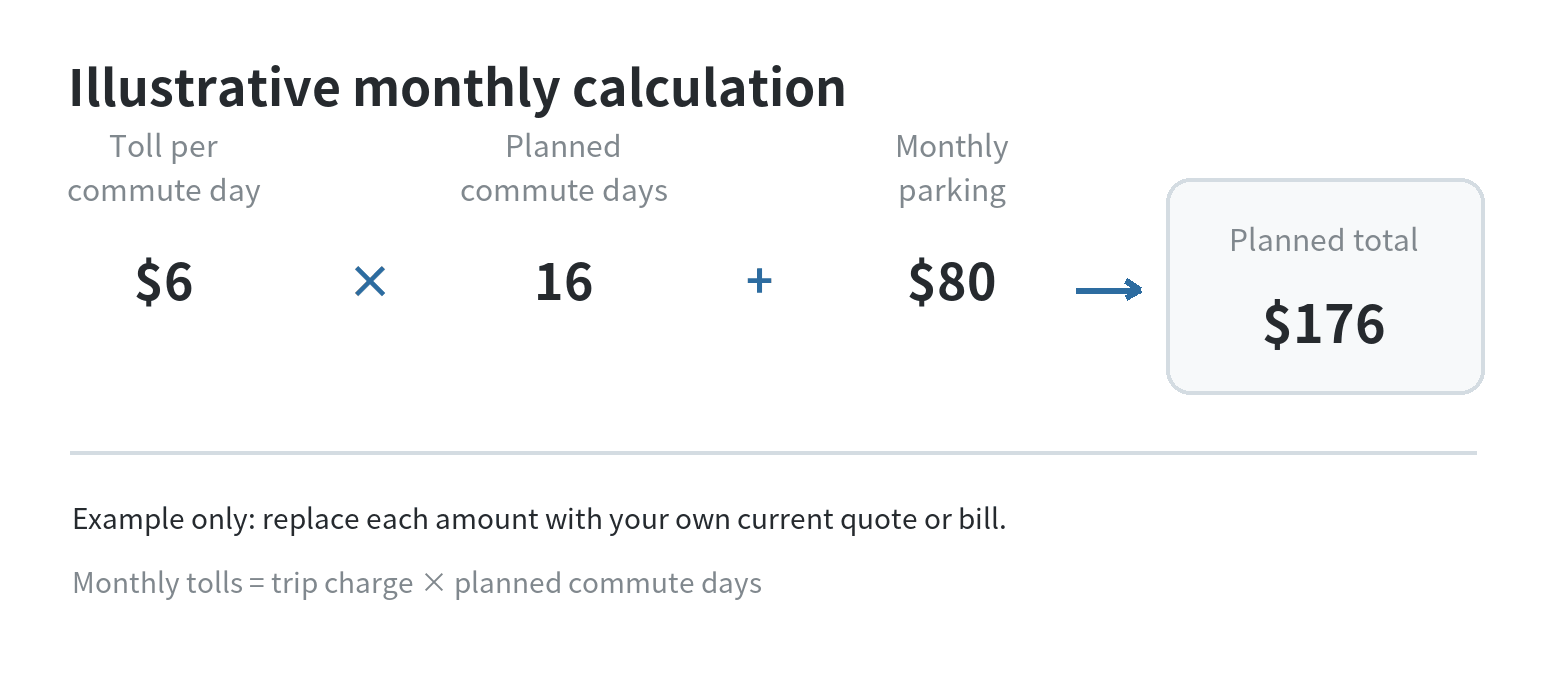
For a predictable schedule, multiply the charge for one round trip by the number of commute days you plan to make, then add parking charges that are billed by the day. For a monthly parking contract, use the amount shown in the current agreement instead of multiplying a daily rate. If your schedule changes week to week, total the actual charges from your records and use a cautious planning amount based on the months that resemble the coming schedule.
Here is a made-up example, not a price estimate: Jordan expects $6 in tolls on each commute day, plans 16 commute days, and pays $80 for monthly parking. The working month is $176: ($6 × 16) + $80. Jordan can replace each input with the route’s current toll quote, the expected work calendar, and the actual parking bill. The arithmetic is useful; the sample prices are not a guide to local rates.
For tolls, check the operator responsible for each road and enter the route and vehicle details it requests. The Central Florida Expressway Authority’s calculator, for example, asks for payment method, axle count, and start and end points; its instructions show why a single generic toll number would not fit every trip (checked September 2026). If several operators cover your route, gather each portion rather than assuming one calculator includes every road.
For parking, use the current monthly agreement, posted lot or garage rate, or a written quote from the operator or employer. Ask whether the amount is for a reserved space, a permit, or entry by the day, and which dates the charge covers. For a workplace lot, confirm whether payroll deductions, pre-tax commuter benefits, or reimbursement affect the amount you pay from take-home funds. Those details are employer- and location-specific, so use your own benefit documents.
Make the money available before the bill arrives
A monthly total can still cause a shortfall if parking is charged at the start of the month while pay arrives later. The CFPB’s cash-flow budget tool tracks income and expenses by week so a person can see whether money is available when a bill is due (checked September 2026). Put the parking due date and toll account payment date beside your pay dates, then reserve the needed amount from the paychecks that arrive before each charge.
If Jordan is paid twice monthly and plans to use the example $176 budget, setting aside $88 from each check would cover the planned monthly total. That split is only a budgeting illustration. If parking is due before the second check, Jordan would need to build the first month’s balance earlier or reserve more from the earlier check. The monthly total and the calendar both matter.
Keep the commute amount in a dedicated budget category, even if it stays in the same checking account. A phone budget tracker can keep that category beside your other spending notes. After a toll charge posts, compare it with the trip note or statement so an unexpected duplicate, missed trip, or wrong vehicle detail is visible. If you pay tolls by mail, include the bill’s due date in the calendar; do not wait for a late notice to discover the cost.
Leave room for schedule changes
Build the plan around the commute you expect, not every workday on the calendar. If you have remote days, rotating shifts, leave, or a seasonal schedule, adjust the planned commute days before the month begins. When the schedule is uncertain, keep a small buffer inside your own budget rather than treating the example’s $176 as a recommended reserve.
Review the category after a month with an unusual route or schedule. Separate one-time travel from the recurring work commute so a vacation drive does not inflate the next month’s target. If a toll rate changes or a parking arrangement renews, replace the old input with the updated operator rate or agreement and note when you checked it. FHWA’s national facility information is useful for identifying how toll charges can differ; the operator’s live rate page or route calculator is the appropriate source for a personal estimate (checked September 2026).
If the budget does not fit, review commute days, route charges, and parking separately. Compare a toll-free route using its added distance, fuel, and time before deciding whether the tradeoff works for you.
Keep work and personal travel records distinct
A commute to a regular workplace and business travel are not the same tax category. The IRS states in Publication 463 that travel between home and a main or regular workplace is a personal commuting expense, and that parking at the workplace is a nondeductible commuting expense for federal income tax purposes (2025 edition, checked September 2026). This is general information, not advice for an individual tax return. If a trip is for a client visit or another business purpose, keep the receipt and trip details separate and consult the applicable IRS guidance or a tax professional about your situation.
FAQ
How should I budget tolls when my workdays change each week?
Use your expected schedule to estimate the coming month, then compare the estimate with posted charges as they arrive. Keep the route quote and commute-day count as separate inputs so you can update only the part that changed.
Should parking and tolls go under transportation or work expenses?
For a household spending plan, choose a label you will recognize and keep parking and tolls visible as separate subcategories. If you need records for reimbursement or taxes, retain the receipt and purpose separately; commuting and business travel can receive different tax treatment under IRS Publication 463.
What if my employer reimburses some commute costs?
Record the full charge and the reimbursement as separate entries, along with their dates. Check the employer’s current policy to learn which costs qualify and when payments are issued; do not budget an unapproved reimbursement as available cash.
Last updated: 2026-09