Budget music lessons from the full commitment, not just the price of one session. Ask for the lesson schedule, total tuition, payment dates, required fees, and instrument costs, then divide the amount you need to have ready by the paydays before each bill. Music schools publish different formats, so a quote for your exact lesson plan is more useful than a national average.
For context, West Jersey Music Academy lists per-lesson tuition and a separate instrument cost, while the Bronx Conservatory publishes term tuition and notes that loan instruments are limited. Boston Music Project lists lesson packages and separate rental details for some programs. Those program pages were checked October 1, 2026; they describe their own offerings, not a nationwide price. Use the method below with the school or teacher you are considering.
Get the full lesson quote before setting a monthly amount
Ask the teacher, studio, school, or community program to put the full schedule and charges in one written estimate. A per-session price by itself does not tell you whether tuition is billed each month, by semester, or in a package, or whether an enrollment fee is added.
- How many lessons are included, and what is the lesson length?
- What dates are payments due, and is tuition paid per lesson, monthly, or by term?
- Are registration, recital, materials, accompanist, or facility fees separate?
- What happens when the student or teacher misses a lesson?
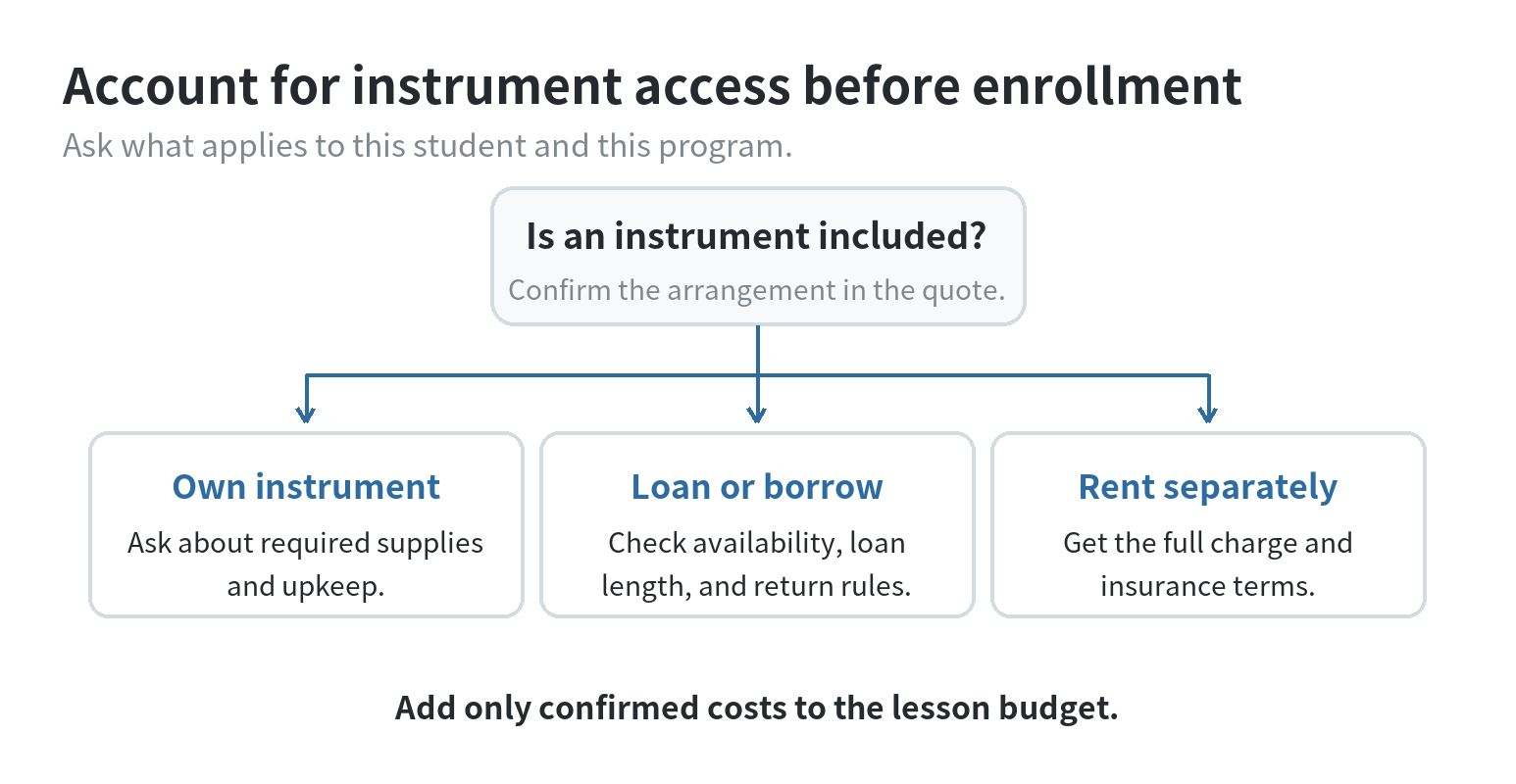
- Is an instrument included, loaned, or rented? Are maintenance or insurance charges separate?
- Can the student pause or leave the program, and how is any prepaid tuition handled?
Keep the answer with your budget notes. If the provider cannot give a complete total yet, write the known tuition separately from “quote needed” items. Do not treat an unknown rental or fee as free; leave room in the plan until the provider answers.
The source pages show why these questions matter. West Jersey Music Academy says tuition does not include an instrument; Monday Music lists instrument rental separately in its 2026–2027 tuition information. The Bronx Conservatory says a limited number of instruments are available to loan, subject to availability, while NEMPAC publishes its own 2026–2027 private lesson rates. Boston Music Project separates rental and insurance from some lesson packages while including rentals in other programs; Lincoln Music School lists tuition and annual registration fees separately. These program details were checked October 1, 2026. Each applies to that organization’s listed program, so ask the provider about your own enrollment.
Convert tuition into the amount your paychecks can cover
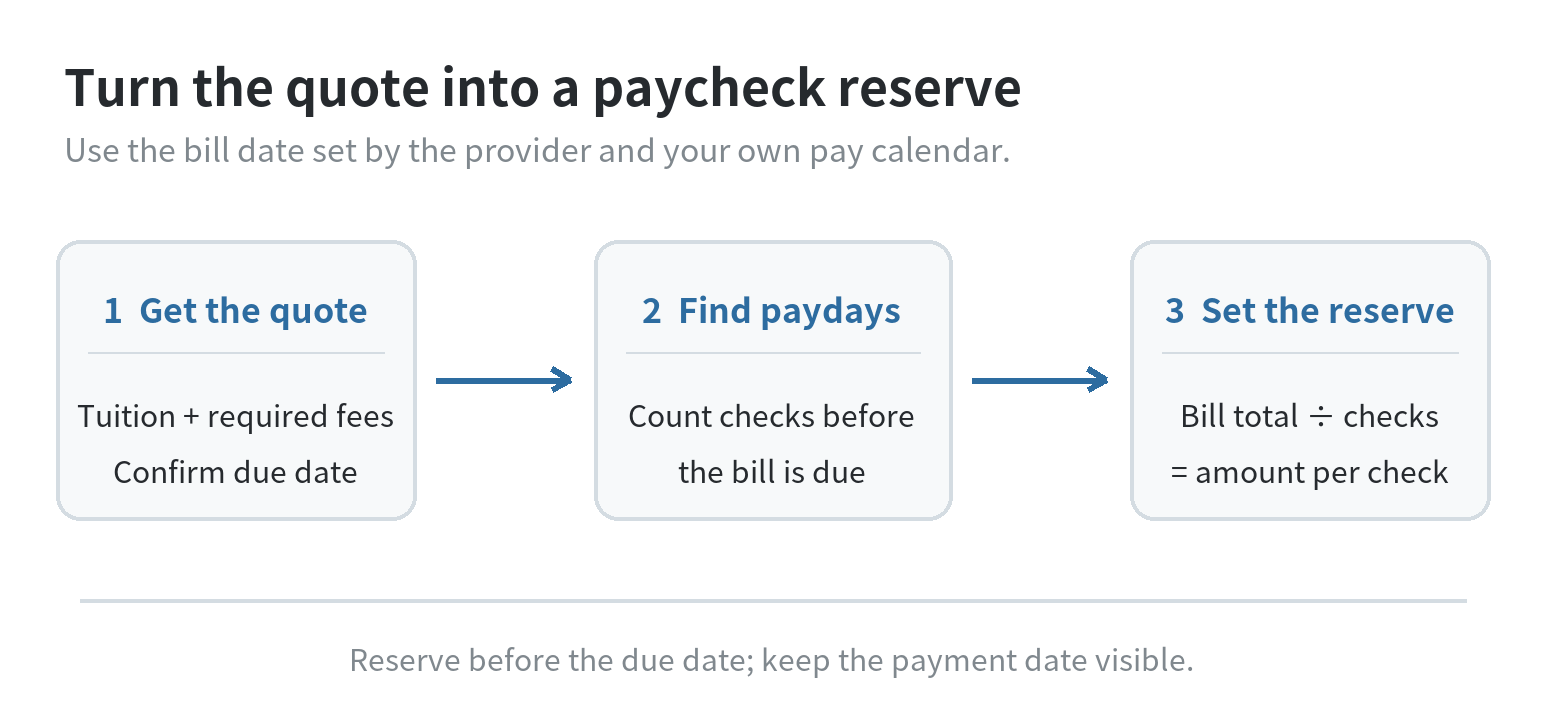
Use the provider’s actual billing schedule first. If tuition is billed monthly, put the due date and exact amount on your calendar. If it is due by term or in advance, divide the next bill by the number of paydays before its due date. That result is the amount to reserve from each paycheck.
Example: suppose a fictional program quotes $480 for a term, due in three months, and you receive six paychecks before the bill is due. Reserve $80 from each paycheck. Use these sample figures to see how the reserve works, then replace them with the total and dates on your own quote. If one paycheck is already committed to rent or utilities, decide in advance whether the reserve comes from another check or whether the lesson schedule needs a different payment arrangement.
For a year-round monthly budget, convert the full year’s expected tuition into a monthly reserve: total scheduled tuition divided by the number of months you are funding it. Then compare that monthly share with the actual due dates. A steady reserve can make a term bill easier to plan for, but it does not change when the provider expects payment.
If your pay varies, use the lower amount you can count on for fixed bills and hold the lesson reserve in a separate budget line. When an unusually large check arrives, decide whether it fills a tuition gap or stays available for other bills before assigning it to new lesson costs. This keeps a good month from masking a shortfall before the next term payment.
If a program offers installments, compare the total installment amount with the pay-in-full amount and note any added charge. The Bronx Conservatory’s 2026–27 page, for example, describes a term payment option and an installment option with a stated fee. Check the current terms directly before using either figure; terms can change between school years.
Build a real music lessons cost line
A useful budget line includes more than tuition. Start with the charges in the written estimate, then add the recurring or occasional costs that apply to this student and instrument.
| Budget item | What to confirm | How to record it |
|---|---|---|
| Tuition | Lesson count, length, billing period, due dates | Monthly bill or term reserve |
| Required fees | Registration, recital, materials, room or accompanist charges | Due date and whether recurring |
| Instrument access | Own, borrow, school loan, or rental; availability and return rules | Quoted charge and start/end date |
| Supplies and upkeep | Ask which books, strings, reeds, sticks, or repairs are expected | Separate planned amount after confirming needs |
| Travel | Trip distance and how lessons fit existing travel | Use your own fuel, transit, or parking records |
Do not price supplies from a generic list before you know the instrument and teacher’s requirements. Ask which materials are needed now, which can wait, and whether the program supplies any of them. For travel, use your own route and receipts rather than adding a generic transportation estimate.
When a provider bills for a term, keep two figures: the amount due on the provider’s date and the monthly or per-paycheck reserve you are building. That distinction makes it clear whether the problem is the total cost or simply the timing of cash leaving your account. For another example of mapping recurring charges into a monthly plan, see how to budget subscriptions.
Choose a lesson plan that fits the household calendar
Start with a schedule the household can keep: lesson day, travel time, payment date, and practice time at home. Ask whether the quoted package follows a school calendar, pauses in summer, or charges for weeks with no lesson. A lower amount per session may still require a larger payment before a term starts, so compare both the full commitment and the bill dates.
If the total is too large for the current month, check the available choices with the provider: a shorter lesson, a different start date, group instruction, a community program, or an installment plan. Ask for the resulting total and schedule in writing before changing the budget. Do not assume a group option or shorter session costs less until you have its actual quote.
You can also set a boundary for the rest of the household budget. Decide what monthly amount remains available after housing, utilities, food, transportation, debt payments, and savings already planned. Then compare the lesson reserve with that remainder. If the numbers do not fit, change the schedule or timing before promising a payment that displaces another bill. The site’s shared-expense budgeting example shows how to separate agreed household costs from individual spending.
Review the line when the agreement changes
Revisit your budget when the provider changes the schedule or terms, the student changes instruments, a rental ends, or a new fee appears. Replace the old quote with the updated one and recalculate the reserve from the next due date. Save the former estimate so you can see which assumptions changed.
If lessons stop, check the written cancellation and refund terms before removing the full amount from the budget. A prepaid term may not be handled like a month-to-month plan. Record any remaining payment, credit, or instrument return requirement on the date the provider confirms.
Keep the process simple: one document for the quote, one calendar reminder before payment is due, and one budget line for the reserve. That gives you a clear answer to “Can we afford lessons?” and makes the next conversation with the provider specific: which charge, date, or schedule needs to change.
FAQ
Should I budget for music lessons during a summer break?
Budget only for the lessons and charges the provider says will continue during that break. Ask whether tuition pauses, continues to reserve the student’s place, or changes to a separate summer schedule, then use that written answer in your calendar.
How should I plan if my child may switch instruments?
Keep the current tuition plan separate from the possible instrument change until the teacher confirms the new lesson rate, equipment needs, and rental or return conditions. Add only confirmed charges to the active budget.
Can a free instrument loan make lessons cost nothing?
No. A loan may remove a rental payment, but tuition, required fees, supplies, or travel can still apply. Ask what the loan covers, how long it lasts, and what condition or return rules come with it.
What if a music teacher asks for payment before the month starts?
Use the actual due date and total in your cash-flow plan. Divide that upcoming bill across the paychecks you receive before it is due, and ask the teacher about payment timing if the reserve cannot be ready by then.
Last updated: 2026-10