Budget a family of five from its take-home pay, bill dates, and recent spending. Start with the money that actually arrives, cover fixed bills, then divide what remains among groceries, transportation, school and child costs, savings, and flexible spending. A household budget works when the categories fit your calendar as well as your total income.
Start with take-home pay and the calendar
Write down the amount deposited after taxes and payroll deductions. Include each adult’s paycheck and any dependable household income. Leave out overtime, gifts, tax refunds, or side work that is not committed to arrive; give those dollars a job only after they reach your account.
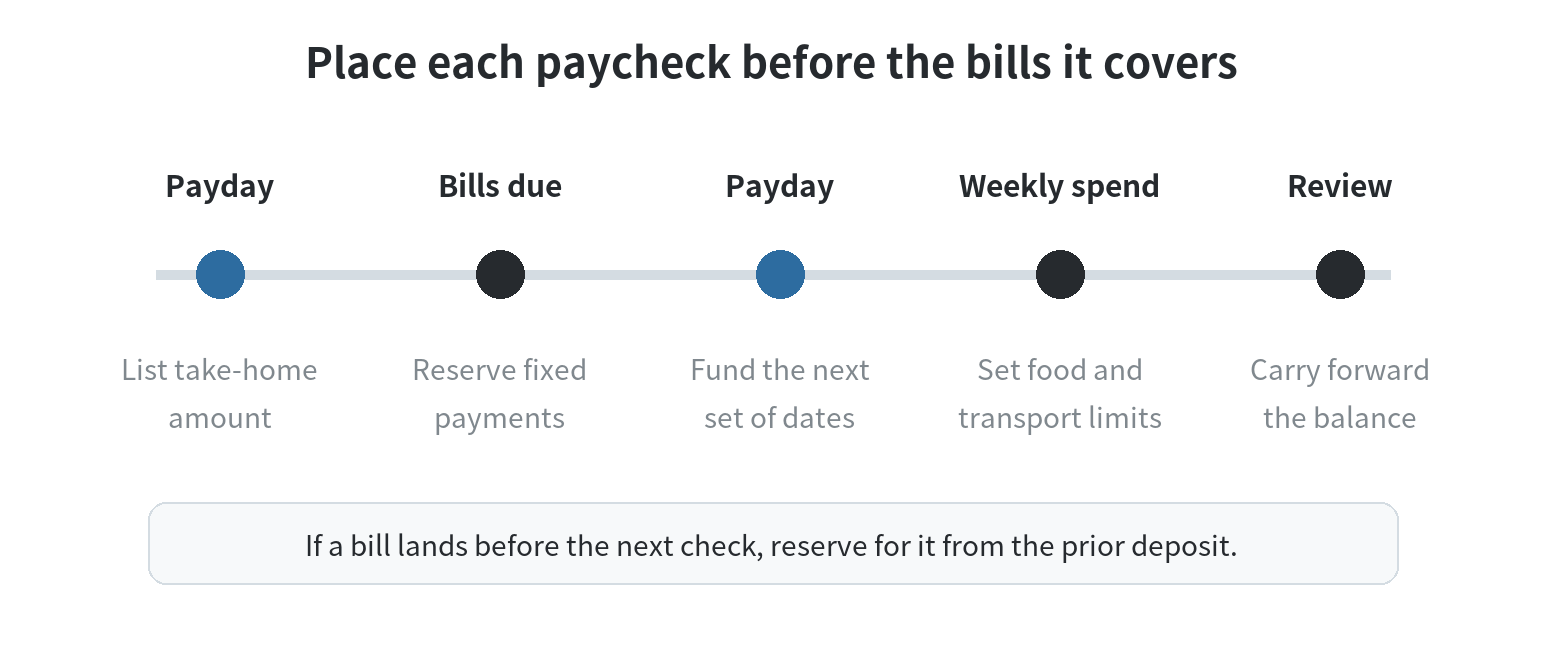
Next, record each payday and bill due date on one calendar. A monthly total can look balanced while rent, childcare, or a car payment falls before the paycheck meant to cover it. The CFPB’s cash-flow budget carries each week’s ending balance into the next week, so a family can see where the timing creates a shortfall (checked September 30, 2026).
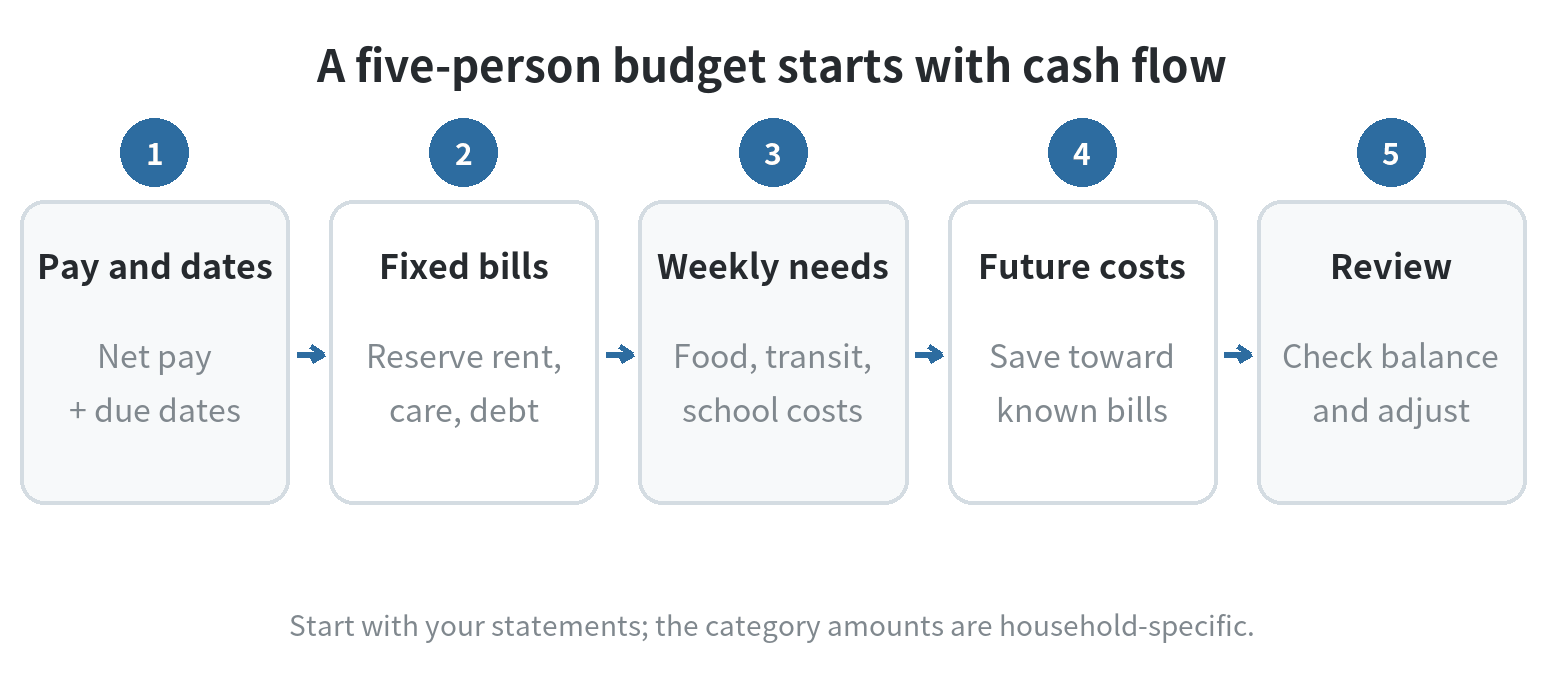
For a first pass, use a paper calendar or spreadsheet with columns for date, money in, bill or spending, and running balance. Keep the opening balance separate from income: it is money already available, not new monthly earnings.
Build categories from your own household records
Use bank and card statements, receipts, and invoices to identify what the household already spends. The CFPB advises reviewing several months of statements to catch less-frequent costs such as insurance, school clothing, tuition, gifts, and seasonal expenses; it also recommends checking whether the planned leftover matches the account balance (checked September 30, 2026).
The BLS Consumer Expenditure tables include spending data by consumer-unit size and other household characteristics. They can provide context, but a published group average cannot tell you your rent, children’s ages, childcare arrangement, commute, or school schedule. Read together, the CFPB and BLS materials support using your records to set the working amounts. (BLS 2024 expenditure tables checked September 30, 2026.)
| Budget line | What to include | How to set your amount |
|---|---|---|
| Home and utilities | Rent or mortgage, electricity, water, internet | Use the bill amount; use recent bills for variable utilities. |
| Food and household supplies | Groceries, school meals, paper goods, cleaning supplies | Review recent transactions and separate groceries from convenience meals. |
| Children and school | Childcare, fees, clothing, activities, supplies | Use invoices, school notices, and your calendar. |
| Transport and debt | Fuel, transit, insurance, loan and card minimums | Use scheduled payments plus statement history for variable costs. |
| Savings and irregular costs | Emergency savings, annual premiums, repairs, gifts | Estimate each known upcoming bill, then reserve toward it each month. |
For each line, write both a planned amount and the evidence behind it: a bill, statement, school notice, or a clearly labeled estimate. Do not force each category into a standard percentage. If housing takes a large share because of your location, start from the actual housing bill and see what remains for the other lines.
Attach children’s costs to the event that caused them: school fees to education, shoes to clothing, and packed-lunch groceries to food. This makes seasonal changes easier to spot. If one receipt covers groceries and cleaning supplies, split it by its line items instead of assigning the full charge to food.
When several adults pay household costs, record the shared total and who handles each bill. That gives the family one view of available cash and clear responsibility for due dates.
Separate fixed bills from weekly spending
Put rent, insurance, debt minimums, and scheduled childcare in a fixed-bill group. Then divide flexible costs such as groceries, fuel, and children’s activities into weekly amounts. This makes the month easier to manage: the household can see what is available for this week without spending money already assigned to a later bill.
Example only: suppose monthly take-home pay is $6,200. Fixed bills total $3,450, planned savings and irregular-cost reserves total $500, and flexible spending is set at $2,000. That leaves $250 unassigned. The arithmetic is the point; replace every figure with your own statement amounts. If the monthly total leaves no cushion, lower a flexible line or revisit a bill before counting on extra income.
For a family with two paychecks, assign each bill to the paycheck that arrives before its due date. If one paycheck must cover rent and childcare together, reserve those amounts as soon as it clears. The remainder can be split across the days until the next payday.
Keep the spending record and the checking-account calendar connected but distinct. If you log a grocery purchase when it is charged to a card, record the later card payment on the cash-flow calendar without counting it as a second grocery expense. That way the budget captures both the purchase category and the date money leaves checking.
Give irregular expenses a place before they arrive
Family spending is not limited to monthly bills. School picture day, sports registration, seasonal clothing, car maintenance, birthdays, and annual insurance premiums can land in different months. List known costs by expected date, then divide each bill by the number of months left before it is due. Move that amount into a separate savings category each month.
For example, if a $360 annual premium is due in six months, setting aside $60 each month builds the amount gradually. If that reserve cannot fit, note the gap now and decide which flexible category can change or whether the provider offers another payment schedule. Do not count the same dollars as both emergency savings and money reserved for a known bill.
Keep a small “unplanned” line for costs that do not fit a named category. When it is used, label the purchase and replenish the line only after checking the rest of the budget. A vague catch-all can conceal recurring costs, so move a repeated item into its own category.
Make the plan visible to all five people
Adults should agree on which bills must be paid first, who handles each due date, and how the children’s needs appear in the plan. Children do not need access to account details to understand a household limit. A simple weekly amount for school snacks or activities can make a boundary clearer than a general “we have to spend less.”
Choose one shared place to record purchases and upcoming costs: a spreadsheet, paper sheet on the fridge, or budget app. If you use an app, first decide which categories and limits you want; a phone-based budget tracker can help record transactions, while a budget app setup guide covers ways to organize categories. Check that the family agrees on what counts as a grocery, school, or personal purchase before reviewing totals.
Set a brief review at each payday. Compare actual spending with the plan, check the next set of bill dates, and move money between flexible categories if one has changed. Keep the original budget visible so a change is a deliberate tradeoff—for example, an extra school fee may mean a smaller entertainment amount this month.
What to change when the numbers do not fit
First check for missing items and timing errors: annual bills, subscriptions, co-pays, school charges, and payments that clear on a different date than expected. Then protect housing, utilities, food, transportation needed for work or school, childcare, and required debt payments while you review flexible expenses.
If the shortfall remains, mark each flexible line as keep, reduce, pause, or replace. A specific decision is easier to test than “spend less”: pack one more school lunch, set a weekly takeout cap, or delay a planned purchase. Do not cut a bill that has a penalty or coverage consequence without checking the provider’s terms.
If a bill cannot be paid by its due date, contact the company before the deadline and ask what options it offers. Keep the amount, date, and response with the budget records. A budget shows the gap and helps organize the next conversation; it cannot create money that is not there.
FAQ
Should child allowance come from the family grocery budget?
Give it a separate line if it is a recurring household commitment. That keeps food costs visible and makes the amount available for each child clear without mixing it with groceries.
How should a family budget handle a three-paycheck month?
Build the regular budget around paychecks you expect in a normal pay cycle, then assign the extra check after it arrives. Use it for a named upcoming bill, a reserve, or debt payment rather than raising every monthly category automatically.
What if grocery spending changes with the school calendar?
Keep school meals and home groceries as separate lines if they move in opposite directions during breaks. Review the calendar and prior statements, then adjust the planned amounts for that month.
Last updated: September 2026.
Last updated: 2026-09