To budget on biweekly pay, plan around the dates your deposits actually arrive, then assign each check to bills due before the next one and to a share of the next rent or other monthly bill. A monthly budget still matters, but it does not show whether the money will be in your account on the day a bill is due.
Start with your take-home amount and the upcoming payday dates. Then place bills, ordinary spending, and savings transfers on the same calendar. The Consumer Financial Protection Bureau (CFPB) recommends tracking bill amounts and due dates on a bill calendar; its cash-flow calendar also places income and expenses on the dates they occur (checked September 30, 2026). That date view is the useful part when pay arrives every two weeks.
Build the calendar from deposit dates
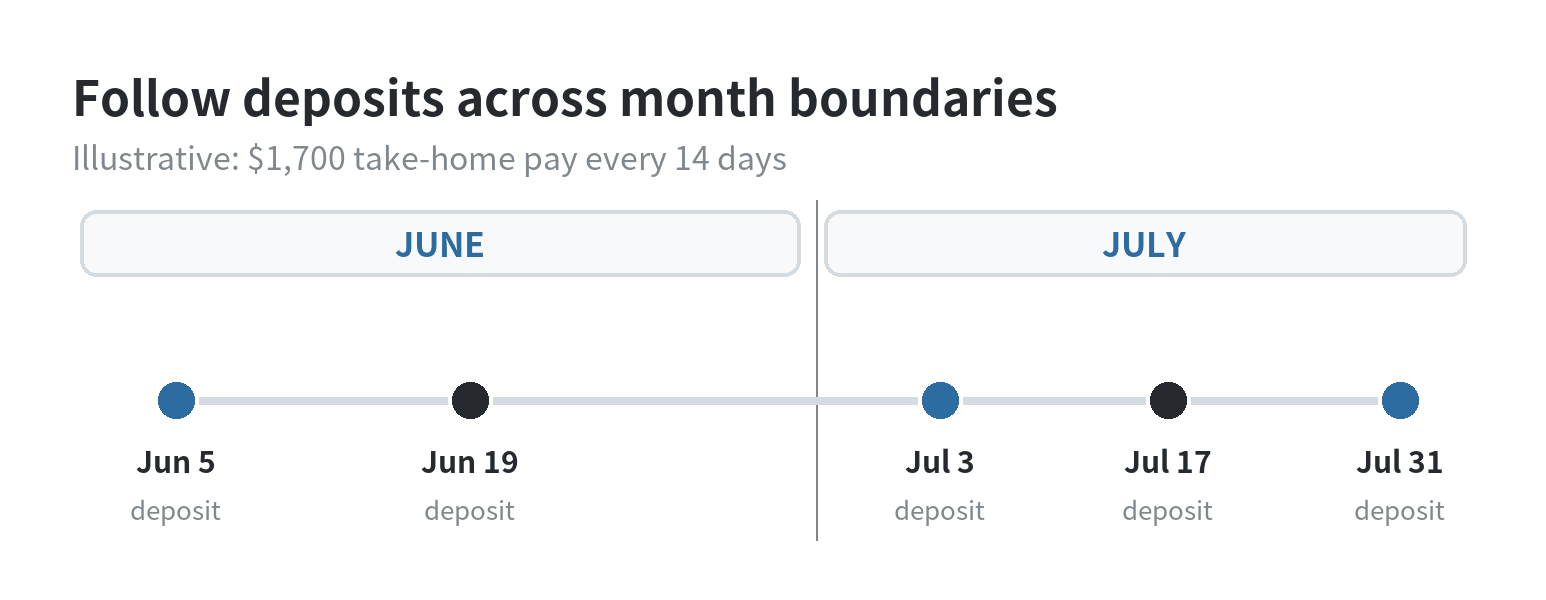
Use your employer’s posted pay schedule and your bank’s deposit history to write down expected deposit dates. The Bureau of Labor Statistics describes a biweekly pay period as a fourteen-day period (checked September 30, 2026); that interval can cross from one month into the next. Follow the paycheck dates rather than dividing a month into two equal halves.
For example, imagine take-home pay of $1,700 on June 5, June 19, July 3, July 17, and July 31. Those amounts and dates are a made-up example, not a national average. The July 3 deposit belongs to the same sequence as the June checks even though the calendar month changed. This prevents you from treating the first and fifteenth as automatic payday markers when your employer uses a two-week cycle.
List every bill with its due date and amount, including rent, utilities, insurance, debt payments, and subscriptions. Add expenses that do not arrive as formal bills, such as groceries, fuel, prescriptions, or school costs. Use recent statements and receipts for the amounts instead of guessing. Consumer.gov’s budget instructions likewise begin with bills, pay stubs, and other expenses before comparing income with spending (checked September 30, 2026).
Give the next check a job before it arrives
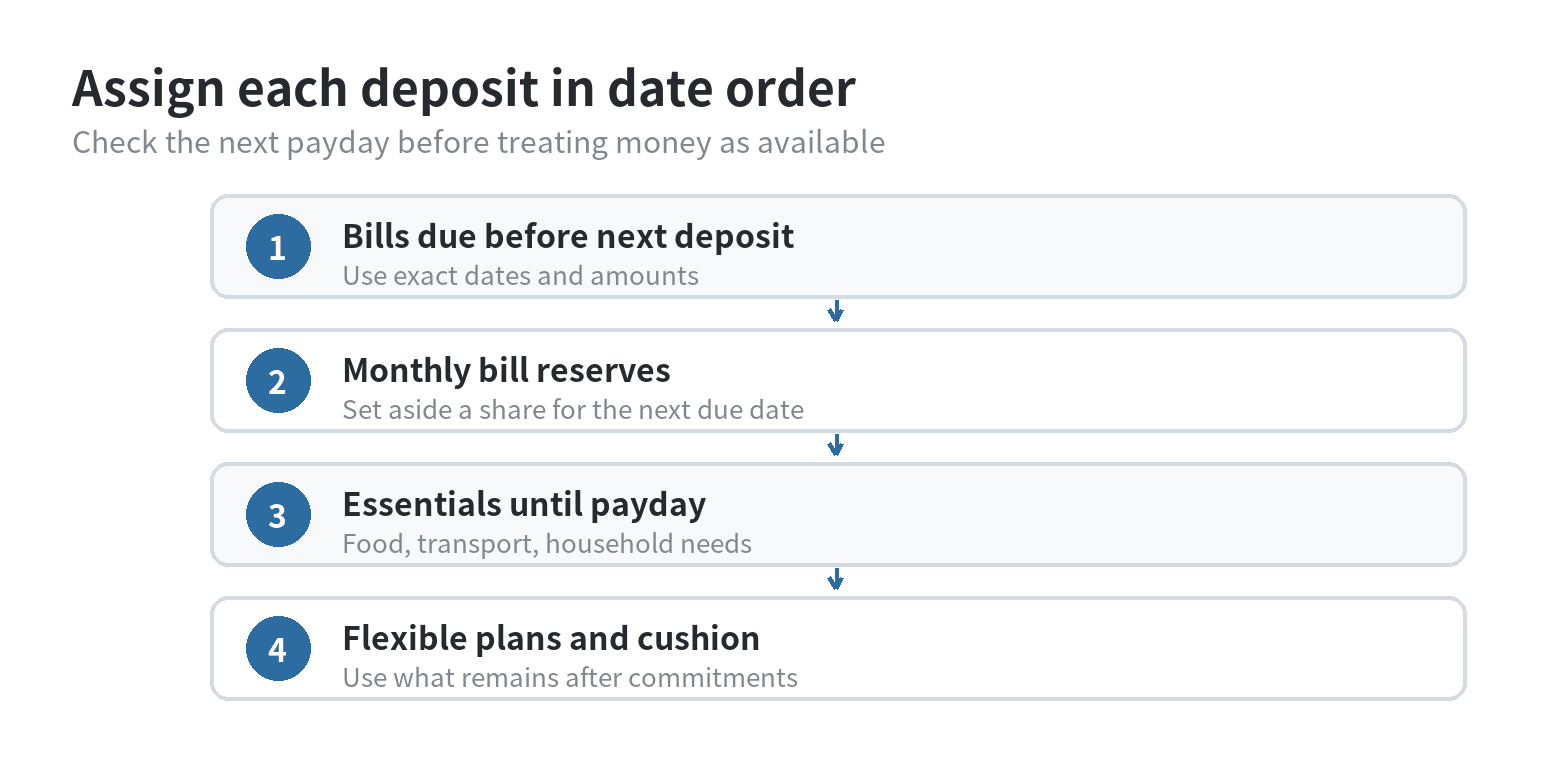
For each payday, look forward only to the next deposit. First mark bills that fall in that window, then set aside the amount needed for those bills. Next reserve money for food, transportation, and other essentials until payday. Any amount left can be assigned to irregular expenses, savings, debt payments, or flexible spending. If the list costs more than the check, the shortfall is visible before a payment date rather than after it.
Here is a sample cycle for someone paid $1,700 on June 5 and June 19. Assume the rent due July 1 is $1,400, a car payment of $300 is due June 12, utilities are $150 due June 14, and phone service is $70 due June 22. Replace each sample amount with your own bill or spending.
| Deposit | First assignments | What remains to plan |
|---|---|---|
| June 5: $1,700 | $300 car payment; $150 utilities; $700 toward July rent | $550 for groceries, transit, other bills, and a cash cushion |
| June 19: $1,700 | $700 to finish July rent; $70 phone bill | $930 for the next stretch of essentials, upcoming bills, and goals |
This example assumes June rent was already funded before June began. That starting cushion matters: a paycheck arriving after rent is due cannot cover that earlier due date. If your current balance does not cover a bill before the next deposit, identify the gap and contact the biller before the due date to ask what options are available. CFPB’s bill-calendar guidance says a consumer may ask a company to change a due date, though some billers may not accommodate the request.
Moving $700 from each check into a rent holding balance reserves July’s rent before it is due. Apply the same method to other predictable large costs: divide the amount due by the paychecks remaining before its date, then reserve that share as each deposit arrives. If the deadline is close, base the plan on the checks still to come.
Keep monthly bills from swallowing one paycheck
A bill due at the start of a month may fall before that month’s first deposit. Build its reserve from earlier checks, and check that the full amount is available before the due date. A future paycheck cannot cover a payment that is already due.
When a bill has a flexible due date, ask the company whether it can move closer to a payday. Do not assume the request will be accepted or take effect immediately. Keep the current date on your calendar until the company confirms a change, and check whether a due-date change affects the first payment cycle. CFPB reported that aligning some due dates with income flow may help consumers manage cash flow, while noting that billers may not accommodate every request (checked September 30, 2026).
If the timing still does not work, write down the bill, amount, due date, next deposit date, and available balance. That list helps you explain the shortfall to the biller and shows whether the issue is timing or a monthly gap between income and costs.
Set a safe amount for spending between checks
After reserving bills, decide how much remains for groceries, fuel, household needs, and personal spending until the next deposit. You can split a category into weekly limits if that makes the balance easier to manage, but calculate those limits from the days in your own pay interval. For example, if $360 is left for variable essentials over a two-week span, dividing that amount into two $180 weekly envelopes is a simple tracking choice, not a claim about what a household needs.
Keep some unassigned money in checking if your balance allows it. Pending card transactions, a utility amount that changes, or a deposit that posts later than expected can upset a plan built down to the last dollar. Decide on a minimum balance you will not allocate to optional spending, based on your account and obligations. If the buffer is used for a bill, show that use in the calendar and refill it only after essentials and near-term due dates are covered.
For expenses that do not happen each month, make a list with the next expected date and total. Examples include annual renewals, car maintenance, school fees, and gifts. If you can, reserve a set share from each paycheck in a labeled savings category. This prevents a large occasional payment from appearing to come out of nowhere. If income changes from check to check, build the must-pay plan on the lower amount you can count on, then assign extra income after the next bills are covered.
Review the plan when a date or amount changes
Check the calendar when a deposit arrives and compare the posted amount with your plan. If the deposit differs, update the available balance first, then move assignments around. Avoid leaving the old numbers in place and hoping the month will average out. Consumer.gov advises comparing planned expenses with actual spending and using that information for the next budget; a paycheck calendar adds the deposit dates to that review (checked September 30, 2026).
Use a simple note beside each item: paid, reserved, or still due. “Reserved” means the money is set aside but the payment has not been sent. This distinction keeps the same dollars from appearing available for groceries and rent at once. A paper calendar, spreadsheet, or budgeting app can all hold the dates; the important part is keeping the due amount, payment date, and deposit date visible together.
When a deposit falls near month-end, carry it into the next month’s calendar. Keep assigning money by due date, and count as available only what remains after the next payday’s commitments are covered.
For a separate overview of planning categories on a phone, see the monthly budgeting and app-tracking guide. For another way to organize reminders around due dates, read the guide to paying bills with a phone.
FAQ
Is biweekly pay the same as getting paid twice a month?
No. Biweekly pay follows a fourteen-day cycle, while semimonthly pay follows two pay periods within each calendar month. Use the dates on your employer’s payroll schedule to build the calendar.
Should I use gross pay or take-home pay in the paycheck calendar?
Use the amount deposited into your account for bill timing and spending assignments. That is the amount available for this cash-flow plan.
What should I change if my employer moves a payday?
Update the calendar with the revised deposit date, then check which bills fall before the following deposit. Keep their amounts assigned and contact a biller if the new timing creates a shortfall.
How should I use overtime or a bonus in a paycheck plan?
Wait until the extra pay arrives, cover upcoming bills and essentials, and then assign any remaining amount to your goals or flexible spending. Keep recurring bills based on the regular take-home amount you can plan around.
How can I tell whether I have a timing gap or a monthly budget gap?
Compare total monthly take-home income with total monthly expenses, then check the dates separately. If the totals fit but a bill comes due before the next deposit, the immediate issue is timing; if expenses exceed income, adjust the monthly plan as well.
Last updated: 2026-09