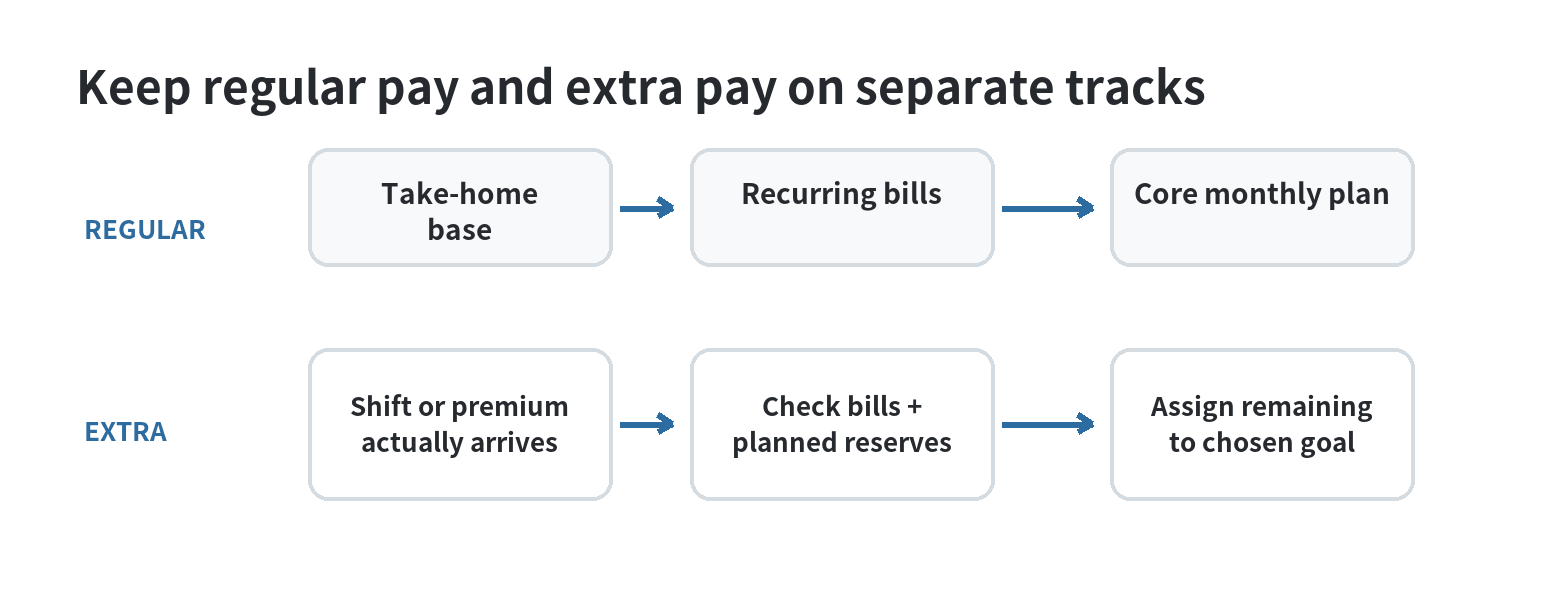
A nurse budget works best when it starts with the dollars that reach your account and the dates they arrive. Build your core plan from regular take-home pay, then give overtime, shift premiums, and extra shifts a separate job instead of assigning them to bills you must cover every month.
The Bureau of Labor Statistics publishes registered-nurse wage data by occupation and area, but that broad wage measure is not your household cash flow. Your own pay stubs show deductions, benefit costs, and the amount available for bills. The Consumer Financial Protection Bureau and FTC’s consumer.gov recommend using pay stubs and expense records to build a budget; checked September 30, 2026.
Use take-home pay as the budget number
Look at recent pay stubs and write down the net deposit, pay date, and pay period. If your schedule changes, distinguish your regular contracted hours from extra shifts or call pay. Use the smaller amount that reliably arrives as the base for rent, utilities, minimum debt payments, food, and transportation. Treat money that depends on picking up a shift as unassigned until it appears on your stub.
For example, imagine two regular deposits of $2,350 in a month, or $4,700 total. Those sample amounts are only a worksheet example. Replace them with your own net deposits, not a gross annual salary divided by 12. If one month includes a third biweekly paycheck, avoid building new recurring bills around it; first check upcoming bills, annual costs, and any shortfall in your checking buffer.
For a variable schedule, total the last several deposits and mark which dollars came from ordinary hours versus optional extra work. Set the base plan using a deposit level you can count on from your current schedule. If your guaranteed hours change, recalculate the base instead of assuming the next busy month will repeat.
Map bills to both the calendar and the paycheck
A monthly total can look balanced while a bill is due before the next deposit. Write each paycheck and bill on its actual date. Start with your beginning checking balance, add deposits, subtract bills and planned spending, and carry the result forward. The CFPB’s cash flow calendar uses this date-by-date approach; the FTC’s consumer.gov budget instructions also start with pay stubs and a list of bills and expenses, checked September 30, 2026.
If you are paid every two weeks, enter the actual deposit dates instead of assigning the same two dates to every month. If your employer pays twice monthly, use the scheduled dates on your pay records. A calendar that includes the days before and after the month boundary helps you see which paycheck must cover an early-month bill.
Suppose rent is due on the first, the electric bill on the tenth, and your next deposit arrives on the twelfth. The month’s income may cover the month’s expenses on paper, yet the rent still needs money already in the account. Assign part of the prior paycheck to the first-of-month bills, or ask the biller whether it offers a different due date. Do not count the same dollars once for rent and again for spending after payday.
Try a dated example with the sample $2,350 deposits: one lands on March 6 and the next on March 20. If rent is due March 1, that payment needs to come from money carried over from February. From the March 6 deposit, mark the March 10 electric bill and any other charges due before March 20. Then assign part of the March 20 deposit to early-April bills. The calendar makes the handoff between pay periods visible.
The CFPB’s cash-flow guide describes setting aside a monthly amount ahead of a large periodic bill; checked September 30, 2026. Divide a known annual cost by 12 to estimate its monthly share. A hypothetical $900 premium becomes a $75 monthly line. If you have not yet saved the full amount, mark what is reserved and what remains before the due date.
Give each deposit a short list of jobs
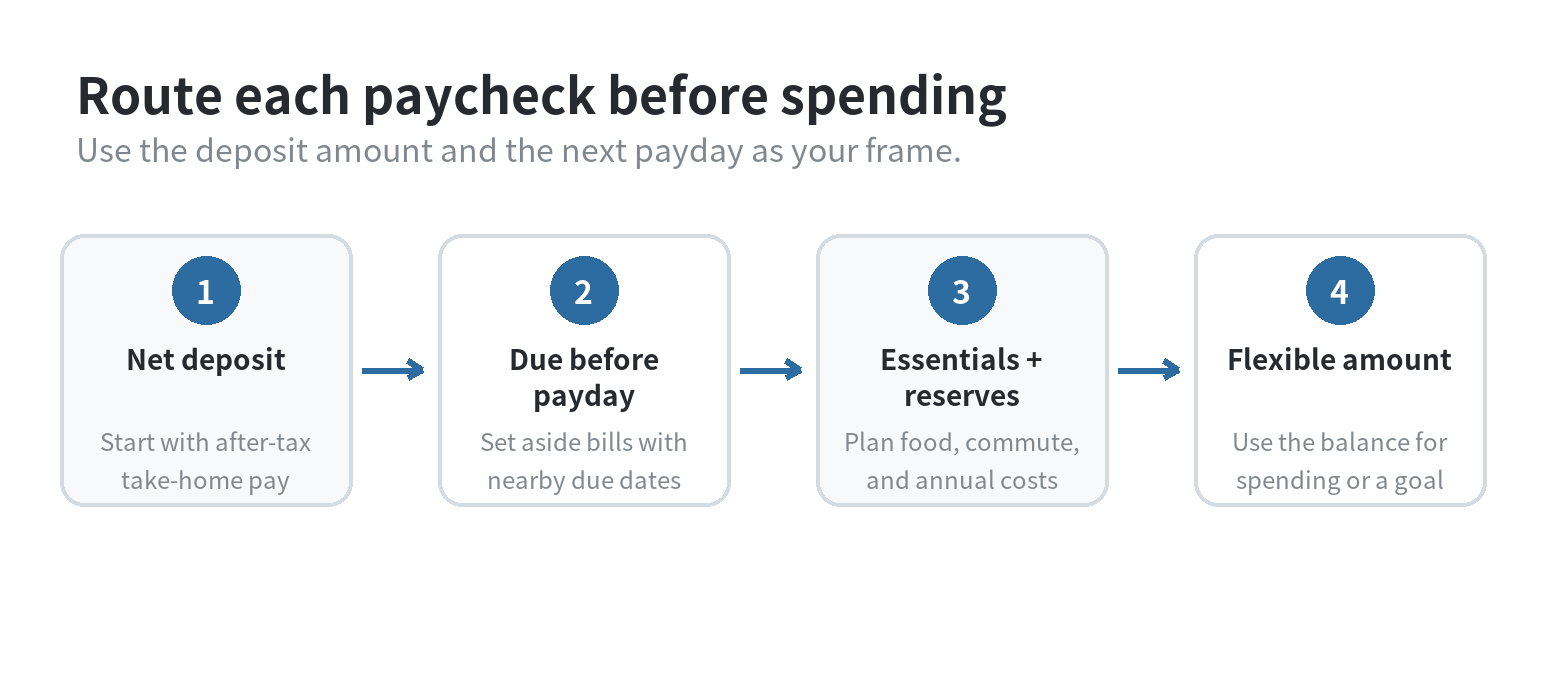
When a deposit arrives, check the next payday and set aside the amount needed for bills due before then. Next cover essentials such as groceries, commuting, and work-related meals. Then reserve money for costs that do not arrive every month, such as car registration, a license renewal, or an annual insurance premium. What remains is the amount available for flexible spending or a savings goal.
Here is a sample two-paycheck month using $4,700 in take-home income:
| Monthly line | Example amount | How to set yours |
|---|---|---|
| Rent and utilities | $1,650 | Use current statements and due dates |
| Food and household basics | $650 | Review recent card and bank activity |
| Transportation | $420 | Include commute, parking, transit, or fuel |
| Debt minimums and insurance | $680 | Use required payments and policy bills |
| Annual-cost reserve | $250 | Divide each known yearly bill by 12 |
| Savings and flexible spending | $1,050 | Set after the dated obligations above |
The rows total $4,700. They are placeholders, not suggested spending targets. If your own obligations exceed your regular take-home pay, change the plan before the next pay period: review adjustable costs, due dates, and available workplace benefit information. A budget cannot turn an income gap into surplus, but it can show the size and timing of the gap.
If you want a spreadsheet or phone-based tracking method, see our smartphone budget tracker guide. For a broader look at budgeting apps, our budgeting apps overview covers what to compare before choosing a tracking method.
Keep irregular pay out of recurring bills
Make two plans: a base budget and an extra-income plan. The base budget uses regular net pay. The second plan tells you what to do after overtime, an extra shift, or a premium-pay deposit actually clears. A simple order is to cover any bill shortfall, refill the checking cushion you planned, fund upcoming annual costs, and then direct the remainder to a goal you chose.
Do not estimate future overtime from a strong month. The BLS describes hospital and nursing-facility schedules as including shifts, nights, weekends, holidays, and on-call work; checked September 30, 2026. That description does not tell you what your employer pays for each schedule. Check your own pay stub and written employer policy for any differential or call-pay terms. Budget a premium only after you know its amount and whether it is recurring.
Review the plan after a schedule change
Once a month, compare planned amounts with deposits and transactions. Flag costs that rose because of a schedule change, such as more commuting or meals during long shifts, and adjust the next month’s line from actual spending. If you change units, employers, hours, benefit elections, or pay frequency, rebuild the calendar from the new stub and bill dates rather than copying last month unchanged.
If a bill date repeatedly falls before payday, ask the provider whether the due date can move. The CFPB notes that due dates and income timing can create cash-flow pressure, and its bill calendar is designed to make those dates visible; checked September 30, 2026. Keep a written list of the bills that must be paid before the next deposit so that a busy workweek does not hide a near-term obligation.
Start with the next paycheck: write its net amount, mark the bills due before the following deposit, and assign what remains to essentials and reserves. That one cycle gives you a usable first budget; the next deposit shows what needs adjusting.
FAQ
How should I budget if I work at two nursing facilities with different paydays?
Put both deposits on one calendar using each job’s actual pay date and net amount. Assign bills against the dates the money arrives, and leave a future deposit unassigned until it clears.
What budget lines should I revisit after changing units or work locations?
Review the pay stub, commute costs, parking or transit, and meals bought during workdays. Replace estimates with amounts from the new schedule and statements before changing recurring commitments.
How do I set aside money for a nursing license renewal?
Use the renewal notice or licensing board information for the amount and due date, then add a monthly reserve based on the time left before payment. Keep the reserve separate in your budget from day-to-day spending.
Last updated: 2026-09