
Set a dollar ceiling before you choose the menu, then build it from the costs you will actually pay: food, drinks, serving supplies, and any space or equipment charge.
List what you will pay for separately from dishes that guests choose to bring.
Start with money already available after household bills, not with a per-person average from another family.
The Consumer Financial Protection Bureau (CFPB) recommends recording income, spending, and bill timing before making a budget.
Its budgeting steps can also guide a gathering plan.
Choose the amount your household can spare
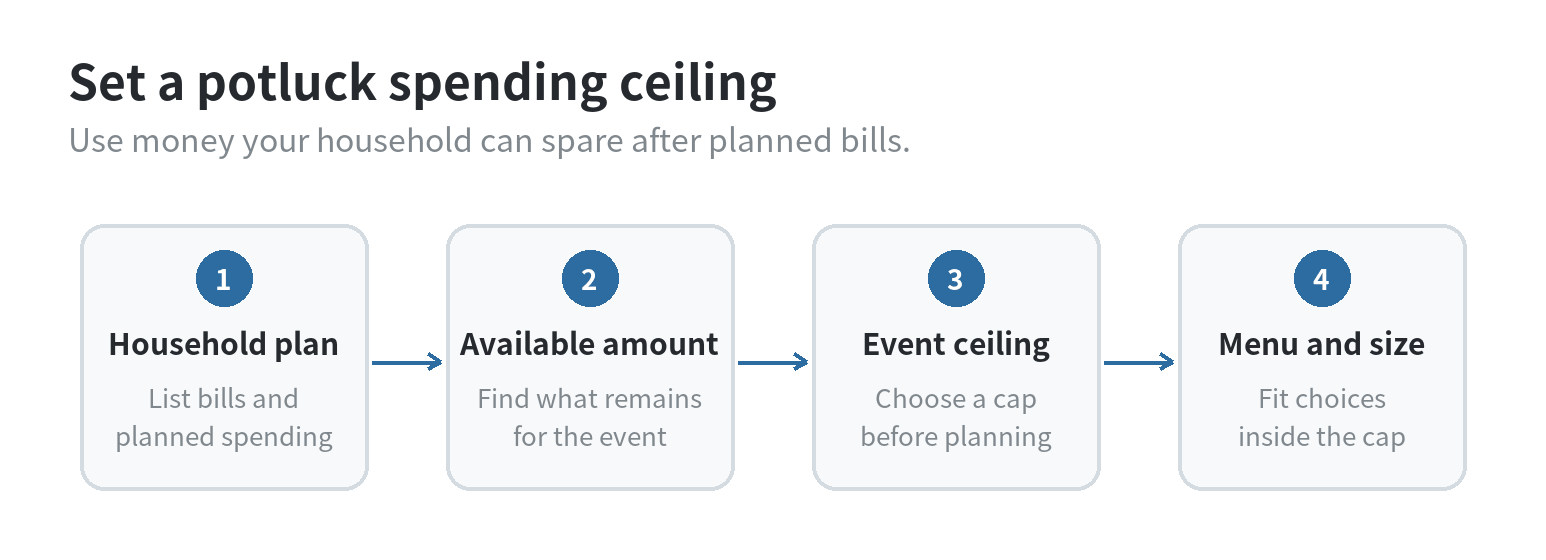
Open your current household plan and identify money left after rent, utilities, groceries, debt payments, and other planned obligations.
Pick a potluck limit from that remainder.
If money is tight, shorten the guest list, use a bring-a-dish plan, or use equipment you own.
Consumer.gov’s budget worksheet puts income and expenses side by side and subtracts expenses from income.
Apply the same logic to the event: do not count a guest’s promised contribution as cash you can spend.
Treat it as a planned dish, and leave enough room in the host’s own budget to cover the items that remain your responsibility.
Keep the gathering’s spending in a separate note, spreadsheet tab, or budget category.
If you already use a phone-based budget, a separate category makes the event easier to review; see our monthly budget tracking overview for ways to organize categories.
The app is only a ledger: enter the costs and check the total yourself.
Build the estimate from a short cost list
List expenses before you assign dishes.
Separate costs that stay about the same from those that rise with attendance.
Use your planned menu, receipts, and local quotes to estimate your own gathering rather than borrowing another household’s total.
| Cost line | How to estimate it | Who covers it |
|---|---|---|
| Food and ingredients | List the dishes you will provide; price the quantities on your actual shopping list | Host or assigned guest |
| Drinks and ice | Decide what the host supplies and what guests may bring | Name an owner |
| Serving supplies | Check what you already have; list only the items you still need | Host |
| Space or equipment | Use the written quote or fee schedule for a rented room or equipment | Host or shared amount |
| Cleanup and leftovers | Plan containers, bags, or cleaning items you do not already have | Host or volunteers |
For an illustrative plan, say your ceiling is $180.
Using the same budget worksheet method, your estimate might reserve $75 for the main dish and sides, $25 for drinks and ice, $20 for serving supplies, and $30 for a room fee.
The example leaves $30 unassigned after those planned amounts.
These are sample inputs, not a national cost estimate.
If the room quote is higher, revisit the menu or guest plan before committing the rest of the amount.
Put prices in the list only after checking the quantity and what the charge includes.
Ask the venue whether cleaning, a deposit, or equipment is included, then write down the complete amount due and any refund conditions.
For food, note package size and how much the recipe uses so unused pantry items do not get counted as event costs unless you are buying them for this gathering.
Separate cash you must spend now from items you already own.
If you have serving bowls and folding chairs, list them as available supplies with no new purchase attached.
If you need extra chairs or containers, enter the full checkout amount.
Divide it across future gatherings only if you are making a longer-term household plan.
Keep fixed and attendance-linked amounts distinct when replies change.
A room charge may stay the same even if fewer people come, while ingredients and drinks can be adjusted to the confirmed guest list.
Recheck those lines when you have the replies, and update the host ceiling before buying anything that is still optional.
Set a host limit before inviting contributions
Decide which items you will provide, then tell guests what would help.
“Bring a side dish, dessert, or nonalcoholic drink if you wish” leaves guests room to choose, while “Please claim an open item” gives you a more predictable menu.
If contributions are optional, keep a host-funded backup for essential parts of the meal instead of counting unconfirmed items as committed.
Make a simple assignment list with columns for the item, person, and status.
Leave the host responsible for the main dish, serving tools, and anything needed for a safe, usable setup.
Ask guests to name the dish or supply they plan to bring, rather than adding duplicate desserts while a basic side remains unclaimed.
Keep separate totals when guests pay directly: what the gathering costs across the group and what leaves the host’s pocket.
Compare the host-paid amount with the household ceiling.
Add a guest-paid room or supply charge to the full event record, but do not count it as the host’s purchase.
If everyone agrees to split a specific venue invoice, record the named amount and each contributor’s share before the event.
Treat dishes as contributions rather than cash offsets unless the group has agreed on a dollar value.
Give guests a clear way to respond: name a dish, claim a needed supply, or say they are not bringing anything.
That lets you plan the host-funded amount without treating silence as a promise.
If someone offers to cover an expense instead of bringing food, record that separately so the person responsible and the amount are clear.
Do not turn the event into a required payment unless that is the plan everyone agreed to before accepting the invitation.
If you need to split a room charge, state the amount, number of contributors, and how you will handle a late cancellation in the invitation.
A shared list and written amount prevent a surprise request after the event.
Use a ceiling and a stop point
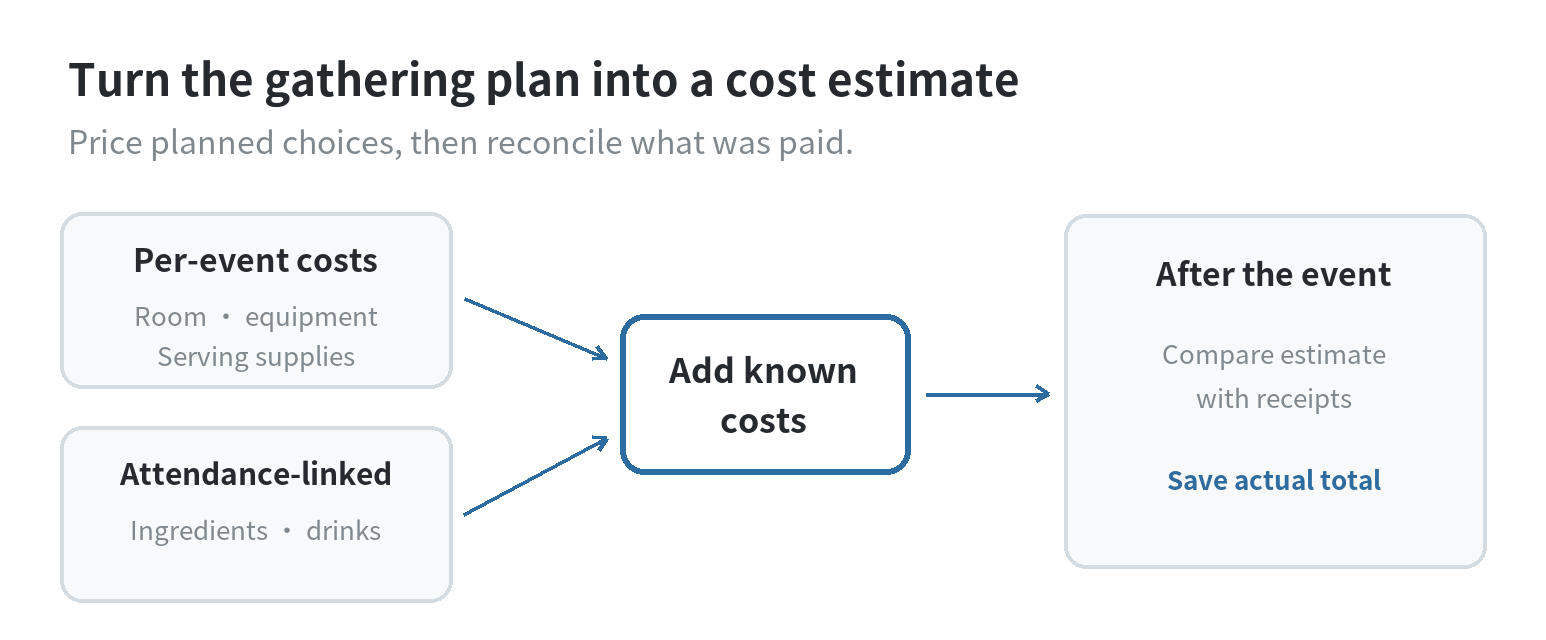
Compare your running estimate with the ceiling after you have the menu, guest count, and venue information.
If the estimate is over the ceiling, change decisions sequentially.
You could remove a rental, use a dish made with supplies on hand, invite fewer people, or ask a guest to cover a named category.
Avoid solving an overage by quietly adding it to another household budget line.
Keep a small unassigned amount inside the event ceiling for a forgotten ingredient or an added bag of ice.
Choose that amount yourself based on how much of the ceiling is still available; there is no universal percentage that fits every gathering.
When it is used, stop adding optional items and update the list so you can see the remaining limit.
If the event is a recurring dinner, make a new estimate when planning an event rather than treating a previous total as a fixed price.
Attendance, menu, space, and what people can contribute may change.
You can compare the old and new plans afterward to spot which line moved, then decide whether the next gathering needs a different format.
Close the numbers after the gathering
Save receipts and enter what you actually paid beside the estimate.
The CFPB’s spending tracker guidance suggests tracking expenses for at least two weeks or a month to see spending patterns.
For this event, collect the event receipts and reconcile them against your estimate after the event.
Mark any shared expense separately from the host’s own purchases.
If someone paid for a room or supplies directly, record that contribution so the host’s cash total is not mistaken for the full event cost.
If you reimburse someone, record the reimbursement separately from the original purchase.
A simple tracker row can include the category, planned amount, actual amount, payer, and whether the expense is shared.
Update the actual amount after a purchase and subtract it from the remaining ceiling.
This leaves you with a record of which line changed instead of a stack of receipts to reconstruct later.
At the end, write down the final total, the guest count, and any unclaimed or duplicated items.
Use that note as a starting point for a similar future gathering, then update the quantities, prices, and venue details for the new plan.
Our budgeting app overview covers ways to keep such records with other household spending.
FAQ
How do I budget when guests have not chosen what to bring?
Budget your host-funded menu first, then treat guest dishes as unconfirmed until guests confirm their items.
Keep a backup option within your ceiling for a basic side or drink, and remove that line only after someone confirms the contribution.
Should I ask guests to pay a fixed amount for a potluck?
Only use a fixed contribution when guests know the amount and purpose before agreeing to attend.
If the gathering is meant to be a dish-sharing event, assigning a dish or supply is clearer than collecting money afterward.
How should I handle a venue deposit in the event budget?
Record the deposit separately from the final room charge and note the written refund conditions.
Count money as unavailable until the venue returns it, and budget against the full amount you may owe if the deposit is not refundable.
What if the actual cost is higher than the estimate?
Record the difference and identify the line that changed before planning another gathering.
If the total exceeds the amount you set aside, adjust the next event’s size, menu, or space before making new commitments.
Last updated: 2026-09