Set a monthly household-shopping cap before you browse, then divide it between planned essentials, replacements, and optional extras. The point is to give a large store trip a clear limit inside the grocery and household budget, so a full cart does not quietly take money assigned to bills or savings.
Give store trips their own line in the budget
Household shopping can mix food, cleaning supplies, toiletries, seasonal items, and one-off purchases in a single transaction. If you only watch the checking-account balance, it is easy to lose track of which dollars were meant for groceries and which were meant for household supplies. Keep one combined line if that is simpler, or split the two categories if you need to see what is driving the total.
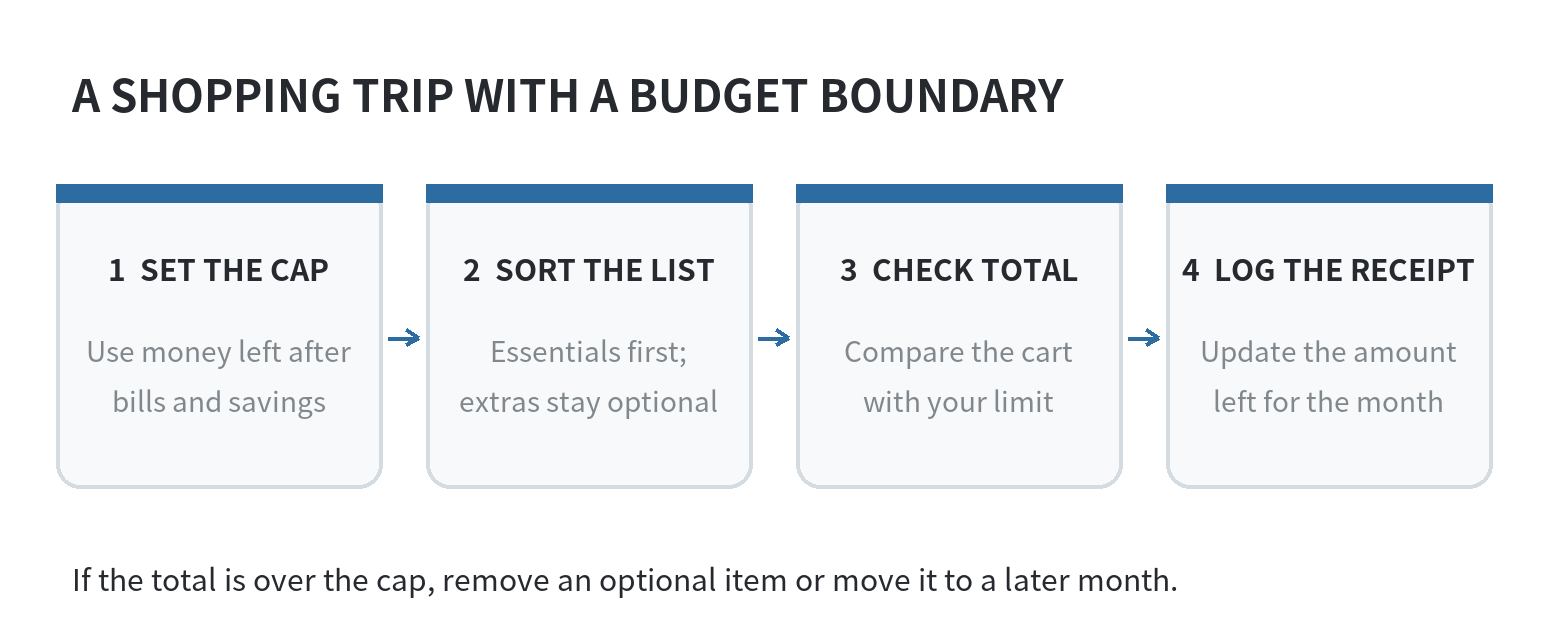
Start with take-home income and subtract rent, utilities, debt payments, transportation, planned savings, and other committed bills. The amount left is not automatically available for shopping: it also has to cover meals away from home, personal spending, and irregular costs. Choose a cap that fits after those obligations rather than borrowing from the next bill.
For example, imagine your household can set aside $600 for groceries and home supplies in a month. You might reserve $420 for a planned main trip, $80 for a later refill, and leave $100 unassigned for an item that genuinely comes up. Those amounts are a working example, not a national spending target. If the real total in your statements is lower, use that instead.
Build the cap from your own receipts
Review bank and card transactions, emailed receipts, and order histories. Record the amount and sort each purchase into a small set of labels: food, household supplies, personal care, and one-time items. The Consumer Financial Protection Bureau’s spending tracker separates needs and obligations from wants and suggests reviewing spending by category; that distinction can help you see where a large trip is absorbing money.
Do not treat a single unusually expensive trip as the new monthly baseline. Mark purchases that will not repeat, such as replacing a kitchen tool or buying supplies for a gathering. Then compare the remaining routine purchases across several statements. If you do not have enough history, choose a cautious temporary cap and revisit it after you have receipts to review.
For a purchase that serves more than one purpose, split the receipt only if that makes your decisions clearer. A pack of storage containers, for example, belongs with household supplies; groceries bought in the same transaction stay in the food line. Consistent categories matter more than a complicated spreadsheet.
Separate planned replacements from “maybe” items
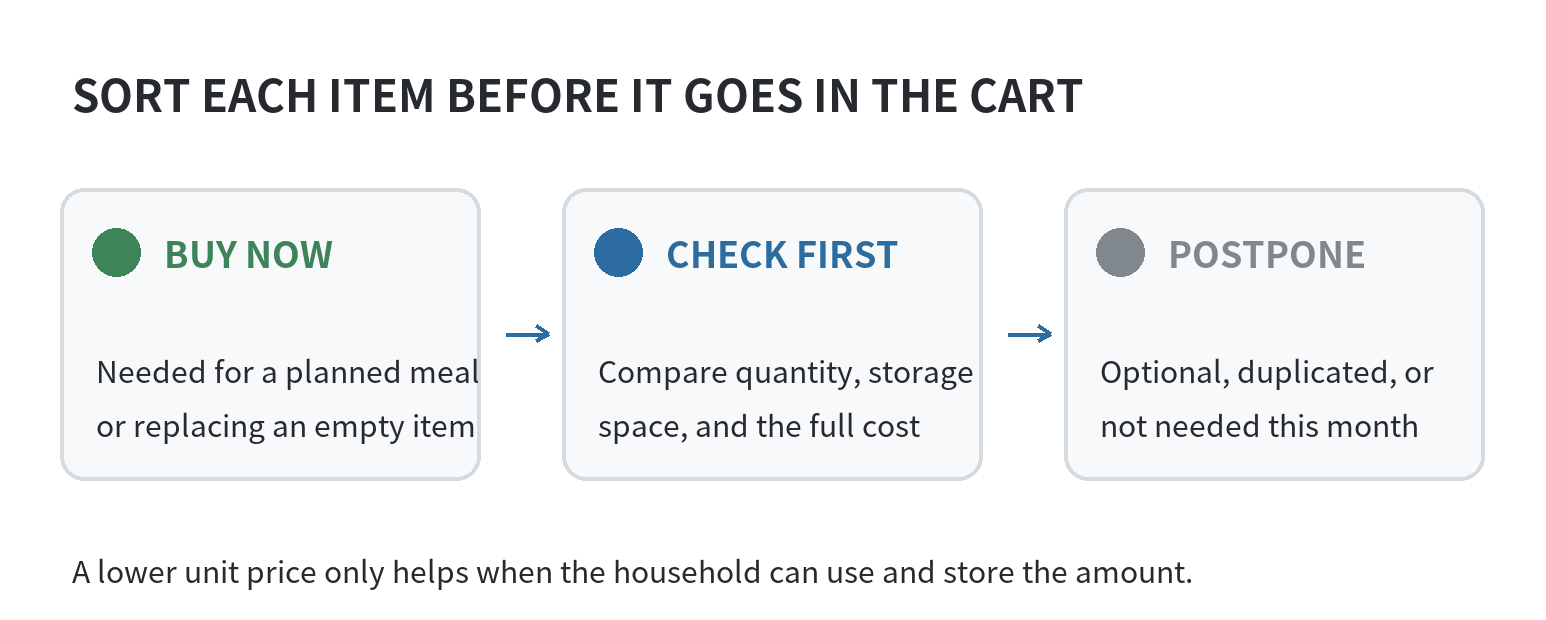
Before shopping, check the pantry, refrigerator, bathroom cabinet, and cleaning-supply area. Write down what is actually low, what is needed for meals already planned, and what can wait. Keep “replace now” items distinct from optional finds. This reduces the chance that a tempting extra gets treated as if it were part of the original plan.
For items bought in quantity, ask three questions: Will the household use it before it expires or becomes unusable? Is there space to store it? Does buying the larger package keep the total inside the cap? A lower price per unit does not help if the extra quantity goes unused or forces another category to run short.
Use a written list with a dollar ceiling for each flexible category, rather than a list of products alone. If the final list costs more than the ceiling, remove a lower-priority item or move it to a later month. Do not count a coupon, sale label, or advertised saving as budget room; the amount charged still has to fit the amount you set.
Check the running total before you pay
Keep a running total as items go into the cart, whether you shop in person or online. Compare the subtotal with your cap before checkout, then account for the final amount shown before placing the order. Delivery charges, substitutions, or changes to quantities can make the final total differ from the list, so leave a little room if your plan depends on an exact limit.
If the total is over, sort the cart instead of starting over. Keep planned meals and genuine replacements; remove duplicates, convenience extras, and items that can wait. If a necessary item pushes the total beyond the cap, record the overage and decide which flexible category will be smaller. Avoid quietly treating a credit-card balance as extra budget.
Online carts can also blur shopping across days. An item left in a cart is not yet a purchase, but once you submit separate orders, record each charge against the same monthly household-shopping line. That makes a small midweek order visible instead of letting it disappear between larger transactions.
Include a paid membership in the right place
A paid membership is a recurring household expense, separate from the money available for products. If you already pay for one connected to your shopping, check the current renewal amount, billing interval, and renewal date on the official account page. Put the charge in subscriptions or memberships, not in the trip cap; otherwise the budget may count the same expense twice or miss it altogether.
If you pay annually, divide the actual renewal amount by twelve and reserve that share in the months before renewal. If you pay monthly, budget the billed amount in the month it is due. Do not assume a membership pays for itself: compare only expenses that the household would otherwise have incurred, and keep any optional benefit or add-on as a separate line. Program fees and included benefits can change; the current terms page is the place to check those details.
For the current membership terms and listed prices, the retailer’s official membership and terms pages were checked on October 1, 2026. Use the amount shown in your own account when planning a renewal, since the charge can depend on the plan and applicable tax.
Let the next receipt update the plan
After the trip, save the receipt and compare the actual total with the cap. Note whether the gap came from planned essentials, a price or quantity change, a one-time need, or an optional addition. The reason determines the fix: a recurring shortfall may call for a higher food line and a smaller flexible category, while a one-off replacement belongs in a separate irregular-expense note.
Do not respond to one over-budget trip by setting an unrealistically low cap for the next one. Look at the remaining food and household-supply money for the month, subtract purchases already made, and decide what is still available. If you need to build a larger planned-purchase fund, the site’s guide to budgeting for a big purchase covers a separate savings timeline.
A budgeting app can make receipt tracking easier, but it cannot decide which items matter to your household. Match the app’s categories to the labels you use, then check that one order has not been counted twice. See the site’s overview of budgeting apps if you want a way to organize transactions without changing the spending rules above.
Finish by resetting the remaining amount, not by carrying an overspend forward as if it were free money. A clear cap, a list sorted by priority, and a receipt review give the next shopping decision a real number to work with.
FAQ
How should I budget for a large household item bought during a store trip?
Put it in a planned-purchase or household-goods line rather than hiding it in groceries. If it was not planned, record it as a one-time expense and choose which flexible category will absorb the cost.
Should groceries and cleaning supplies share one shopping limit?
They can share a cap if that is easier to maintain, but track the categories separately when you need to know which one is changing. Use the same labels on receipts and in your budget.
What if my household-shopping total changes from month to month?
Separate recurring items from seasonal and one-time purchases, then set aside money for less frequent needs in an irregular-expense category. Use statements and receipts to update the amount instead of relying on a generic average.
How do I budget for a paid membership that renews once a year?
Use the renewal amount shown in the official account, divide it across the months before renewal, and set that share aside. Check the renewal date and current terms before the charge is due.
Last updated: October 2026
Last updated: 2026-10