
If you are looking for a senior discount, do not count on an age-based discount being applied automatically. The company’s official Customer Service Center lists its Specials & Offers and Military Discount Benefit pages, but it does not list a senior discount program there. Checked October 8, 2026, that is the clearest public answer; ask customer service about any local or limited-time offer before you build it into a project budget.
That distinction matters when you are pricing a repair. Treat an age-based discount as zero until the store confirms the exact offer and shows how it applies to your items. Then you can decide whether the project still fits your budget without relying on a discount that may not exist for your purchase.
What the official pages say about a senior discount
The company’s Customer Service Center links to “Specials & Offers” and “Military Discount Benefit.” It does not link to an age-based or senior discount program. The company’s military discount page describes a separate benefit for eligible U.S. veterans, active service members, and spouses; age alone is not one of the listed eligibility categories. Both pages were checked October 8, 2026.
This is a statement about the companywide offers shown on those public pages, not a promise about every conversation at every location. A store associate may be able to explain a local promotion, a product markdown, or a one-time adjustment. Those are different from a published senior discount with set eligibility and terms.
If a friend says they received a senior discount, ask what the receipt called it and whether it was tied to a specific item or promotion. A lower total by itself does not establish that an age-based program exists. It may reflect a sale price, a price correction, a damaged package, or another offer with its own conditions.
Ask one clear question before you plan around savings
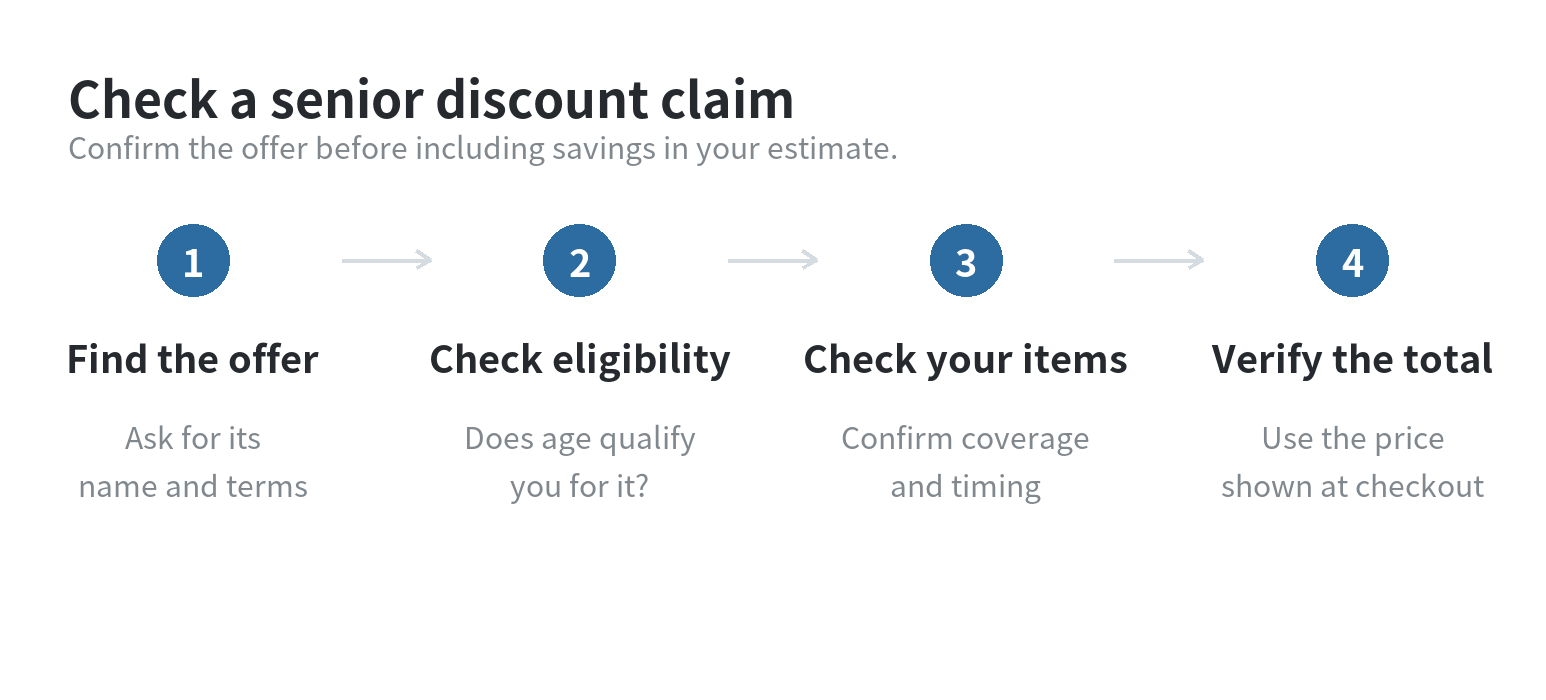
Contact customer service or the store where you expect to make the purchase and ask: “Is there a current senior discount for this purchase? If so, what proof, items, dates, and checkout steps does it require?” This wording separates an age-based benefit from a sale or an individual price adjustment.
Ask for the offer’s name and written terms, or where those terms appear in the company’s official information. Confirm whether the offer applies to the product you need, whether it is limited to a location or date, and whether it must be selected before checkout. If the answer is “we can check,” wait for the check rather than assuming the discount will appear later.
Keep the exact item description or product number with you if you have one. The question is not only whether a discount exists; it is whether that discount applies to your particular item and transaction. A general “yes” does not tell you whether an excluded item, a sale price, or another condition changes the final amount.
For a phone conversation, write down the date, the department or contact you spoke with, and the wording they used. For an in-person question, ask to see the price after any confirmed offer is applied. You do not need to debate whether a previous customer received a discount; you need the terms for your own purchase.
Separate a discount claim from a lower price
People use “discount” to describe several different things: a published eligibility program, a sale on a particular item, a price correction, or a courtesy adjustment. Only the first is a standing benefit with formal eligibility rules. If someone says there is a senior discount, ask which of those they mean before comparing your receipt with theirs.
A clear answer should identify who qualifies and what triggers the price change. An age-based benefit would name age or senior status as the qualifying condition. A product sale would identify the item and offer period. A one-time correction would relate to a particular price or transaction. These explanations lead to different expectations, so do not treat one customer’s total as a promise that the same reduction is available on another purchase.
If the offer is only described verbally, repeat it back in plain terms: “This applies because I am a senior, it covers these items, and it will appear before I pay—is that right?” If the answer changes, ask which written terms control. You can then keep a note of the confirmed amount and avoid depending on a vague recollection when you plan the rest of the work.
Build the project estimate with the discount set to zero
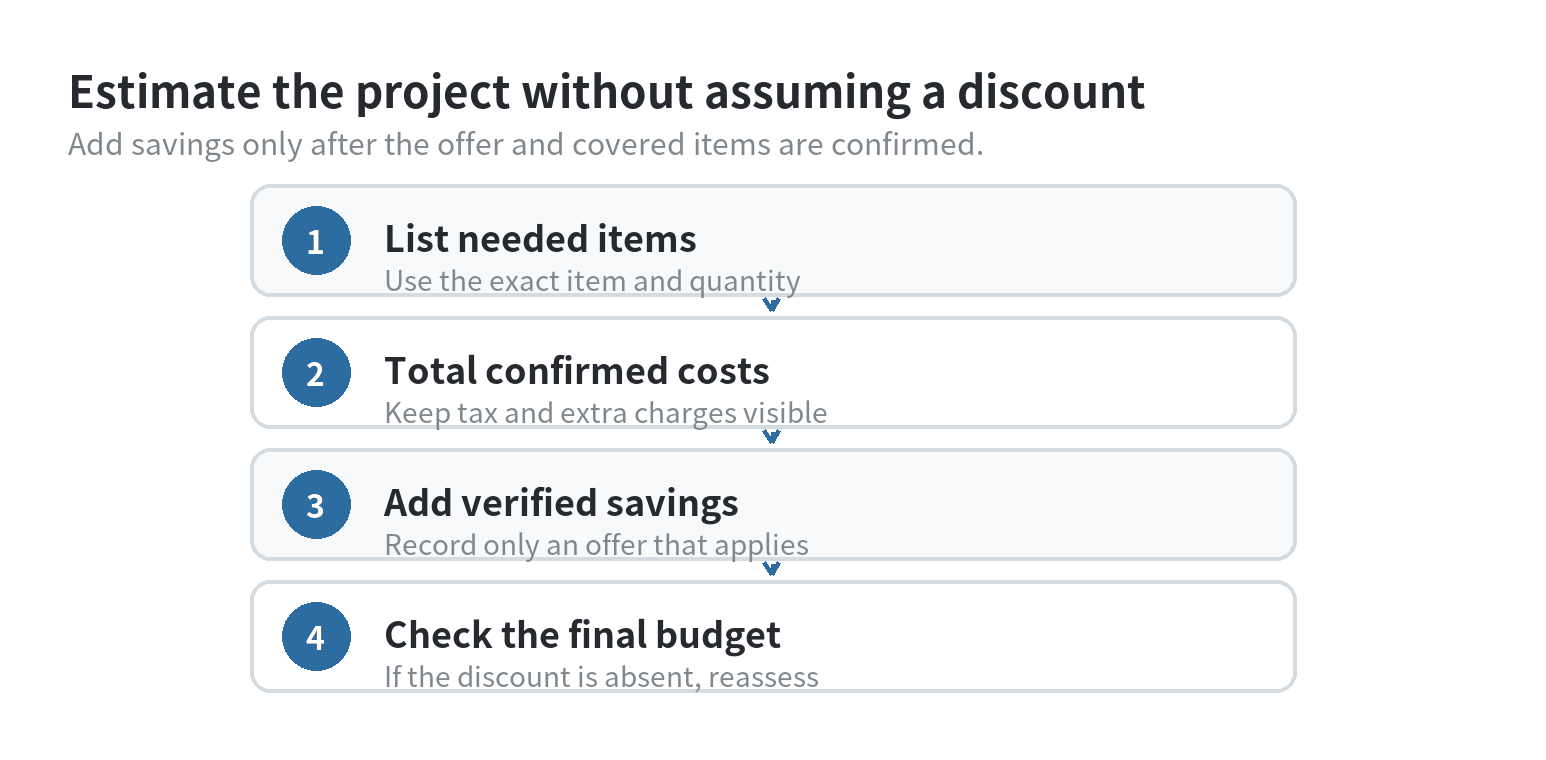
Make a short materials list and record the current displayed price for each item. Add the items, delivery or service charges that apply, and sales tax as a separate line in your own estimate. This gives you a working total before any unconfirmed discount enters the calculation.
For a simple example, if your repair list totals an amount before tax, keep that amount as the merchandise estimate unless an offer is confirmed. If customer service later confirms a reduction for eligible items, subtract only that confirmed amount. The arithmetic is a planning example, not a typical price or a promise about a discount.
Write confirmed savings on a separate line with the offer name and the items it covers. If the offer does not appear at checkout, remove that line and decide whether the original total still works. This avoids treating a possible discount as money already saved.
When the current price itself is unclear, check the exact item and location with the store. For a promotion, read the exclusions and dates rather than relying on a headline. Our guide to reading ad terms covers how to separate an offer’s headline from its conditions.
If the repair includes installation, list the labor quote separately from materials. Ask whether a confirmed promotion applies to materials only or also to the service portion. Keeping those lines separate makes it easier to revise the estimate if the offer covers one part of the project and excludes another.
Save the written quote or final receipt with your project notes. If a later visit gives you a different price, you can compare the same item, quantity, location, and offer terms instead of comparing totals that may include different work.
When another discount is mentioned
The military discount is a separate program, not a senior discount. The company’s official description names eligible veterans, active service members, and spouses, with verification tied to that status. If that description fits your household, read the program’s current eligibility terms; the military and veteran discount guide explains the separate verification and purchase rules.
Do not assume a senior discount can be combined with a military offer, a sale, or another promotion. Ask which offer applies to each item and what the register or online total will show. If you are comparing a promoted price, our guide to clearance pricing can help you identify the terms to check; it does not establish eligibility for an age-based discount.
A useful answer from the store should identify the offer, eligibility, covered items, timing, and how it will appear on the final receipt. If the employee cannot point to a current offer or confirm how it applies, leave the senior discount out of your estimate and use the price you can verify.
FAQ
Can I show my driver’s license to get a senior discount?
Only if a current offer specifically asks for age verification. The official public pages checked for this article do not list a senior discount or an age-verification process, so ask the store to identify the offer before showing documents.
Could an individual store have a different senior offer?
A store can tell you whether it has a local promotion, but that would not establish a companywide senior program. Ask for the offer’s name, dates, covered items, and written terms for the location you plan to visit.
Does an existing sale mean I can add a senior discount?
No. A sale price does not by itself establish that another discount can be added. Ask which terms apply to the exact items and check the final total before you use the savings in your estimate.
What should I do if an employee says a discount will appear later?
Ask where the offer terms are recorded and when the price should change. Keep the estimate at the undiscounted total until the offer is confirmed on the receipt or order total.
Last updated: 2026-10