A propane tank exchange is a swap: you hand over an eligible used cylinder and leave with a filled replacement. At a local home improvement store, first confirm that its propane center is operating and check the exchange price for that location; the store’s current listing separates tank exchange from buying a tank without one, and says local prices can differ. The official propane exchange program page points customers to a local propane center.
Exchange means swap, not refill
With an exchange, the provider takes the cylinder you bring and gives you a different cylinder that has been prepared for use. AmeriGas describes retail exchange as returning an old grill tank and receiving a refilled one; its exchange FAQ says it accepts all brands of propane tanks and cylinders. Those are provider-level terms, so check the local location’s rules for the specific service offered. The retailer’s current propane listing also separates exchange from a tank purchase that requires no empty cylinder.
A refill works differently: a service station adds propane to the cylinder you keep. The store’s product listings distinguish an exchange from buying a tank with no exchange, but the exchange program page does not promise that every store refills customer-owned cylinders. If keeping your own cylinder matters, ask the location whether it offers refilling before you load the tank.
For a standard grill setup, product listings may label the cylinder as a 20-pound tank. That label describes the cylinder class, not a promise that the tank contains 20 pounds of propane when exchanged. AmeriGas states that its grill tanks contain a net 15 pounds of propane; Blue Rhino also describes its exchange as accepting a standard 20-pound grill tank. Check the replacement’s label and provider details for the exact product you receive. If you are still deciding whether to use a gas grill, the site’s gas-versus-charcoal grill comparison covers that separate fuel-choice question.
Check the local propane center and current price
Use the official local-store propane service page to confirm there is a propane center at the location you plan to visit. A national program page confirms that the program exists, but it does not provide a store-by-store list of open cages, staffed counters, or current stock. Check that the page has the intended store selected before relying on any displayed item or price. Call the location if the service listing is unclear, especially before making a special trip. A saved screenshot from another location or an earlier visit cannot confirm today’s local service details.
Check the exchange price for your selected store on the day you go. The retailer’s product page, checked October 7, 2026, lists an exchange item separately from a full tank purchase that does not require returning an empty cylinder, and notes that local store prices may vary. Blue Rhino also says exchange prices vary by retailer and location. Check the local listing or ask the location for its current amount rather than using a figure from another city.
| What you bring | What the listing calls it | What to confirm |
|---|---|---|
| An eligible empty cylinder | Tank exchange | Exchange price and local procedure |
| No empty cylinder | Tank purchase, no exchange | Full-tank price and whether the tank is available locally |
| Your own cylinder to keep | Refill service, if offered | Whether the location fills customer-owned cylinders |
The exchange listing and no-exchange purchase listing are separate products on the retailer’s propane page. If you have no empty cylinder, the no-exchange option is the relevant listing to check; it is not the same transaction as trading in a cylinder.
What to expect when you arrive
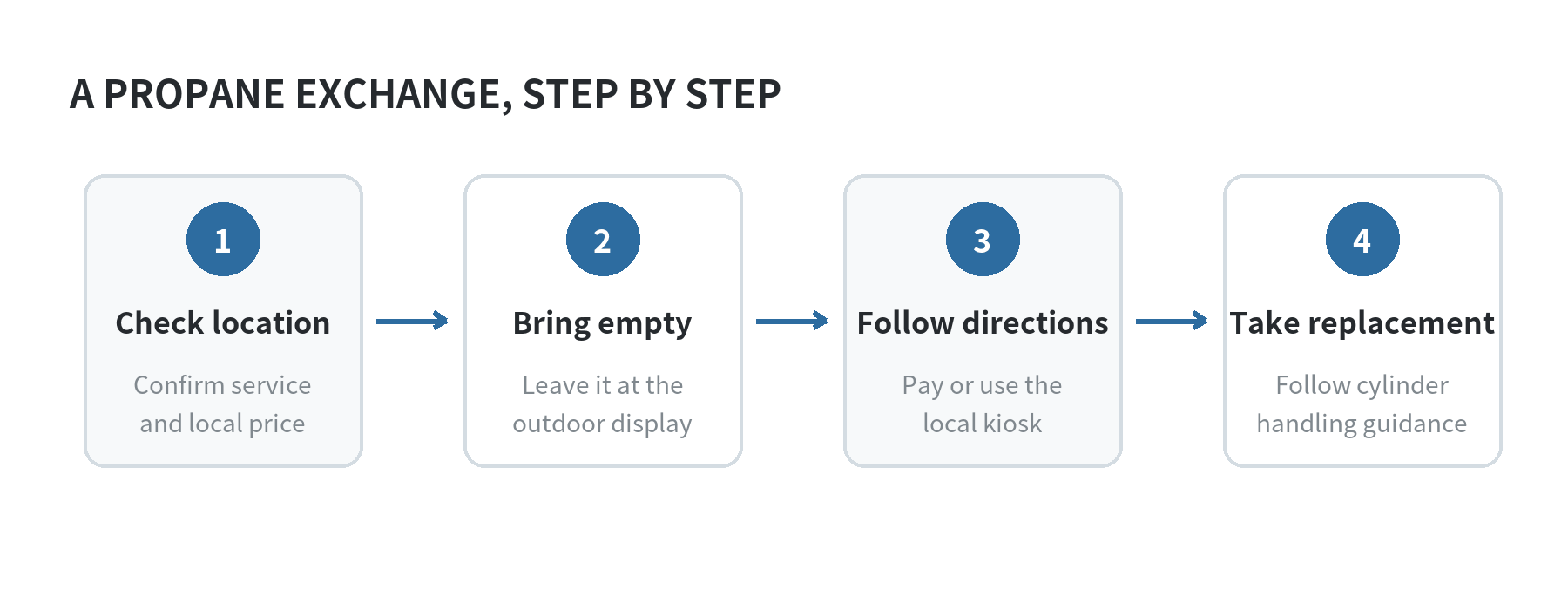
Exchange providers do not all describe the same customer steps. Blue Rhino’s instructions tell customers using its service to leave an empty tank beside the outdoor display, pay at the cashier, then receive a fresh tank from an associate. AmeriGas describes staffed retail exchanges and self-service kiosks. These provider instructions explain possible formats; they do not establish which format a particular store uses.
Leave the cylinder outside the building and follow the posted directions for that location. Blue Rhino tells customers using its exchange service not to bring a propane tank inside. If you cannot tell whether the display is self-service or staff-assisted, ask an employee before opening a gate, moving a cylinder, or completing payment. Do not assume that a receipt code, keypad, or exchange cage is part of every store’s process; the official store program page does not describe those details.
Before paying, make sure you selected an exchange rather than a no-exchange tank purchase. If the screen or receipt uses a product name you do not recognize, stop and ask which line includes returning an empty cylinder. Check the price shown before completing payment, since a local amount can differ from a listing tied to another store.
Keep the receipt with the date and store location. That gives you a record if you later need to identify which provider supplied the replacement cylinder or ask about the transaction. If you plan to exchange the tank on a later visit, note the provider name on the cylinder so you can locate that provider’s exchange rules.
Transport the replacement upright and secured
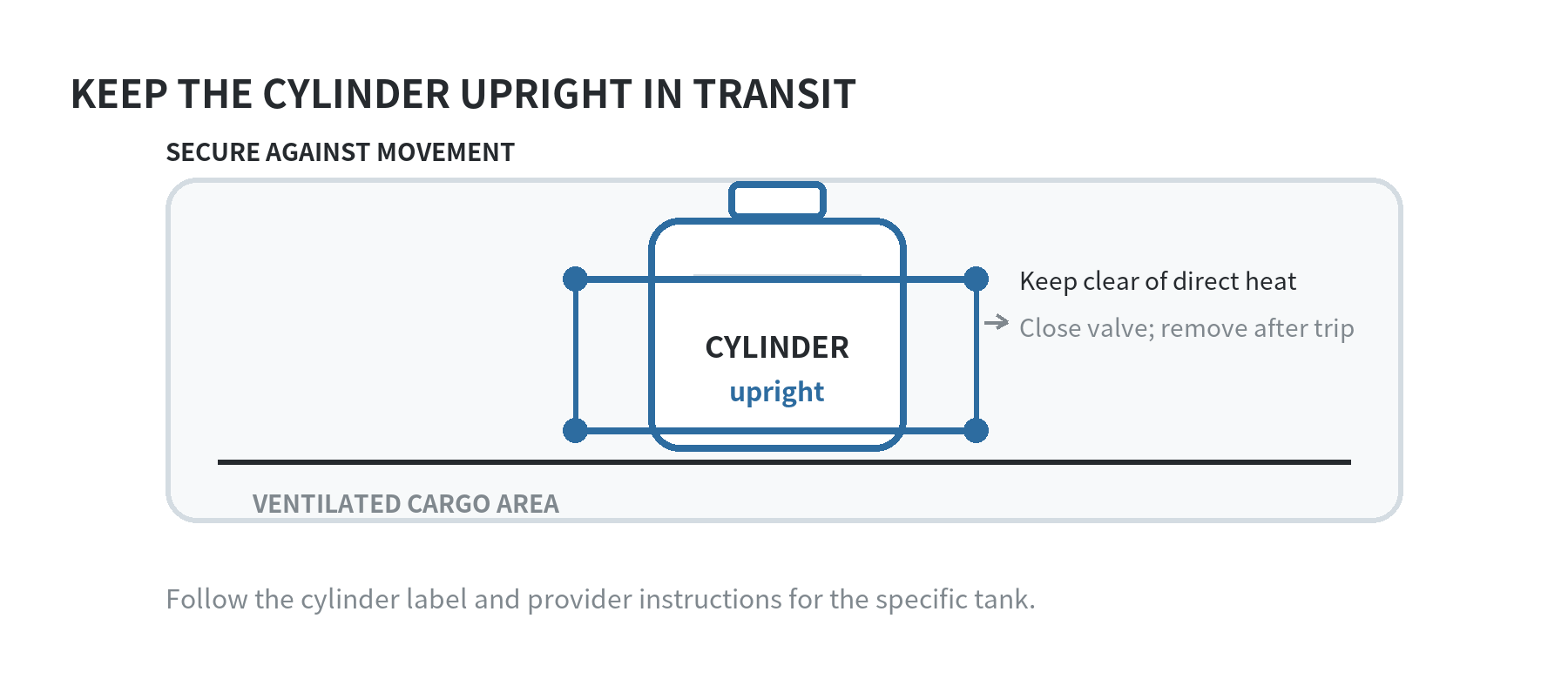
AmeriGas advises transporting a cylinder upright and secured so it cannot fall, shift, or roll. It also says to close the cylinder valve, keep the tank in a well-ventilated area of the vehicle, avoid leaving a filled cylinder in a hot vehicle, and remove it from the vehicle promptly after reaching your destination. Follow the provider’s label and instructions for your specific cylinder.
Before leaving the parking area, check that the cylinder stands upright and cannot tip during a turn or stop. Use a stable cargo area and secure it against movement; do not put it in a position where loose items can strike the valve. The diagram below shows the orientation and restraint relationship, not a substitute for the cylinder’s own handling label.
If your tank is damaged or you do not need an exchange
Do not assume an old, rusted, visibly damaged, or uncertain cylinder will be accepted. AmeriGas’s public FAQ says it accepts all brands, but it does not say every condition is acceptable. Ask the exchange provider how it handles the cylinder before transporting it to the store.
Before setting out a cylinder, check the provider’s acceptance rules. Blue Rhino says its delivery exchange accepts competitor tanks only when they are in acceptable condition; that delivery rule does not establish what a store counter will accept. If a tank is dented, corroded, or otherwise damaged, contact the provider before transporting it, and do not attempt to repair a damaged tank yourself.
If the cylinder is unwanted or expired, do not put it in regular trash. AmeriGas says propane cylinders should not be thrown away with household garbage and directs customers to propane refill or exchange locations, or to contact the provider for disposal help. Local household hazardous-waste programs may have separate rules, so check the relevant local service before disposal.
If you plan to use propane with a generator, check the generator maker’s fuel and cylinder instructions; the site’s backup power overview covers generator categories. If you want to keep the same cylinder, ask about refill availability instead of assuming an exchange is equivalent. If you do not have an empty tank, compare the local full-tank purchase option with an exchange only after checking the current listing; they are separate transactions with separate prices.
FAQ
Can I exchange a cylinder that still has propane in it?
Do not assume a partly used cylinder meets the exchange rule. Blue Rhino describes its store exchange as a swap for an empty tank; ask the provider serving your location what it accepts before you make the trip.
Does a tank exchange include connecting the replacement to my grill?
Check this separately with the service provider. Blue Rhino Delivery+ says it does not currently connect tanks to appliances; that statement is specific to its delivery service. Blue Rhino also says to consult your appliance maker’s connection instructions before attaching a cylinder.
What can I do if the location will not accept my old cylinder?
Ask the provider about an approved disposal location. AmeriGas says not to put a propane cylinder in regular trash and directs customers to an exchange or refill location, or to contact the provider for disposal help.
Last updated: October 2026.
Last updated: 2026-10