A radon test kit is useful only when its test period, placement, and return steps match the instructions on that exact kit. If you are comparing a kit listed on an e-commerce platform, check whether it is short-term or long-term, where the sample goes after the test, and whether laboratory analysis and return postage are included.
EPA guidance, checked October 7, 2026, gives you a way to choose the testing window and understand the result without treating a short reading as a year-round average.
Check the kit details before you open it
Radon kits do not all use the same exposure period or reporting process. Some devices are passive samplers that sit in a room and are mailed to a laboratory. A continuous monitor records measurements during the test and provides a different kind of report. EPA’s 2024 guide, checked October 7, 2026, describes both types; the device instructions identify which procedure applies to yours.
Read the product and package information for four details: the test duration, the room where it should be placed, how to record the start and stop times, and how the completed device must be returned. Confirm whether analysis and postage are included or charged separately. Listings can describe these items differently, so a low shelf price alone does not show the full testing process.
Check who analyzes the sample and how results are delivered. EPA advises using a measurement device from a qualified laboratory. For a real-estate transaction, state rules and testing protocols may add requirements; EPA recommends discussing the test with a qualified radon tester. A home kit can suit an ordinary screening situation, while a transaction may call for a documented protocol.
Choose a test window that fits your question
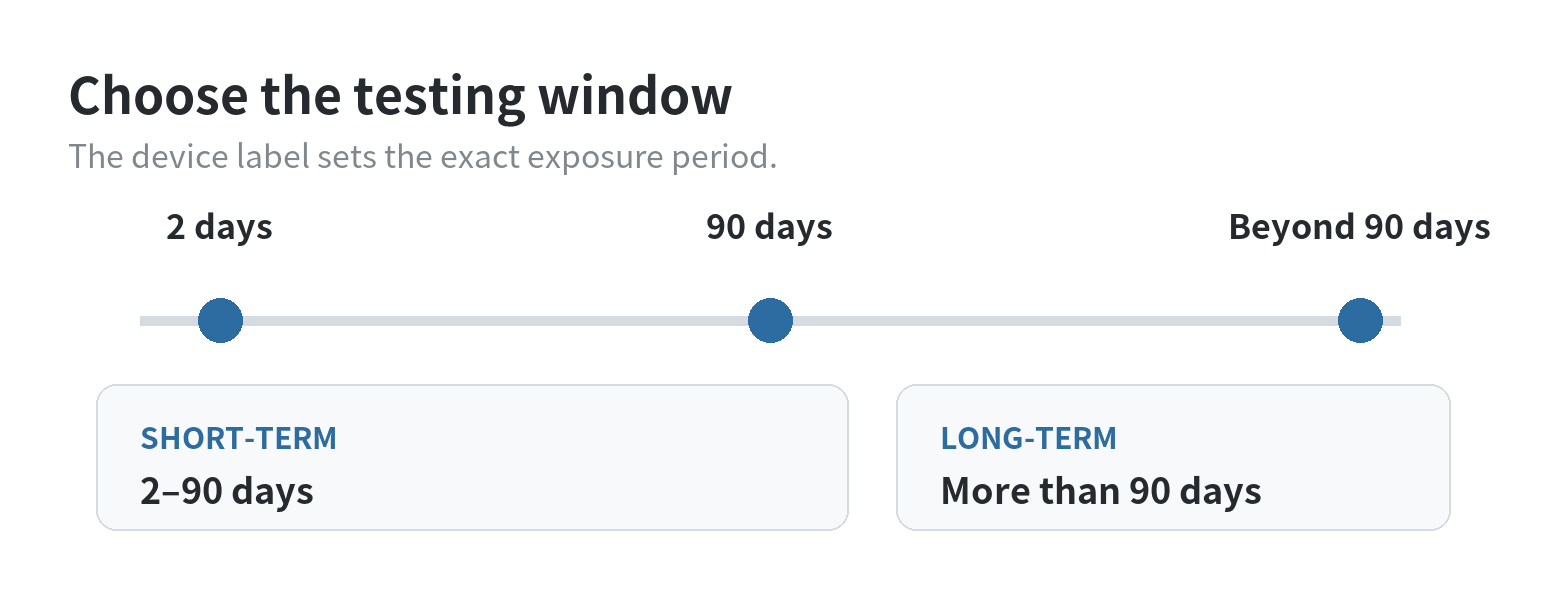
A short-term kit gives a reading sooner; a long-term kit stays in place long enough to better represent a year-round average. The CDC and EPA’s 2024 Home Buyer’s and Seller’s Guide, checked October 7, 2026, describe short-term tests as lasting 2–90 days and long-term tests as lasting more than 90 days.
EPA says radon tests should run for at least 48 hours, with some devices requiring longer.
| Test type | Time in the home | Useful for |
|---|---|---|
| Short-term | 2–90 days, depending on the device | A quicker initial reading |
| Long-term | More than 90 days | A reading more representative of the year-round average |
Use the timeframe printed for the specific kit, not a general estimate from a product photo or a different model. A short-term result answers what the device measured during that interval. It does not describe every season or prove that another floor has the same reading.
For example, a household that needs an initial reading before deciding on follow-up testing may prefer a short-term window. Someone who can leave a sampler in place for a season may choose a long-term test to get a reading that better reflects the year-round average.
In either case, record the test location and dates so the report stays tied to the right room and period.
Place the device in the room that matters
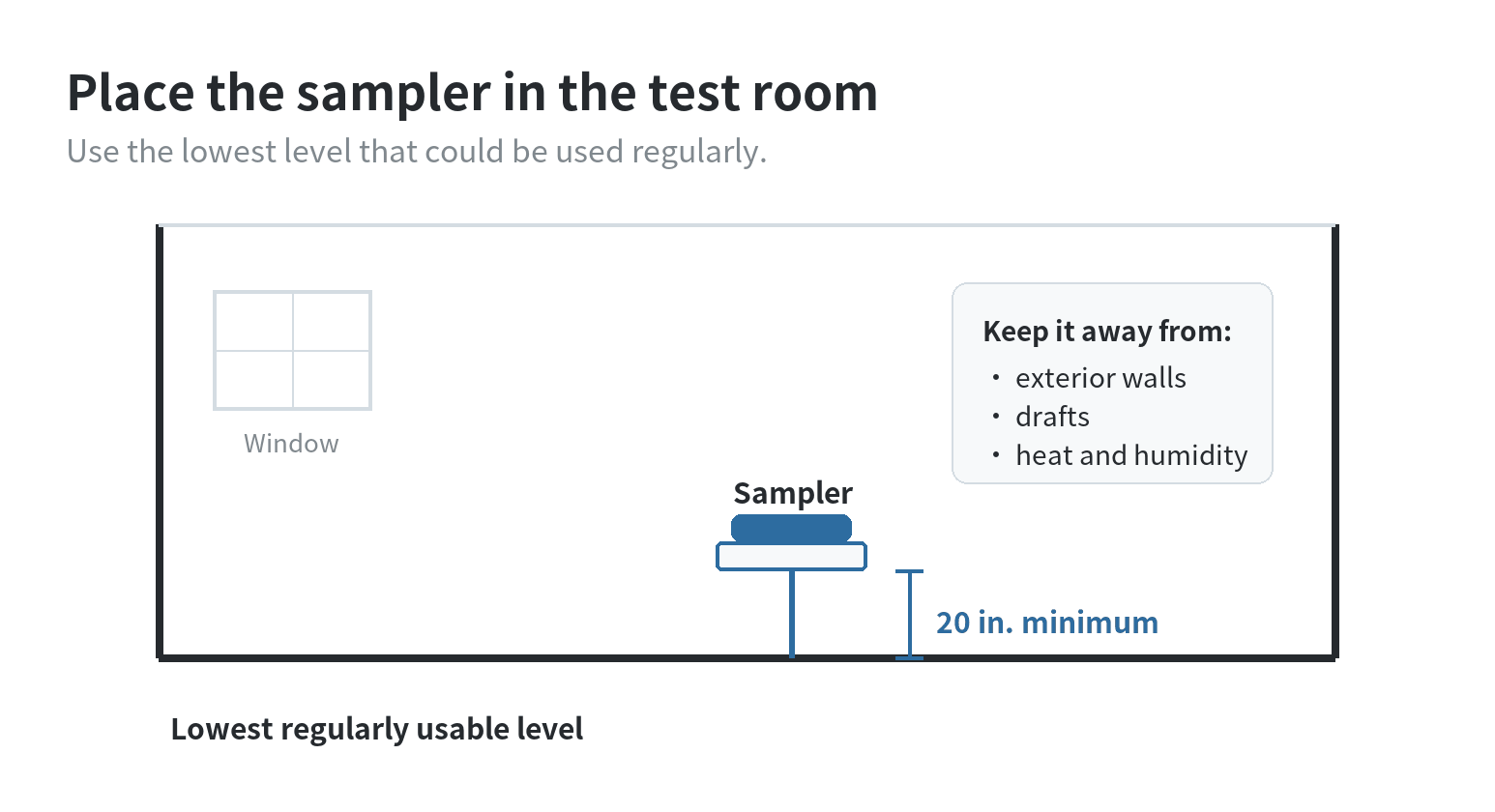
For a home test, choose the lowest level that could be used regularly. A basement used as a family room, office, or bedroom is a more relevant location than an upstairs hallway if the basement is the lower living space. EPA’s 2024 guide, checked October 7, 2026, recommends the lowest level that could be used regularly, whether or not it is finished.
Set the device at least 20 inches above the floor, where it will not be disturbed. Keep it away from drafts, high heat, high humidity, and exterior walls. Do not place it in a closet, stairway, hallway, crawlspace, kitchen, bathroom, laundry room, or furnace room when those locations do not match the protocol for the space being evaluated.
If the package names a particular room or placement method, follow those directions. For a simple room sketch, mark the floor level, exterior walls, windows, vents, and the spot where the device will sit. That makes it easier to put a repeat test in the same location.
If you keep house records on a phone, the site’s guide to tracking home maintenance tasks offers a way to organize dates and reports.
Keep the room conditions steady during a short test
For a short test, EPA’s 2024 checklist, checked October 7, 2026, says to keep outside windows and doors closed except for normal entry and exit. If the test lasts under four days, close them at least 12 hours before it begins.
EPA also advises against running a short test under four days during severe storms or high winds. Follow the kit instructions if they specify additional conditions.
Record the start date and time, leave the device in place for the specified period, then record the stop date and time. Avoid moving or covering it. Keep normal heating and cooling operation as the kit directs; do not change ventilation or room use to try to influence the reading.
If a device is disturbed or the required room conditions are interrupted, note what happened and ask the kit provider or state radon office whether to repeat the measurement.
EPA’s testing checklist says a short test can be invalidated by interference with the device or closed-house conditions. This matters when other people use the space: tell household members where the sampler is and why it must remain undisturbed. A small note on the door or a calendar reminder can prevent someone from moving it during cleaning or storage.
Return the sample and keep the report
When the test ends, follow the package instructions for sealing and mailing the device to the named laboratory. EPA’s checklist, checked October 7, 2026, advises returning a mail-in device promptly and including required information such as the start and stop times and test location.
Keep a photo or copy of the completed form, tracking details if provided, and the final report together.
Before starting, check the stated reporting method and turnaround estimate. EPA’s 2024 guide, checked October 7, 2026, says results may take a few days or weeks, depending on the service. The test itself may be short while laboratory processing takes additional time. If a result is needed for a deadline, compare the provider’s stated processing time with the date you need the report.
Store the report with the room name, floor, test dates, device type, and any unusual condition during testing. Those details help you compare a repeat measurement later or share the result with a radon professional. If you retest after a renovation or after beginning to use a lower floor, label each report separately instead of replacing the earlier record.
A shared checklist can keep the room, dates, and follow-up task together; the site’s guide to shared phone lists covers one way to organize household tasks.
Read the number as a next-step guide
Radon results are reported in picocuries per liter of air (pCi/L). EPA and CDC’s guidance, checked October 7, 2026, uses 4 pCi/L or higher as the level for taking action; EPA says homeowners can consider action between 2 and 4 pCi/L.
CDC also describes follow-up testing after an elevated short-term result. These are agency recommendations, not a guarantee about what another room or season will measure.
If one short-term result is at or above 4 pCi/L, CDC advises taking a second test, either short-term or long-term. When using a second short-term test, CDC says to average the two results.
A long-term test can give a better picture of the year-round average. For a result close to the threshold, a qualified radon professional or your state radon office can explain which follow-up protocol applies to your home and location.
Retest after major renovations or HVAC changes, and test a lower level before changing it into a room used regularly. CDC’s guidance, checked October 7, 2026, lists both situations as times to test.
If a radon reduction system is installed, use a post-work test to document the level afterward. The test report, rather than the age of the house or a neighbor’s reading, is the record for your own space.
FAQ
Should I test a basement before turning it into an office?
Yes. CDC says to test before a lifestyle change that would lead someone to spend more time in a basement or lower level. Place the device according to its instructions and the room’s intended use.
Does a low reading stay valid after remodeling?
No test report describes future conditions after a major change. CDC recommends testing before and after renovations, especially after work intended to reduce radon; EPA also calls out major remodeling and HVAC changes as reasons to test again.
What if my kit requires more than 90 days?
Use the duration printed for that device. EPA says some devices need more time than the general minimum, and CDC notes that the exact testing length depends on the specific test.
Can I use a test result from a neighboring home?
No. EPA’s 2024 guide, checked October 7, 2026, says neighboring homes can have different indoor radon readings, so another property’s report does not establish the level in your home.
Last updated: 2026-10