Replacing a gas boiler starts with documenting the system you have, then asking a licensed heating professional to match a new unit to the home and check local permits. A combi boiler adds domestic hot water to space heating in one appliance, so it is not automatically a drop-in match for a boiler that serves radiators alone.
Before comparing models, gather the boiler’s make and model, fuel type, nameplate output, heating controls, and the type of emitters in each room. Also note whether hot water comes from a separate tank. These details give an installer a starting point; they do not determine the replacement size by themselves.
First identify what the current boiler serves
A conventional boiler can heat water for radiators, hydronic baseboards, or another water-based heating loop. Domestic hot water may come from a separate storage tank. A combi boiler combines space heating and domestic hot water in one appliance, while keeping the heating water and tap water in separate circuits.
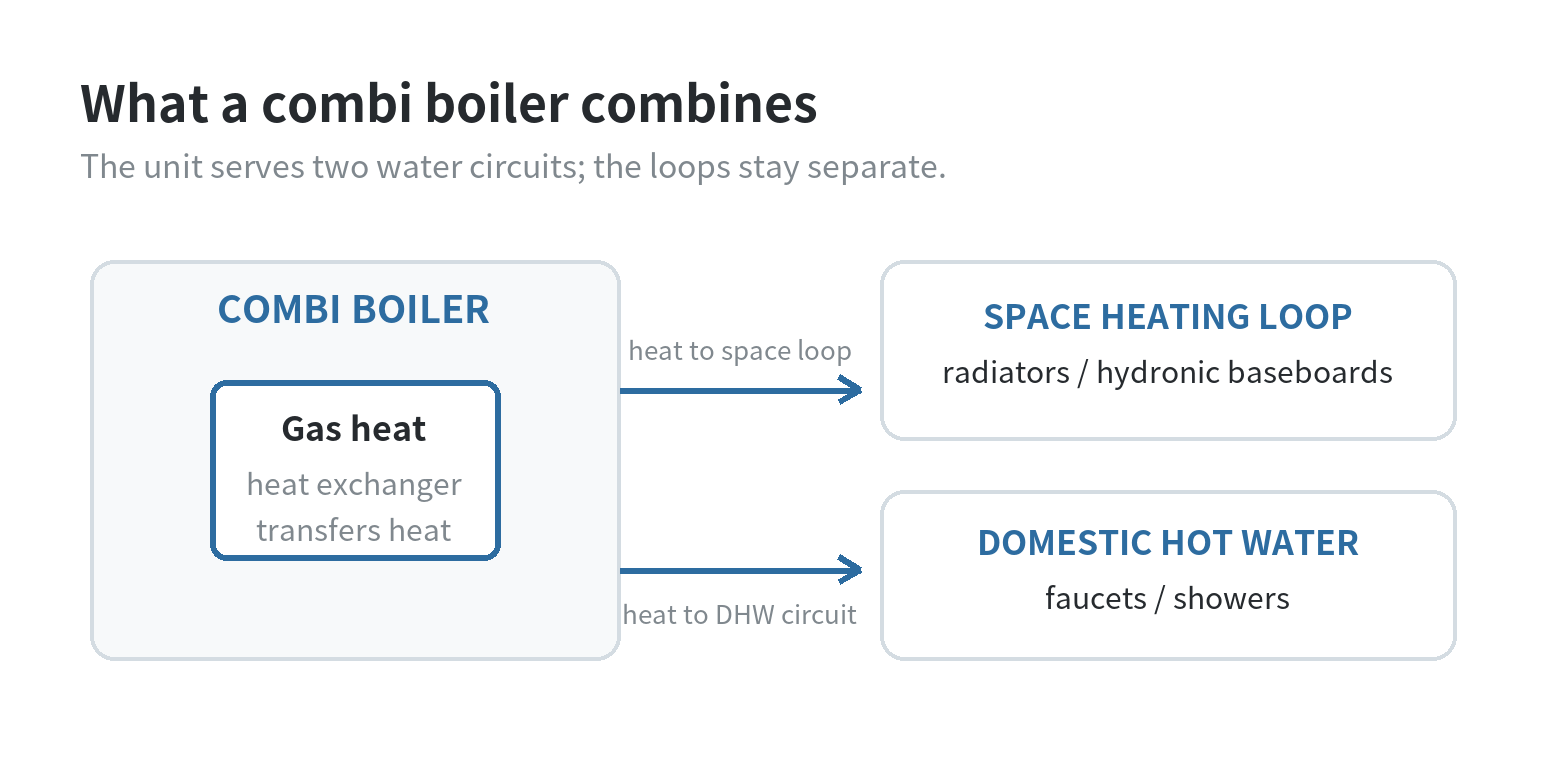
The U.S. Department of Energy’s Building America guide describes combi systems as serving space heating and domestic hot-water needs from one heat source. Navien’s combi-boiler FAQ explains that a heat exchanger separates the heating-water flow from domestic water. That distinction matters when you compare a combi model with a boiler-and-tank arrangement.
Write down whether the existing setup has a storage tank, an indirect water heater connected to the boiler, or no separate hot-water tank. If you cannot tell from the piping, photograph the equipment and ask the installer to identify it. Do not assume a replacement boiler can serve a water-heating job that the old unit did not handle.
Bring a system record, not just the old boiler’s size
The label on the old unit helps identify what is installed, but it is not a complete design specification. The U.S. Department of Energy’s Building Science Education page says proper HVAC sizing starts with determining heating and cooling loads; it points to ACCA Manual J as a home load-calculation method. For boiler replacement, ask the contractor to show how the proposed capacity relates to the home’s heating demand.
A useful handoff sheet can include:
- Boiler nameplate details and fuel type.
- Radiators, baseboards, radiant floors, or other heat emitters.
- Whether a tank supplies domestic hot water and how it connects.
- Thermostat zones, visible venting, and any condensate drain.
- Rooms that are difficult to heat, plus recent repairs or recurring operating issues.
These are observations to share, not a sizing formula. The installer can check the equipment, piping, fuel supply, venting route, electrical connections, and controls against the home and the selected model’s installation instructions. If a renovation changed windows, insulation, or heated space, mention it; the current load may differ from the conditions under which the old boiler was chosen.
If the system uses a wall thermostat or multiple heating zones, keep the control details with your notes. A boiler replacement may involve control compatibility, so the thermostat model and wire labels can help the professional review the setup. The site’s thermostat wiring checklist explains why equipment type and wiring labels belong in that record.
Check whether a combi matches the household’s hot-water pattern
A combi system is a candidate when one appliance is expected to provide both home heating and domestic hot water. It changes the hot-water side of the project as well as the boiler connection. Tell the installer when showers, laundry, dishwashing, and other hot-water uses overlap, and ask how the proposed model’s published output is rated for the conditions at your home.
For example, a household with multiple bathrooms may have morning use clustered together, while another household spreads hot-water use across the day. This example is a prompt for describing your schedule, not a capacity estimate. Ask the installer to relate the product’s domestic hot-water rating to the incoming-water temperature and the expected simultaneous draws.
Keep a separate-tank option in the discussion if you already use one or if the installer identifies a reason to retain storage. The Department of Energy’s guide to combined space and water heating calls for assessing both space-heating and domestic hot-water needs before selecting components. A single cabinet can simplify the equipment layout, but the right choice depends on the home’s loads, existing connections, and product specifications.
Compare AFUE ratings and the certification label
AFUE, or annual fuel utilization efficiency, is the rating used for residential boilers. ENERGY STAR says its certified gas boilers have AFUE ratings of 90% or higher; its boiler page also identifies AFUE as the heating-equipment efficiency measure. The Department of Energy’s federal boiler guidance directs readers to the ENERGY STAR certification listings for residential boilers.
Use the exact model number when checking the label. Compare gas with gas, and confirm that the model is listed for the fuel and application under consideration. A higher AFUE number describes a higher rated share of fuel converted to space heat under the rating method; it does not by itself establish the unit’s fit, installation quality, or household operating cost.
Ask for the product data sheet and installation manual alongside the quote. Check the model’s output range, approved fuel, venting requirements, clearance instructions, condensate provisions if specified, and control compatibility. ENERGY STAR’s buying guidance links boiler selection with hiring a contractor, while the Department of Energy notes that boiler requirements differ by equipment size and output type. Treat a label as one screening detail, not the entire replacement plan.
When reviewing proposals, compare the work being offered as well as the model numbers. Ask whether the scope includes removal of an existing tank, changes to gas or water piping, new vent components, electrical or thermostat work, start-up, and permit close-out. A line marked “replacement” can describe different work when one proposal retains existing connections and another changes them.
Ask the contractor to list any assumptions that could change the scope, such as a vent route that cannot be reused or a control that does not support the selected boiler. You can then resolve those questions before the installation date instead of treating an unexpected change as a model-selection detail. Keep the written scope with the equipment manual and permit record.
Confirm licensing, permits, and close-out steps locally
Use a heating professional with the license or credential required where the home is located. The Department of Energy’s Energy Skilled guidance recommends asking for a technician with a recognized credential. Local rules control who may perform the work and which permits apply: Michigan’s mechanical-permit guidance describes contractor licensing and permit requirements, while Boston’s boiler replacement page requires a licensed trade contractor for plumbing work and identifies a permit for boiler replacement.
Before work is scheduled, ask who will obtain each permit, whether an inspection is required, and what document confirms the permit is closed. Give the installer the full address because rules can differ between a city and its surrounding county. The homeowner’s role and any owner-permit option also vary, so confirm them with the local building department rather than relying on a rule from another state.
Put the agreed scope in writing: unit model and fuel, what happens to the old tank, piping or vent changes, control work, permit responsibility, inspection, start-up, and the records you will receive. Ask the installer to leave the product manual and explain the normal operating controls. ENERGY STAR’s contractor guidance also points homeowners toward checking contractor qualifications before the project proceeds.
For seasonal equipment reminders after the replacement, the site’s home maintenance checklist includes a heating-system check before the heating season. Keep the new boiler’s model information with that household record so a future service call begins with the correct equipment details.
FAQ
Can I replace a standard gas boiler with a combi boiler without changing anything else?
Not without checking the home’s heating and hot-water connections. A combi serves both functions in one appliance, so an installer needs to review the heating load, domestic hot-water demand, fuel, venting, and controls.
Does a combi boiler send heating-loop water to the faucets?
No. Navien’s combi-boiler FAQ describes separate heating and domestic-water circuits, with a heat exchanger transferring heat between them.
Can I use the old boiler’s BTU rating to choose the replacement?
Use the rating as identification information, not as the only sizing basis. The Department of Energy says HVAC sizing begins with a calculated heating load; ask the installer to explain the capacity selection for your home.
Does every boiler replacement need a permit?
Permit rules depend on the location and work scope. Ask the local building department or the licensed contractor handling the job which permit and inspection steps apply to your address.