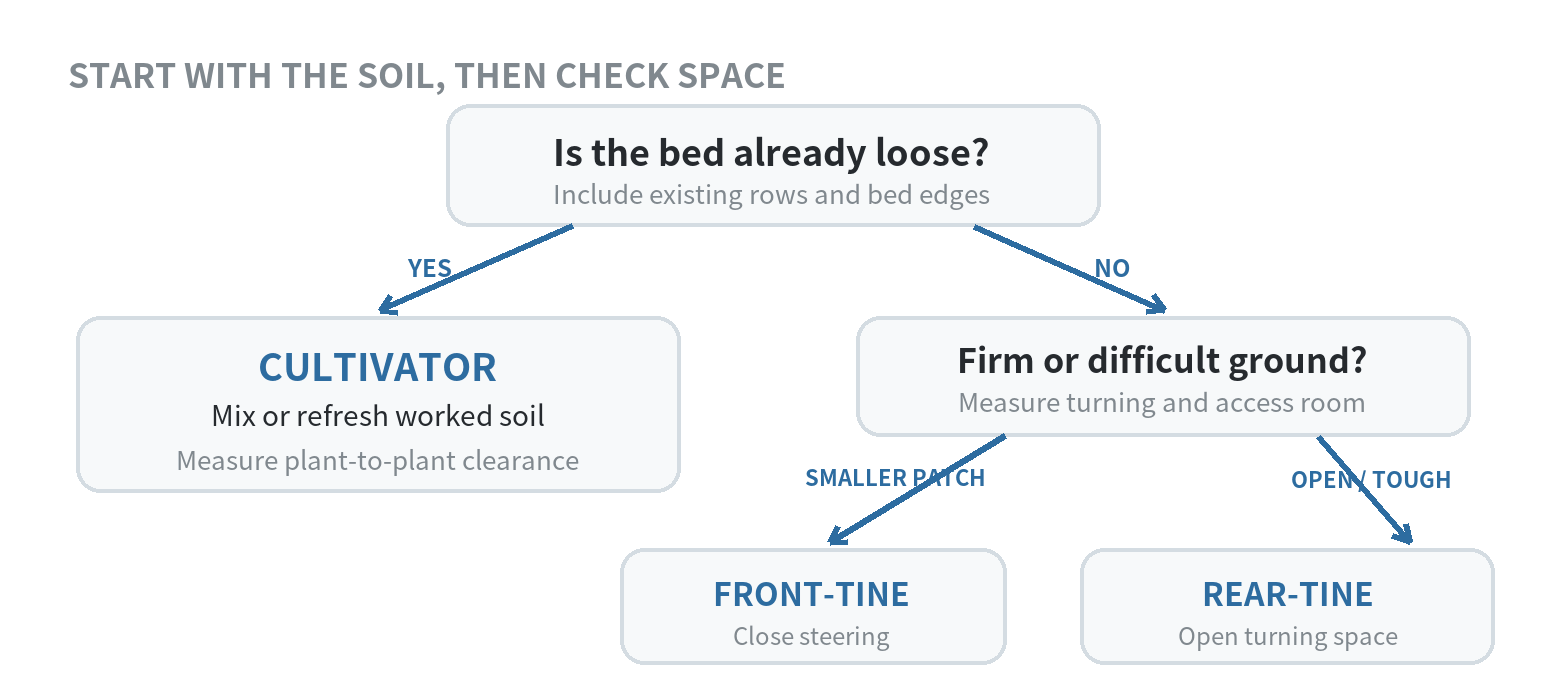
Choose by the soil you need to work, not by the word printed on the machine. A cultivator is for loosening soil that is already workable; a front-tine tiller suits a bed that needs more breakup but still needs close steering; a rear-tine tiller is built for tougher ground and a larger, open patch. The tine position tells you the machine’s layout, while the soil condition tells you whether that layout fits your job.
Before comparing listings, walk the plot and mark what is new ground, what has been worked before, and where plants, paths, or bed edges limit turning space. That quick map helps prevent a mismatch: choosing a small cultivator for sod or compacted ground, or bringing a large tiller into a narrow planted bed.
Match the tool to the ground in front of you
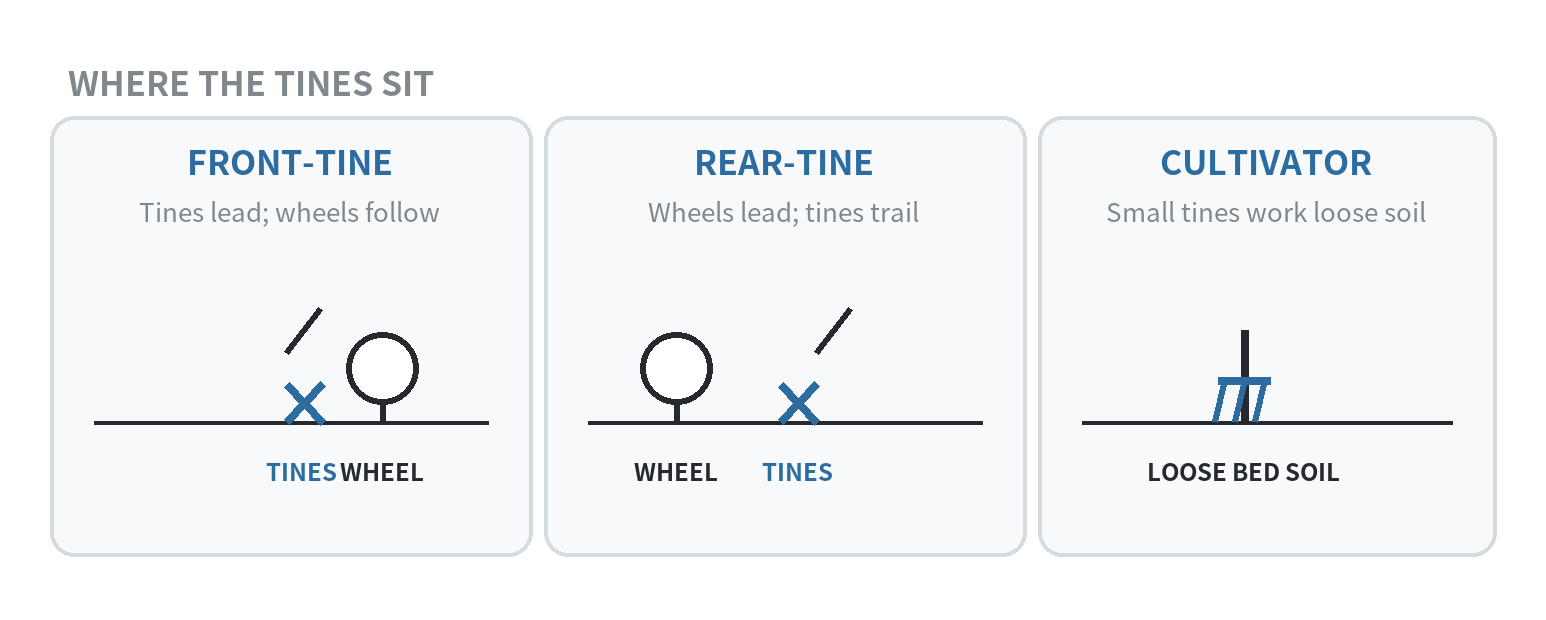
A cultivator mixes loose soil near the surface. It can stir compost into an established bed, break small weeds, or refresh ground that has already been loosened. Troy-Bilt and Husqvarna both describe cultivators as suited to loose or previously worked soil, rather than firm ground that needs to be broken open.
A tiller does the heavier soil-breaking job. If you are turning a lawn section into a new bed, working firm ground, or dealing with compacted soil, compare tillers before cultivators. If the bed is already loose and you only need to blend in an amendment or work around existing plants, the smaller, more precise cultivator category is the closer match.
Soil condition matters more than the yard’s total size. One property can have a compacted lawn patch and a loose raised bed; those are different jobs even if they sit a few steps apart. Sketch each work area separately and note whether it has sod, firm soil, previously worked soil, or established plants.
Front-tine tillers trade reach for close control
On a front-tine tiller, the tines sit ahead of the wheels. That arrangement makes the machine a reasonable candidate for smaller or medium beds where you need to turn and steer around the work area. Husqvarna describes its front-tine machines for smaller garden patches; Troy-Bilt likewise distinguishes them from the larger rear-tine class by their compact handling.
Think about the turns as well as the straight passes. A bed with a fence on one side, a path on another, and plants near the edge may call for a narrower working width and a machine you can redirect without crossing planted rows. Measure the clear soil strip at its narrowest point, then check the product’s listed working width and whether the tine width can be adjusted.
A front-tine design is still a tiller, not a hand-guided cultivator. If you need to work between mature plants or along a tight row, check the machine’s full body width and turning room, not only the tine span. Keep the intended pass outside root zones you want to preserve.
Rear-tine models suit open, difficult patches
Rear-tine tillers place the tines behind the wheels. Manufacturer guidance from Troy-Bilt and Husqvarna associates this class with tougher soil and larger, open work areas. For a new plot with firm ground, that design deserves a closer look than a light cultivator.
Space is part of the decision. A rear-tine machine may need room to turn, line up for the next pass, and move through a gate or storage area. Measure the narrowest access point and the path from storage to the bed. Compare those measurements with the product’s overall width, weight, wheel arrangement, and transport setup.
Check tine rotation, too. Troy-Bilt explains that forward-rotating tines are intended for ground that has been worked before, while counter-rotating tines are used for new or challenging soil. Toro also describes counter-rotating tines as a sod-breaking feature on a dual-direction tiller. Some models offer both directions; read the specification line for the exact model to see which options it includes.
Read width and depth as model-specific limits
Working width tells you how broad a strip the tines cover in a pass. Working depth tells you how far the manufacturer rates the tines to work under the stated conditions. Neither number is a promise that every soil will be cut to that depth in one pass; soil firmness, roots, stones, and the operator’s pace affect the work.
Use the exact model’s manufacturer listing or manual for both measurements. Troy-Bilt’s tiller listing and Toro’s product specification table show width and depth by model, so do not transfer a figure from another model in the same product family. Compare those model-specific numbers with the bed you measured, and note whether the listed width is fixed or adjustable.
Check the details that shape actual use: tine rotation, adjustable width, depth control, reverse gear, transport wheels, handle adjustment, and the machine’s listed weight. A feature only helps if it solves a real constraint. Reverse can matter when turning space is tight; transport wheels matter when the machine must cross a hard path; a narrower setting can matter when the bed is bordered by plants.
Use a short site check before choosing
Write down the job in one sentence: “refresh loose soil around an established bed” points toward a cultivator; “prepare a compacted patch for a new bed” points toward a tiller. Then add three observations: the firmest soil, the narrowest work width, and the tightest access point.
As a hypothetical illustration, not a measurement from an actual product or project, picture a yard with a made-up 14-by-8-foot patch of compacted ground and a separate made-up 3-by-6-foot bed that has already been loosened and planted in rows. Treat them as two work areas instead of adding them into one garden-size estimate. The firm patch calls for tiller specifications; the planted bed calls for closer control and a width that fits between the rows. If a single machine is meant to handle both, compare its footprint and width settings against each space, then check whether its tine type suits both soil conditions.
- Loose, previously worked bed: compare cultivators first; look for a working width that fits between the plants and bed edges.
- Firm but manageable garden patch: compare front-tine tillers and check turning room, tine width, and depth specifications.
- New or difficult ground with open access: compare rear-tine models, including tine rotation, overall dimensions, weight, and depth control.
For a raised bed, account for its walls and corners: a walk-behind machine may not fit or turn inside it, so a smaller cultivator or hand tool may suit the confined area. For a long row, compare the row’s clear width with the full machine width and leave room to turn at each end. The relevant measurement is the working corridor, not the whole garden footprint.
Also read the manual for the model you are considering. It identifies controls and operating limits for that machine. A match on soil type and width is only the start; you still need to confirm that its dimensions, transport method, and operating instructions fit your site and the person who will use it.
If your project includes building the bed itself, see our guide to planning a simple raised garden bed. For surface material after the soil work, our mulch guide explains how to match mulch to a planting area.
FAQ
Can a cultivator loosen a strip of lawn for a new garden?
A tiller is the better category to compare for firm or unbroken ground. Troy-Bilt and Husqvarna describe cultivators as tools for loose, previously worked soil, while tillers are intended to break firmer ground. For a small patch, compare the machine’s specified working depth and width with the area rather than assuming a cultivator can do the heavier job.
Is a narrower working width always better for a small garden?
No. A narrow width helps where paths, plants, or bed walls constrain each pass, but it also covers less ground per pass. Measure the usable strip and turning area, then compare both tine width and the machine’s outer dimensions.
What should I check if a product page lists several depth figures?
Use the specification for the exact model and configuration you are comparing, then confirm the meaning in that model’s manual. A range or adjustable setting describes the machine’s stated capability; ground conditions still affect how deeply it works in a pass.
Will a walk-behind tiller fit inside a raised bed?
Check the bed’s inside width, corner clearance, and the machine’s full body dimensions before deciding. If it cannot turn without striking the sides or nearby plants, use a smaller tool for that confined space.