Budgeting with ADHD is easier to maintain when the plan lives somewhere visible, asks for few decisions, and has a clear next action. Start with take-home income, bills and due dates, then add a small weekly check to record spending and adjust the next step. The goal is a usable map of your money, not a perfect ledger.
The CDC and the National Institute of Mental Health describe adult ADHD as potentially involving attention, organization, task completion, and impulse-control difficulties (checked September 30, 2026). Those experiences differ from person to person. A budget can account for the steps that are easy for you to miss without turning every purchase into another task.
Put the whole plan in one visible place
Choose one home for the budget: a notes app, spreadsheet, paper page, or budgeting app. Keep the essentials together: take-home pay, bills, due dates, spending categories, and money set aside for expenses that do not arrive every month. If a tool hides these in several menus, use a simpler view or a different format.
Consumer.gov recommends gathering bills and pay stubs, listing income and expenses, and comparing the two. Use that as the first pass. Take the net amount from your pay stub, not the amount before taxes and deductions. For variable income, Consumer.gov suggests using last year’s income divided by twelve as a monthly estimate (checked September 30, 2026). If last year’s pattern no longer fits, make a conservative estimate from the income you can document and revise it when new deposits arrive.
Begin with the last bank or card statement rather than trying to remember every expense. Copy the bill name, amount, and due date. Add flexible categories such as groceries, transportation, and personal spending using your own recent transactions. This makes the first draft a record-based plan instead of a guess about what you ought to spend.
Give each dollar a job before the month gets busy
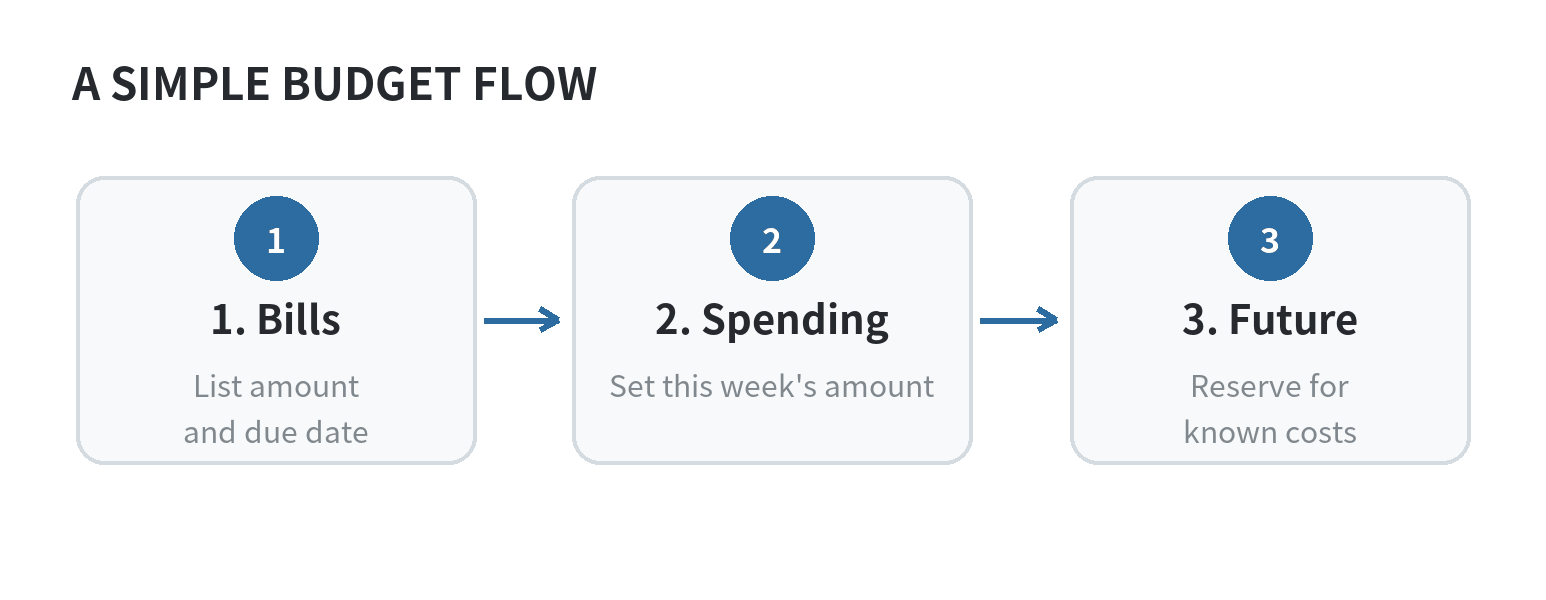
Separate the plan into three jobs: bills, everyday spending, and future expenses. The split keeps an upcoming annual payment from looking like money available for this week’s choices. It also gives you a short question to answer when you open the budget: which job needs attention next?
| Budget job | What belongs here | First action |
|---|---|---|
| Bills | Rent, utilities, minimum debt payments, insurance | Write down each amount and due date |
| Everyday spending | Food, transit, fuel, household purchases | Set a weekly amount from your own records |
| Future expenses | Car maintenance, gifts, annual renewals, school costs | Divide a known upcoming bill into deposits before its due month |
For example, imagine take-home pay of $3,200 in a month. If fixed bills total $1,850, everyday spending is planned at $900, and $250 is reserved for known future costs, the plan assigns all $3,000 and leaves $200 unassigned. Those amounts are only a worked example. Replace them with your own deposits and statements; the important part is seeing what remains before spending it.
If the totals exceed your income, change a category or due-date plan before adding more tracking. Start with flexible spending and upcoming expenses. If fixed obligations already use the available money, write down the shortfall and the bill date that creates it. That gives you a specific question to take to a creditor or service provider.
For a predictable bill that does not arrive every month, record the expected month and pull the amount from its last statement or renewal notice. Divide the amount by the number of pay periods or months left before the due date, then give that amount a named line in the plan. If the contribution makes weekly spending unrealistic, the conflict is visible early enough to review another flexible category or ask the provider about timing options. A named reserve is easier to distinguish from money already assigned to current bills.
Make bill dates visible beside paydays
A monthly total can look workable while the dates still collide. Put paydays and due dates on the same calendar, then match each bill to the deposit that needs to cover it. CFPB’s bill-calendar instructions say to list each bill, amount, and due date and place the calendar somewhere you can review weekly (checked September 30, 2026).
Here is a sample calendar: paychecks arrive on the 5th and 19th; rent is due on the 8th; a phone bill is due on the 12th; and a utility bill is due on the 23rd. The first deposit has to cover rent and the phone bill before the second deposit arrives. If the checking balance is tight, note that timing gap even if monthly income is greater than monthly bills.
For each payday, write a short sequence: deposit arrives, bills due before the next payday are covered, then the remaining amount is split across weekly spending. If a due date is hard to meet, contact the provider before it passes and ask whether a different due date or payment arrangement is available. Keep the answer and any new date in the calendar.
Reduce the number of steps between spending and recording
Choose one capture method you will actually open: enter a purchase when it happens, keep receipts in one tray, or review transactions from your bank statement during a planned check-in. A long category list can make every entry a classification problem. Start with a few broad groups and split one only when the distinction changes a decision.
If automatic imports are available in your chosen tool, check their categories against the statement instead of assuming every transaction landed correctly. If you prefer manual tracking, leave a note on the home screen with the next action, such as “record card purchases.” Keep the budget itself in the same place as that reminder so you do not have to reconstruct where you stopped.
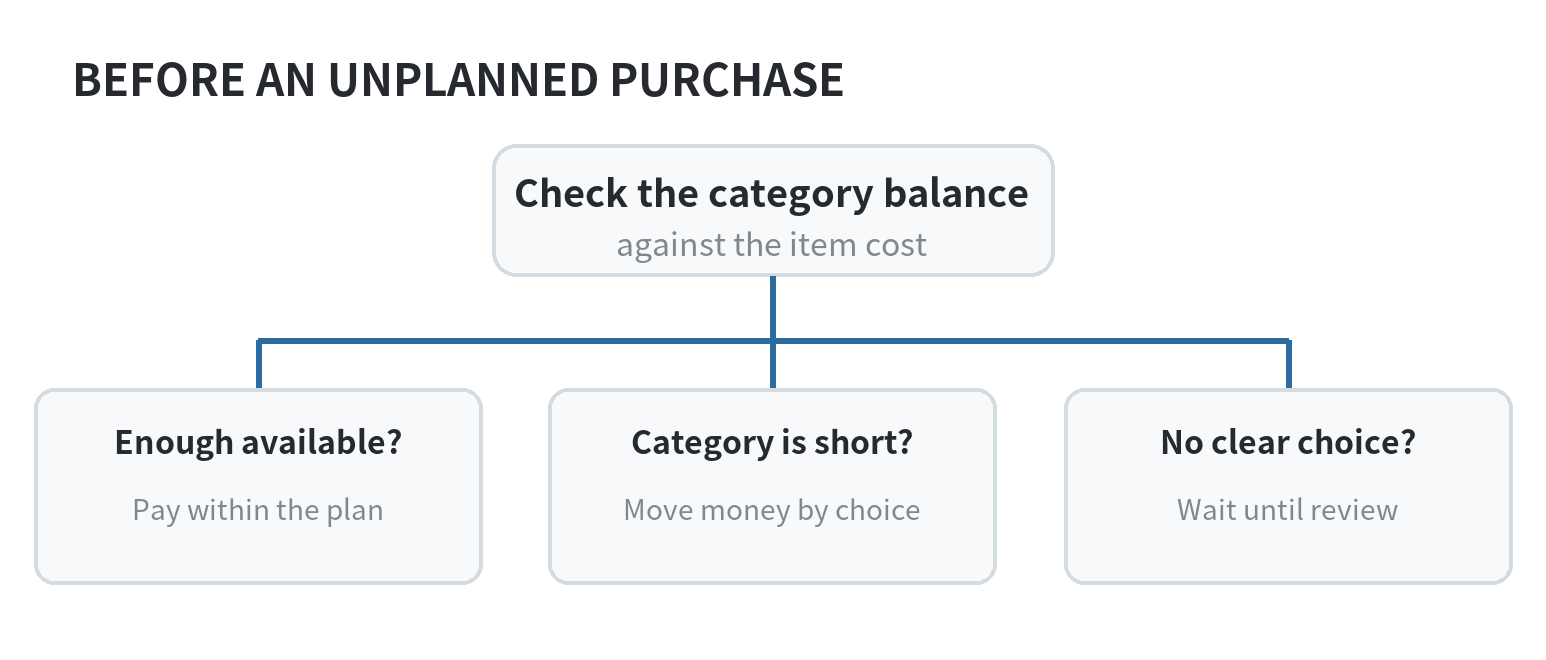
Make alerts specific: identify the bill or task, the date it matters, and the action required. “Electric bill due Friday—check amount” is easier to act on than “remember bills.” For purchases that are not planned, compare the available category balance with the item cost before paying. If the category is short, choose whether to move money from another category or wait until the next planned review.
Use a short reset instead of restarting the budget
Consumer.gov describes using a budget each month: make a plan, record spending, compare the plan with what happened, and use that information for the next month (checked September 30, 2026). Keep the review small enough to finish. Check the next bills, compare a few category totals, and decide one adjustment. A missed entry is a missing record, not a reason to throw away the plan.
If you stop tracking for a while, restart from the current account balance and the bills still ahead. Do not spend time rebuilding every past transaction unless a specific question requires it. Mark the last known balance, add pending charges, and continue from the next due date. That gives you a current working picture without turning catch-up into a second budget.
Write down a fallback rule for a week when the system gets missed: protect bills already due, pause optional purchases until you check the balance, then update the plan at your next review. If another person shares expenses with you, agree on who records each shared bill and where the confirmation lives. Specific ownership prevents two people from assuming the other person handled it.
For adjacent tools, see the site’s smartphone budget tracker walkthrough and its emergency-fund planning article. Keep this page focused on the day-to-day budget; the separate guides cover their own setups.
FAQ
Should I use cash envelopes or a digital budget with ADHD?
Use whichever format makes the available amount easiest for you to see before spending. A paper envelope can show a category balance at a glance; a digital list can keep bills and reminders together. Try one format for a month and note which steps you actually complete.
How should I record cash purchases in an ADHD budget?
Record cash purchases in the same capture place as card purchases, or assign a cash withdrawal to a category and reconcile it during your budget review. Keeping cash visible in one category makes it easier to see what remains without searching for separate notes.
How do I keep bill money from looking available to spend?
Add the bills due before your next payday and subtract that total from your usable balance in the budget. You can keep that amount as a labeled reserve in your plan, even if it stays in the same checking account. Check the due dates before moving any money elsewhere.
Last updated: 2026-09