Build a conference travel budget from written prices for your dates, then subtract only the costs your employer or sponsor has confirmed it will cover. Track the full trip cost separately from the cash you may need before reimbursement arrives. That distinction catches both an over-budget trip and a short-term cash gap.
Price the trip around the event dates
Start with the registration page and the event schedule. Record the registration amount for the pass you need, its deadline, and whether the pass includes meals, workshops, or other sessions. The organizer’s price is the relevant number; an old conference fee or a general travel average cannot tell you what this event will charge.
For transportation, price a round trip that arrives in time for the first required session and leaves after the last one. Include the trip to and from the airport or station, local rides or transit, baggage charges, and parking if you expect to drive. If the fare changes when you add a bag or select a seat, include the version you would actually use.
For lodging, compare the total for the needed nights, including taxes and fees shown before payment. Check the event hotel block and a suitable alternative using the same dates and cancellation terms. A lower nightly headline can produce a higher total if it adds a longer commute, paid parking, or a night you do not need.
Meals need their own line. First mark meals included with registration or provided by your host; budget only the meals you expect to pay for. IRS Publication 463 explains the records needed for business travel and distinguishes actual meal costs from a federal standard meal allowance. GSA’s per diem lookup applies to official government travel, so do not treat its allowance as a private employer’s promise or as a quote for your destination. Both sources were checked September 30, 2026: IRS Publication 463 and GSA travel planning.
Turn quotes into one total and one monthly reserve
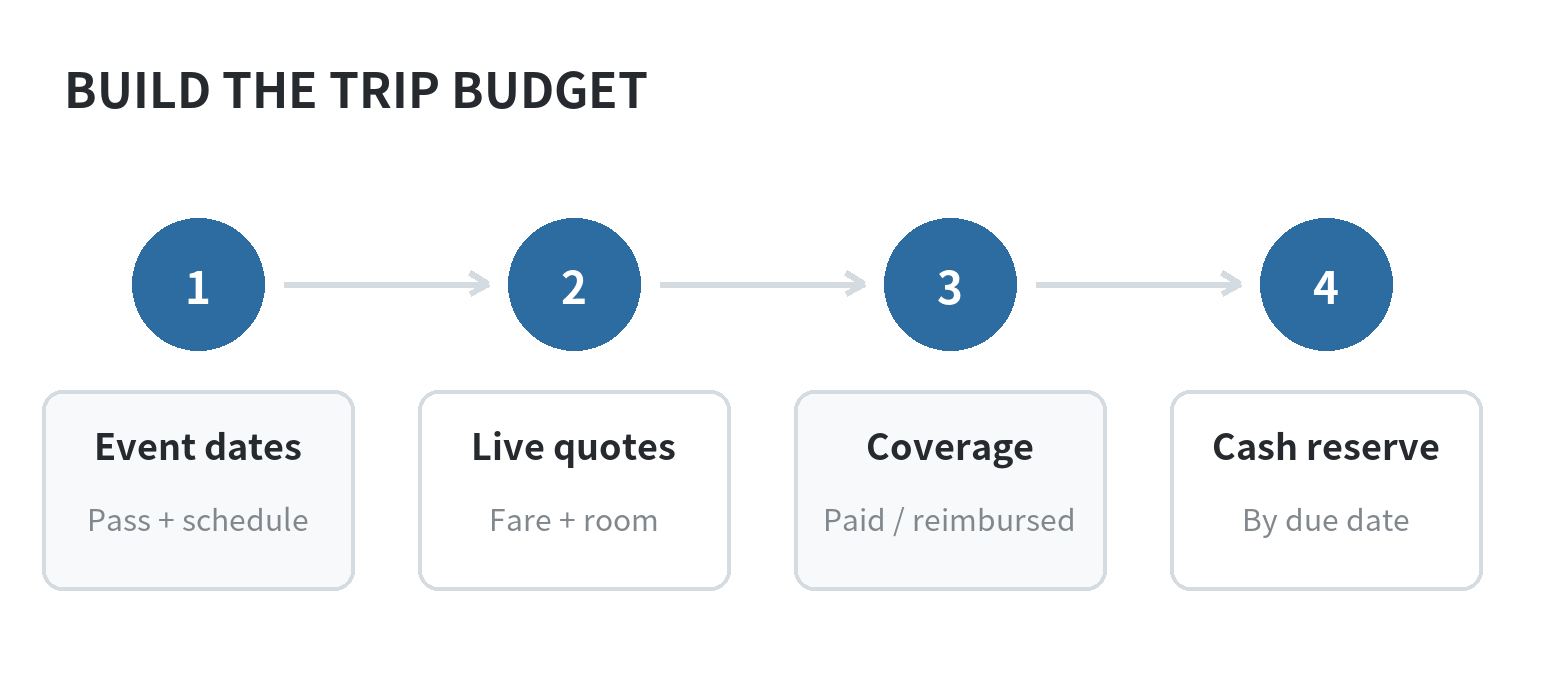
Put each amount in a simple worksheet: registration, transportation, local travel, lodging, meals, and other required costs such as baggage or parking. Add a note for the source and date of each quote. If you have no dependable price yet, leave that cell open and request a quote instead of filling it with an invented average.
Then mark each line as paid by you, paid directly by work, or potentially reimbursed. “Potentially” is not the same as covered. Ask your manager or finance team whether the event is approved, which expenses qualify, what limits apply, whether you can use a company card, and what documentation and submission process they require. Save the answer with your budget.
Suppose, purely as a worksheet example, registration is $480, transport is $360, lodging is $640, meals are $150, and local travel is $70. The trip total is $1,700. If an employer confirms it will pay registration and lodging directly, the remaining personal cash estimate is $510. These figures are sample inputs, not typical conference prices or a forecast.
If the event is months away, divide the amount you expect to pay yourself by the number of paychecks before the first payment deadline. Keep each deposit in a separate “conference” savings line so it does not disappear into everyday spending. Use the due dates, not the travel dates: registration may be charged well before departure, while lodging may be charged at booking or after the stay.
The CFPB’s Your Money, Your Goals toolkit includes a spending tracker, bill calendar, and cash-flow budget tool for organizing income, expenses, and due dates. The toolkit page was checked September 30, 2026: CFPB toolkit. You can use a notebook or spreadsheet the same way: write the expected charge date beside each trip cost, then check whether money will be available that week. For a phone-based monthly plan, see our guide to planning a monthly budget.
Ask how reimbursement works before paying
Get the reimbursement rules before you put a large charge on a personal card. Confirm whether the company pays the organizer or hotel directly, advances funds, reimburses after the trip, or uses a mix. Ask when to submit the form, where receipts go, and what happens if a cost exceeds the approved limit or the trip changes.
IRS Publication 463 says an employer should tell employees the reimbursement method and required records. For an accountable plan, it describes substantiation and returning excess advances as conditions; the exact treatment depends on the arrangement. That is a tax rule, not a guarantee that your employer will reimburse every expense. Check the policy for your trip and keep the records it requests. The IRS travel and reimbursement guidance was checked September 30, 2026.
Keep a running record while traveling: date, vendor, amount, business purpose, and receipt. The IRS lists amount, time, place, and business purpose among the elements used to substantiate travel expenses. A hotel receipt should show the property, stay dates, and separate charges. Photograph receipts as you receive them, then store the originals if your employer asks for them.
Stress-test the cash gap, not just the final cost
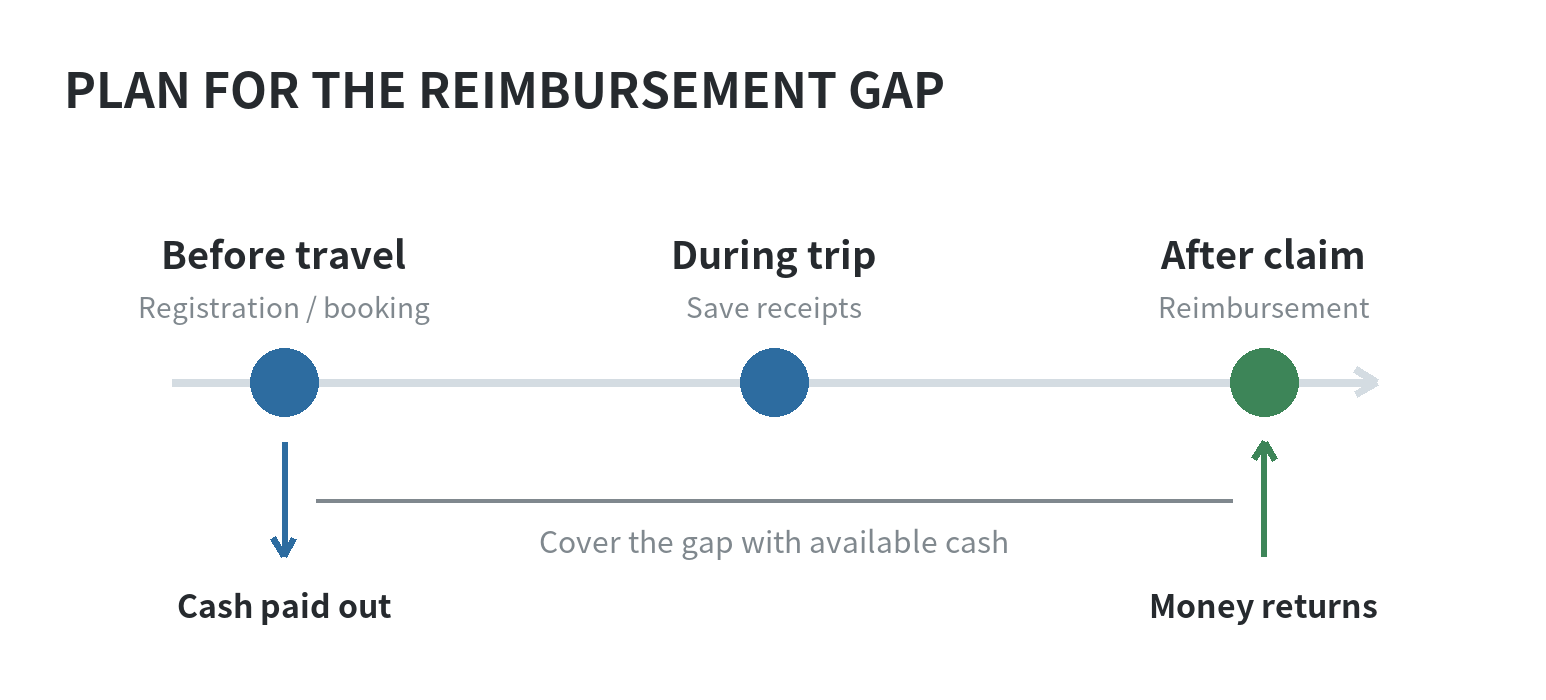
A trip can fit the approved budget and still strain your checking account if you must pay first. List the dates when registration, transport, and lodging will post. Compare those dates with your paydays and other bills. The largest amount due before reimbursement is the cash bridge you need to cover without missing rent, utilities, or a card payment.
For example, if you pay $480 for registration now and expect a $360 fare charge before your next paycheck, those two charges require $840 of available cash at that point. A later reimbursement does not make the earlier charges disappear. If the timing is tight, ask whether work can pay a vendor directly, issue an advance, or split an eligible charge; do not assume one is available until finance confirms it. Set a checking-account floor that protects bills due before the next payday, then count only the money above that floor as available for the trip. If the trip charge would push the balance below the floor, the choices are to change payment timing, reduce the trip cost, or wait for approval—not to count a future reimbursement as cash already on hand.
Also create a small contingency line from actual quotes, such as a changeable ticket instead of a nonrefundable one, or ground transport if the arrival time changes. Do not add a generic percentage without a reason. If you cannot estimate a possible charge, mark it “quote needed” and ask the provider or employer before committing.
Separate optional personal costs from the work trip: an extra hotel night, companion travel, sightseeing, or a room upgrade should not be hidden in the employer-funded total. Decide whether you can afford those extras after you know the required trip costs and reimbursement terms.
Reconcile the plan when you return
Compare the final receipts with the original worksheet. Replace estimates with actual charges, label any personal portion, and total the reimbursement request using the employer’s categories. Submit the claim through the stated process and save a copy of what you sent. If a receipt is missing, contact the vendor promptly and ask whether it can provide a duplicate.
When repayment arrives, match it against the claim rather than treating the deposit as new spending money. If the amount differs, ask which line was adjusted and update your records. Use the final trip total as a reference only for this event’s route, dates, and policy; the next conference needs fresh registration, transportation, and lodging quotes. If you keep receipts and spending in a phone spreadsheet, this smartphone budget tracker guide covers a simple way to organize category totals.
| Budget line | What to record | When to check |
|---|---|---|
| Registration | Pass type, total, included meals or sessions | Organizer deadline |
| Transportation | Fare, bags, seat or parking, airport transfer | Before booking |
| Lodging | Nights, taxes, fees, cancellation terms | Before booking |
| Meals and local travel | Only charges not provided or directly paid | Before and during trip |
| Work coverage | Direct pay, advance, reimbursement, limits | Before committing |
| Cash bridge | Personal funds due before repayment | By charge date |
FAQ
What if the registration deadline comes before expense approval?
Ask the approver whether registration is covered and whether work can pay the organizer directly before you submit payment. If you cannot get an answer in time, budget the charge as your own cash at risk and decide whether paying it is manageable.
Should I use a credit card for expenses I expect to be reimbursed?
Only count on reimbursement after the expense is approved, and make sure you can cover the card bill if repayment is delayed or denied. A reimbursement does not change the card’s due date.
How should I budget when a coworker shares a hotel room?
Use the amount you are personally responsible for, and confirm who books the room, how the bill is split, and how each person submits documentation. Keep your own proof of payment for your share.
Are meals included in a conference registration fee?
Check the event’s registration description and schedule for the specific meals included. Put only meals you still need to pay for in your personal estimate, and follow your employer’s meal-expense rules for reimbursement.
Last updated: September 2026.
Last updated: 2026-09