Budget formula feeding from your own receipts, not a national “average.” Formula type, container size, and any WIC benefit change the out-of-pocket total. Start with recent purchases, compare containers by a common unit, and reserve cash for the next month.
Turn receipts into a monthly number
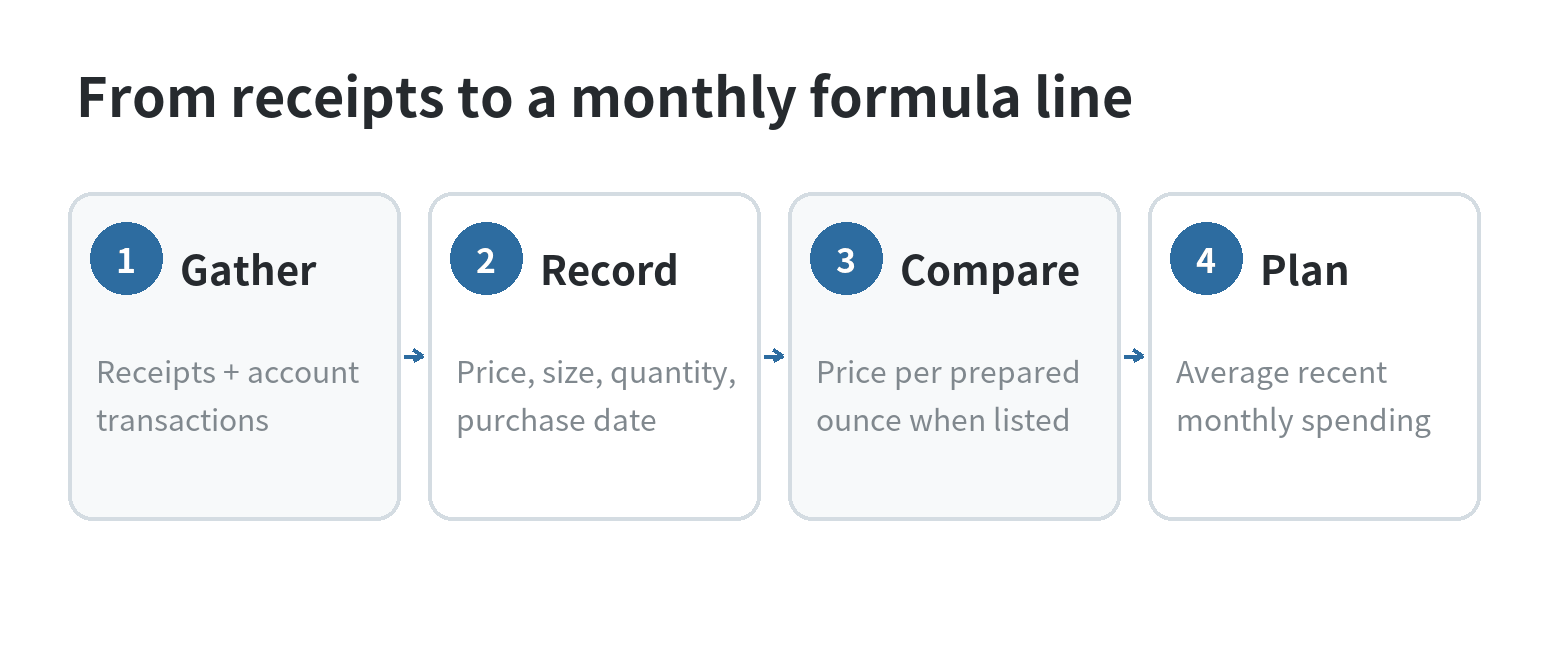
Gather formula receipts and account transactions from the last month. Record the product type, container size, price paid, quantity bought, and date. If a receipt combines formula with groceries, mark just the formula line. Include delivery or shipping charges when they were part of that purchase.
When you order online, save the order confirmation until the charge posts. If a purchase is refunded, record the credit against formula after it appears in the account so the month’s total reflects the final amount paid. Keep the order date with the posted date if the charge crosses a month boundary; that makes the timing difference visible during the next review.
The American Academy of Pediatrics’ HealthyChildren.org formula buying page recommends comparing cost per prepared ounce and keeping receipts (checked October 1, 2026). To make that comparison, divide the amount paid by the prepared ounces listed for that container. Do not compare a can’s sticker price with a different size or format and assume the lower shelf price is the lower unit cost.
Use purchases to make a monthly baseline, then note any unopened containers. They may shift when you buy the next one, but the amount already paid still belongs in your overall plan.
Build a line that can handle uneven shopping
Formula purchases may not land neatly on one date each month. If you buy a larger container one month and none the next, add recent monthly totals and divide by the number of months reviewed. This smooths purchase timing without treating a no-purchase month as free.
If the coming month includes a scheduled product change or travel, keep the baseline and show the extra amount as a separate one-time adjustment. That makes the reason for the higher budget visible.
Keep formula separate from bottles, nipples, water, and other feeding supplies. Those purchases may not recur at the same pace as formula. A separate line shows whether a one-time setup expense is ending or whether a replacement needs its own sinking fund. If you are already building a household plan with another adult, the site’s shared-expenses budget guide offers a way to decide which costs belong in the joint budget.
Compare containers by the same unit
Package size can make options hard to compare. Use the prepared-ounce amount printed for each container when available. If you cannot compare the yields, record the product name, size, and price, then check the manufacturer’s current label or customer information; do not infer yield from net weight alone.
| Record | Why it helps |
|---|---|
| Amount paid after discounts | Shows the actual cash cost to your household |
| Container size and prepared yield | Lets you compare like units instead of shelf prices |
| How many were bought | Separates a larger stock-up from a normal month |
| WIC amount used, if applicable | Separates the covered portion from additional purchases |
For a made-up unit-price check, if a $24 container lists 90 prepared ounces, divide $24 by 90: the planning unit cost is about 27 cents per prepared ounce. Include a discount before dividing; if shipping is charged for that order, add it to the purchase cost. The calculation lets you compare package sizes with the same measure. It does not predict how long a container will last in your household.
A lower cost per prepared ounce does not decide whether a product is right for a baby. If a health professional has recommended a particular formula, plan around that product. The budget question is how much to set aside and when the cash will be needed.
Fit WIC into the cash-flow plan
In USDA Economic Research Service estimates of 2016 WIC packages, infant package costs vary by age and feeding category. For fully formula-fed infants, ERS reported a cost of $57.05 per month for a 6-month-old infant (checked October 1, 2026). The National Academies’ 2017 review also presents WIC package costs as program costs. These are historical benefit-package estimates, not current retail formula prices or a family’s out-of-pocket bill. Ask your state or local WIC agency what benefit is assigned now.
Write down the amount the local WIC agency assigns, what it covers, and when the benefit becomes available. Use receipts to total purchases beyond that amount. USDA ERS’s 2025 report describes state bids and manufacturer rebates (checked October 1, 2026); those program costs are not household checkout prices.
Check eligibility and application steps with your state or local WIC office. USAGov says applicants must meet requirements based on income, health, and residence, and the state or local agency explains where and how to apply and what to bring (checked October 1, 2026). The current guidelines and process can depend on your state. Keep a separate note of your application or recertification status so a pending benefit does not disappear into the regular household budget.
Decide what to adjust when the total rises
When the total runs high, identify whether the cause was price, package size, timing, or the amount covered by a benefit. Check the receipt and WIC balance, and record one-time purchases separately from repeat expenses.
A planned formula change can alter the cost per container or how quickly the household uses its supply. If the product choice is being discussed with a health professional, use that guidance for the product question and update the budget with the actual new receipt. If the current plan will not cover the next purchase, contact the WIC office or the baby’s care team and ask what support is available.
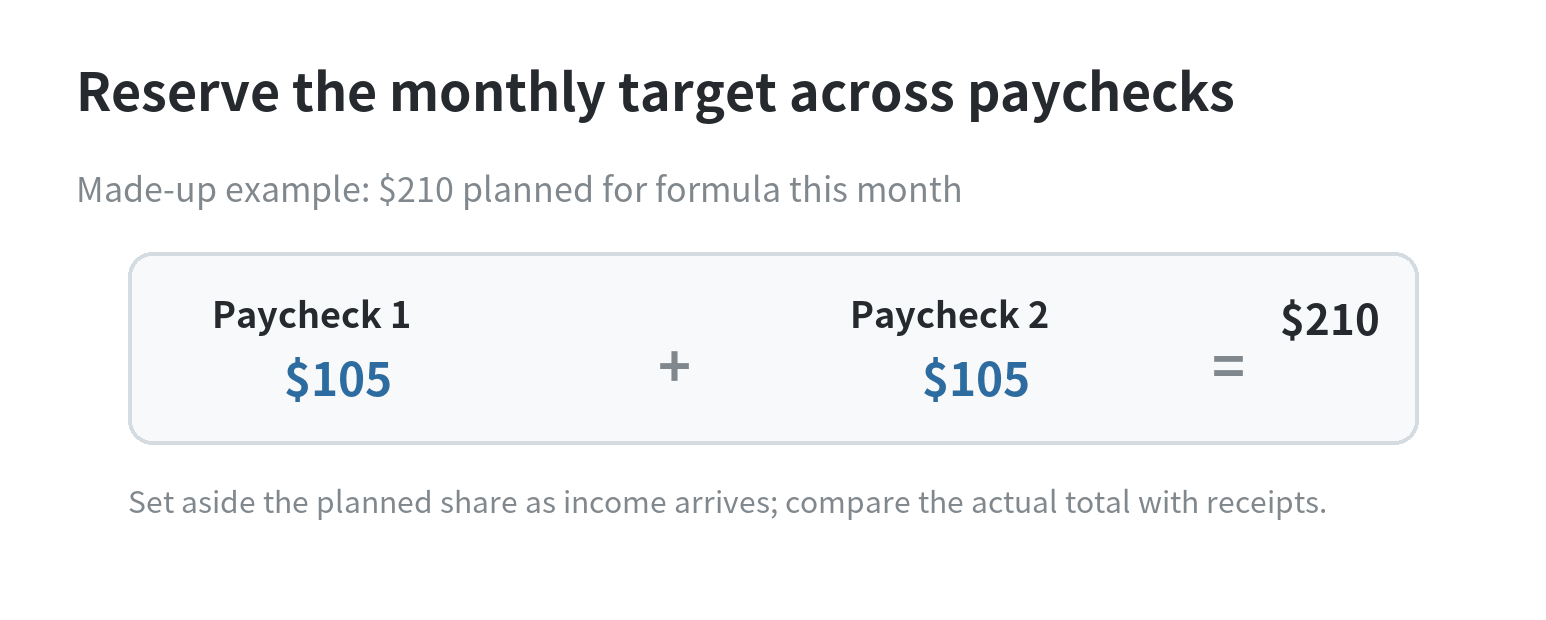
If the cash timing is the problem, divide the monthly target by paydays and reserve that share as income arrives. For example, a $210 monthly target paired with two paychecks means setting aside $105 from each check. If you track household spending on a phone, the site’s budget tracker walkthrough shows a simple way to keep planned and actual amounts visible.
Match the set-aside to the date the purchase must be paid, not just the calendar month. If a benefit becomes available after a paycheck, do not count it toward an earlier purchase. If another caregiver buys formula, agree on who records the receipt and whether the spending came from a shared account or personal money. That prevents the same purchase from being entered twice or disappearing from the total.
Review the line after a real change
At month end, compare the planned amount with receipts and separate any one-time expense from the repeat line. Recalculate when the product, package, WIC amount, or purchase pattern changes. Label an unusual expense separately, then remove it from the next month’s plan. Keep receipts with the budget so you can see what your household paid, what WIC covered, and what cash is due before the next purchase.
If a month runs under budget because you had an unopened container, note the inventory as well as the cash spent. The next month can then start with the right amount on hand without permanently lowering the baseline from one unusually low checkout total. When the stock is used, let the next receipts show whether the old monthly target still fits.
FAQ
How can I set a formula budget before my first receipt?
Use a temporary placeholder based on current prices for the product already selected for your household, then replace it with actual receipts. Keep the placeholder separate from confirmed expenses so the first month can reset the estimate.
Should I treat a gifted container as money saved?
Record it as inventory received, not as a cash purchase by your household. Note when it is used and continue setting aside money for the next container you will need to pay for.
What if I cannot afford the next container before payday?
Contact your WIC agency and the baby’s care team promptly to ask about available local help. USAGov directs families to their state WIC agency for application information, and the American Academy of Pediatrics’ HealthyChildren.org page on food affordability discusses asking a pediatrician’s office about resources (checked October 1, 2026).
Does a one-time discount lower next month’s formula budget?
Use the amount actually paid for that receipt, but do not automatically carry a one-time discount into later months. Update the baseline once you see the amount paid on the next regular purchase.
Last updated: 2026-10