Vet bills are easier to plan when you budget from your own clinic’s estimates and visit history instead of a national average.
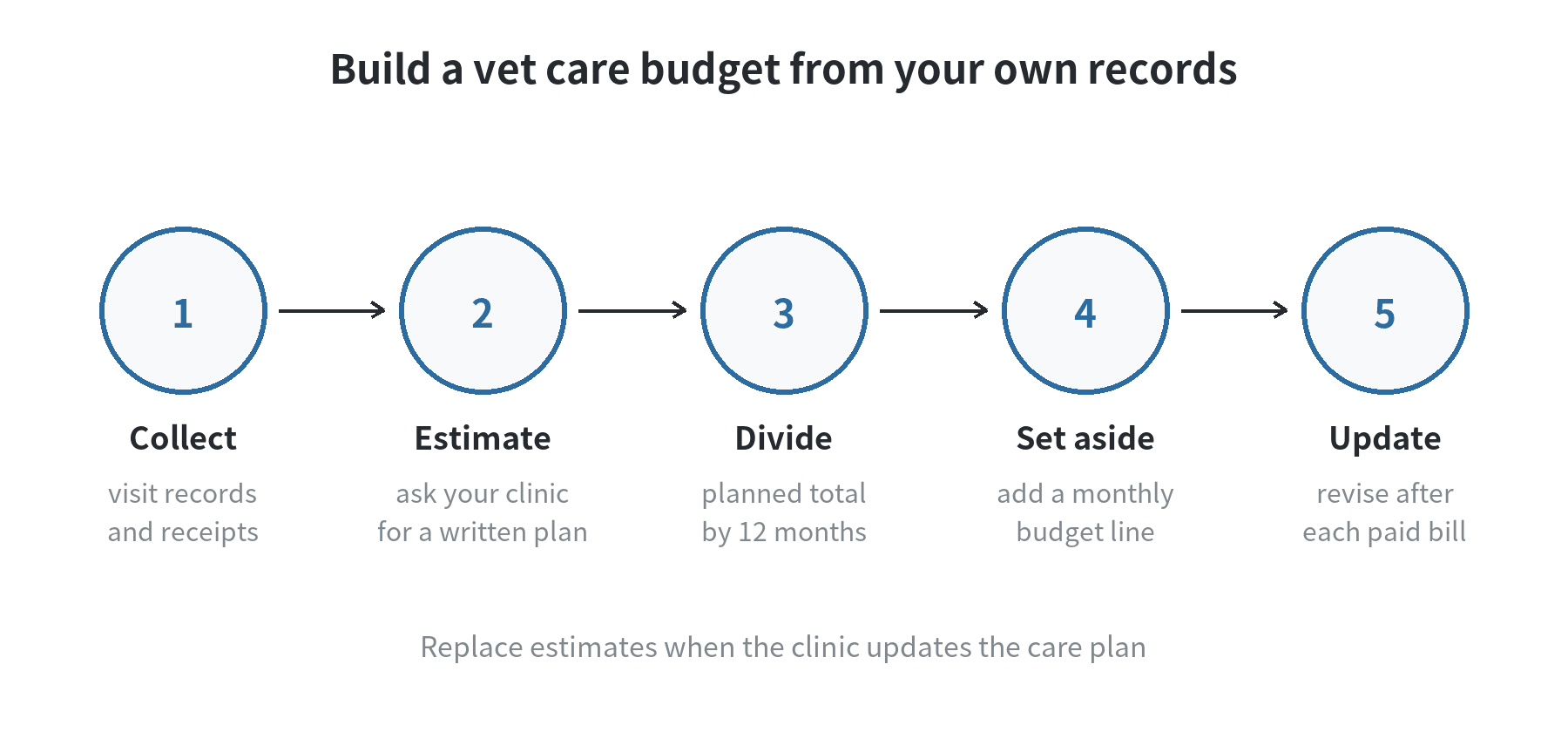
Separate routine care you can schedule from unexpected visits, then turn known yearly costs into a monthly amount.
On September 30, 2026, the American Animal Hospital Association (AAHA) advised pet owners to ask their veterinarian for estimates of routine services.
The American Veterinary Medical Association’s (AVMA) household data also shows spending varies by kind and number of pets.
Start with the records you already have
Gather invoices, receipts, and insurance statements for the pet. Sort each item into routine visits, tests, medication, dental care, and urgent or specialty visits.
Keep food, grooming, boarding, and supplies in separate budget lines so the veterinary category answers one question: what have you paid for care?
If records are scattered, use a simple spreadsheet or a note on your phone. Enter the date, clinic, service, amount paid, and whether the visit was planned.
If you use a separate app or tracker for appointments and care records, link it to the budget only when a charge is actually paid or due.
When you receive a new invoice, compare it with the estimate. Mark which listed services were completed, what you paid, and what the clinic wants to revisit later.
That record gives you a clear starting point for your next budget update.
Review a full year of records if you have it. If you have fewer records, use what exists and mark the missing period.
Don’t treat a quiet stretch as proof that next year will cost the same; instead, use it as a starting point and replace estimates when the clinic gives you current information.
Ask the clinic for your household’s baseline
Request a written estimate for the routine care the veterinarian expects for your pet over the coming year.
AAHA names exams, lifestyle-appropriate vaccines, parasite testing and prevention, screening tests, spay or neuter care, and dental care as items to price.
Which items apply depends on your pet and the veterinarian’s care plan.
For a proposed visit or procedure, ask for an itemized written estimate with the service, test, medication, and any follow-up listed separately.
AAHA’s financial planning guidance recommends detailed written estimates and questions about alternatives and costs.
It also describes phased plans (AAHA, checked September 30, 2026).
If the estimate has a range, ask what could move the final bill toward either end and how the clinic will contact you if the plan changes.
Tell the clinic what amount you can manage before agreeing to a plan; ask which parts are time-sensitive and which can be scheduled later.
There is no single annual average that can set a reliable amount for every household.
The AVMA’s 2022 Pet Ownership and Demographics Sourcebook reports differences in veterinary spending by pet species and household pet count (checked September 30, 2026).
Call your clinic for its estimate, and ask a second local clinic for a comparable quote when you need to compare a planned service. Keep the same service list in both requests.
Turn scheduled care into a monthly budget line
Add the annual estimates for routine care that you expect to pay directly, then divide that total by twelve.
That is a planning contribution, not a promise that bills will arrive evenly.
If you have an upcoming dental visit or another known expense, give it a separate savings amount and due month so it does not disappear inside a general monthly figure.
Suppose your clinic later revises that yearly estimate after a visit or a change in your pet’s care.
Update the monthly contribution to match the new total, rather than keeping the old figure out of habit.
If the monthly amount does not fit, ask the clinic whether services can be scheduled across pay periods or whether it can offer a phased plan.
Put the amount in your budget on the date income arrives, just like a bill. Track the balance in a separate savings bucket or a clearly named budget category.
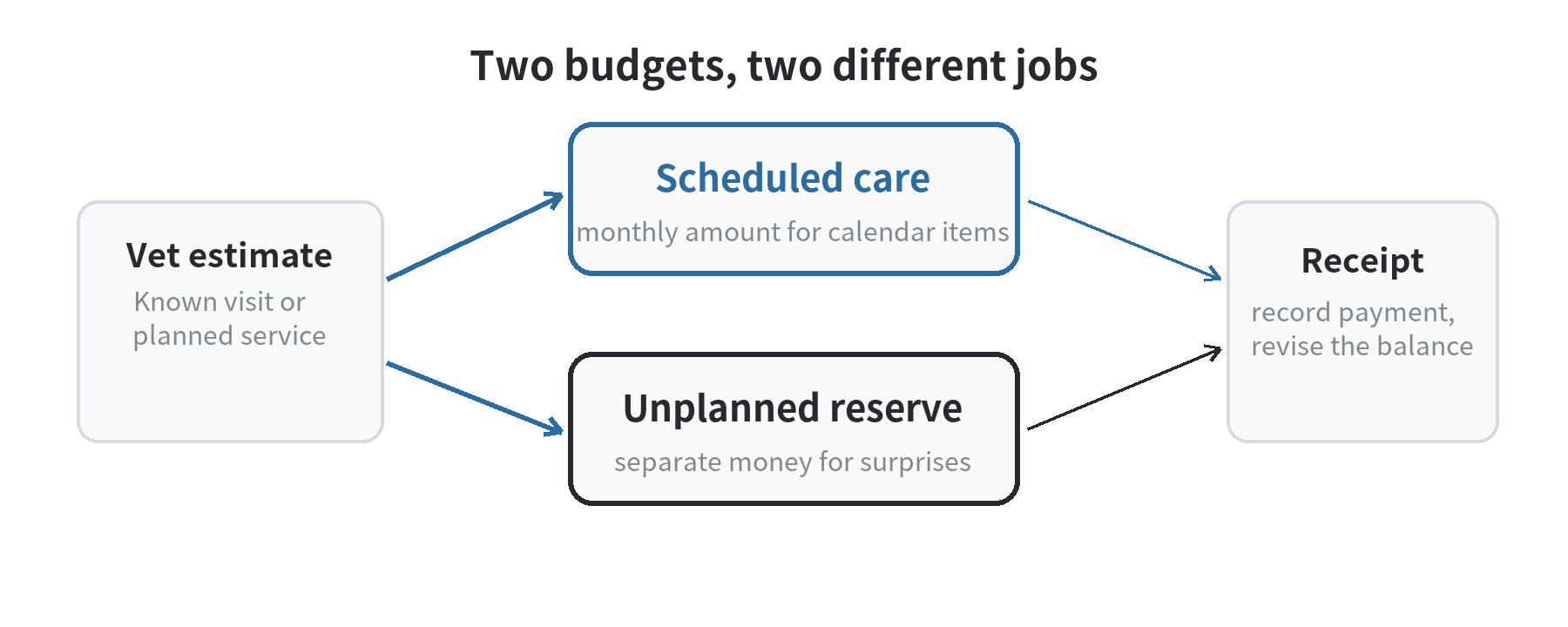
When you pay an invoice, subtract it from that bucket and save the receipt; the remaining balance then reflects money reserved for care already on the calendar.
Mark the expected visit month beside the estimate. If the bill is due before your next contribution arrives, use the balance already saved or discuss timing with the clinic.
This connects the care calendar to your paycheck calendar and makes a monthly amount easier to judge against actual cash flow.
Keep planned visits apart from surprises
Use two lines in your plan: scheduled care and an emergency reserve. Scheduled care covers visits and services already on the calendar.
The reserve is money you have chosen to hold for an illness, injury, or other bill you could not schedule.
Keep the reserve goal personal to your cash flow instead of treating a published average as a guarantee.
Start the reserve with what you can set aside after essential bills. If a surprise bill uses part of it, add a refill amount to later budgets and rebuild over time.
When savings are limited, call the clinic early and ask for a written estimate, available care options, and the amount due at each stage.
AAHA notes that clinics may offer internal payment plans.
It also advises asking about charitable assistance for specific conditions or income levels; ask your clinic what applies locally.
When a bill cannot be paid in full, ask about the total repayment cost and due dates before accepting financing.
Put any agreed payment in the monthly budget as debt repayment, separate from future care savings.
This makes clear whether the budget can carry both the existing bill and the next planned appointment.
If you are setting aside money for more than one pet, label contributions and charges by pet even if they share one savings account.
A new estimate for one animal can then change that pet’s budget line without erasing the other animal’s planned expenses.
Review coverage and reset the plan when life changes
If you have pet insurance, budget the premium separately from money available for a bill.
Read your policy for the deductible, reimbursement terms, annual limit, waiting periods, and exclusions before counting on a payment.
AAHA’s chronic-care guidance identifies these as policy details to review.
AAHA calls pre-existing-condition exclusions an industry standard; the NAIC also lists exclusions (checked September 30, 2026).
Ask the insurer how a specific expense is treated before relying on reimbursement.
Update the budget after a new diagnosis, a move, a change in clinic, a new pet, or a change in your income.
Request a fresh estimate when the care plan changes, and keep older estimates so you can see which assumptions no longer fit.
A monthly line can stay stable while the underlying estimate changes; the amount should follow the current plan, not habit.
When a recurring service or prescription appears on several invoices, list it separately from one-time charges.
Ask the clinic whether it belongs in the next estimate and which visit date or refill date to plan around.
Use the clinic’s instructions for care decisions; the budget tracks the expense and timing.
If the monthly contribution competes with rent, food, utilities, or minimum debt payments, write down the gap before the next visit.
Share that limit with the clinic and ask what care options and timing it can discuss with you.
For a broader monthly budget structure, use the site’s monthly budget planning guide; if keeping care records is the hard part, see the pet care tracker guide.
FAQ
Should I use a national average to set a vet budget?
No. Ask your clinic for a written estimate based on your pet and planned services.
AVMA’s household data shows spending varies by species and number of pets, so an average may not match your household.
What if I have no past veterinary receipts?
Start with a call to the clinic and ask for an annual routine-care estimate and a written estimate for any upcoming visit.
Add future bills to your records as they happen, then revise the budget from those actual charges.
Can I count pet insurance as my emergency fund?
No. Keep a reserve for costs you may need to pay before reimbursement or that your policy does not cover.
Check your policy’s terms and ask the insurer how a planned expense is handled.
How do I budget for more than one pet?
Track estimates and receipts by pet first, then add the monthly contributions together if you use one household savings bucket.
This keeps a change in one pet’s care from obscuring the other pet’s planned expenses.
Last updated: 2026-09