Budget for a gym membership only after you know the full recurring cost and the rules for leaving. Ask for a written quote, turn every fee into a monthly amount, and compare that total with the money left after bills, food, debt payments, and savings. There is no dependable national price to plug in: the number that matters is the one the gym will actually charge you under the plan you are considering.
Get the complete price before choosing a monthly limit
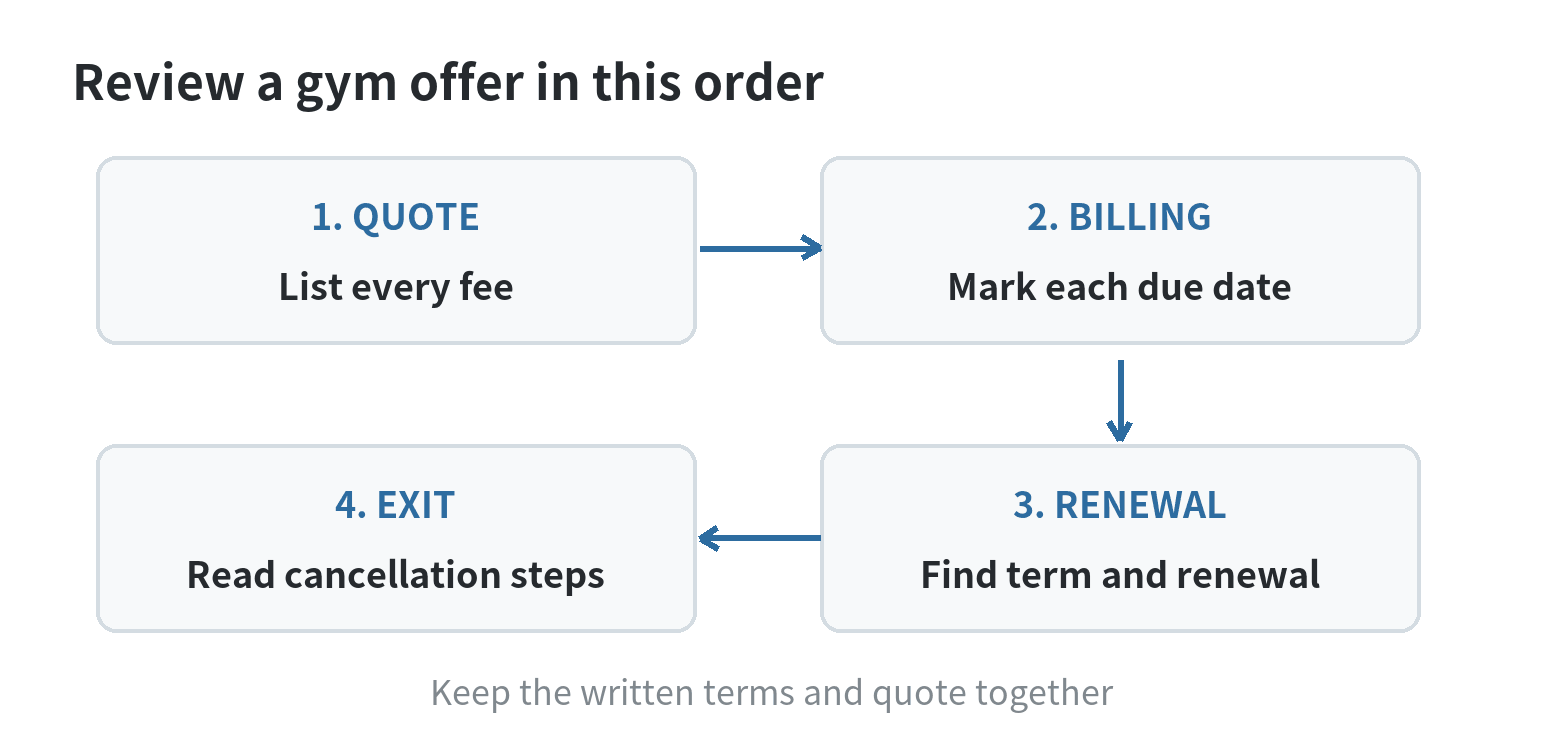
Ask the gym to list every charge that applies to your plan: the recurring membership payment, enrollment or start-up charge, annual or facility fee, required access card, and any add-on you have selected. Ask when each charge will post, whether it is one-time or recurring, and whether the quoted amount is promotional. Request the terms in writing so you can compare the same items across gyms.
A simple quote request can be: “Please send the full price for this plan, every charge due at signup and later, the billing dates, the renewal terms, and the steps and deadline for cancellation.” Ask for a separate line for each optional service. A clear written reply gives you figures to enter in your budget instead of relying on a verbal headline price.
Do not compare a monthly headline price with another gym’s all-in annual cost. Convert the quote into one expected monthly figure. Add recurring fees. Divide each one-time fee by the number of months you expect to keep the membership. Keep annual fees visible as well, because they may arrive in a month when the regular payment is also due.
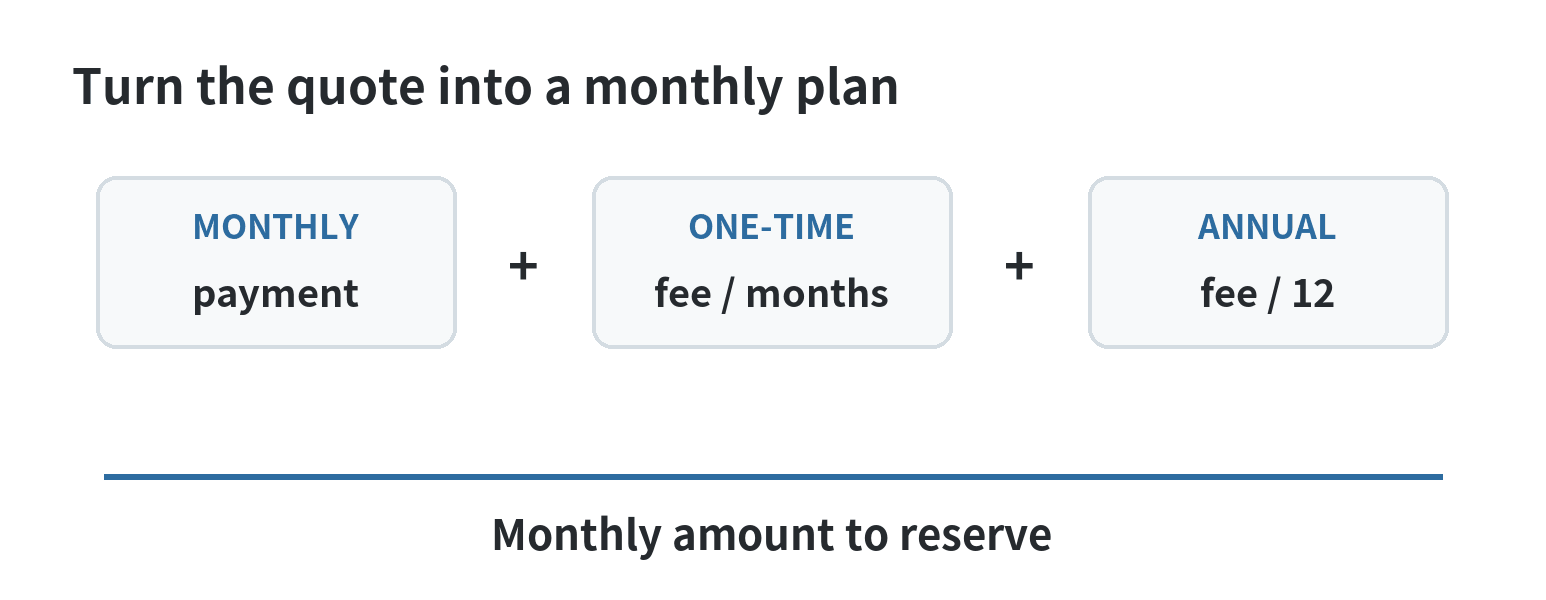
For example, suppose a written quote has a $42 monthly payment, a $36 start-up fee, and a $60 annual fee. If you plan around a full year, the planning amount is $42 + ($36 ÷ 12) + ($60 ÷ 12), or $50 a month. These are example inputs, not a market price. If the gym bills the annual fee at once, set aside the monthly share in advance or leave enough room in that bill’s month.
Keep optional costs separate. A locker, classes, personal training, or guest access should not quietly become part of the base membership figure. Put an add-on in the budget only if you want it and know its price and billing schedule.
Check what the contract makes you pay and when
Read the agreement for the initial term, renewal date, payment frequency, late or returned-payment charges, and any fee for freezing or ending the membership. Look for the cancellation method, required notice, where to send the request, and the date a cancellation takes effect. Ask what happens if you move or the gym closes, and get any answer that affects your decision in writing.
The FTC’s consumer alert about gym memberships, checked September 30, 2026, advises readers to inspect the terms for automatic renewal and learn how cancellation works before joining. It also says a recurring charge may continue until cancellation. Treat the renewal date as a bill date: write it on your calendar and keep a copy of the agreement and any cancellation confirmation.
If there is a trial or introductory offer, find its end date and the price that follows it. The FTC’s subscription guidance, checked September 30, 2026, says to check how and when to cancel a trial and to monitor statements for charges. Add a reminder before the deadline, even if you expect to continue; that gives you time to decide with the future price in front of you.
Fit the payment around bills already due
Start with take-home pay, not gross salary. List rent or mortgage, utilities, food, transportation, insurance, debt minimums, and savings contributions before assigning money to the gym. The CFPB’s Your Money, Your Goals toolkit includes spending trackers, a bill calendar, and a cash-flow budget worksheet; its toolkit page was checked September 30, 2026. A recent statement review can show which bills land before your next paycheck. If you track expenses on your phone, see our guide to planning a monthly budget with your phone.
Then test the full monthly gym amount against the leftover money. Here is an example, not a recommended income target: with $3,200 take-home pay, $2,750 in planned bills and savings, and a $50 gym planning amount, $400 remains for flexible spending and other costs. If you need that $400 for groceries, medicine, transit, or an irregular bill, the membership does not fit that version of the budget yet.
Now place the gym’s actual draft date beside your pay dates. If the $50 example payment is pulled on the second day of the month but your first paycheck arrives later, treat it as money from the prior month’s final check. Move that amount into a bills bucket as soon as the check arrives. This is a timing fix, not extra spending room: the same $50 still has to come out of the month’s plan. For a phone reminder routine around bill due dates, read how to pay bills on time using your phone.
Use the same calendar for a one-time enrollment charge. If the gym wants the charge when you sign, include it in that pay period’s cash plan before agreeing. If the timing would leave too little for a bill already due, ask whether a different start date is available and get any change in writing. The CFPB bill calendar can help organize due dates, while your own account statements show when money actually comes in and goes out.
Keep a small buffer for charges whose timing varies. For example, if the $60 annual fee falls in the same month as a car registration or another yearly bill, the yearly average can hide a tight month. A separate “annual fees” line lets you save a piece each month and see the bill before it arrives.
Decide what to do when the quote does not fit
First ask for the same written quote without optional services, then recalculate using the actual payment schedule. If the cost still crowds out a bill or a priority you already funded, wait or compare a different type of access, such as a community recreation center, workplace facility, or pay-per-visit option. Request the fees and cancellation terms for that option too; a lower-looking monthly amount does not answer what you will pay over the time you expect to use it.
You can also set a personal ceiling before you discuss plans. It should come from your budget: take-home income minus bills, planned savings, debt payments, and the flexible spending you need to protect. A gym quote above that ceiling is a clear reason to change the plan, not to borrow from next month’s rent or assume an uncertain discount.
If the schedule or location may change, favor terms that match that uncertainty. Compare the length of the commitment, pause rules, and cancellation notice alongside the fee. A slightly lower payment can cost more in practice if ending it requires another payment cycle or a fee you had not included.
Use a short worksheet before you agree
| Write down | Your number or answer |
|---|---|
| Monthly membership payment | From the written quote |
| Recurring add-ons and fees | Only items you choose or must pay |
| One-time and annual fees | Amount and due month |
| Monthly planning amount | Recurring total + fee set-asides |
| Term, renewal, cancellation | Dates, steps, and written confirmation |
| Budget room after essentials | Take-home pay less planned obligations |
Save the quote, agreement, and a note of who answered questions. If you later cancel, follow the stated process and keep proof of the request. The FTC’s gym-membership alert recommends checking cancellation terms in advance; its subscription guidance also recommends saving a copy of the cancellation request and monitoring later statements. Those records make it easier to check whether billing stopped when expected.
FAQ
Should I budget for the signup fee in the month I join?
Yes, keep enough cash for the full charge when it is due. You can also divide it across your expected months of use to compare plans, but the gym may still collect it all at once.
How do I compare a monthly plan with an annual prepayment?
Compare the total cost over the same period and check the cancellation and refund terms. Use the number of months you realistically expect to keep access, rather than assuming a full year of use.
What should I do if the gym keeps charging me after I cancel?
Save your cancellation request and contact the gym using its stated process. The FTC says to monitor statements and dispute a charge with your card issuer if a company continues charging after cancellation; checked September 30, 2026.
Can I put a gym membership on a credit card?
You can include the card payment only if the amount fits your budget and you have a plan to pay the statement. A credit card changes the payment method, not the membership’s total cost or cancellation terms.
Last updated: September 2026.
Last updated: 2026-09