Smart water leak detectors range from a small sensor that sounds an alarm to a whole-home monitor that can close a valve. Start by deciding whether you need to know about water in one vulnerable spot or monitor flow through the home’s main line. Then check the exact device instructions and plumbing conditions before planning an installation. Detection and shutoff add a response step; they cannot guarantee that every leak will be found or every water loss stopped.
Choose what you want the system to watch
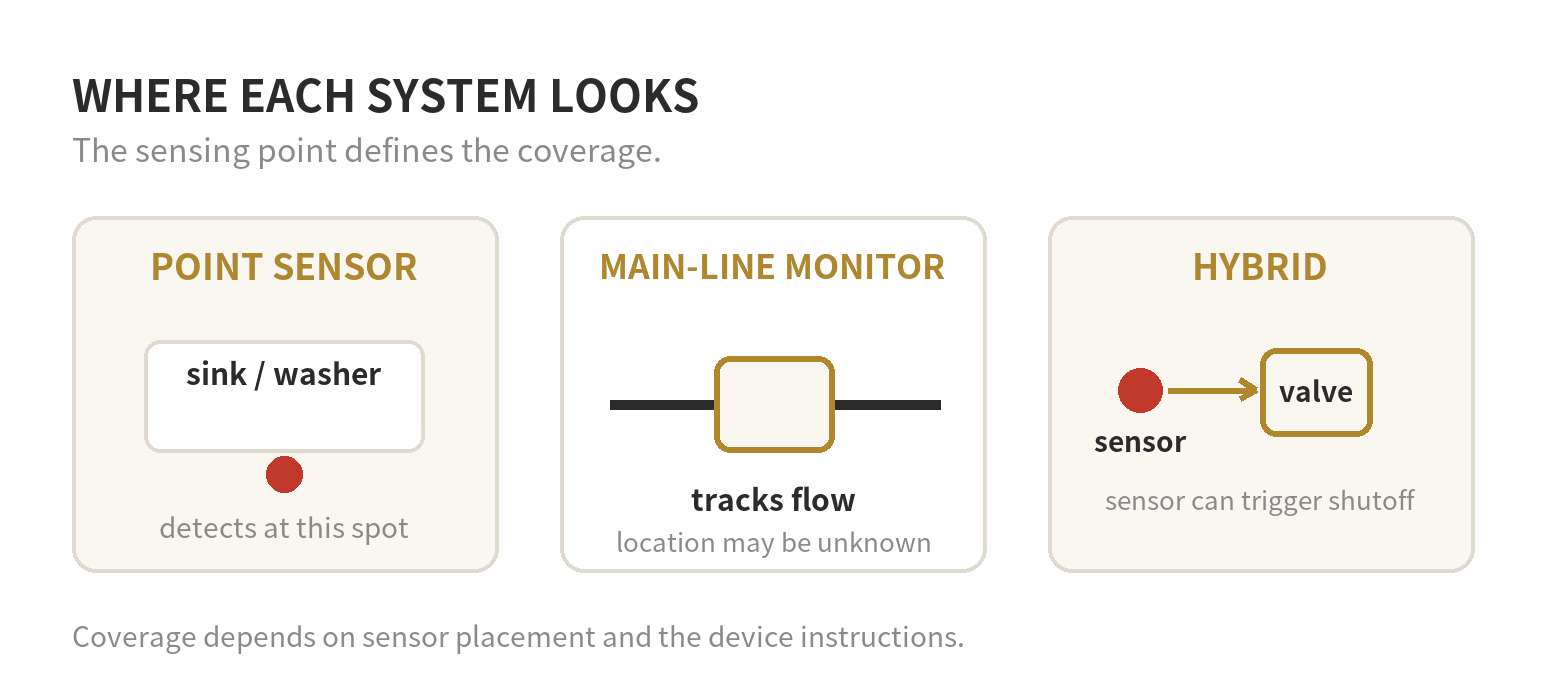
A point sensor sits near a fixture or appliance and reacts when water reaches its sensing surface. That makes it useful for a specific location such as the floor beside a water heater, washing machine, or sink cabinet. The U.S. Environmental Protection Agency’s WaterSense guidance says these sensors identify water in a designated area; a sensor cannot report a leak that never reaches it.
A whole-home monitor sits on or connects to the main supply line. In-line models measure flow or pressure and look for patterns that may signal unusual use. Some can operate a shutoff valve. The EPA notes that a main-line alert may not identify the exact leak location, so you may still need to inspect fixtures and appliances after receiving one.
A hybrid setup pairs remote sensors with a main-line valve. Water detected in a laundry area, for example, can send a signal to close the home’s supply. The EPA describes this arrangement as one way separate detection and shutoff devices can work together. It expands the system’s reach, but each sensor still covers its own location.
Picture a basement laundry room with the water heater on one side and the washer on the other. A single sensor beside the heater will not cover the washer area; a sensor under each appliance gives each spot its own detection point. A main-line monitor can add a different kind of coverage by watching water use through the line, but an alert may leave you searching for the source. A linked valve can respond to a sensor signal, subject to that system’s setup.
If a home sits empty for a week, remote alerts and automatic closure may matter more than a local chime. If someone is home and can hear an alarm, a point sensor may be enough for a single vulnerable cabinet. The EPA’s WaterSense guide suggests considering notifications, automatic shutoff, sensitivity settings, and planned vacancies as separate selection questions. Match each feature to the way the home is used, then check that the manual supports the intended setup.
Match the coverage to the leak you worry about
Walk through the rooms and note where water could reach finished flooring, stored belongings, or a nearby wall before anyone notices. Put a point sensor where water would collect and where its alarm can be heard, or where its connected alert can reach someone. A sensor hidden behind stored boxes may be hard to notice or maintain.
If you want a shutoff for a single fixture, look for a system designed to control that fixture’s supply. A main-line valve affects water to the home beyond its installation point, so its location and any linked sensors matter. Read what triggers an automatic closure, how the system sends an alert, and how a person can restore water after checking the situation.
Think through a normal day as well as an absence from home. A loud local alarm depends on someone being nearby. A phone alert depends on the device’s connection and the person seeing it. The EPA lists audible alarms, text messages, and app or email notifications as possible alert types, depending on the product. Check which alerts are included and what happens if power or internet service is unavailable.
Check the main-line installation before choosing a valve
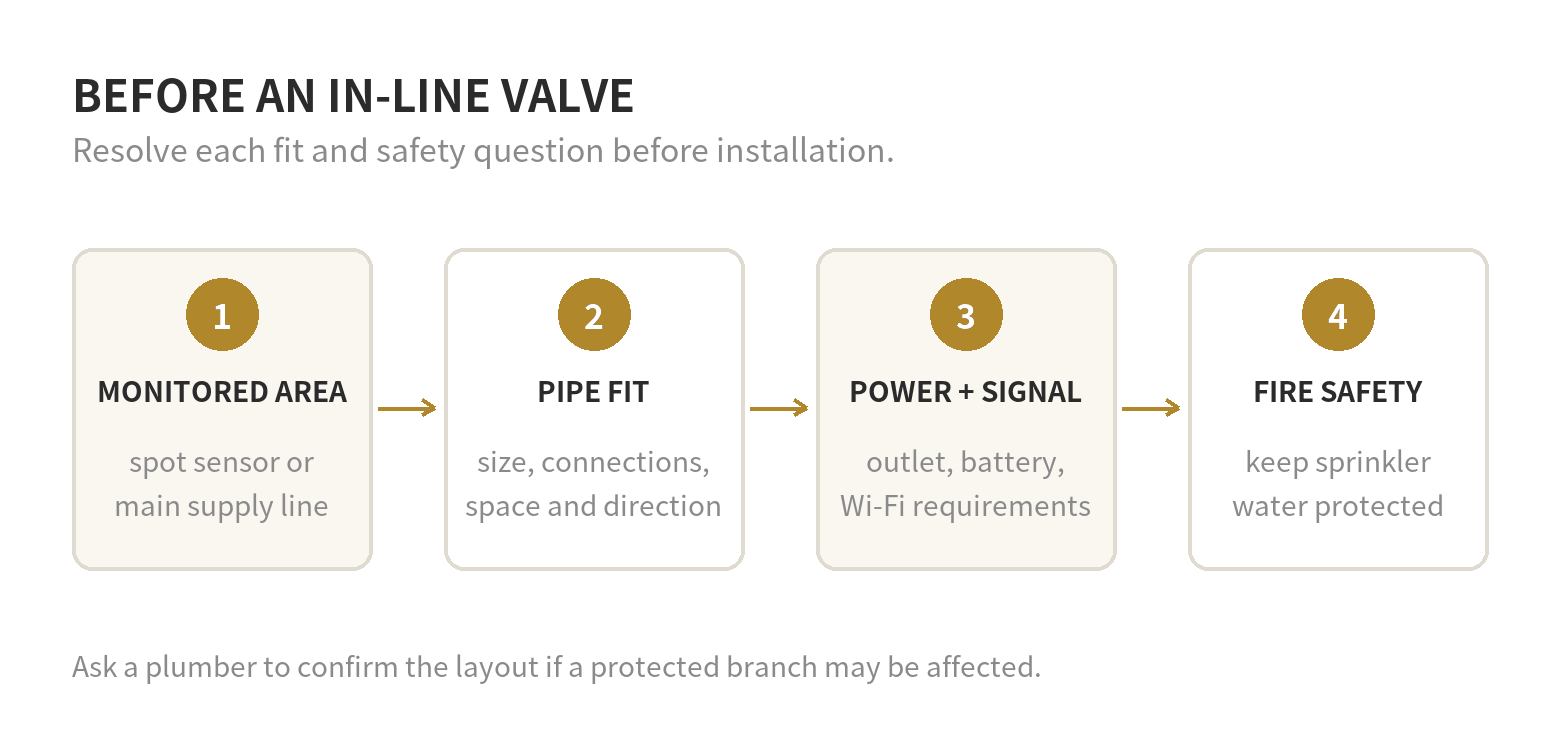
A main-line shutoff is fitted into household plumbing, so it needs a suitable location and compatible connections. The EPA advises checking the supported pipe size and notes that an in-line, point-of-entry installation may require a plumber. Measure or identify the pipe only as the manufacturer instructs; do not assume two devices with a similar description use the same fittings.
Look at the proposed installation point, not just the pipe diameter. One manufacturer’s instructions may require a particular position relative to the existing manual shutoff or pressure-reducing valve, a straight accessible pipe section, and a nearby outlet. These details vary by product and plumbing layout. Ask a licensed plumber to inspect the space if the pipe is concealed, crowded, corroded, or difficult to isolate.
Keep fire protection in the plan. The EPA says a leak-control device should not interfere with or stop water to a fire sprinkler system. A manufacturer’s instructions may also prohibit installing its valve on fire-suppression piping. Have a plumber confirm how the home’s water branches are arranged before adding a device to the main line.
Connectivity and backup power deserve their own check. Some monitors require Wi-Fi and continuous power; other devices use batteries or include backup power. Confirm the requirements for the exact model and the signal at its installed location. If the device depends on an app, check whether local alarms or manual valve operation remain available during a network outage.
If the home has scheduled irrigation or another predictable use, ask whether the monitor lets you adjust sensitivity or account for that schedule. The EPA’s WaterSense guide notes that some devices offer settings for irrigation, seasonal changes, and planned vacancies. Write down the household’s normal schedule before setup so you can tell whether an alert reflects an unexpected pattern or a planned use.
Use a short pre-installation checklist
- Coverage: Mark the exact spots a point sensor will reach, or identify the main line section a flow monitor will cover.
- Response: Confirm the alarm type, who receives a remote alert, and what causes the valve to close.
- Fit: Compare the device’s allowed pipe size, connection type, installation direction, and required clear space with the home’s plumbing.
- Utilities: Check electrical, battery, Wi-Fi, and phone requirements at the installation location.
- Safety: Confirm the installation will not interrupt fire sprinklers, suppression piping, or another protected branch.
- Follow-up: Read how to test the sensor, check alerts, replace batteries, and operate the valve manually.
Keep the product manual with the home’s shutoff information. Label the new valve and the existing manual shutoff so another adult can identify them. If the automatic system closes the water, inspect the reported area and the connected appliances before reopening the supply.
After setup, confirm that the alarm can be heard from the rooms where people spend time and that remote alerts reach the intended phone. Follow the manufacturer’s test steps, including any maintenance cycle or battery check. The EPA recommends checking the manual for model-specific maintenance. A note with the test date, battery replacement, and valve operation gives the next person a clear starting point without relying on memory.
If you live in a multi-unit building, first find out whether your unit has its own water meter and main supply line. Phyn’s installation requirements, for example, call for an individual plumbing system with a main line and meter. Ask the property manager or plumber whether a valve can be installed for your unit and whether the building has rules for work on shared piping.
Write down the device’s alert recipient, the location of the manual shutoff, and the steps for reopening the water after inspection. If a sensor sends an alert while no one is home, the person responding should know which room to check and who can isolate the supply. Keep this information with the product manual rather than relying on a phone notification as the only record.
FAQ
Can a leak detector find water behind a wall?
A floor sensor only reacts when moisture reaches its sensing area. A flow monitor may flag unusual use on the line, but an alert does not tell you where the leak is; inspect the home or contact a plumber to locate it.
Will an automatic valve shut off water during a power or Wi-Fi outage?
That depends on the model. Check its manual for backup power, local alarms, network-loss behavior, and manual operation rather than assuming the valve will behave the same way across systems.
Can I put a shutoff valve on the sprinkler line?
Do not place a leak-control valve where it can interrupt fire sprinkler or suppression water. The EPA’s WaterSense guidance and product installation instructions call for keeping fire protection in view; ask a plumber to verify the home’s pipe branches.