She Pressed Play on a Strange Audio Track and Within Days Her Financial Reality Started Shifting in Ways She Could Not Explain
>>> See How It Works <<<

Tired of late-night pings interrupting sleep or early morning work? You’re not alone. A simple scheduled Do Not Disturb setup can help you reclaim quiet hours without missing urgent calls or alarms. This post explains how to lock in specific hours on your phone so notifications fade into the background when you need focus or rest.
If you’re new to this, think of it as a custom switch for your smartphone. You choose when it turns on, what types of alerts still get through, and which apps or contacts are exempt. The result is fewer interruptions and more control over your day. The steps are quick, and they work on most recent iPhone and Android models.
First, a quick note on what scheduled Do Not Disturb offers. You can set daily or weekly hours, tie the mode to your location, or trigger it by the apps you use. You’ll still wake up on time thanks to alarms, and important people or emergency alerts can be allowed through. This gives you better rest, steadier focus, and more predictable routines.
Whether you’re balancing work deadlines, study sessions, or family time, the pattern helps you protect what matters. In this guide you’ll see the exact steps for iPhone and Android, plus tips to fine tune exceptions. By the end you’ll have a dependable schedule that fits your life, not the other way around.
She Pressed Play on a Strange Audio Track and Within Days Her Financial Reality Started Shifting in Ways She Could Not Explain
>>> See How It Works <<<
Why Use Scheduled Do Not Disturb on Your Phone
A scheduled Do Not Disturb (DND) timer is like a personal guardrail for your day. It keeps interruptions at bay during focused work, study, or rest, while still letting through the moments that truly matter. When you predefine times for silence, you gain a reliable rhythm that reduces stress and helps you reclaim quality time. This section explains why a scheduled DND setup is worth using and how it fits into a balanced smartphone routine.
Clear boundaries save mental energy
- A predictable quiet window helps your brain stay in work or study mode. With fewer alerts pinging in, you waste less time resetting focus and more time producing results.
- You’ll sleep better when nighttime notifications are muted, yet alarms and essential alerts stay intact. The result is a reliable boundary between work, rest, and personal time.
- A well-tuned schedule reduces decision fatigue. Instead of debating every ping, your phone simply follows a rule set you trust.
In short, scheduled DND is not about hiding from the world. It’s about reclaiming your attention for the moments that deserve it. If you’re juggling a heavy deadline, a long workout, or a quiet reading hour, a fixed DND window can be your anchor.
Tailored control, not total silence
- You decide what gets through. Alarms, calendar alerts, or calls from favorites can bypass the block so you don’t miss something important.
- You can create exceptions for people or apps that matter most. This means urgent family updates or critical work messages still reach you, even during silence.
- You can combine DND with other modes, like a location-based trigger or a time-based rule. This makes the system adapt to your daily routine rather than forcing you to adapt to it.
This level of control helps you stay reachable for the people who matter while preserving your own focus. It also prevents the feeling that your device has hijacked your day.
A simple path to healthier tech habits
- A scheduled DND routine nudges you away from constant checking. You’re less likely to reach for your phone every few minutes if you know a longer silence is already planned.
- It supports consistent routines. If you have early mornings or late-night study sessions, a steady DND window protects those blocks without you thinking about it.
- It reduces the stress of “notification judgment calls.” You’re not deciding in the moment whether to silence or allow each alert; the rule handles it.
For many, the biggest win is regaining evenings, mornings, or in-between moments. When your phone stops demanding attention, you reclaim time for hobbies, family, or just in-the-moment peace.
He Was Drowning in Bills and Burnout Until a Simple Daily Ritual Rewired His Brain for Wealth in Less Than a Week
>>> Start Your Shift Today <<<

Practical scenarios where scheduled DND shines
- Deep work sprints: set a 90-minute DND block with important calls allowed from a specific contact list.
- Quiet study: mute nonessential apps during school hours, but keep reminders and emergencies audible.
- Family time: silence distractions during dinner, but keep an alarm if someone needs to coordinate after meals.
- Sleep routine: enable a nightly window that blocks most pings while preserving alarm reliability.
These real-world uses show how a simple timer can translate into meaningful improvements in daily life. It’s not about depriving yourself; it’s about protecting your time from noise.
How to get started quickly (high level)
- Pick your core quiet hours. Decide when you want uninterrupted time and when you must stay reachable.
- Decide what matters. Choose which people and apps can bypass the block.
- Turn on a mode that suits you. Most devices offer a standard DND option with scheduling plus optional alerts for alarms, reminders, and favorites.
If you want extra guidance, see how other users are managing DND on their Galaxy devices or iPhone. For example, Samsung’s official instructions walk you through turning on DND and setting automatic schedules, which you can adapt to your needs. You can read more about how to activate and customize DND on Samsung phones here: Use Do not disturb mode on your Galaxy phone. For a broader look at how to enable and fine-tune DND on iPhone and Android, see Asurion’s practical guide: How to turn Do Not Disturb on or off on iPhone and Android.
Visual aid: quick anatomy of a scheduled DND setup
- Core window: The hours you want silence.
- Allowed list: People or apps that break through during the window.
- Exceptions: Alarms and emergency alerts that stay active.
- Activation method: Time-based, location-based, or app-based triggers.
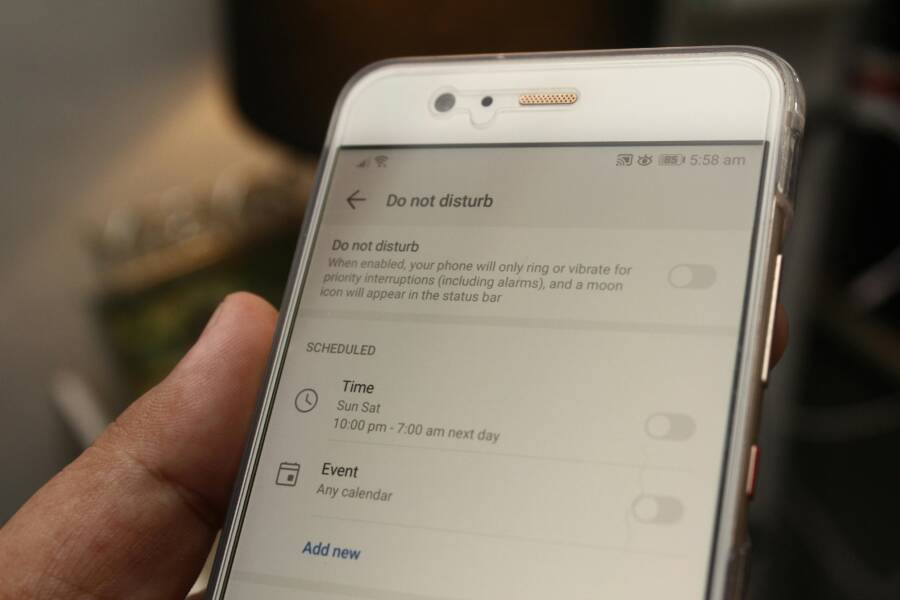
Photo by Daniel Moises Magulado
Photo by Daniel Moises Magulado
Caption: Close-up of a smartphone displaying ‘Do Not Disturb’ settings with active options.
Quick takeaways
- A predictable DND window reduces interruptions and protects your focus.
- You control what passes through; you decide who and what matters.
- It supports healthier tech habits and steadier daily rhythms.
To make the most of scheduled DND, simplify your setup. Start with a small, regular block, test how it feels, and adjust your allowlist over the first week. As your routine shifts, your DND rules should evolve with it. If you’d like, I can tailor a two-week trial plan that matches your current schedule and responsibilities.
How to Schedule Do Not Disturb on iPhone
Scheduling Do Not Disturb on your iPhone helps you reclaim quiet time without missing urgent moments. By setting exact start and end times, choosing repeat days, and specifying who or which apps can still come through, you gain control over your day. Below you’ll find practical, sectioned guidance to get your iPhone focused, whether you’re coding, studying, or winding down. And yes, a few smart tips will help you optimize across devices so your smartphone respects your schedule no matter where you are.
Step-by-Step Setup for Time Schedules
Setting a time-based Do Not Disturb schedule on iPhone starts with a simple rule: pick the hours you want silence, then decide who or what can bypass the block. Start by opening the Focus or Do Not Disturb controls in Settings. Choose a Focus mode or create a new one, then set a strict time window. For example, from 10:00 p.m. to 6:00 a.m., with alarms and important calls on your Favorites list still able to reach you. You can also enable a daily repeat or custom days of the week to fit your routine. Don’t forget to tailor the allowed list for people and apps so essential alerts like family messages or calendar reminders slip through. This approach keeps your smartphone quiet when you need it most, yet reliable when something truly matters happens.
- Start and end times: define exact hours.
- Repeat days: choose weekdays, weekends, or custom days.
- Allowed through: select people and apps that bypass DND.
- Alarms stay on: rely on built-in alerts for critical items.
For a quick reference, Apple’s guidance covers turning Focus on and off with scheduling: Turn on or schedule a Focus on iPhone. You’ll also find official steps to set up and manage Focus here: Set up a Focus on iPhone. These resources ensure you configure correctly, even as iOS versions evolve. https://support.apple.com/guide/iphone/turn-a-focus-on-or-off-iph5c3f5b77b/ios https://support.apple.com/guide/iphone/set-up-a-focus-iphd6288a67f/ios
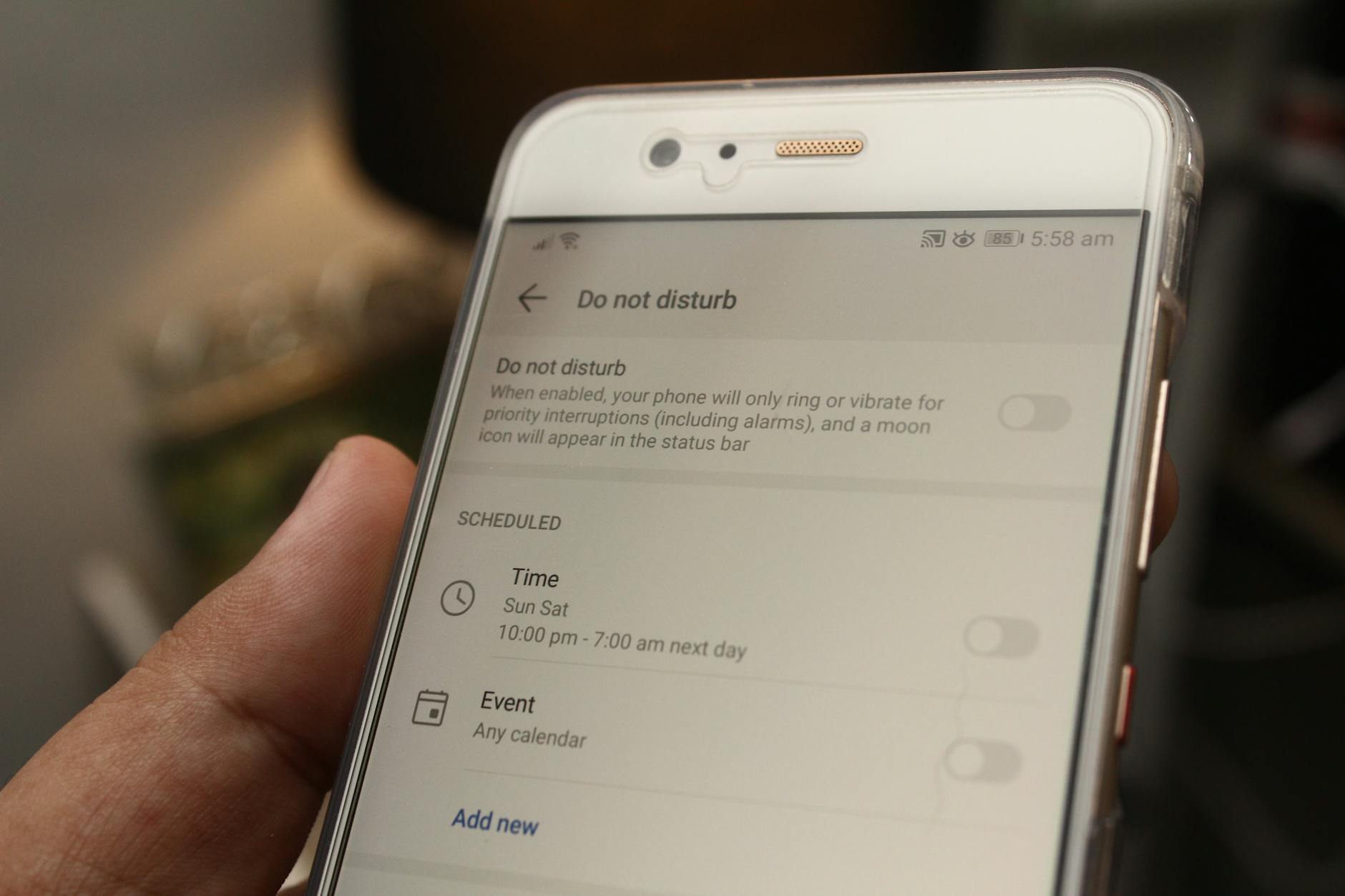 Photo by Daniel Moises Magulado
Add Location or App Triggers
Beyond fixed hours, you can add triggers that adapt to your day. Location-based rules turn DND on when you arrive at home or work, while app-based triggers activate when you open a calendar or note-taking app. To build multiple schedules, create separate Focus modes for different contexts, like “Work,” “Study,” and “Sleep.” Each one can have its own time window and exceptions, so you stay productive without being overwhelmed by pings.
- Location triggers: silence when you reach specific places.
- App triggers: start or end based on app usage or calendar events.
- Multiple schedules: tailor Focus modes to different routines.
Apple’s guidance on setting up Focus covers configuring location and app-based triggers: Set up a Focus on iPhone. For broader ideas on customizing Focus, Lifehacker’s tips can be helpful: How to Set Up Your Own Custom Focus Modes on iPhone. References to official and practical guides provide solid, up-to-date steps. https://support.apple.com/guide/iphone/iphd6288a67f/ios https://lifehacker.com/tech/how-to-set-up-custom-focus-modes-iphone
Visual aid: quick anatomy of a scheduled DND setup
- Core window: The hours you want silence.
- Allowed list: People or apps that break through during the window.
- Exceptions: Alarms and emergency alerts that stay active.
- Activation method: Time-based, location-based, or app-based triggers.
Photo by Daniel Moises Magulado
Quick takeaways
- A predictable DND window reduces interruptions and protects your focus.
- You control what passes through; you decide who and what matters.
- It supports healthier tech habits and steadier daily rhythms.
To make the most of scheduled DND, start small with a regular block and test the results. If you’d like, I can tailor a two-week trial plan that matches your schedule and responsibilities.
How to Set Do Not Disturb Schedules on Android
If you want to reclaim quiet hours without missing critical alerts, scheduling Do Not Disturb (DND) on Android is a reliable move. In this section, you’ll find practical steps for the most common Android experiences on Google Pixel and Samsung Galaxy devices. The goal is to help you create a predictable, distraction-free window that still lets through the essentials. Think of it as setting a daily boundary for your phone so it supports your focus, rest, and workflow. You’ll keep alarms and emergency alerts intact while silencing nonessential notifications. This approach makes your phone work for you, not the other way around. Let’s walk through two popular paths you might be using.
Steps for Google Pixel Phones
Pixel users can tailor DND through Modes, which act like smart presets that can turn on automatically at set times or days. Start by opening Modes > Add mode. Give the new mode a clear name, such as “Work Focus” or “Bedtime Silence.” Next, set when this mode should activate: use “Set when” to pick time blocks or specific days. For example, you might choose weekdays from 9:00 p.m. to 6:00 a.m., Monday through Friday. After scheduling the window, decide what’s allowed. You can specify who can ring through and which apps are exempt. A tight allowlist keeps critical alerts visible while blocking noise from nonessential apps. A few tips to optimize your Pixel DND: keep alarms enabled, and use the “What’s allowed” option to ensure calendar reminders or family messages still get through. If you want more guidance, Google’s Pixel help resources detail how to manage Modes and DND for reliable daily use. For official steps, start here: https://support.google.com/pixelphone/answer/6111295?hl=en
He Was Drowning in Bills and Burnout Until a Simple Daily Ritual Rewired His Brain for Wealth in Less Than a Week
>>> Start Your Shift Today <<<
In daily practice, this setup behaves like a personal schedule you trust. You tell your phone when to fall quiet and what can bypass the block. That means you won’t miss that morning alarm or a crucial calendar alert, yet you’ll enjoy your chosen stretch of uninterrupted time. If your routine shifts, tweak the days or the allowed list rather than reworking the entire mode. With a few quick adjustments, your Pixel can protect your focus during deep work, late-night study, or a calm morning routine. If you want more ideas, Pixel community discussions often cover how to refine DND schedules as needs change: https://support.google.com/pixelphone/thread/386336360/do-not-disturb-schedule?hl=en
Steps for Samsung Galaxy Devices
Samsung’s Do Not Disturb setup is built to be approachable and flexible. Start by going to Settings > Notifications > Do Not Disturb. From there, choose Add schedule to create a new time block. Pick the hours you want quiet, then decide which exceptions you need. A common pattern is to silence most alerts during work hours while letting through calls from favorites and essential apps. You can set multiple schedules for different contexts, like “Work,” “Study,” and “Sleep,” each with its own time window and exception list. The key is to keep the most important notifications visible to avoid missing urgent moments. Samsung’s official guide walks you through turning DND on and off and adjusting schedules, which you can adapt to your daily rhythm. Official steps are available here: https://www.samsung.com/us/support/answer/ANS10002889/
As you fine tune, consider adding exceptions for your alarm clock, calendar alerts, and contacts you rely on. If you often collaborate with teammates, you might create a dedicated “Work” schedule that silences social apps but allows incoming messages from a trusted work contact group. For a broader look at how Samsung users implement and manage Do Not Disturb, you can explore additional tutorials that demonstrate adding and editing schedules on Galaxy devices: https://www.samsung.com/latin_en/support/mobile-devices/how-to-use-the-do-not-disturb-mode-on-your-galaxy-phone/
Tips and Fixes for Scheduled Do Not Disturb
A well-tuned scheduled Do Not Disturb (DND) setup helps you protect focus, rest, and time with loved ones. Whether you’re coding, studying, or winding down, the right rules keep the phone quiet while letting through what matters. Below you’ll find practical tips, quick fixes for common hiccups, and ideas to keep DND aligned with real life. Think of this as your toolkit for a calmer, more predictable smartphone routine.
Quick wins to get your schedule running smoothly
Getting DND up and running can be done in minutes, and a few small choices make a big difference. Start with a clear quiet window, then layer in exceptions that truly matter.
- Pick two solid blocks to begin with. A bedtime window (for example, 10 p.m. to 6 a.m.) and a daytime focus block (like 1 p.m. to 3 p.m.) cover the two most common needs: rest and deep work.
- Decide who and what should bypass the block. Alarms must stay audible, and calendar reminders or messages from favorites can be allowed through. This keeps you on track without constant interruptions.
- Use a single source of truth. Create focused modes or schedules that you reuse across days rather than creating ad hoc rules every time. Consistency reduces mistakes and confusion.
- Keep a simple allowlist. Start with a short list of essential contacts and apps. You can expand later as you become more confident with the setup.
- Pair DND with other niceties. If your phone offers location-based or app-based triggers, use them to adapt quietly to your day.
For quick references, official setup guides walk you through turning Focus on and scheduling it on iPhone, and Google’s help articles explain Android Modes and Do Not Disturb. See Apple’s guidance to Turn on or schedule a Focus on iPhone and Set up a Focus on iPhone, and Google’s overview of Android modes for Do Not Disturb. https://support.apple.com/guide/iphone/turn-a-focus-on-or-off-iph5c3f5b77b/ios https://support.apple.com/guide/iphone/set-up-a-focus-iphd6288a67f/ios https://support.google.com/android/answer/9069335?hl=en
Common issues on iPhone and how to fix them quickly
iPhone users occasionally hit snags when schedules don’t behave as expected. The most frequent culprits are hidden automations, Smart Activation, or conflicts between Focus modes.
- Check for conflicting schedules. If you have multiple Focus modes, make sure they aren’t turning on automatically at the same time. Delete or consolidate overlapping rules.
- Remove old automations. In Settings > Focus, review all “Turn On Automatically” rules and remove anything you no longer need.
- Disable Smart Activation on older builds if available. A simple restart after turning off automations can clear stubborn states.
- Verify the allowed list. If an important contact or app isn’t coming through, re-check the allowed list for that Focus. A small change can restore essential notifications.
- Keep the OS fresh. Apple occasionally fixes Focus bugs in updates. Check Settings > General > Software Update and install any pending patches.
In practice, these steps resemble a quick routine: swipe to open Control Center, tap Focus to toggle off if needed, then dive into Settings to prune schedules. Apple’s official guidance provides straightforward steps to manage Focus on iPhone, including setting and adjusting schedules. https://support.apple.com/guide/iphone/iphd6288a67f/ios
New on iOS 18.1 and later, there are improvements around notifications that pass through during focused time, especially for newer devices. If you notice persistent issues on a current device, a quick OS update often resolves it.
Common issues on Android and how to fix them fast
Android users have a few reliable options to tailor DND, especially with Modes on Pixel and the various Do Not Disturb settings on Samsung devices.
- Use Modes strategically. Create separate moods like “Work,” “Sleep,” and “Study.” Each mode can have its own time window and allowlist so you stay productive without missing critical alerts.
- Review app permissions. Sometimes Do Not Disturb refuses to silence because an app has notification access in the background. Revisit app permissions if something seems off.
- Ensure alarms remain active. Alarms are a non-negotiable exception in most Android builds, so verify they’re always allowed to sound.
- Consider a quick restart when changes don’t take effect. A reboot can clear stalled DND states and apply new rules cleanly.
Google’s official guide explains how to manage Modes and Do Not Disturb on Android, including the steps to turn interruptions off or back on and use the quick settings tile. https://support.google.com/android/answer/9069335?hl=en If you’re using Pixel specifically, Modes work like smart presets and can automate based on time or day, making it simple to protect focus without constant tweaks. For a practical overview and additional tips, you can explore community discussions and tutorials that cover refining DND schedules as needs evolve. https://support.google.com/pixelphone/thread/386336360/do-not-disturb-schedule?hl=en
Samsung devices follow a similar pattern but with the Galaxy interface. Go to Settings > Notifications > Do Not Disturb, then Add schedule to create a new time block. Choose your quiet hours and the exceptions you need. Multiple schedules let you switch contexts—Work, Sleep, or Study—without reconfiguring everything each day. Samsung’s official guide provides step-by-step instructions you can adapt to your routine. https://www.samsung.com/us/support/answer/ANS10002889/
If you’re troubleshooting on Samsung or Pixel, a simple reboot after updating app lists or changing rules often clears up stubborn glitches. And if a particular notification still slips through, re-check the allowed list for that app or contact group. It’s usually a small misconfiguration, not a broader failure.
Fine-tuning exceptions, triggers, and automation
A great DND setup isn’t just about silence. It’s about smart pass-throughs that keep you productive and informed.
- Alarms and time-sensitive alerts first. Always ensure alarms and calendar alerts stay audible. They are the anchor that keeps you on schedule even when the phone is quiet.
- Exceptions for key people. Add a few trusted contacts who can reach you when necessary. It’s better to be reachable by a small circle than to risk missing something urgent.
- Apps matter, not all apps. Only a handful of apps should bypass the block. Focus on utilities (calendar, messaging from trusted numbers, finance apps) rather than social noise.
- Combine triggers for resilience. Use a mix of schedule, location, and app-based rules. This enables your phone to adapt to real life without constantly reconfiguring.
- Review and refresh every couple of weeks. Tweak the allowed list, adjust windows, and prune outdated rules as your routine shifts.
If you want a quick overview of how to set up location or app triggers for iPhone, Apple’s support articles cover the essentials and give you a reliable baseline. https://support.apple.com/guide/iphone/iphd6288a67f/ios For Android users, Google’s guidance on limiting interruptions with Modes and Do Not Disturb explains how to combine rules for better outcomes. https://support.google.com/android/answer/9069335?hl=en
A simple maintenance plan to keep DND effective
Consistency beats complexity. A lightweight routine keeps DND predictable and effective.
- Weekly audit: glance at your active schedules, confirm they still reflect your week, and remove anything you no longer use.
- Monthly test: run a short test window to verify alarms and essential alerts still come through as expected.
- Seasonal adjustments: adjust windows for daylight changes, holidays, or shifts in your work or study patterns.
- Keep a minimal allowlist: aim for 3–5 essential contacts or apps. You’ll be less tempted to tweak rules constantly.
A quick two-minute check each week ensures your smartphone stays a help, not a hindrance. If you’d like, I can outline a 14-day trial plan to tailor DND to your exact routine and responsibilities.
Quick reference reminders
- Start with a clear quiet window, then add essential exceptions.
- Alarms, calendar reminders, and trusted contacts should always pass through.
- Use a single, reusable Focus or DND setup rather than multiple overlapping rules.
- Regularly update your OS to benefit from bug fixes and improvements.
If you want more practical ideas, check out additional guides that compare DND setups across popular devices. For example, a practical overview from How-To Geek explains automatic quiet times in Android and clarifies common confusion around DND settings. https://www.howtogeek.com/260506/how-to-set-automatic-quiet-times-in-android-with-do-no-disturb/ Additionally, Samsung and Pixel tips can help you tailor the approach to your exact device. You’ll find useful step-by-step instructions in the Samsung support article and Google’s Android help pages. https://www.samsung.com/us/support/answer/ANS10002889/ https://support.google.com/pixelphone/answer/6111295?hl=en
If you’re ever unsure, start small and test. A modest schedule that you actually use beats a perfect plan that drains your energy. And if you want, I can tailor a two-week trial plan to fit your current schedule and responsibilities.
Conclusion
Setting up a scheduled Do Not Disturb window is a simple move that pays off in calmer days. On iPhone, create a Focus with a clear quiet window, add a precise allowed list, and consider location or app triggers to adapt to your routine. Alarms and calendar alerts should always pass through, so you stay on track even when silence is in effect.
On Android, use Modes or DND schedules to lock in your quiet hours, then fine tune which calls or messages get through. A lean approach works best: two solid blocks to cover rest and deep work, with a small, trusted allowlist for essential alerts. This keeps your smartphone from hijacking your time while ensuring you don’t miss what matters.
The key is ease of setup. Start tonight with a single block, test how it feels, and adjust the exceptions. A straightforward pattern reduces interruptions, lowers stress, and makes your routines more predictable. You’ll notice better focus during work, smoother study sessions, and more peaceful evenings.
Try it tonight and notice the difference. If you find a schedule that fits, share your results in the comments or subscribe for a quick reminder when new tips drop. Your feedback helps others design a smarter, calmer smartphone routine. Here’s to quieter days, easier mornings, and a more intentional approach to tech.
There Is a Frequency That the Wealthiest Families Have Used for Generations and Most People Will Never Know It Exists
>>> Open the Door <<<
