When your spouse loses a paycheck, rebuild the household budget around money you can count on now, then pause or renegotiate the costs that no longer fit. Keep the conversation focused on cash coming in, bills due, and the next decision you can make together; do not build the plan around an unemployment benefit that has not been approved.
The U.S. Department of Labor and USA.gov explain that state agencies run unemployment insurance programs and set eligibility rules. Check the state agency for the state where your spouse worked, then use the award notice and actual deposit amount when you update the budget (checked September 30, 2026).
Build the budget from money already available
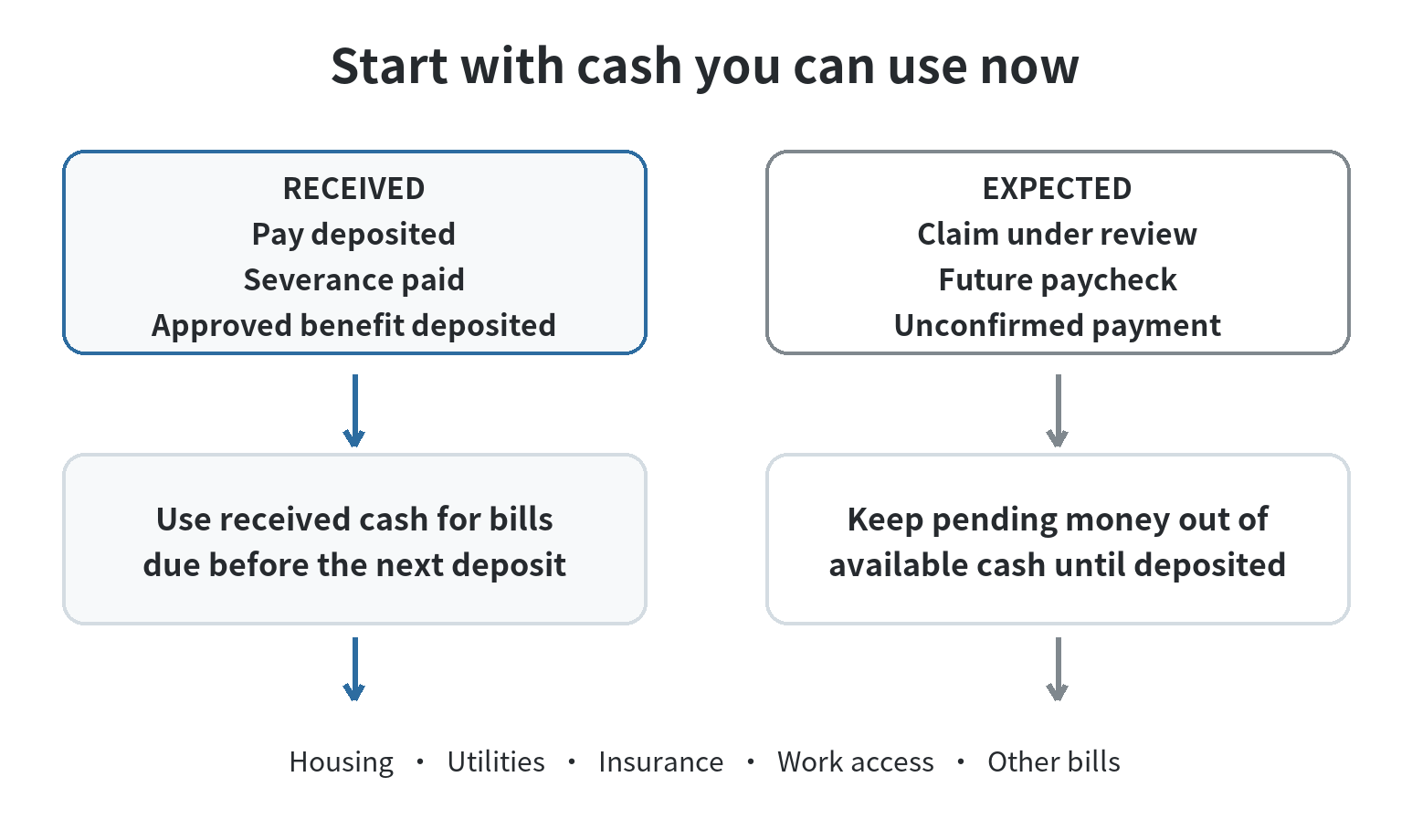
Start with the balances in checking and savings, then list income that is still arriving: the working spouse’s take-home pay, final wages, any severance that has actually been paid, and benefits already approved and received. Keep expected money on a separate line. An application, a promised payment date, or a verbal estimate is not cash available for this month’s rent.
Next, list due dates and the amount needed to keep the household housed, utilities connected, insured, and able to reach work or job interviews. The CFPB’s unexpected-job-loss guide recommends reviewing income, spending, debts, savings, and severance with everyone who contributes to the household; its bill-prioritizing worksheet asks readers to weigh what may happen if each bill is late. Those are useful distinctions when one paycheck has disappeared.
Make a short-term version of the budget for the next pay cycle, not a forecast for the rest of the year. If the working spouse is paid twice a month, match each deposit to bills due before the following deposit. Mark any gap plainly. A monthly total can look workable even when rent is due before the next check arrives.
Use a sample month to expose the gap
Suppose take-home pay is $4,200 for the month and current savings available for bills are $600. That gives the household $4,800 to work with in this example. If rent is $1,700, utilities $250, groceries $650, transportation $500, insurance $400, and minimum debt payments $350, those listed costs total $3,850. The remaining $950 still has to cover phone service, medication, household needs, and any irregular bill. These are sample figures, not a national budget or a recommended spending amount.
Write each amount from your own statements or bills. For a bill that changes, use the amount currently due and record the range you have seen on recent statements; do not substitute an internet “average.” Include costs that can interrupt work or housing, such as car insurance, childcare needed for the working spouse’s shift, or a required license renewal. Add one-time expenses, such as a final utility bill from a move, on the date they are due.
Now make a second column for income not yet received. If unemployment benefits are still pending, put the expected amount there only if the state agency has provided one, and leave the amount out of available cash. The Department of Labor says people generally file through the unemployment program in the state where they worked, and USA.gov directs applicants to state eligibility rules. Both pages were checked September 30, 2026. Neither should be treated as a promise that a specific household will be approved or paid by a particular date.
Choose what to change before a payment is missed
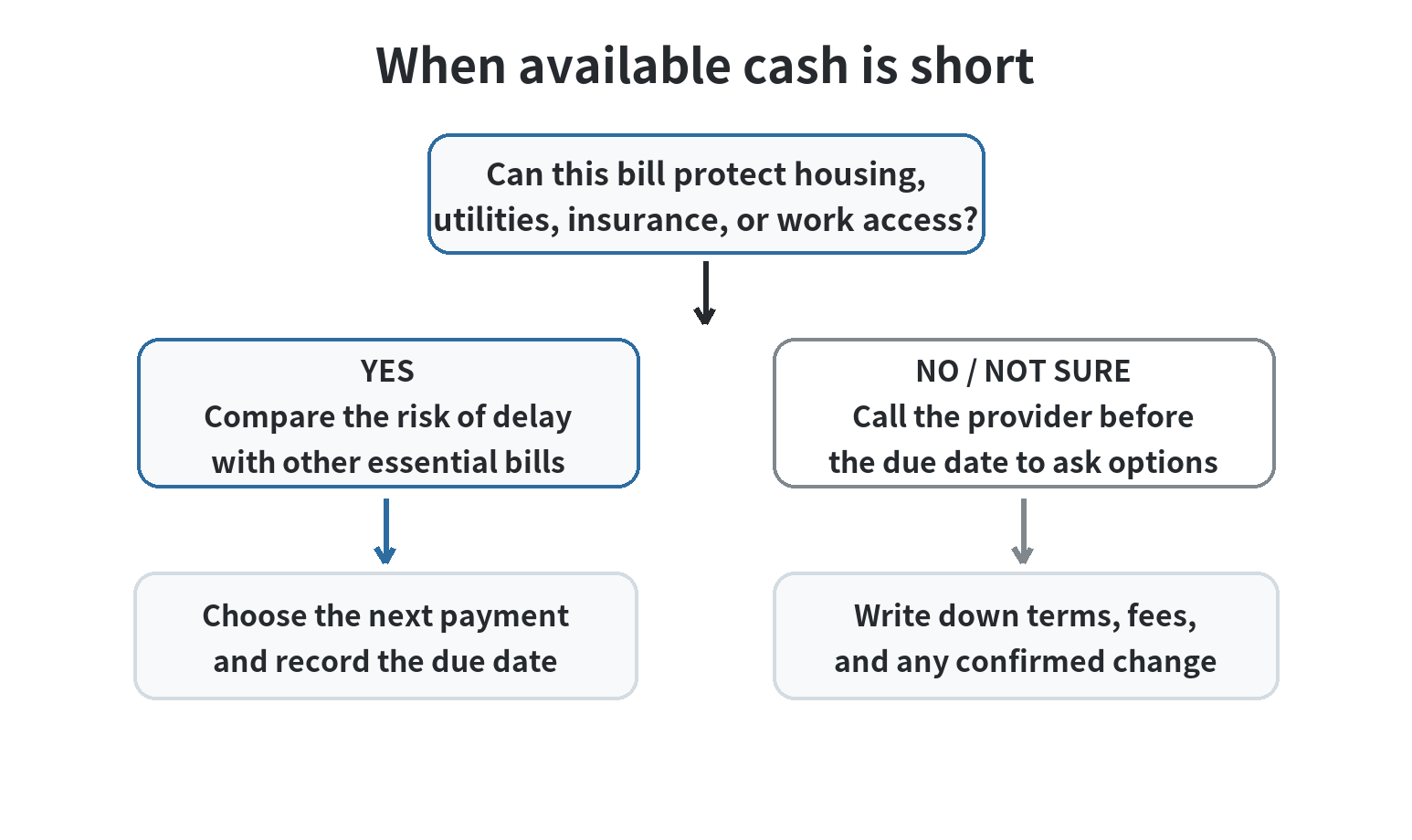
Sort expenses by consequence, not by which company sends the most reminders. Put housing, utilities, essential insurance, and expenses needed to keep the working spouse employed at the top of the discussion. Then list debt payments, subscriptions, dining out, and optional purchases. A bill can still matter even if it is not first in line, so keep the full list rather than silently dropping it.
If the totals do not fit, choose a specific adjustment together: pause a discretionary service, reduce an upcoming purchase, use an existing pantry meal plan, or ask a provider about a due-date change or hardship option. The CFPB advises people facing income changes to contact lenders and financial companies to ask what help may be available. Record the representative’s name, date, amount discussed, and any written confirmation. Do not assume a request changed the contract until the company confirms it.
Before stopping an automatic payment, check the account balance and the bill’s consequences. The CFPB notes that automatic payments can lead to overdraft fees when deadlines are missed and recommends contacting the bank or company promptly if a payment needs to stop. Update the calendar after any change so both spouses see the new due date and amount.
Agree on a job-loss routine that feels fair
Unemployment changes income, but it does not turn one spouse into the household’s sole financial manager. Set a brief check-in using the same page of numbers: current balance, bills due before the next income date, applications or calls that need follow-up, and one decision that needs both people. Give each person a clear role. One might update due dates while the other contacts a lender; both should know the result.
Separate job-search costs from personal spending. If interviews require fuel, transit, printing, or childcare, list those items as work-related expenses and decide how they fit before the money is spent. If the unemployed spouse is handling more home tasks, name those responsibilities directly instead of treating them as invisible labor. The goal of the conversation is a shared plan, not a scorecard about who contributes more.
Agree on a small personal-spending amount only after the bills that keep the household operating have been assigned. If there is no room for one, say so plainly and set a date to review the decision. Avoid vague promises such as “we’ll catch up later.” A useful agreement states which payment will be made, which call will happen, who will do it, and when you will revisit the plan.
When the numbers still do not cover essentials
If rent, food, utilities, transportation, and minimum obligations exceed money available, write down the shortfall and call before skipping a payment. Ask the landlord, utility, lender, insurer, or loan servicer what arrangements exist, what fees or reporting may apply, and whether the agreement can be sent in writing. The CFPB’s bill-prioritizing worksheet suggests identifying what protects housing and income, keeping insurance, and meeting court-ordered obligations when deciding which bills need attention first.
For unemployment questions, use the official state agency’s current instructions. The U.S. Department of Labor and USA.gov both point applicants to the state program for rules and filing. Check with the state agency if your spouse worked in more than one state, worked remotely, or has questions about a decision. Do not put a benefit amount into the household budget until the agency has issued a determination and the payment is available.
Keep the written budget simple enough to revise. When a deposit arrives, replace the estimate with the amount received, assign it to the next due bills, and recalculate the remaining gap. When a bill changes, update the amount and due date. The plan is a working list for decisions the two of you can see, not a judgment on the unemployed spouse.
FAQ
Should we use savings before an unemployment claim is decided?
Use the budget to decide which existing funds are available for current bills, and keep any unapproved benefit out of the income total. If using savings would affect a required payment or account minimum, check that obligation before moving money.
What if my spouse worked in a different state than where we live?
Ask the unemployment agency in your current state how to file across state lines. The Department of Labor says that agency can provide filing information when work occurred in another state or multiple states; USA.gov also directs people to their state program. Both were checked September 30, 2026.
How can we budget if severance is paid in installments?
Count each installment when it reaches the account, and keep later installments in a separate expected-income list until their payment dates and amounts are confirmed. Assign received money to bills due before the next confirmed income date.
What should we say when asking a lender for help?
Explain that household income changed, state what amount you can pay and when, and ask which temporary options are available and what each would change. The CFPB recommends contacting lenders and financial companies when employment or money circumstances change; checked September 30, 2026.
Last updated: 2026-09