Budget vision care from your own plan documents and written estimates, not from a national average. Put an eye exam, glasses, and contact lenses in separate lines, subtract any benefit you can confirm, then divide the remaining estimate across the paychecks before the expected expense. That gives you a usable monthly target without assuming every plan or prescription costs the same.
Turn a vague “eye care” budget into separate expenses
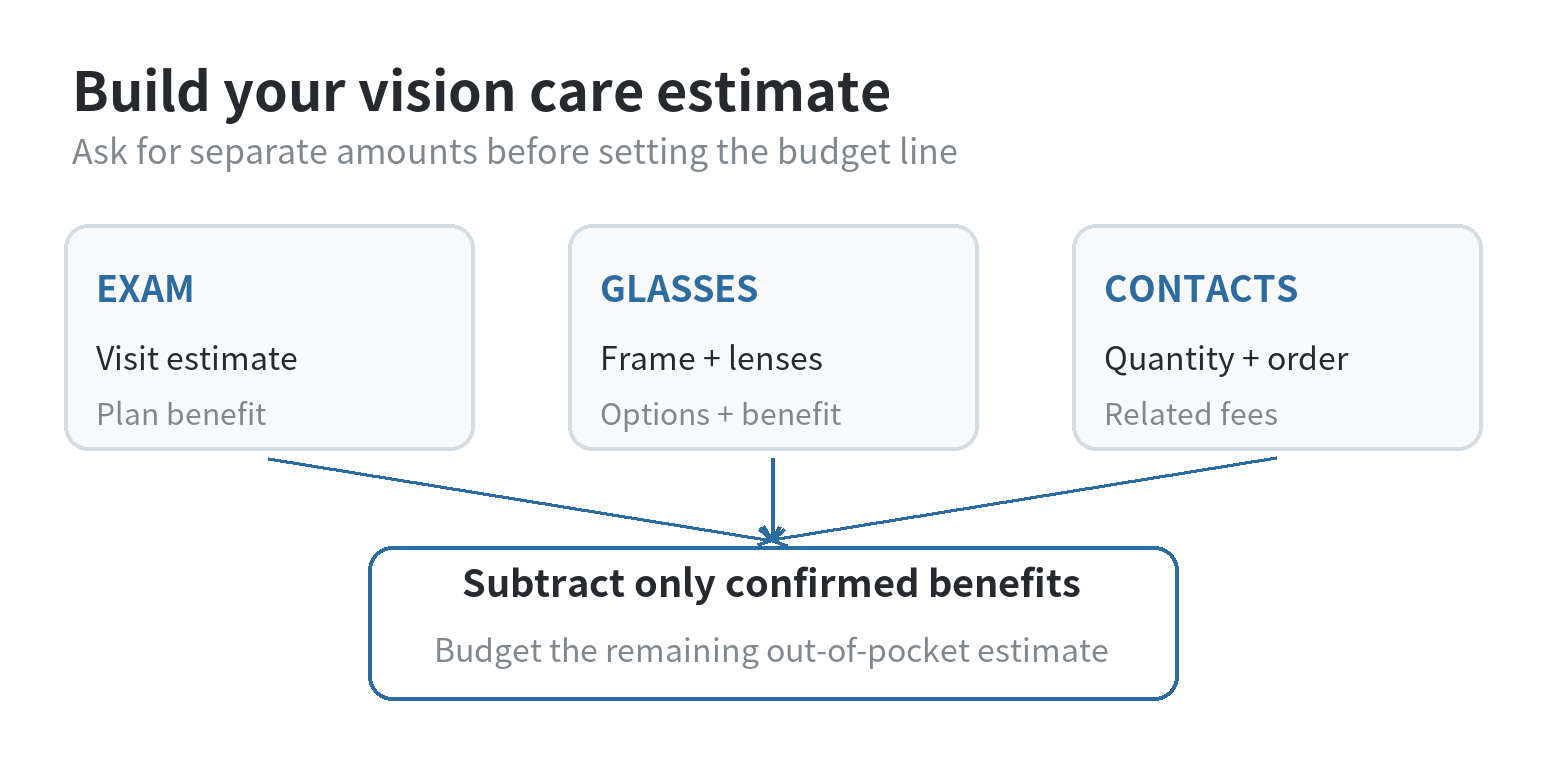
Start with the expenses you may actually face: an exam, frames, lenses, contact lenses and related supplies, and any amount your plan leaves to you. Keep each item separate. A bundled quote can hide which part is covered by a vision benefit and which part is optional or paid out of pocket.
Make one list for each person who shares the household budget. Note the expected month, whether the cost is recurring or occasional, the source of the estimate, and whether an insurance or workplace benefit may apply. For contacts, record the replacement schedule and the quantity shown on the current prescription or order estimate; do not turn a one-time box price into an annual total without checking how many boxes you expect to use.
| Budget line | What to request or record | When to set money aside |
|---|---|---|
| Eye exam | Visit type, provider quote, plan benefit, expected copay or remaining balance | Before the scheduled visit |
| Glasses | Frame, lens, selected options, benefit allowance, balance after benefit | When the written estimate is available |
| Contact lenses | Box quantity, replacement schedule, fitting or evaluation charge if listed | Across the period covered by the order |
| Other charges | Separate any item not included in the quote or plan summary | In the month it is due, or in advance if known |
Do not count a vision benefit as cash until you know how it applies. Ask whether it is a fixed allowance, a discount, or a payment toward a particular service or item; check the eligible provider list, benefit period, and any balance you would owe. A benefit shown in a summary may not cover every option on a glasses quote.
Ask for the number you will actually owe
Before booking a visit or ordering glasses, ask the provider for a written, itemized estimate. For an exam, ask what the quoted visit includes and whether another service would be billed separately. For glasses, ask for the frame, lenses, selected lens options, taxes or delivery charges, and any benefit applied as separate lines. For contacts, ask for the quantity and any separate fitting or evaluation charge included in the estimate.
If you use insurance, contact the plan and provider with the same service details. Ask the plan what it covers and ask the provider what it expects to bill; write down the representative, date, and estimate. The Consumer Financial Protection Bureau explains that an uninsured or self-pay patient should receive a good faith estimate before care; checked September 30, 2026. Compare it with the bill afterward. Read the estimate as a planning document, then keep the final bill and explanation of benefits together.
When you receive a bill, compare its line items with the estimate and plan explanation. If a charge is unfamiliar or the amount differs, ask the provider’s billing office to explain the item and check with the plan before you treat the balance as final. The CFPB recommends asking for an itemized bill when a medical charge is unclear; checked September 30, 2026.
There is no need to turn older published estimates into your own price target. The American Optometric Association’s 2024 report includes modeled eye care cost inputs, but it cites external estimates from earlier years for some items; checked September 30, 2026. Use that report for its dated context, not as a current quote for your household.
Spread an estimate across the checks before it is due
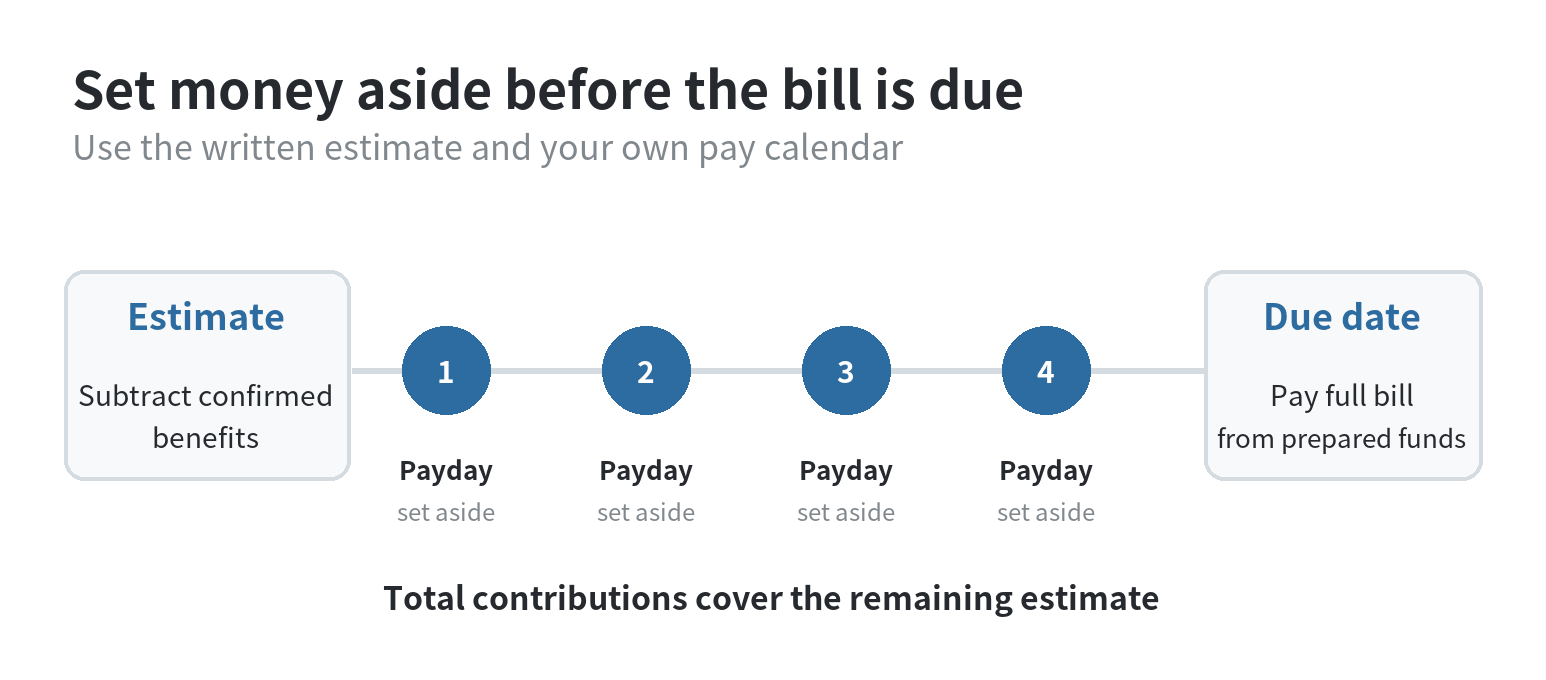
Once you have a current estimate, subtract confirmed insurance or workplace benefits to find the amount you expect to pay yourself. Divide that remainder by the number of paychecks before the due date. Keep the full charge visible in the due month even if you save toward it gradually.
Example only: if your written estimates leave $600 to pay and four paychecks arrive before the planned purchase, set aside $150 from each check. The CFPB’s savings worksheet uses the same basic method—set a target amount, choose a time frame, and divide the target across that time—to plan contributions; checked September 30, 2026. Those example amounts are placeholders; replace them with your estimate and calendar.
Put the set-aside on your budget as “vision care,” then keep sub-lines for the exam, glasses, and contacts. If a quote changes, update the relevant line instead of increasing the whole category by guesswork. When an expense is not scheduled yet, use a tentative target based on the last paid bill or current plan information, label it as an estimate, and revise it when you have the next written amount.
Timing matters as much as the total. If an appointment falls before payday, reserve the money from the preceding check. If a glasses purchase and another large bill land in one month, save toward both ahead of time rather than treating the annual average as money available on that date. A bill calendar and a separate savings line make those collisions visible; our phone-based emergency fund plan covers the broader idea of setting aside money for irregular expenses.
Check FSA or HSA rules before counting the balance
A health FSA or HSA may help pay eligible vision expenses, but the account rules and your plan documents matter. IRS Publication 502 lists eye examinations and medically needed eyeglasses and contact lenses among medical expenses; checked September 30, 2026. IRS Publication 969 says HSA-qualified medical expenses generally follow the medical-expense definition and explains the separate rules for FSAs and HSAs; checked September 30, 2026. Review the current IRS publications and ask the plan administrator how your specific expense is handled.
Do not budget the same expense as if two accounts will reimburse it. Keep the receipt, the explanation of benefits, and the reimbursement record together, and track what was paid by insurance, an FSA, or an HSA. IRS Publication 502 says an expense reimbursed by an FSA cannot also be included as a medical expense deduction; checked September 30, 2026. Publication 969 describes the tax treatment of HSA distributions; checked September 30, 2026. For an individual tax question, use a qualified tax professional rather than treating a general budget guide as advice.
An employer may offer an FSA, but availability and plan details come from that employer’s benefit materials. IRS Publication 969 describes health FSAs as employer-established plans and outlines their reimbursement rules; checked September 30, 2026. Ask the plan administrator which expenses qualify and how to file a claim. Before choosing a contribution, confirm eligible expenses, claim deadlines, documentation, and how any unused balance is treated under your plan.
Use this quick check before committing the money
Before setting the monthly amount, make sure the plan fits the rest of the household budget. Start with take-home pay and bills already due, then test the new line against flexible spending and other savings goals. If the full estimated balance does not fit, adjust the timeline or ask for a different itemized option; do not treat an unconfirmed benefit or future reimbursement as money already in your account.
| Question | What goes in your notes |
|---|---|
| What is the expected expense? | Separate exam, frames/lenses, contacts, and extra charges |
| What may another plan pay? | Confirmed benefit, source, check date, and remaining amount |
| When is payment due? | Appointment, order, or billing date beside pay dates |
| How will you prepare? | Target remainder divided by paychecks before that date |
| What record will confirm it? | Quote, receipt, explanation of benefits, and reimbursement record |
For a broader monthly framework, our monthly budget planning guide shows how to place irregular costs beside regular bills. Revisit your vision care line when a plan renews, a quote changes, or the household schedule shifts. Keep the dated estimate beside the budget so the next update starts with a real number.
FAQ
How should I budget if my insurance benefit resets before I use it?
Check the plan’s current benefit period and covered services, then base your estimate on the benefit available when the expense is expected. Ask the plan administrator or provider to confirm the remaining amount before relying on it.
Can I include glasses in an HSA or FSA budget before I have a prescription?
You can make a planning line, but confirm eligibility and documentation before using account funds. IRS Publication 502 lists medically needed eyeglasses and contact lenses as medical expenses; checked September 30, 2026. Your plan materials explain how to submit a claim.
What should I save after buying glasses or contacts?
Keep the itemized receipt, the estimate, the plan explanation, and any reimbursement record together. Those records help you see what the final out-of-pocket amount was when you update next year’s budget.
How can I plan when I do not know the next glasses cost yet?
Use the latest amount you actually paid as a temporary placeholder and label its date. Replace it with a new written estimate before you commit to the next purchase.
Last updated: September 2026.
Last updated: 2026-09