To budget for pet grooming, get a written quote for the exact service your pet needs, then set aside part of that amount between appointments.
A generic price is a weak starting point because it may not describe your pet or the requested work.
Use your own quote and appointment history to build the line.
The American Kennel Club (AKC) says grooming needs vary with a dog’s size, breed, coat type, and lifestyle.
Its professional grooming guide also recommends asking about fees and scheduling before booking.
Those details give you a better budget line than a generic “pet grooming” estimate.
Separate a full appointment from small upkeep
Start by writing down what you actually want done at the next appointment.
A full service may combine a bath, drying, brushing, and a trim; a shorter visit may cover only a defined task.
Ask the groomer to name what is included rather than assuming every salon uses the same package name.
Then list optional or separately charged work.
Depending on the salon, that might mean nail trimming, coat detangling, a breed-specific cut, or an add-on product.
Treat these as line items to clarify, not as services every pet needs.
Tell the groomer your pet’s size, coat, preferred cut, and any handling needs so the estimate describes the same job you plan to schedule.
Keep grooming separate from food, veterinary care, and supplies in your household plan.
If the statement groups several pet purchases together, split the grooming receipt into its own category.
That lets you see what a professional appointment costs without mixing it with unrelated pet spending.
Ask for quotes that describe the same job
When you compare salons, send each one the same short description.
Include your pet’s size and coat, the service requested, the desired trim, and whether you are asking about a first visit or a repeat appointment.
If one salon quotes a bath and brush while another includes a haircut, the totals do not answer the same question.
| Ask the groomer | Record in your notes |
|---|---|
| What does this service include? | Bath, brush, drying, trim, and named add-ons |
| What could change the quoted total? | Coat condition, extra time, or a requested change |
| Is this the full amount due? | Any separate fees, deposit, or payment timing |
| When should I plan the next visit? | The suggested interval for this coat and service |
Ask whether the quote is fixed or an estimate, and what would require approval before extra work begins.
Also ask how long the appointment takes, whether the pet waits in a crate, and how rescheduling works.
These questions help you plan both the money and the day without relying on assumptions.
The AKC’s professional grooming guidance specifically advises asking about fees and scheduling requirements before an appointment.
Its at-home grooming guide notes that needs vary by dog.
In practice, use those guides to frame your questions, then let the local groomer price the exact service.
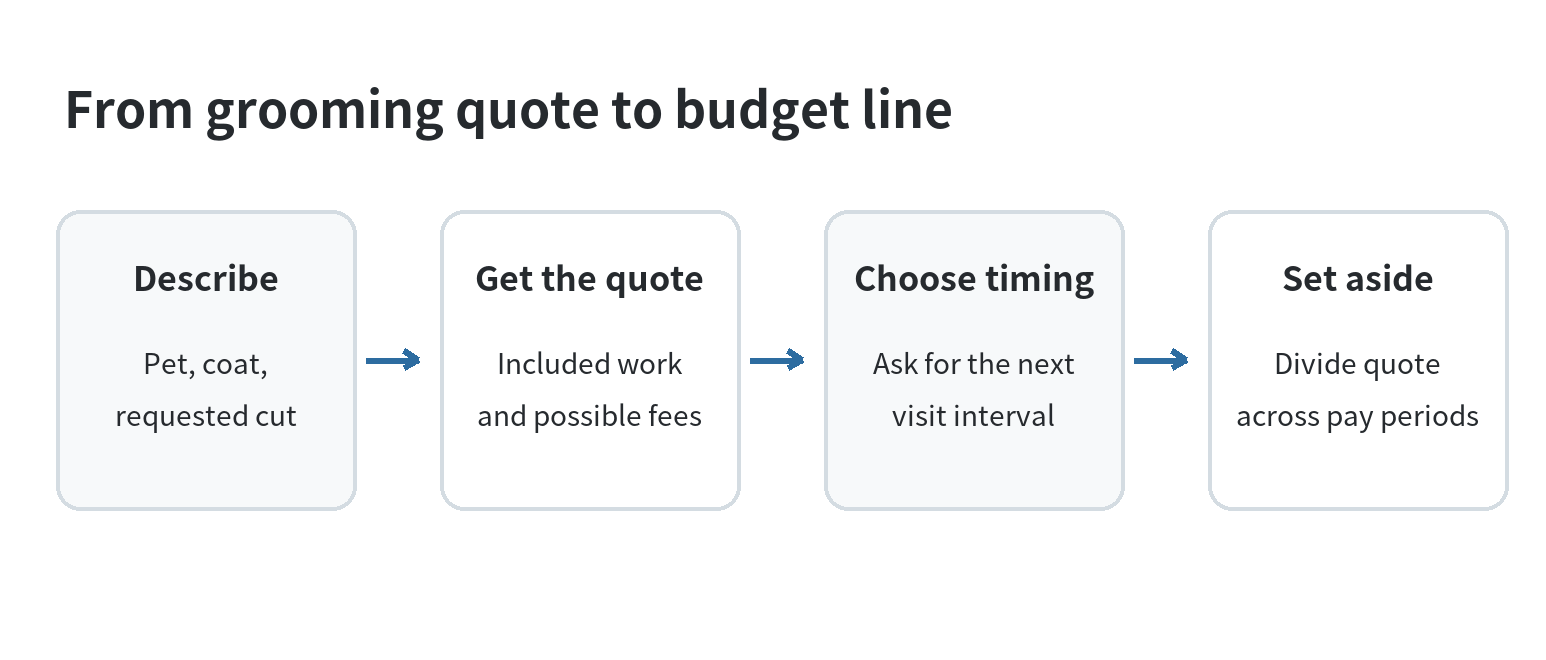
Turn the quote into a monthly or payday set-aside
Once you have the expected appointment total and a realistic interval, convert the visit into smaller deposits.
Divide the planned total by the number of months between appointments for a monthly amount.
If you budget by paycheck, divide it by the paychecks that arrive before the appointment.
Keep the money in a separate pet-grooming category so it is not mistaken for spendable cash.
For example, suppose your notes say “full bath and trim,” show the groomer’s quote, and include the next suggested visit month.
Your budget can carry a grooming set-aside each month until that date.
When the appointment is paid, record the actual charge, then refresh the next cycle using the new quote or invoice.
The amounts in this example should come from your own records, not a national estimate.
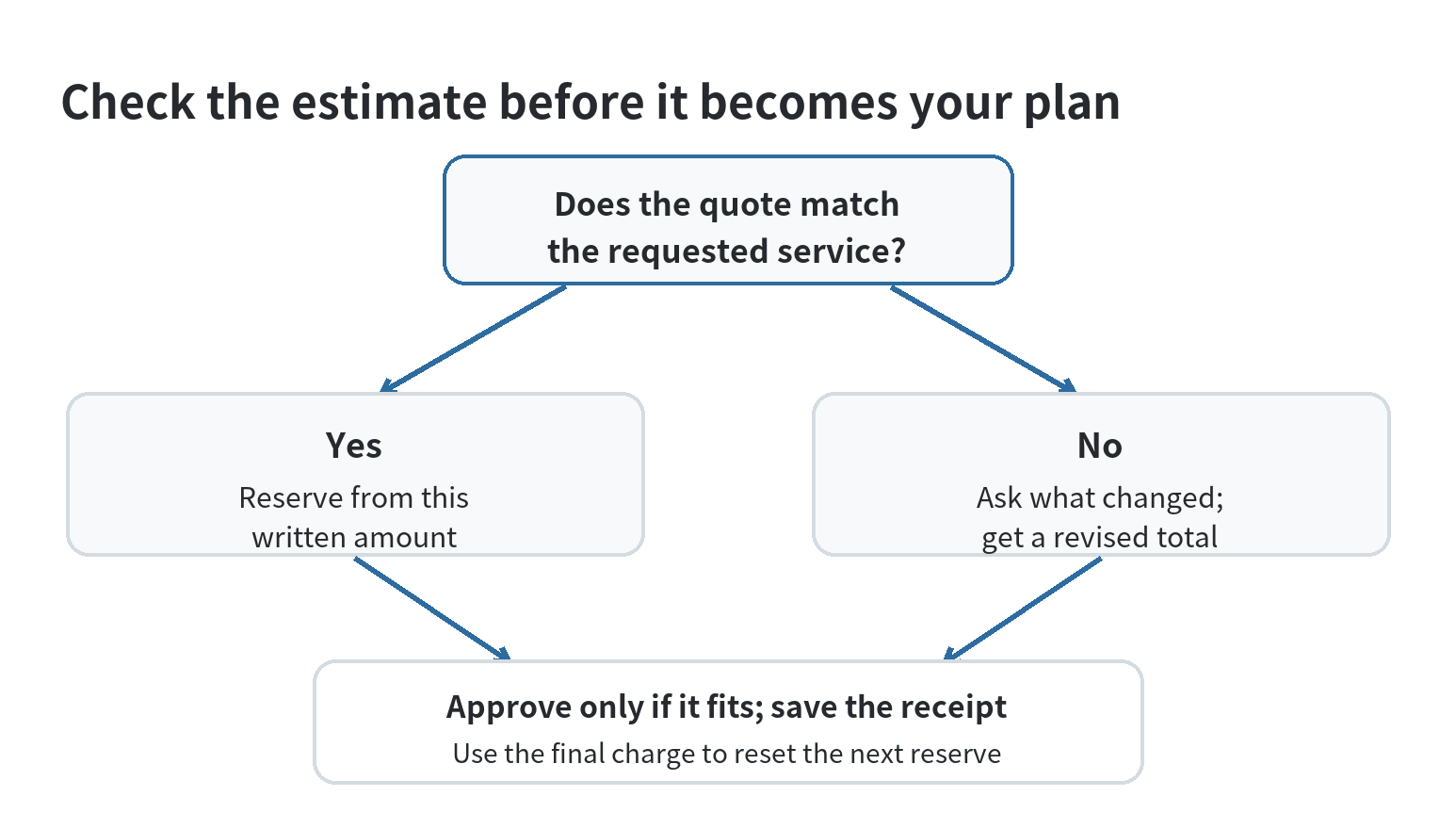
Plan for the quote you received, and leave room in the pet category if the groomer says extra work could be needed.
Do not quietly treat an uncertain add-on as part of the base service.
Ask for a revised total and decide whether it fits before approving it.
Handle a bill that does not match the estimate
Compare the receipt with the written quote while the service details are fresh.
Mark which items were included, which changed, and whether you approved the change.
If the final amount differs, ask the groomer to explain the difference before using it as your next planning figure.
Use the final receipt to update your real spending history; use the new quote to plan ahead.
These are different numbers with different jobs.
An estimate helps reserve money before the visit, while the receipt shows what this appointment actually cost.
If the new total is beyond the amount set aside, check which other planned expenses can move without affecting bills due now.
You can also ask the groomer what service can be scheduled within your available grooming amount, or whether a smaller visit is appropriate for the requested work.
Do not assume a lower-cost service includes the same work.
Use the first appointment as a planning checkpoint
A first visit gives you a real receipt and a clearer description of the service.
Save both the estimate and final receipt, and note any extra work you approved.
Ask the groomer what to request next time if you want the same result, and whether the next visit would use the same service and fee structure.
Do not automatically copy the first bill into every future month.
A first-time appointment and a repeat visit may not involve identical work.
Ask for the repeat-visit estimate before you choose a set-aside amount, then compare it with what you actually paid at the next appointment.
Include appointment logistics in your note too: the location, expected drop-off and pickup window, payment timing, and any rescheduling terms.
If a deposit or cancellation charge applies, record it as a separate possible expense rather than silently adding it to the grooming service.
Confirm the current policy when you schedule.
Use home care to plan, not to guess
Ask the groomer which simple between-visit tasks fit your pet’s coat and what tools are appropriate.
The AKC notes that coat type affects home grooming needs; its guide recommends getting coat-specific tool advice from a groomer or veterinarian.
This can help you decide what supplies belong in a separate line and which work remains part of a professional visit.
Do not lower the grooming budget just because you hope to replace a service with home care.
Try only tasks you are comfortable handling, then see whether the next appointment’s service changes.
If the groomer recommends a different schedule or service, ask what changed and update the plan from that conversation.
This article is about budgeting routine grooming.
If you notice a health concern while caring for your pet, ask a veterinarian to assess it rather than treating it as a salon service.
Keep the line visible in your household budget
The Consumer Financial Protection Bureau’s (CFPB) spending tracker sorts purchases into categories, includes pets as a category, and totals spending at month’s end.
Apply that simple routine to grooming: save the quote, record appointment receipts, and review the category during your regular budget check.
The expense-tracking guide has more ideas for capturing purchases as they happen.
Want the grooming reserve to fit into a wider monthly plan?
See the site’s monthly budget guide for phone-based budgeting.
For this expense, keep a clear category, a current quote, and a set-aside tied to the next appointment.
FAQ
Should pet grooming go in monthly bills or irregular expenses?
Use the category that matches how you manage money, but keep it visible as its own pet-grooming line.
A recurring set-aside works when you want smaller contributions before a future appointment; an irregular-expense category works if you review pet spending as a group.
The CFPB’s spending tracker uses a pets category for tracking costs.
How do I budget when I do not know the next appointment date?
Ask the groomer for a suggested interval for the service and coat, then use that interval to divide the quote into smaller set-asides.
AKC guidance says grooming needs depend on the dog and its coat, so a quote and schedule for another pet are not a sound substitute.
What if the grooming quote changes between visits?
Ask what changed in the requested service or estimate, and record the updated quote before the next appointment.
Keep the old receipt for spending history, but base future set-asides on the current service details you expect to request.
Can I use a national average instead of calling salons?
A national average is a weak planning number when it does not describe your pet, location, and requested work.
Ask local groomers for the same service details and use the quote that matches the visit you intend to schedule.
Last updated: 2026-09