Build a haircut budget and plan salon visits from your own appointment history, then turn the next expected visit into a monthly set-aside.
Do not start with a national “average”: salon menus describe specific services and may leave parts of the appointment separate,
so ask for the full quote before you decide what fits.
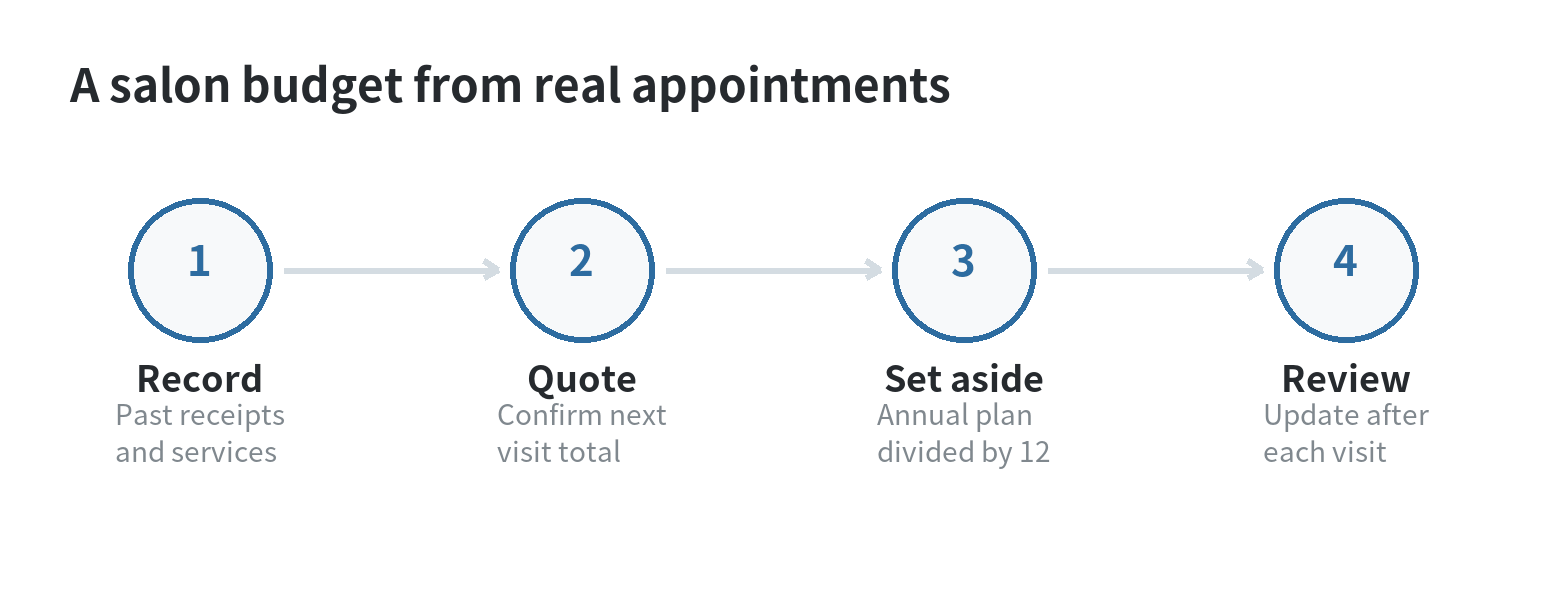
The method is simple: record what you actually book, note the full amount paid, estimate how often you want that service, and divide the yearly plan by twelve.
If your budget is tight, schedule the core service first and treat optional add-ons as a separate choice.
Build the line from appointments you really book
Look through bank or card transactions, appointment confirmations, and receipts for the past year.
CFPB’s spending tracker recommends recording expenses for at least two weeks or a month to get a clearer picture; checked September 30, 2026.
For salon planning, past records add the service details that a general category can miss.
For each visit, write down the service, date, amount paid, and anything included.
Keep a separate note for a trim, a color appointment, a blowout, or a special-event style if those are part of your routine.
Do not combine unrelated services into one guessed “salon” total.
If you have few records, start tracking from now and use receipts or appointment confirmations to fill gaps.
CFPB’s smartphone budget tracker guide describes a simple way to log spending as it happens; use a note, spreadsheet, or paper log if that is easier.
Ask for the full service price before you set a target
A menu price is useful only when it matches the appointment you intend to book.
The Unveil Salon service menu, checked September 30, 2026, lists some services separately and says a haircut and blowout are not included with its color services.
That is one salon’s menu, not a national price guide; use it as a reminder to ask what a quote includes.
Before confirming an appointment, describe the service in plain terms and ask:
- What is the price for the service I described?
- Does that include washing, drying, styling, or a cut?
- Are toner, product, or other requested add-ons separate?
- Could the quote change after a consultation, and when would I approve that change?
- What taxes, deposits, cancellation charges, or gratuity should I plan for?
Write down the quoted total and what it covers.
If the salon cannot provide a final amount before the appointment, ask what would change the price and set your budget using the higher amount you are prepared to spend.
If it exceeds that limit, ask which parts can be removed or reschedule while you compare your options.
A short written request can make the answer easier to compare: “I want to book [service] and my hair is [brief description].
What is the estimated total, and does it include washing, drying, and styling? Are any requested extras charged separately?
Please check with me before adding a service that changes the quote.” Keep the reply with the appointment details so you can compare the final receipt with the same scope.
Convert irregular visits into a monthly amount
If your haircut and salon appointments are not monthly, a set-aside can make their timing easier to plan.
To make the cost easier to plan, estimate the number of appointments you expect in a year, multiply by the full quoted cost for each appointment, and divide the total by twelve.
This is a planning estimate based on your schedule, not a promise that future prices will stay the same.
For example, if you book different services across the year, calculate each service line separately: expected haircut visits × quoted haircut total,
plus expected color visits × quoted color total.
Add those annual estimates, then divide once by twelve.
The resulting monthly transfer gives you a steady amount to set aside even when appointments land in only a few months.
If you do not know the timing yet, choose a tentative interval based on your own appointment history or ask your stylist what schedule matches the service you want.
Revisit the estimate after you have another receipt. Do not use a service interval from someone else as your personal schedule.
Give the budget a clear boundary
Separate the service you intend to maintain from optional extras.
A haircut, a color service, styling, and products can appear on the same receipt, but they are different decisions for your plan.
Put the service you have already chosen in the core line; list add-ons separately so you can see their cost before agreeing to them.
Set a maximum for the appointment before you arrive. That amount should cover the quoted service and any tip or other amount you plan to include.
If the proposed total is above the cap, pause before adding services. You can keep the core appointment, decline an add-on, or move the appointment to a later month.
If money is already committed to rent, utilities, food, transportation, debt payments, or another priority, do not hide the salon expense inside those categories.
The CFPB’s spending tracker distinguishes needs and obligations from wants and recommends setting budget priorities; checked September 30, 2026.
Use that distinction to decide whether this visit belongs in the current month or a later one.
Make the line work when appointments bunch up
A monthly set-aside smooths the timing, but it does not lower the total cost by itself.
Keep the money in a clearly named budget category or savings envelope, and subtract the appointment when it is paid.
If you spend less than planned, let the balance carry forward toward the next visit rather than treating it as extra room for an unrelated purchase.
If an event, travel, or a service change puts two appointments close together, compare the planned dates with the category balance.
You can move a non-urgent appointment, reserve more from the next paycheck, or revise another flexible category.
Avoid charging the visit to a card unless repayment already has a place in your budget.
When the quote changes, update the next monthly target using the new total.
For a simple running view of other savings categories,
see the site’s emergency-fund tracking guide; the same record-and-review habit can help you keep a planned salon balance visible.
Review the plan after the receipt
After each appointment, compare the final receipt with the quote and note any difference.
Record whether the difference came from an added service, a changed service, or a separate charge.
That note gives you a better starting point for the next quote and makes the next monthly estimate more useful.
Check the category when you plan the next appointment, not only at month-end.
If the balance is short, decide whether to wait, save more per month, or choose a different service with a new quote.
If the balance is higher than the amount you need, keep it available for the next salon visit or move it back to your general budget.
Prices and menus are set by individual salons.
The useful number for your budget is the current quote for the service you plan to receive, plus any separate charges you choose to accept.
FAQ
Should I include salon products in my haircut budget?
Give products their own line if you buy them separately from the appointment.
That lets you decide whether the recurring salon service and optional products both fit without blending two kinds of spending.
How do I budget for a salon visit when I do not know the price yet?
Ask the salon for a quote using the service details you want, and ask what could change the total.
Until you receive that amount, leave the line uncommitted or use a personal spending limit rather than an invented average.
Should a tip be part of my salon budget?
Include the amount you choose to tip in your appointment plan so the budget reflects the cash you expect to spend.
Ask the salon whether any gratuity is already included before adding another amount.
What if I need a haircut before my salon fund is ready?
Compare the appointment quote with money available after bills and other priorities.
You can ask for a quote on a simpler service, move the appointment, or adjust a flexible spending category before booking.
Last updated: 2026-09