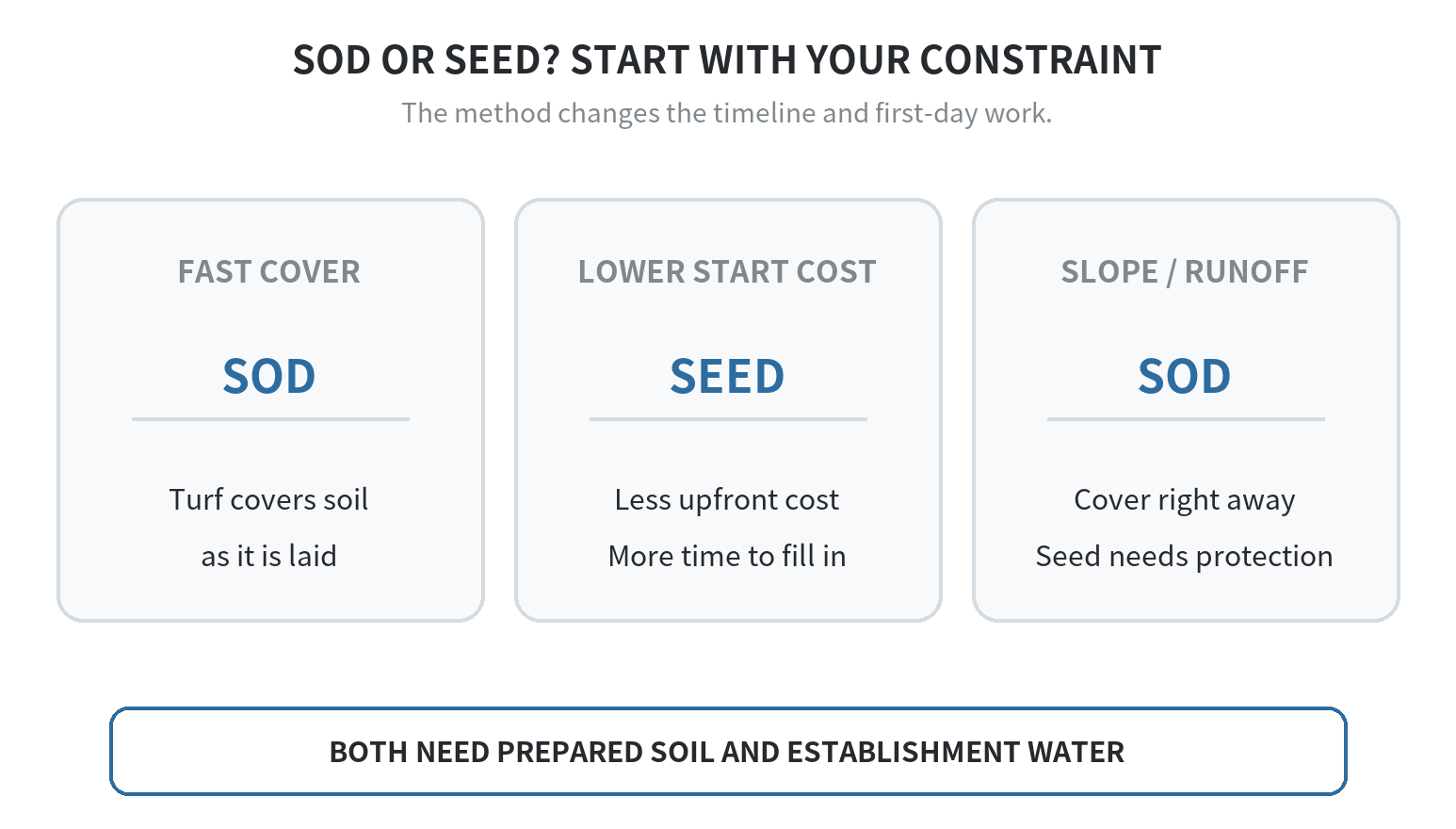
If you need a usable-looking lawn quickly or need to cover a bare slope, sod is the better fit; if your schedule is flexible and upfront cost matters most, grass seed is usually the better fit. The choice is about time, site conditions, and the weeks of care you can provide, because neither option skips soil preparation or watering.
What the upfront cost actually buys
Seed costs less to establish than sod, according to Minnesota Extension’s comparison. You pay for seed, soil preparation, and any tools or materials needed to spread and protect it. The trade-off is waiting while seedlings emerge and fill in. During that period, the soil remains more exposed, and young grass needs careful moisture management.
Sod costs more because you are bringing in living turf that has already grown into a mat. The lawn looks covered as soon as the strips are laid, but you still have to fit the pieces, prepare the ground, and help the roots connect with the soil below. Minnesota Extension also notes that sod installation takes substantial labor and that a soil layer difference between the sod and yard can complicate rooting.
Compare the full job, not just the package price. Measure the lawn area, then list soil testing, amendments recommended by the test, delivery or pickup, equipment rental, and disposal of old turf if those apply. For seed, include mulch or erosion protection where the site needs it. For sod, include the time and help needed to move and lay the material while it is fresh.
| Decision point | Grass seed | Sod |
|---|---|---|
| Upfront cost | Lower starting cost | Higher material and installation cost |
| Visible coverage | Builds gradually as seed grows | Covered as soon as pieces are laid |
| Timing | Plant in the suitable local window | More flexible within the growing season if water is available |
| Early care | Keep the seedbed moist while seedlings establish | Water through the sod into the soil below |
| Best fit | Flexible schedule and a lower initial budget | Fast ground cover or a slope that needs protection |
Choose by the date you need the lawn
Seed is a calendar choice. For cool-season grasses in Minnesota, the best seeding window is mainly late summer to early fall; Minnesota Extension says a mature, durable lawn takes nearly a full season to develop from seed. That timing is regional. Check your state university extension’s planting calendar before setting a date.
Sod moves the visible-coverage date forward, but it does not make the lawn ready for unrestricted traffic right away. Measuring, removing old growth, correcting grade, carrying rolls, and cutting around edges all add work, so the project schedule depends on the site and area.
Ask what “ready” means for your household. If you only need the bare soil covered before heavy rain, sod can be useful on an erosion-prone slope. If you need a mature surface for regular play, neither choice is immediate: new roots and seedlings both need time before they can handle normal use. Plan a temporary route for people and pets so the new area can settle in.
Match the grass to your region and yard
Choosing sod versus seed does not decide which grass belongs in the yard. First identify whether your region favors cool-season or warm-season turf, then check the amount of sun and the soil conditions. A grass type that suits a nearby town may still be a poor fit for a shaded, compacted, or poorly drained part of your property.
Seed gives you more variety to match a specific site. Minnesota Extension describes seed as offering more species and varieties, while local sod availability can narrow the options. Ask for the exact grass type or blend before committing. Compare its climate range and shade tolerance with what your yard actually receives, rather than choosing by color in a photograph.
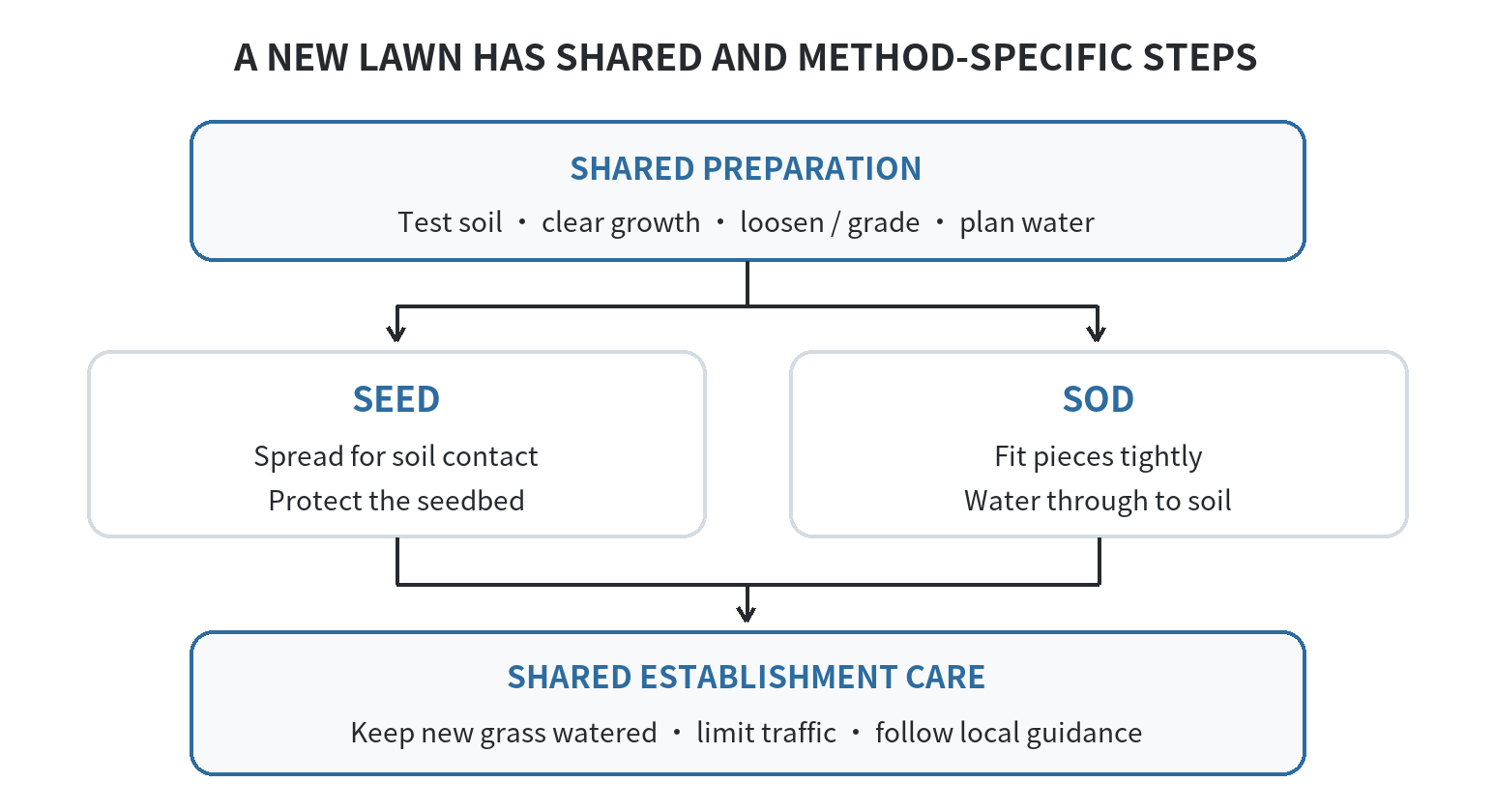
Utah State University Extension recommends soil testing and correcting site problems before either seeding or sodding. A soil test can guide amendments; loosening compacted ground, clearing weeds, and planning irrigation address conditions that affect both methods. The same preparation matters under sod: a neat layer of turf cannot compensate for compacted or unsuitable soil below it.
Compare the grass variety as carefully as the installation method. Ask which species and blend are in the seed mix or sod, whether it fits your climate and shade, and what area the package or cut is intended to cover. Minnesota Extension notes that seed offers more species and variety choices, while local sod availability may be narrower. If you are filling a gap beside existing grass, ask how closely the new type will match its growing season and light needs.
A slope changes the risk calculation. Sod gives the ground cover right after installation, while bare seeded soil needs protection from runoff and drying. Purdue Extension’s seedbed guidance says mulch helps limit erosion and conserve moisture on seeded areas, especially when irrigation is difficult. If the grade is steep or water cannot be controlled, ask your local extension office about suitable grasses and establishment methods before ordering material.
Budget for the establishment period, not just installation day
Both methods need reliable water while new grass is establishing. Seed needs moisture at the soil surface so it can germinate; sod needs water to pass through the turf and wet the soil beneath it. Utah State University Extension’s irrigation guidance describes several short watering cycles through the day for seeded areas and says to wet the underlying soil after sod installation. Follow local extension advice and any water restrictions for your location.
Think through access before choosing. Can a hose or sprinkler reach every part of the area? Can you keep the seedbed damp without washing seed downhill? Can you water a whole sod installation immediately after it is laid? If your answer is no, adjust the project size or timing. A smaller section that you can prepare and care for is easier to manage than a large area left dry or unevenly watered.
For sod, schedule the site work around the material’s arrival: Utah State University Extension advises laying it within 24–48 hours, and an installation guide says fresh sod should be planted quickly so it can be watered and begin receiving nutrients from the soil. For seed, read the coverage and application directions for the exact mix, and use the local planting window. The same square footage can require different amounts of material depending on the grass and product, so compare the stated coverage rather than assuming every bag or roll covers the same area.
For a sample 300-square-foot patch, sketch the outline into rectangles, measure the area, and add each section’s area. Then price seed or sod for that measured amount and add delivery, soil work, and tools. This is a planning example, not a typical lawn size or cost. You can use the same worksheet for a narrow side yard or a larger front lawn.
If you are estimating water access, compare your setup with this sprinkler and watering-system overview. For soil-test follow-up, see the site’s fertilizer and soil amendment guide. Use the test results and local recommendations to decide what the ground needs.
Make the call with three questions
Choose seed if the lower initial cost and wider grass selection matter more than quick coverage, and you can wait through establishment. Choose sod if visible cover is time-sensitive, the area is erosion-prone, and you can prepare the site and water as soon as it is installed. In either case, pause if you have not identified a grass type suited to your climate and light.
Before setting the date, check the local planting window, water rules, soil-test recommendations, and the exact grass blend available in seed or sod form. Confirm how you will keep people off the new area and reach it with water. Those checks turn “sod vs grass seed” into a manageable project plan instead of a choice based only on the first-day appearance.
FAQ
Can I lay sod over my existing lawn?
No. A sod installation guide says to clear existing growth and prepare the soil before laying turf, so the new roots can contact the ground.
Does grass seed need less watering than sod?
Both need consistent moisture during establishment. Seed needs a moist surface for germination; sod needs water to reach the soil below it. Local weather and soil affect the schedule.
Can I lay cool-season sod in spring?
Yes, Utah State University Extension says cool-season sod can be laid when the soil is not frozen; its guidance lists late summer, spring, and fall as favorable times. Local climate and water access still shape the project date.
When should I mow a newly seeded lawn?
Wait until the grass reaches the height recommended for its species and local conditions. Purdue Extension advises mowing when the first seedlings are tall enough; check local guidance before the first cut.
Last updated: 2026-10