
For a house-siding job, start with an electric pressure washer that offers a gentler spray option and enough hose and cord reach. Choose by siding material, access, nozzle, and water flow; a higher PSI number alone does not make a better exterior washer.
The current pressure-washer categories include corded and cordless electric machines as well as gas models (checked October 7, 2026). Compare the whole setup before choosing: the tool, the nozzle you will use on siding, a safe way to reach the work, and the instructions for your wall material.
Match the power source to the work area
For a small exterior area near an outlet, an electric unit avoids fuel and engine care. A corded model needs a usable outlet and a route that keeps the cord away from water and foot traffic. A cordless model removes the power cord, but its battery and water-supply setup still limit how long and where you can work.
Gas models make sense when a job site is far from an outlet or the work area is large enough to justify the extra setup. They require fuel and engine maintenance. The “Gas vs. Electric Pressure Washers” buying guide, last updated June 5, 2026, describes gas models as more powerful than electric models and electric units as needing less maintenance.
For siding, that extra power is not automatically useful: surface compatibility and spray control matter first.
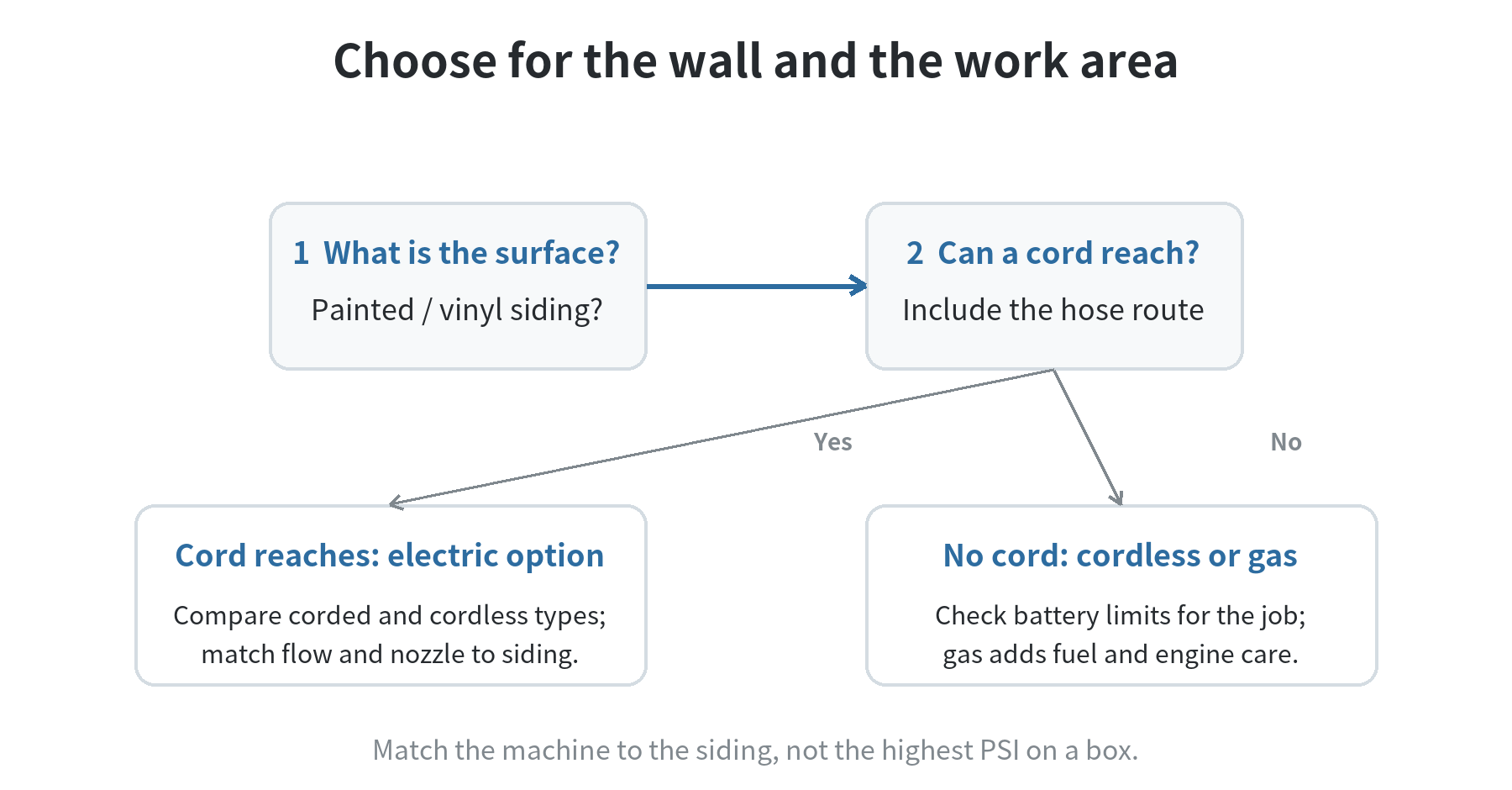
Think through the path from the water spigot to the wall as well as the machine’s listed reach. A long supply hose can cross a walkway or wrap around a corner; plan where it will lie before you start. The pressure hose connects the washer to the wand, while a separate garden hose supplies water to the pump.
The SIMPSON pressure-washer FAQ, checked October 7, 2026, advises unrolling the supply hose and removing kinks because restricted flow can reduce nozzle pressure and strain the pump.
For a two-story wall, the label “long reach” does not make every approach safe. Check whether the maker approves an extension wand for the unit and the surface, and plan to work from firm ground. If you cannot reach a section from the ground, a lower-pressure cleaning method or a qualified exterior-cleaning service may fit better than a ladder and spray gun.
Read PSI and GPM together
PSI means pounds per square inch, the pressure the machine can produce. GPM means gallons per minute, the water flow. The SIMPSON pressure-washer FAQ, checked October 7, 2026, explains PSI as scrubbing force and GPM as rinsing flow. The buying guide calls their product cleaning units, but a combined score does not tell you whether a spray is gentle enough for your siding.
| What to compare | What it tells you | What to check for siding |
|---|---|---|
| PSI | Maximum pressure shown for the unit | Can the pressure be reduced or controlled for the wall? |
| GPM | Water delivered per minute | Does the water supply and hose setup meet the manual? |
| Nozzle pattern | How wide or concentrated the spray is | Does the manual approve it for painted or vinyl siding? |
| Hose and cord reach | How far you can work from the machine and outlet | Can you stay on the ground and keep cords clear of water? |
Do not compare machines by maximum PSI alone. A narrow spray concentrates force into a smaller area, and a higher setting can mark paint, force water behind a siding seam, or damage a weak surface. Look for pressure control, a broad nozzle option, and instructions that name your wall material.
Listings may show maximum pressure, water flow, and included accessories in different places. Read them with the manual: confirm the supplied nozzle matches the surface chart, and check that any pressure adjustment is approved for siding. A product photo alone does not establish what comes in the box.
Choose the nozzle before the machine
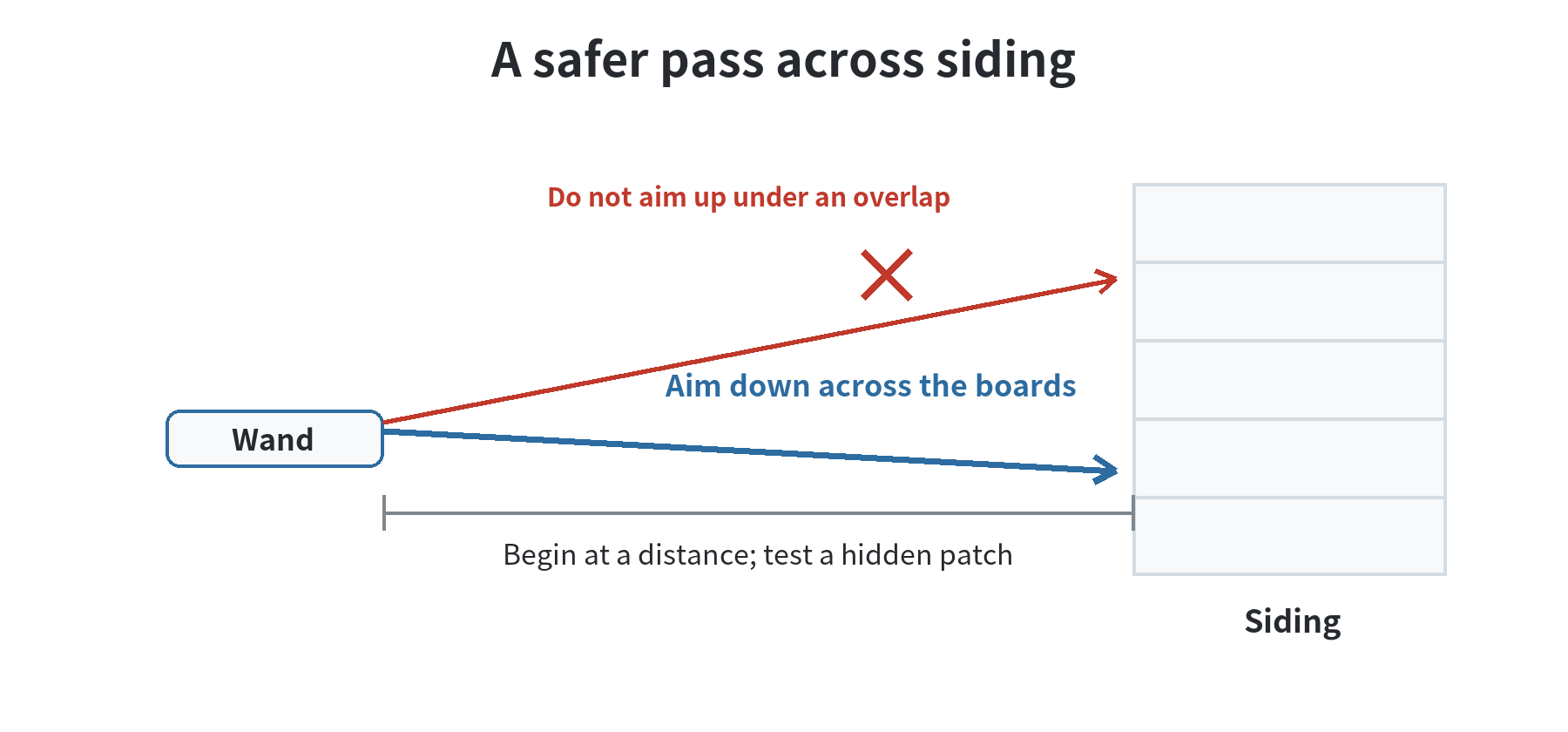
Nozzle color codes are not universal instructions; read the chart for the exact washer. A SIMPSON Use and Care Manual revised September 2024 and checked October 7, 2026, lists a 40-degree nozzle for painted or delicate surfaces and says to keep its nozzle about four feet from siding.
The manual directs the operator to spray at a 45-degree angle, avoid sending water behind the siding, and test the surface first. Those distances and nozzle settings belong to that manual, so use the instructions supplied with your own equipment.
Start with a wide fan pattern and a hidden test area. Keep the wand moving, hold it at the angle stated in the manual, and stop if paint lifts, water gets behind a seam, or the surface changes. Do not use a zero-degree tip on siding unless the washer and siding instructions specifically allow it.
Windows deserve their own check. The SIMPSON pressure-washer FAQ, checked October 7, 2026, says to inspect window frames for cracked caulk or glazing, peeling paint, and spots where water could enter before pressure washing glass.
Even when the frame appears intact, keep the nozzle farther away and use only a nozzle approved for that surface. If you see a gap or loose seal, skip that area until it is repaired.
Check the house before connecting the hose
Look for loose siding, open seams, damaged caulk, peeling paint, cracked window glazing, and gaps where water could enter. Fix or avoid those areas before washing. Close windows, move outdoor items, and cover nearby plants; a pressure-washer manual warns that spray can damage plants and surfaces.
Use only a detergent that the washer manual and siding instructions permit. The SIMPSON Use and Care Manual, checked October 7, 2026, warns that unapproved or corrosive cleaners can damage pump parts and says not to put bleach through that machine. Follow the exact manual for detergent use and rinsing rather than adapting a household cleaning recipe.
Do not assume a detergent tank means every cleaner is compatible. The machine, hose seals, siding finish, and cleaner label all matter. If the documentation does not name a product or chemical type, use plain water or contact the manufacturer for compatibility guidance instead of mixing chemicals into the washer.
Keep the spray pointed away from people, pets, electrical equipment, and the washer itself. The SIMPSON manual, checked October 7, 2026, warns that a high-pressure stream can cause injection injuries and severe lacerations. If a hose or fitting leaks, shut the unit down; never touch or search for a leak with your hand.
Do not spray from a ladder. The SIMPSON FAQ says to work from a stable surface because spray can cause the gun to kick back and throw off balance. A ground-level extension wand or a different cleaning method is safer than handling a high-pressure gun while climbing.
Make a listing checklist
Before comparing a model, write down the siding material, the area to be cleaned, outlet distance, water-source location, and whether you can work from the ground. Then check these points in the listing and manual:
- Power source and whether the cord or battery setup fits the work area.
- PSI and GPM, plus any pressure adjustment feature.
- Included nozzle patterns and the maker’s surface-use chart.
- Hose length, wand reach, water-supply requirements, and detergent limits.
- Storage and maintenance steps for the climate where the washer will be kept.
If a listing omits the nozzle chart or does not identify siding as an allowed use, consult the model manual before settling on that unit. Check the retailer’s live pressure-washer categories and the manufacturer’s current manual to verify the exact configuration.
Compare the cost of ownership along with the machine’s sticker price: a gas model adds fuel and engine-care tasks, while an electric model depends on a suitable power setup. Check warranty coverage for the washer and pump separately, and note which accessories are included instead of assuming a pictured surface cleaner or extension wand comes in the box.
When the main job is an occasional siding wash, a simpler machine with clear low-pressure instructions can be easier to match to the wall than a higher-output unit built for heavy-duty work.
FAQ
Will a cordless power cleaner do the same job as a pressure washer on siding?
Compare the actual pressure, water flow, nozzle options, and the manual’s allowed surfaces. Product labels can distinguish a low-pressure power cleaner from a pressure washer, so the name alone does not establish whether it suits a full siding wash.
How should I store a pressure washer before freezing weather?
Follow the exact model manual’s winter-storage steps. A SIMPSON manual, checked October 7, 2026, says to remove remaining water from the pump, high-pressure hose, and spray-gun assembly when freezing weather is possible; the procedure can differ by machine.
How should I compare pressure washers when prices change?
Compare current price, included nozzles, hose length, warranty, and maintenance on the live listing and the manufacturer’s page on the day you evaluate them. Add the date to your notes so you can tell whether an older comparison still matches the listing.
Last updated: October 2026.
Last updated: 2026-10