For a Halloween yard display, start with the spot where an inflatable will stand, then check its fully inflated dimensions, power setup, anchoring pieces, and outdoor-use instructions. That order helps you avoid choosing a figure that blocks a walkway, has no nearby suitable outlet, or cannot be secured on your surface. The seasonal collection also groups outdoor props and animatronics separately; this guide stays with outdoor inflatables.
Decide what the inflatable needs to do
Choose the role before the character. A single large figure can anchor a display; a low arch can frame an entry; a smaller lighted figure can fill a gap near a porch. Sketch the intended view from the sidewalk and from the front door. That makes it easier to judge whether one focal piece is enough or whether a second item would compete for the same sightline.
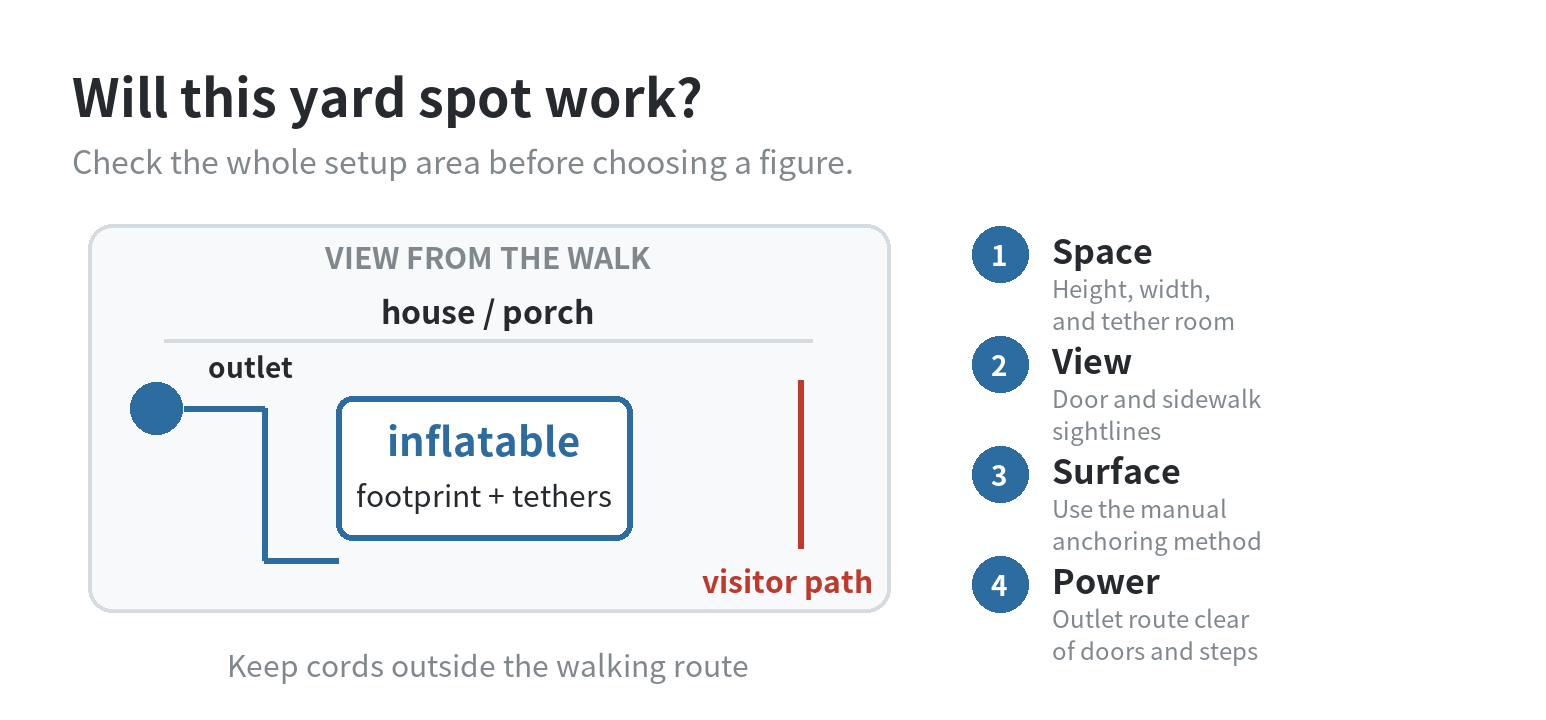
Keep the display in proportion to the space. A tall figure beside a narrow walk can feel crowded even when it fits on the lawn. For a porch, leave room for the door to swing and for people to pass. The product listing’s stated height and width describe the inflated object, while the real footprint also needs room for tethers and access to its fan or plug.
Think about the audience and the scene together. A playful pumpkin or ghost reads differently from a dramatic monster, and a character with lights or sound draws attention after dark. Pick a theme that works with what you already own, then limit the number of competing focal pieces. Other seasonal categories, such as animated props and yard lighting, can be considered separately.
When comparing two inflatables, compare the full silhouette and its orientation. A tall narrow figure may fit beside a porch where a wide arch would block the view; a long scene may need more open ground than its height suggests. Look for the dimensions in the item details and compare them with your outline on the ground. Product photos can show an item alone, so judge the available space with the walkway, door, and nearby decorations included.
Measure the spot and the route to it
Measure the usable ground, not just the visible patch of grass. Check the height and width available, then leave clearance around the decoration for stakes or tie-downs. Mark the footprint with garden-safe markers or a temporary outline and look at it from the sidewalk. Include the path from the storage area to the display spot so a large package or assembled piece will not be difficult to move.
Check the ground surface before settling on a location. Soft soil may accept stakes; a hard patio or deck needs a setup allowed by the item’s own instructions. Do not assume a heavy object, railing, or improvised weight can replace the specified anchoring method. If the site is exposed to wind, choose a position and anchoring arrangement that follow the product manual rather than placing it where gusts funnel between buildings.
Plan the cord route at the same time. Trace it from the outlet to the display without crossing a doorway, stair, or the path visitors use. If the route cannot stay clear and protected as the instructions require, choose another location or another decoration. A spot that looks good in daylight still needs to work when the display is running after dark.
Read the listing as a set of constraints
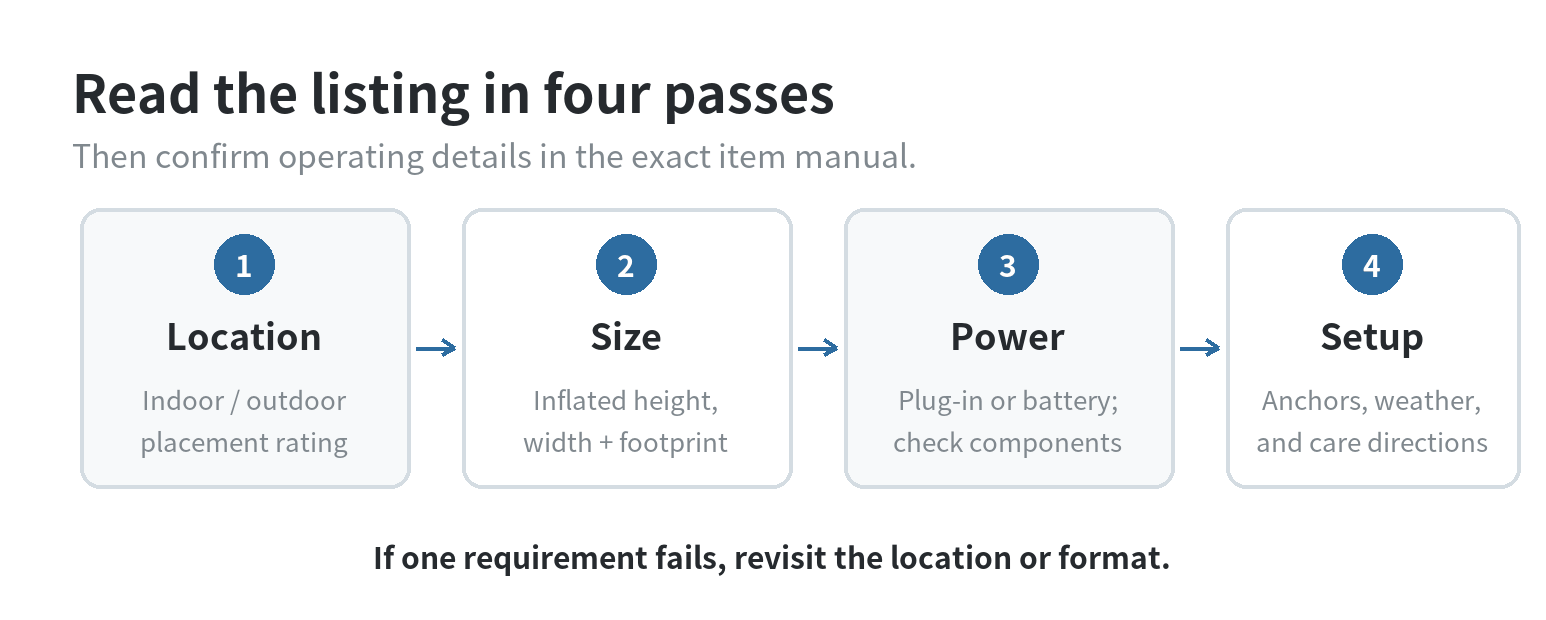
Use the listing to answer practical questions, rather than treating its photos as a complete setup plan. The official seasonal listings checked October 6, 2026, offered filters for indoor or outdoor placement, inflated height, power type, and features such as lighting and self-inflation. Those filters help narrow the options; the manual for the exact item supplies the operating details.
| Listing detail | What to confirm | Why it matters at home |
|---|---|---|
| Indoor/outdoor rating | Whether the item is intended for the location you chose | A covered porch and an exposed yard are different settings |
| Inflated dimensions | Height, width, and the space needed for anchoring | The visible shape is not the whole footprint |
| Power type | Plug-in or battery operation, and the included power components | It determines where the display can go |
| Included accessories | Stakes, tethers, adapter, or other listed pieces | You can spot setup items that are not included |
| Care and storage | Cleaning, drying, and packing directions in the manual | Storage begins with the maker’s instructions |
Availability, photos, descriptions, and prices can change. The collection page showed different item filters and live inventory when checked, so treat any listing as a snapshot and confirm the current product details before making a plan. Avoid comparing two figures on height alone: a narrow upright character, a wide arch, and a low scene use yard space in different ways.
Check power and placement before Halloween night
For a plug-in model, check the product instructions for the required outlet, adapter, and permitted conditions. Keep connections out of standing water and route cords where people will not trip over them. The U.S. Consumer Product Safety Commission’s Halloween decoration guidance, checked October 6, 2026, says to use decorative light strands tested by a recognized testing laboratory, inspect for damaged sockets or wires, discard damaged sets, and avoid overloading extension cords. Apply those light-safety checks to any separate strands used around the display.
Keep decorations clear of steps, landings, doors, and the route to the entrance. The CPSC’s 2023 Halloween guidance specifically recommends removing obstacles from lawns, steps, and porches when trick-or-treaters are expected. A cord, tether, or collapsed decoration can become an obstacle too, so walk the route at night with the display switched on and check that visitors can pass without stepping around equipment.
Do not infer weather resistance from an outdoor label alone. Check the product instructions for rain, wind, temperature, and when to unplug or bring an item inside. If the directions do not answer a condition you expect at your location, contact the maker for that item’s guidance instead of improvising a setup.
Run a small setup rehearsal
Set the inflatable up before the night you expect visitors. Follow its assembly sequence, use the listed stakes and tethers, and give the fabric room to inflate without catching on branches, fences, or sharp edges. Confirm that the fan intake and exhaust are unobstructed, then check the display from the viewing point you chose. If a tether crosses the walkway or a cord is exposed, adjust the layout while there is still time to move it.
Turn on the lighting and any sound or motion feature at the intended time of day. Check whether the light faces neighbors’ windows or shines directly into the path. Make sure switches and plugs remain reachable without walking through the display. If the unit behaves differently from the manual or cannot remain anchored as directed, stop using it and ask the manufacturer about the model.
Make takedown part of the plan
Pick a dry, accessible place for the packed decoration before the season begins. After use, switch off and unplug it as directed, let it dry as the manual specifies, and inspect seams, cords, stakes, and tethers while packing. Keep the instructions with the item so next season’s setup does not depend on memory. A storage bag or container should fit the folded material without forcing parts together or bending components.
For a simple decision, keep the item only if its dimensions fit, the location matches its rating, power can be routed safely, and the required anchoring is possible. If any one of those checks fails, change the display spot or look for a different format. A decoration that fits the yard and the setup instructions is easier to enjoy than one chosen only for its catalog photo.
FAQ
Can an inflatable go on a concrete porch?
Only if the item’s instructions allow that surface and explain an approved way to secure it there. Ground stakes may not work on concrete, so do not substitute an improvised anchor without the maker’s direction.
Should I leave a plug-in inflatable running in the rain?
Follow the specific model’s instructions for rain and unplugging. An outdoor designation alone does not establish how every electrical connection or fan should be handled in wet conditions.
What should I check if the inflatable leans or deflates?
Switch it off and check the setup against the manual, including the power connection, air openings, fabric, and specified anchoring. Do not continue operating it if you cannot restore the instructed setup.
Last updated: 2026-10