In a home, begin by comparing fire extinguisher types by their letter ratings. Place a unit where an adult can see and reach it while moving toward an exit.
A multipurpose unit labeled A-B-C covers ordinary combustibles, flammable liquids, and energized electrical equipment. A room with a special hazard may call for a different rating.
The letters describe the fires the unit is tested for, not the material inside the canister.
The U.S. Fire Administration (USFA) describes five fire classes: A, B, C, D, and K. The National Fire Protection Association’s NFPA 10 fact sheet uses the same class system.
The right extinguisher type depends on the fuel or equipment in the room. Placement depends on visibility, access, and a clear way out.
Match the letter to what could burn
Read the letters on the label before comparing size or extinguishing agent. A listing that says “dry chemical” does not by itself tell you which fires the specific unit is rated for.
The class letters do that job. NFPA and the Occupational Safety and Health Administration (OSHA) explain that the rating follows the fire hazard the extinguisher is approved to address.
| Class | Hazard shown by the rating | Where it may matter |
|---|---|---|
| A | Ordinary materials such as wood, paper, cloth, rubber, and many plastics | Living spaces and storage areas |
| B | Flammable liquids, including gasoline, oil, some paints, and solvents | Garage or workshop materials |
| C | Energized electrical equipment | Appliances, wiring, or powered tools |
| D | Combustible metals such as magnesium or sodium | Specialized work or metal processes |
| K | Cooking oils and animal fats in commercial cooking equipment | Commercial food-service kitchens |
An A-B-C label combines three ratings on one unit. USFA describes multipurpose A-B-C extinguishers as suitable for Class A, B, and C fires.
NFPA explains that a C rating is added to an extinguisher that already has an A or B rating after testing shows it does not conduct electricity. Match the letters to listed hazards instead of relying on a vague phrase such as “all-purpose.”
Do not assume that a single extinguisher covers every possible fire.
Class D is a specialized rating for combustible metals, not a general garage label. Class K addresses cooking oils and fats in commercial appliances.
USFA and NFPA distinguish these hazards from ordinary household materials. If a home workspace or cooking setup includes a less common fuel, ask the local fire department which rating matches it.
The agent matters after you check the letters
The agent helps explain how a unit works, but the rating label shows which fire classes it covers. OSHA describes water extinguishers as Class A units for ordinary combustibles. It warns against using water on energized electrical equipment or flammable-liquid fires.
Carbon dioxide models carry B and C ratings and are not intended for Class A materials that may keep smoldering. Multipurpose dry-chemical units may carry A, B, and C ratings. Follow the exact label; an agent name alone does not establish suitability.
This distinction matters when a product description emphasizes “water,” “carbon dioxide,” or “dry chemical.” Check the specific letters and the manufacturer’s operating instructions before comparing models.
Use the number to compare rated capacity
A label can include numbers as well as letters. USFA and OSHA explain that the number before A is a water-equivalency rating. Each A unit represents 1.25 gallons of water equivalent.
The number before B represents the area in square feet of a Class B fire a nonexpert user should be able to extinguish under the rating test. USFA’s rating guide uses 1-A:10-B:C as an example: “1-A” and “10-B” are separate ratings. C indicates suitability for energized electrical equipment.
These figures describe a test rating, not a promise about the size of a real fire that a person can safely fight.
Compare the full rating string and the canister’s size and weight together. USFA advises choosing a unit the intended user can safely and comfortably operate.
A large extinguisher that is too heavy for the person expected to use it is a poor fit for that household. Check the printed instructions and the listing mark on the unit.
USFA points readers to UL Listed or ULC Listed markings as evidence that a recognized testing laboratory certified the extinguisher.
Choose a spot you can reach on the way out
NFPA’s placement fact sheet calls for an extinguisher to be visible and readily accessible, including along normal paths of travel. USFA advises keeping it unblocked and keeping a clear escape route.
Choose a visible wall location where an adult can reach the unit without moving toward the likely fire or blocking the way out. Do not hide it behind stored items or place it where a fire could cut off access.
In a kitchen, keep the extinguisher close enough to reach from the route out. Do not tuck it beside the stove where a flare-up could separate you from it.
A visible wall mount near the kitchen exit can keep it in view while preserving the exit path. Make sure potential users know its location.
NFPA describes general accessibility and visibility; the exact place in a home depends on the room layout.
For example, if the kitchen opens to a hall, a visible spot on the hall side may keep the extinguisher on the route out. That avoids reaching across the cooktop to retrieve it while leaving the doorway and walkway open.
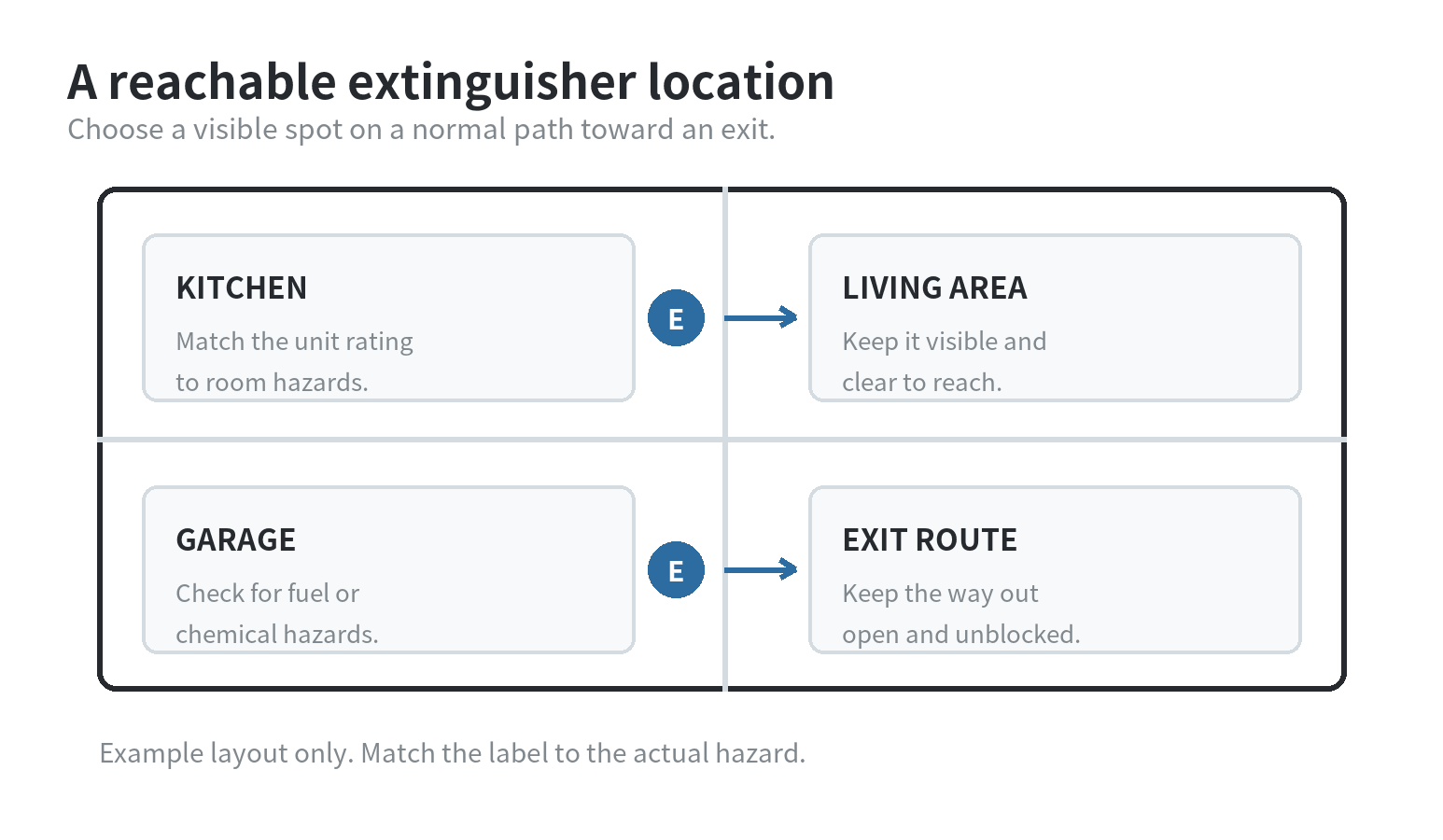
A garage needs a closer look at stored fuels, paints, solvents, and powered equipment. Read product labels and note what is stored there before deciding whether an A-B-C rating matches the hazard.
Keep the extinguisher visible and outside the area where a likely fire could trap someone. NFPA distinguishes ordinary combustibles from flammable liquids and energized equipment, so do not choose a rating solely because the room is called a garage.
For an apartment or shared home, agree on a spot that housemates can identify without searching. Do not let boxes, coats, or furniture cover the unit.
If it sits inside a cabinet, make sure adults know which cabinet and can open it quickly. NFPA recommends visibility and ready access.
USFA also advises keeping the extinguisher unblocked and checking its pressure indicator and physical condition against the manufacturer’s instructions.
Check the actual unit before choosing a mount
Use the listing details to confirm the class letters, model size, and weight. USFA recommends looking for a UL Listed or ULC Listed mark and choosing a size the intended user can safely operate.
Then compare those details with the label on the physical canister. A photo or short product description may not show the full rating string or operating instructions.
After mounting, keep the instructions readable and the gauge visible if the unit has one. USFA’s maintenance guidance says to check that the extinguisher is accessible, its pressure is at the recommended level, and the canister, hose, and nozzle have no damage.
Follow the manufacturer’s schedule for inspection, recharge, or replacement. Whether a unit can be recharged depends on its model and instructions.
Do not guess from the shell color or appearance.
Keep the extinguisher secondary to getting out
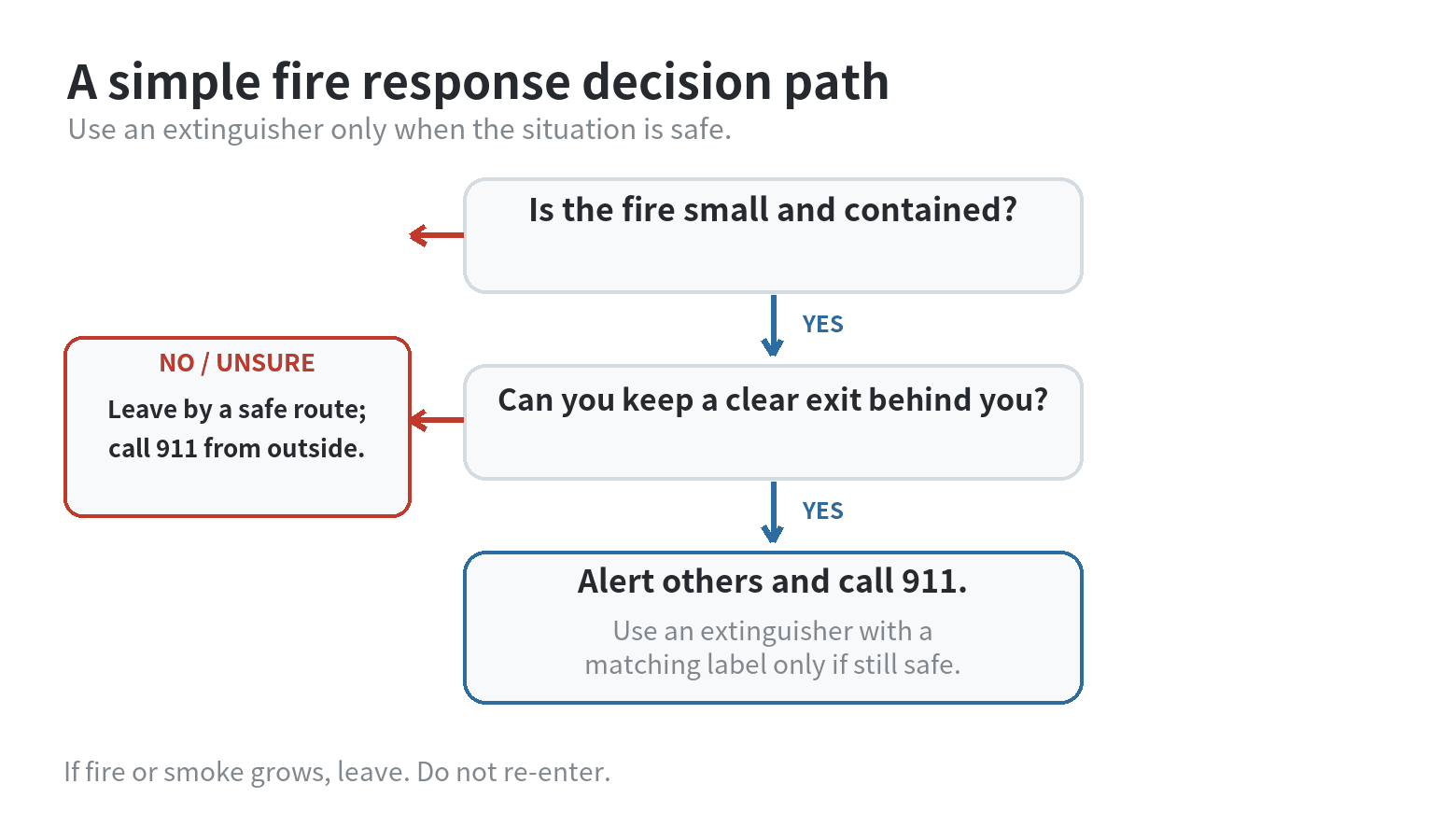
USFA’s checklist says to consider an extinguisher only when the fire is small and contained, others have been alerted, someone has called the fire department, smoke is not putting you in danger, and a clear escape route remains.
OSHA’s extinguisher-use instructions also put a safe evacuation path before approaching a fire. They direct users to evacuate if they doubt their ability to fight it.
If any condition is uncertain, leave and call 911 from outside. A fire extinguisher is not a substitute for evacuation.
Before an emergency, read the operating instructions on the exact unit and ask the local fire department about training. USFA describes the PASS sequence: pull the pin, aim low at the base, squeeze the lever, and sweep side to side.
Follow the canister directions because discharge and maintenance instructions can vary by unit. Replace or service one that is damaged, corroded, leaking, or outside the condition indicated by its gauge or instructions.
FAQ
Is a B-C extinguisher enough for a home kitchen?
It does not carry a Class A rating for ordinary combustibles. Check the label against the hazards in the room; USFA describes A-B-C units as covering Class A, B, and C fires. Cooking oil fires also require careful attention to the unit label and evacuation guidance.
Does the letter C mean the extinguisher is for computers only?
No. Class C indicates use on energized electrical equipment, which can include appliances, wiring, or powered tools. NFPA explains that C is added to an A- or B-rated extinguisher after it passes an electrical conductivity test.
Where should an extinguisher go if the kitchen has no clear wall near an exit?
Choose another visible, reachable point on a normal path toward an exit, then ask the local fire department to review an unusual layout. NFPA’s placement guidance centers on access and visibility; the unit should not be hidden or positioned so the fire can block access.
Can a portable extinguisher replace a kitchen fire-suppression system?
No. A portable unit is not a substitute for getting out, calling 911, or following instructions for installed fire-protection equipment. OSHA’s Class K guidance describes a separate relationship to fixed hood systems in commercial kitchens; ask the local fire department or building official about equipment at that location.
Last updated: 2026-10. USFA extinguisher guidance checked for this update.