For a cool-season lawn, plan fall aeration and overseeding around your local growing window, not a single national date. Check your county or state extension calendar first.
Aerate only where soil is compacted. Spread seed while the soil can still support establishment, and keep the seedbed lightly moist.
Warm-season lawns follow a different calendar, so identify the grass before scheduling work.
Fall work is a sequence, but not every lawn needs every step. Aeration opens compacted soil by removing small plugs; overseeding adds seed to an existing lawn to fill thin areas.
Doing both can make sense when bare or thin turf and compacted ground occur together.
If the lawn is dense and the soil is easy to work, adding seed or aeration without a clear need adds labor without addressing a specific problem.
Start with your grass and your local calendar
Cool-season grasses such as fescue, ryegrass, and Kentucky bluegrass are common choices for fall seeding. Their best window depends on local climate and the grass mix.
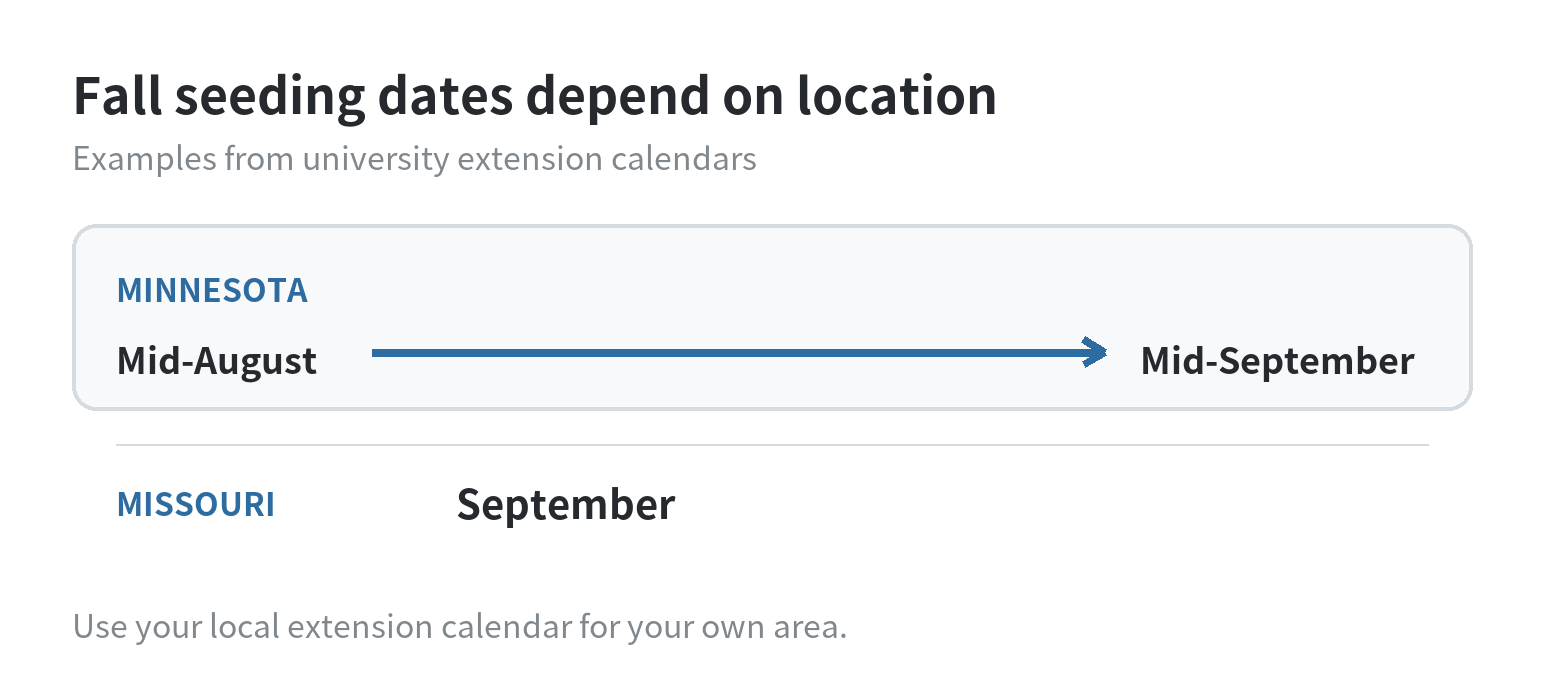
The University of Minnesota Extension places its preferred lawn renovation period from mid-August to mid-September.
University of Missouri Extension identifies September for cool-season seeding and advises allowing enough time for seedlings to develop before a killing frost.
Missouri Extension recommends four to six weeks before the first killing frost.
Those are local recommendations, not dates to copy across the country.
Use your state extension service’s lawn calendar to find the recommended seeding period for your county or climate zone.
If the calendar gives a range, plan early enough within that range for seed to germinate and grow before cold weather slows it.
Late-season work can leave young grass with less time to establish; shifting the task to spring may be a better fit when the local fall window has passed.
If the local fall window has passed, check whether your extension calendar lists a spring option; Minnesota Extension lists early spring as its next renovation window.
Grass type matters as much as the month. Missouri sits between cooler and warmer grass-growing regions.
University of Missouri Extension says cool-season grasses fit northern Missouri better, while warm-season grasses suit southern Missouri.
A neighbor across town may therefore be working with a different calendar or seed mix.
Use a local extension recommendation tied to your county and lawn type instead of borrowing a date from a national article.
Warm-season grasses need a separate plan. A cool-season fall window does not apply to warm-season grass.
Missouri Extension says to seed warm-season grass in late spring, after soil temperatures reach 75–80°F.
If you do not know the grass type, use a local extension identification guide before choosing seed or setting a date.
Decide whether aeration belongs in the plan
Aeration is most relevant when soil compaction is limiting the lawn.
Illinois Extension describes hollow-tine core aeration as removing plugs of soil and says it can be done when cool-season grass is actively growing in spring or fall.
A simple check is to press a screwdriver into moist ground at a suspected problem area.
If it is difficult to push in at a problem area, compaction may be present; one resistant spot is not a diagnosis for the whole yard.
Choose a core aerator that pulls soil plugs rather than a spike tool that only punctures the surface.
Illinois Extension notes that solid tines do not remove cores and are not an effective tool for reducing compaction.
Aeration works best when soil is moist enough for the tines to enter, but avoid working saturated ground.
If the soil is hard and dry, water it or wait for rainfall; if it is muddy, postpone the pass so the machine does not churn the surface.
Mark sprinkler heads, shallow lighting wires, and other obstacles before moving equipment across the lawn. Follow the equipment manual for operation and safety.
If a rental unit is unfamiliar or the site has hidden utilities, have the service provider confirm the safe route and operating steps before work begins.
Match the seed to the thin spots
Overseeding means distributing grass seed into existing turf without starting over. Use a seed blend suited to your region, sun exposure, and the lawn’s current grass.
Local extension recommendations can help narrow the species; a label alone cannot tell you whether a mix suits a shaded northern yard or a hotter transition-zone site.
For a broader review of lawn basics, see the site’s beginner lawn and garden guide.
For isolated bare patches, loosen the surface so seed can meet soil. For a thin lawn, mow and clear loose debris according to local seeding guidance, then distribute seed evenly.
A slit seeder places seed into narrow openings; broadcasting spreads it over the surface and depends more on good seed-to-soil contact.
Follow the seed package rate for the identified grass and use the lawn’s measured area rather than guessing. Do not compensate for a poor date or preparation by adding extra seed.
Measure only the sections that actually need seed.
University of Missouri Extension recommends measuring the lawn and subtracting non-green areas such as a patio or shed before calculating the area.
For example, a rectangular patch that is 20 feet by 30 feet covers 600 square feet. Two patches of that size total 1,200 square feet.
University of Missouri Extension describes this area-measurement method.
For an irregular lawn, break the seeded area into simple shapes, add their areas, and leave out beds, pavement, and other surfaces that will not receive grass seed.
Then use the seed label’s rate for that measured area.
If you aerate and overseed in the same project, spread seed after the core-aeration pass so some seed can reach the exposed soil.
Missouri Extension advises seeding cool-season grass the same day as fall aeration. Illinois Extension explains that aeration holes can improve contact between seed and soil.
Illinois Extension says the extracted cores can remain on the surface to dry and break apart. Follow local guidance for your soil and equipment before removing them.
Keep the seedbed moist while seed establishes
After seeding, keep the soil surface moist without leaving it waterlogged.
University of Minnesota Extension recommends light, frequent watering until the grass varieties have germinated.
It says Kentucky bluegrass can take two to three weeks to germinate.
Missouri Extension advises monitoring the soil so it remains moist but not saturated, then reducing watering frequency after sprouts appear.
Local rainfall, soil drainage, and the seed mix affect how often you need to check.
That means the calendar plan should include the follow-up, not just the aerator and seed.
If you cannot water during a dry stretch, schedule the job for a period when you can monitor the surface or wait for a more suitable window.
Keep foot traffic off newly seeded patches where practical, and follow the seed label and local extension directions for mowing once seedlings begin growing.
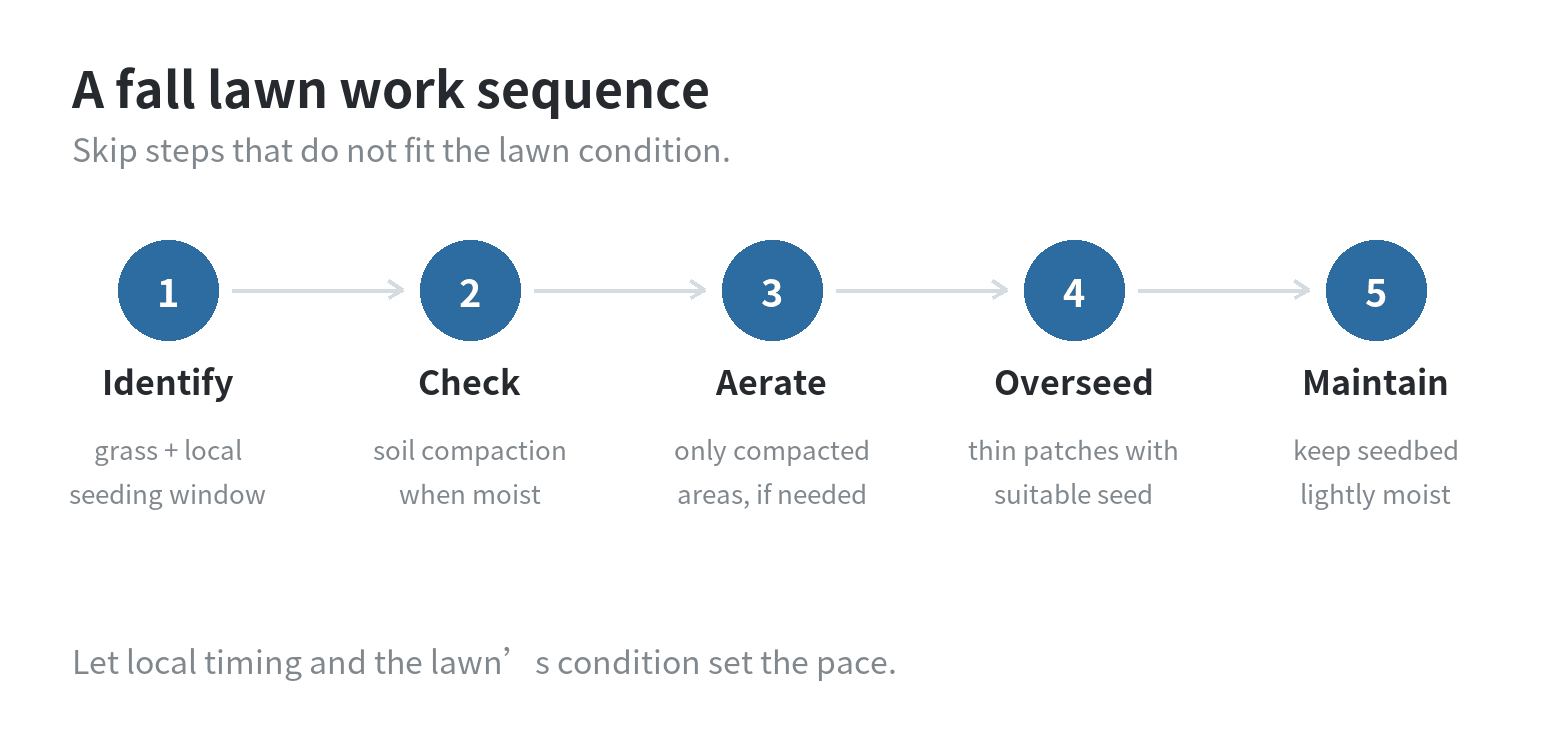
Think of fall lawn care as a short decision path: identify the grass, check the local timing, aerate only compacted ground, and overseed thin areas with a suitable mix.
The site’s seasonal home maintenance checklist can help place outdoor tasks on a household calendar. Your local extension calendar identifies when lawn seeding fits your area.
Last updated: October 2026.
FAQ
Can I aerate a lawn after heavy rain?
Wait until the soil is moist rather than saturated.
Illinois Extension says core aerators work best in moist soil and recommends waiting until after rain or irrigation (checked October 13, 2026).
Should I overseed if only a few spots are bare?
Yes, spot seeding can address small bare areas without treating the entire lawn.
Loosen the surface for seed-to-soil contact and follow the regional seed recommendation for your grass type.
Can I seed a warm-season lawn in fall?
Do not use the cool-season fall calendar for warm-season grass.
Missouri Extension recommends seeding warm-season grasses in late spring after soil temperatures reach 75–80°F.
What if I miss my area’s fall overseeding window?
Check your local extension calendar for the next recommended period instead of choosing a date from another state.
Minnesota Extension lists early spring as its second-best renovation time, while other climates may give different guidance.
Last updated: 2026-10