Choose a driveway sealer by the pavement under your feet: asphalt and concrete products are not interchangeable.
Then read the product label for surface preparation, weather limits, application method, and the exact time before foot or vehicle traffic.
A sealer that looks dry may still have a longer cure or reopening window.
Start with the pavement, not the bucket
Asphalt is flexible pavement.
A portland-cement concrete driveway is a rigid slab that may have control joints.
The Federal Highway Administration describes these different pavement structures and explains that concrete joints help control cracking, checked October 4, 2026.
If the driveway has not been poured yet, our overview of concrete mix types covers that earlier material choice.
If an old coating hides the surface, look at an exposed edge, a crack, or the apron where the driveway meets the street.
Product catalogs make the same distinction.
Home Depot’s asphalt category groups sealcoats for blacktop, while its concrete sealer pages specify concrete or masonry substrates.
The Henry 130 data sheet says its asphalt coating is not for concrete, and BEHR’s concrete waterproofer lists concrete and masonry as its surfaces.
Check the full label for the exact surface and condition before you compare coverage or cure details.
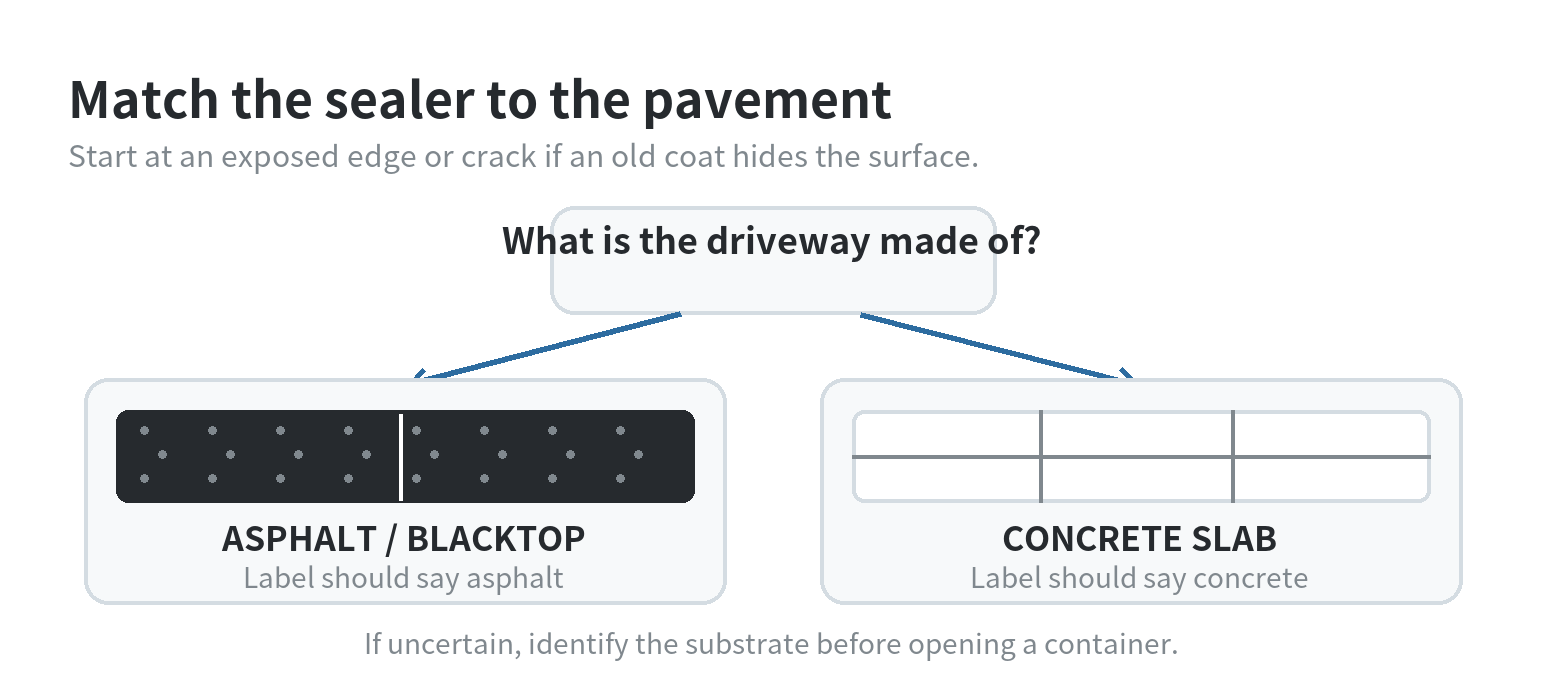
| What you have | What the listing should say | Pause if |
|---|---|---|
| Asphalt or blacktop | Asphalt driveway sealer or asphalt sealcoat | The label says not for concrete, or your surface is too new or steep for that formula. |
| Concrete slab | Concrete sealer, concrete waterproofer, or a coating explicitly rated for concrete driveways | The product is only for asphalt, or it is meant for a different surface such as vertical masonry. |
Read the use line before comparing features
Search results may mix driveway sealers with crack fillers, joint sealants, patch compounds, and products for patios or garage floors.
Those names describe different jobs.
A crack filler treats a narrow defect; an asphalt sealcoat covers a pavement surface.
A concrete joint sealant fills a joint and is not a blanket sealer for the slab.
Open the details and confirm the substrate, intended location, and whether the product is a coating, penetrating sealer, or repair material.
Then check whether the instructions allow a previously sealed surface.
If the listing and container disagree, follow the current container and manufacturer instructions.
Product pages can carry older specifications or summarize them briefly.
If you are checking indoor versus outdoor use labels for another surface, see our guide to interior and exterior sealer labels.
Also check the condition limits.
Henry’s 130 asphalt coating data sheet says its formula is not for concrete, checked October 4, 2026.
That is a product-specific substrate restriction, so match the top surface to the selected label.
Estimate the surface area before you use the coverage line.
For a rectangular example, an 18-foot by 32-foot driveway covers 576 square feet.
BEHR lists a rate of 250 square feet per gallon for its No. 980 concrete protector, checked October 4, 2026.
At that stated rate, the example area is about 2.3 gallons for one coat, before any adjustment for surface texture or waste.
Measure odd-shaped areas in sections, add their areas, and follow the container if it calls for more than one coat.
Do not treat the estimate as a promise that one container will cover the job.
A rough or porous surface, application losses, and the specified coat count affect how far a product goes.
Use the product’s coverage range when it gives one; if your measured area sits near the upper limit, pause and resolve the quantity before opening containers.
Plan around the label’s cure clock
“Dry to touch,” “recoat,” “foot traffic,” and “vehicle traffic” are different milestones.
Use the longest applicable instruction for the way you need to use the driveway.
The manufacturer page for Black Jack Drive-Maxx 1000 says to allow 24 hours before vehicle traffic, checked October 4, 2026.
Check the label for the vehicle-traffic wait time before using the driveway.
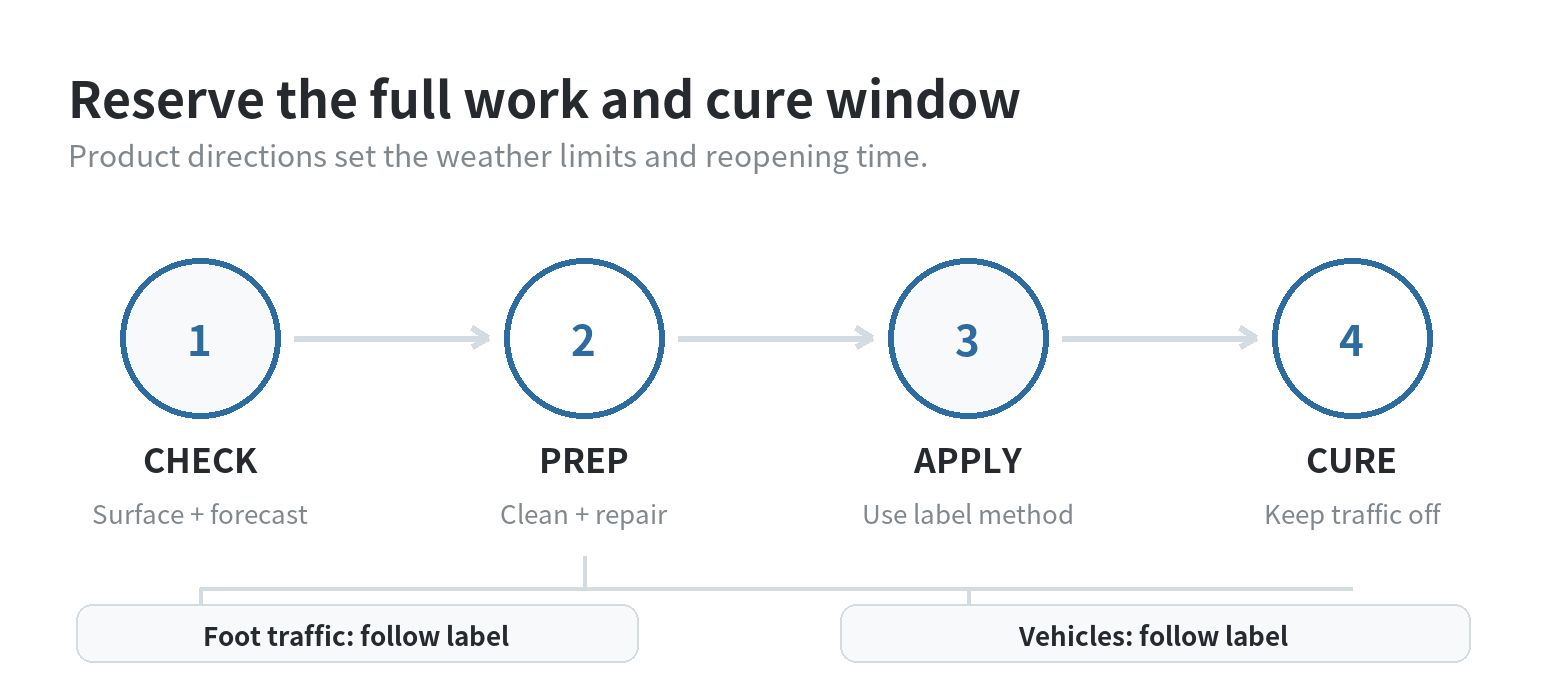
Before opening the container, write the label’s times on a small schedule: application, earliest second coat if required, foot traffic, and vehicle traffic.
Add the weather conditions the label requires, including temperature and any rain or dew-free window.
If the instructions give separate light and heavy traffic times, plan around the heavier use when cars need to return.
Check the use conditions as carefully as the clock.
A product label may list temperature conditions and a rain or frost forecast window.
Read the exact conditions on your chosen product’s label before selecting a workday.
Checked October 4, 2026.
Prepare the surface and keep the work contained
Move cars, bins, hoses, and toys out of the work area.
Sweep loose grit and leaves, then deal with oil, dirt, and existing loose material using the cleaning method the label allows.
A coating applied over dust, oil, standing water, or a peeling old layer may not bond as intended.
Let cleaning water evaporate if the product calls for a dry surface.
Repair cracks or holes with a material rated for that pavement, and let the repair reach the cure time stated on its own package before covering it.
A product’s sealer instructions do not automatically set the cure time for another brand’s filler.
For broad, broken, or settling areas, pause and identify the repair needed before coating; a thin surface coat is not a substitute for rebuilding failed pavement.
Protect garage doors, siding, plants, drains, and neighboring pavement from splashes.
Lay out a route that lets you finish at the street without stepping or driving over fresh coating.
Use the applicator named on the label and keep a wet edge only if its directions call for one.
Do not add sand, water, or another product unless the manufacturer allows it.
Look for slope and wet-weather cautions, too.
Henry says its 130 asphalt coating is not recommended for steeply pitched driveways where water or ice could create a hazard.
BEHR warns that its sealed concrete surfaces may be slippery when wet.
Those product instructions were checked October 4, 2026.
If either condition describes your driveway, read those warnings before choosing a coating or planning the work.
Use a simple job-day checklist
- Surface: Confirm asphalt or concrete, then match the label wording.
- Condition: Check for loose aggregate, active cracks, oil, old coating, or a recent repair.
- Weather: Compare air and pavement conditions with the printed range and forecast window.
- Materials: Confirm coverage guidance, coat count, applicator, and cleanup method on the container.
- Access: Arrange another place for vehicles to remain until the label’s traffic time has elapsed.
For example, if the only open window includes overnight rain, postpone rather than compress the preparation and cure schedule.
A clear work plan can prevent a scheduling problem: finishing the coating, then discovering that a car needs to cross it before the listed vehicle-traffic time.
FAQ
What if my driveway has asphalt over an older concrete slab?
Identify the top layer before choosing a product.
The Federal Highway Administration calls pavement with an asphalt surface over concrete composite pavement; check that the sealer label names the surface you will coat.
What if the label gives a dry-to-touch time but no vehicle time?
Do not treat dry-to-touch as permission to drive on the surface.
Ask the manufacturer about the exact formula and keep vehicles off until you have its traffic instructions.
Can I apply sealer when the driveway feels damp?
Only if that product allows a damp surface.
BEHR’s concrete protector directions call for a dry surface and say not to apply on wet surfaces.
Last updated: 2026-10