Choose a live tree if you want a seasonal tree with natural branches and can handle watering and cleanup. Choose an artificial one if you want to set up a reusable tree and have space to store it. Before comparing listings, measure the ceiling and floor area, then decide whether built-in lights fit your setup. The official retailer’s tree guides and listings were checked October 3, 2026; selection and specifications vary by listing.
Start with the kind of upkeep you can manage
A real tree is a cut evergreen that needs a water-holding stand after setup. The National Christmas Tree Association (NCTA) says a fresh cut at the trunk base and water in the stand help maintain the tree; check the stand every day. That routine is part of choosing a live tree, along with handling needles during removal.
An artificial tree does not need a water stand. You assemble it for the season, shape the branches, and store the sections or branches afterward. A pre-lit model has lights attached; an unlit model leaves the light choice and arrangement to you. The official retailer’s artificial-tree guide lists both lit and unlit options, along with full, slim, and pencil shapes (checked October 3, 2026).
| What to compare | Live tree | Artificial tree |
|---|---|---|
| Before setup | Check needle condition, trunk diameter, and stand capacity. | Check assembled height, widest width, branch style, and box dimensions. |
| During the season | Keep the trunk base in water and check the stand each day. | Follow the assembly and electrical instructions for that model. |
| After the season | Plan for local collection or disposal options. | Take the tree apart and store it where its packed dimensions will fit. |
The choice is less about which kind is universally better and more about which set of tasks fits your room and routine. If there is no dry storage area for a boxed tree, account for that before choosing an artificial model. If you do not want to refill a stand, account for the live tree’s water needs before bringing one home.
Measure the room before choosing a height
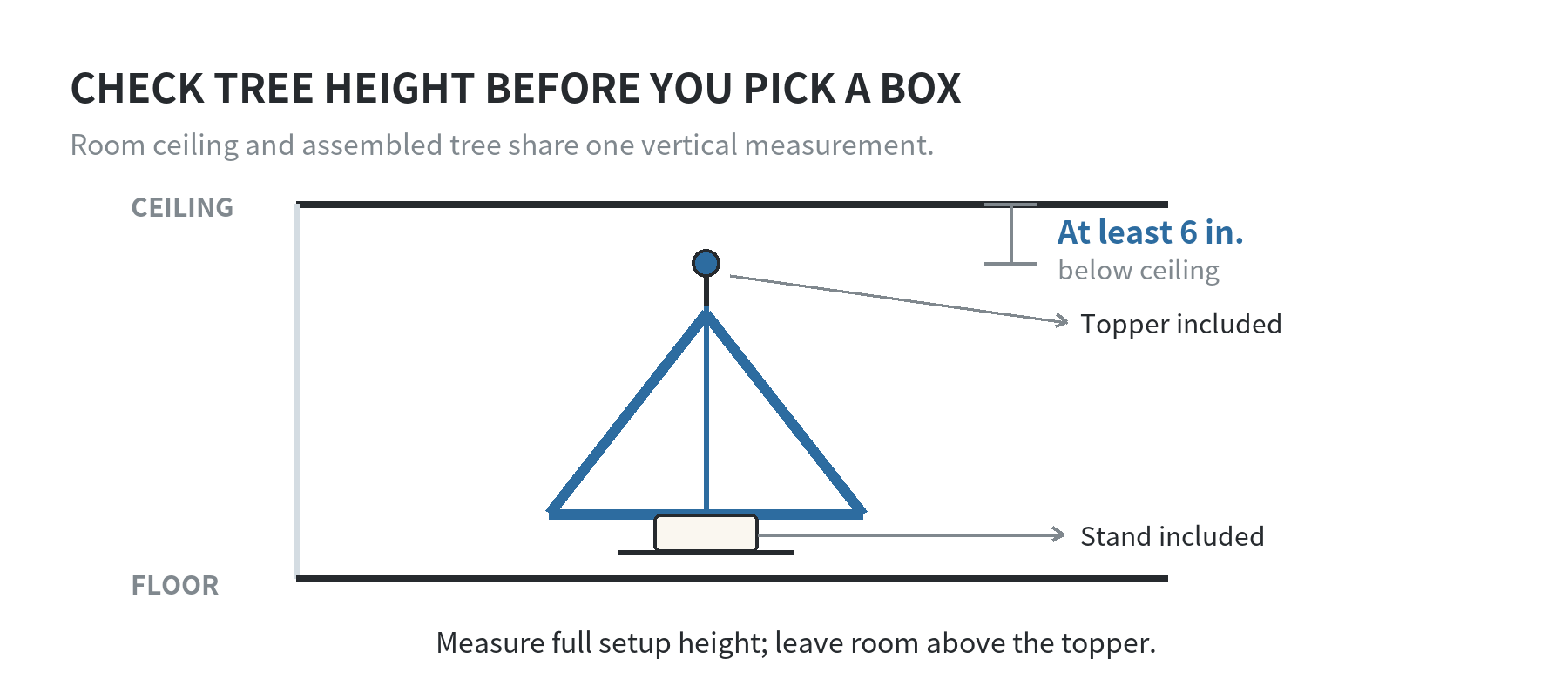
Measure from the floor to the ceiling at the exact spot where the tree will stand. Then measure the tree’s full assembled height, including the stand and the topper you expect to use. The official artificial-tree guide recommends keeping the treetop at least 6 inches below the ceiling and counting both topper and stand in the total (checked October 3, 2026).
For example, if the ceiling at the chosen spot is 96 inches high, subtract the 6-inch clearance, then subtract the height added by your stand and topper. The remaining height is the largest tree body that fits that arrangement. Use your room’s measurements and the listed assembled height.
Height alone will not tell you whether a tree fits. Measure the floor area around the trunk, including the widest branch tips. Leave room for the path people use to cross the room, and check that the branches will not press against nearby furniture or block a door.
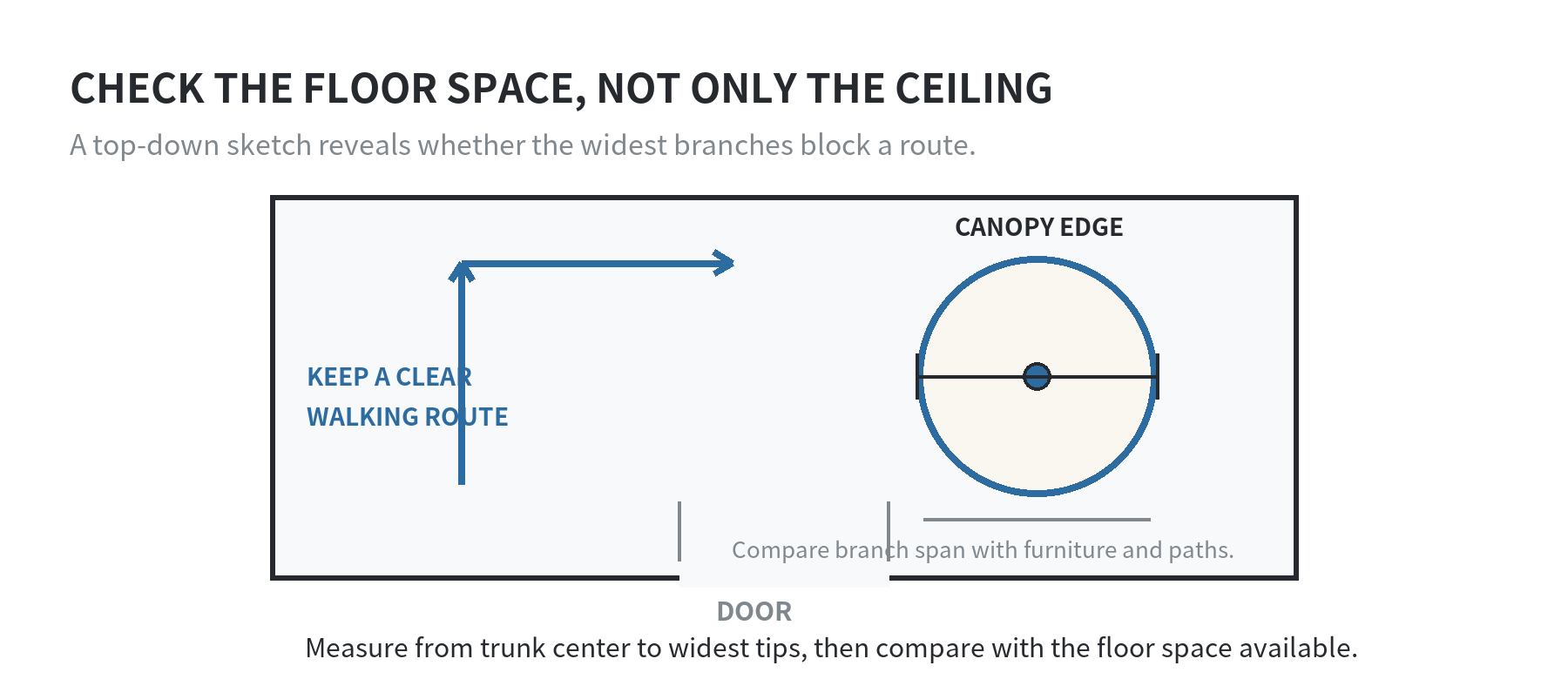
The official retailer’s artificial-tree guide describes full trees as wider and slim or pencil shapes as suited to narrow areas (checked October 3, 2026). Compare the maximum width in the listing with the space you measured. A narrow footprint can be more useful than extra height in a small living room or beside a walkway.
Read the listing as a set of decisions
Use the same order for every tree you compare. First filter by assembled height and shape. Next decide whether attached lights matter. Then check the tree material, branch count if listed, stand, number of sections, and storage dimensions. These details answer different questions: whether it fits, how it is lit, what setup involves, and where it will go after the season.
- Height and width: Match the listing dimensions to the room measurements, including the topper, stand, and widest branches.
- Pre-lit or unlit: A pre-lit model reduces separate light placement; an unlit one lets you choose and replace separate light strings.
- Light type and color: Check whether the listing specifies LED or incandescent lights, white or multicolor, and whether light modes can be changed.
- Assembly and storage: Look for the number of sections, branch-hinging details, included stand, and packed dimensions.
The official listings use filters for tree height, shape, and light status, so those terms can help narrow a large selection (checked October 3, 2026). A filter is only a starting point: open the individual specification and confirm the full dimensions and included parts before deciding that it fits.
For a pre-lit tree, inspect the light information as carefully as the tree shape. UL Solutions advises checking for a recognized certification mark on the light string and following the product’s instructions; NFPA’s Christmas Tree Safety tip sheet also advises using light strings listed by a qualified testing laboratory (both checked October 3, 2026). Confirm how the lights connect between sections and what the maker says to do if a section does not light. The exact troubleshooting steps depend on the model, so keep its instructions with the stored tree.
Check a live tree before you choose it
Look at the branches and trunk rather than relying on a variety name alone. The official retailer’s live-tree guide says to look for flexible green needles that do not come off easily with a gentle touch and a trunk cut that appears moist (checked October 3, 2026). NCTA’s selection guidance also recommends checking needle condition and the cut end. These are observations to make while comparing the trees in front of you.
Measure the trunk diameter where it will sit in the stand. NCTA recommends stand capacity of 1 quart of water per inch of trunk diameter; the official retailer’s live-tree guide gives the same capacity rule (both checked October 3, 2026). Check that the stand opening fits the trunk without shaving down its sides. A stand that is too small for the trunk or its water needs is a poor match even if the tree’s branches fit the room.
After setup, NCTA says to place the fresh cut in water promptly, keep the cut end submerged, and check the water level daily. It also advises keeping the tree away from heat sources such as fireplaces, heaters, heat vents, and direct sunlight (checked October 3, 2026). The retailer’s live-tree guide likewise recommends daily water checks and plain tap water (checked October 3, 2026). Set the stand where it is reachable for refilling before you decorate around it.
Separate collection from care when planning the end of the season. Find out how your local community handles tree pickup or drop-off before the tree comes indoors. That lets you choose a tree without assuming that the same disposal service is available in every town.
Make the final comparison on fit and upkeep
Use a short checklist before settling on a tree:
- Does the assembled height leave the required space below the ceiling?
- Does the widest branch span fit without closing off a route?
- For a live tree, does the stand fit the trunk and hold enough water?
- For an artificial tree, do its light setup, assembly, and stored size suit the household?
- Have you checked the current listing for included parts, availability, and specifications?
For broader indoor decorations around a tree, see the site’s holiday decor overview. Plan yard lighting separately from the indoor tree; the site’s outdoor holiday lighting article covers exterior displays.
Before deciding, compare your room measurements with the selected listing’s full dimensions and included parts.
Last updated: 2026-10
FAQ
How should I compare two artificial tree boxes when storage space is tight?
Compare the packed dimensions with the shelf, closet, or storage area where the box will go. The assembled tree’s height and width do not tell you how much room its disassembled pieces need.
What should I measure if the tree will sit beside a doorway?
Measure the tree’s widest branch span and the remaining walking route to the doorway. Include furniture that narrows the route after the branches are opened.
What should I check if only part of a pre-lit tree lights up?
Follow the model’s instructions for connecting sections and checking its light strings. UL Solutions advises using the product according to its instructions and inspecting light strings for damaged wires or connections; NFPA also advises using listed lights and following the manufacturer’s instructions (both checked October 3, 2026).
Can I put a rooted Christmas tree indoors for the whole holiday season?
A rooted, potted tree has different indoor timing and care from a cut tree. The official retailer’s live-tree guide says to keep a living tree indoors for 3 to 10 days (checked October 3, 2026); check the care instructions for the specific tree before planning its stay indoors.