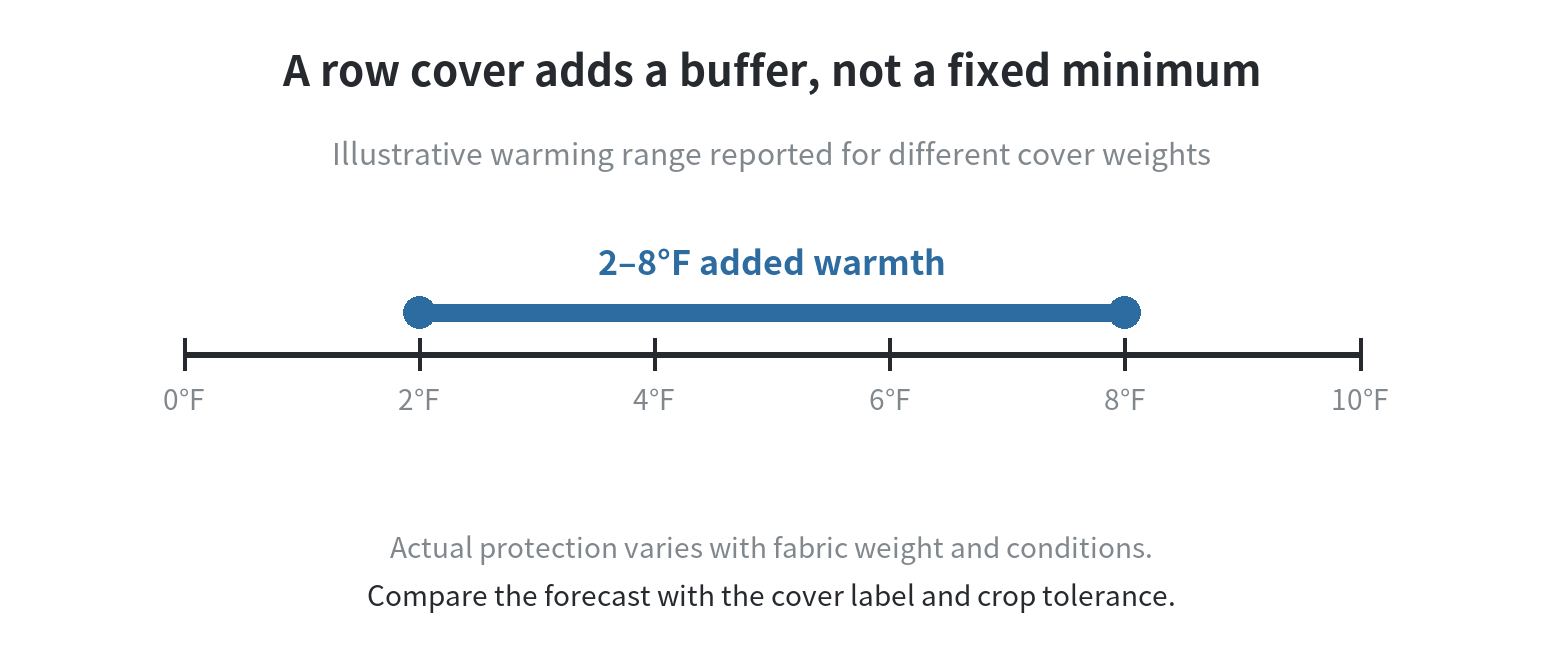
For an early freeze, choose a row cover by its listed frost protection and weight, then secure it over the bed before temperatures fall. A frost cloth can hold some heat rising from the soil, but its protection is limited: Utah State University Extension reports roughly 3–5°F of extra nighttime warmth under a floating cover, while Wisconsin Horticulture Extension describes 2–8°F across different cover weights. Treat those as ranges, not a promise for every plant or night.
Check the forecast low against the cover’s stated rating and the crop’s cold tolerance. If the forecast is colder than the cover’s range, use a sturdier protected space or move containers indoors; adding a light fabric layer does not turn a row cover into a heated shelter.
Read the frost rating as a temperature buffer
Product descriptions may state a minimum temperature or say how many degrees of protection the fabric provides. Those figures are not interchangeable. “Adds 4°F” describes a difference from outside air; “protects to 28°F” names a stated outdoor condition. Check which wording appears on the package and keep the crop’s own tolerance in view.
Fabric weight affects both warmth and light. UMN Extension says heavy row-cover fabric can protect plants around 20°F, but it blocks 40–50% of sunlight and can hold too much heat on a mild day. Its medium-weight fabric is aimed at light frost and transmits 75–85% of available sunlight. These are general material descriptions, not a rating for every roll sold as frost cloth.
For one early cold snap, a heavier fabric may make sense when its stated rating covers the forecast and the plants can tolerate reduced light. For a light frost, a medium or lighter cover may be easier to manage. If the package gives no temperature guidance, do not infer a rating from the word “frost” alone.
Consider a forecast low of 30°F and a cover described as adding 4°F. That wording suggests a possible buffer, not a guaranteed 34°F reading around every leaf. Wind, gaps at the edges, the fabric’s weight, and contact with foliage all affect the result. If the crop is sensitive to cold, use the forecast as a planning cue and choose a sheltered location or structure that gives more protection.
A stated “protects to” temperature also needs context: it may describe the fabric’s performance under particular conditions, not a universal survival temperature for every crop. Check whether the package gives a temperature difference, a minimum outdoor temperature, or both. When the label is vague, choose a cover with a clearer rating or plan to move vulnerable containers instead of guessing.
Measure the bed before choosing a roll
Measure the full length of the planted row, then check the bed width and the height of the tallest plant. The fabric needs extra width to reach the ground on both sides, and extra length to close the ends. A piece that only spans the crop canopy leaves gaps where cold air can reach plants.
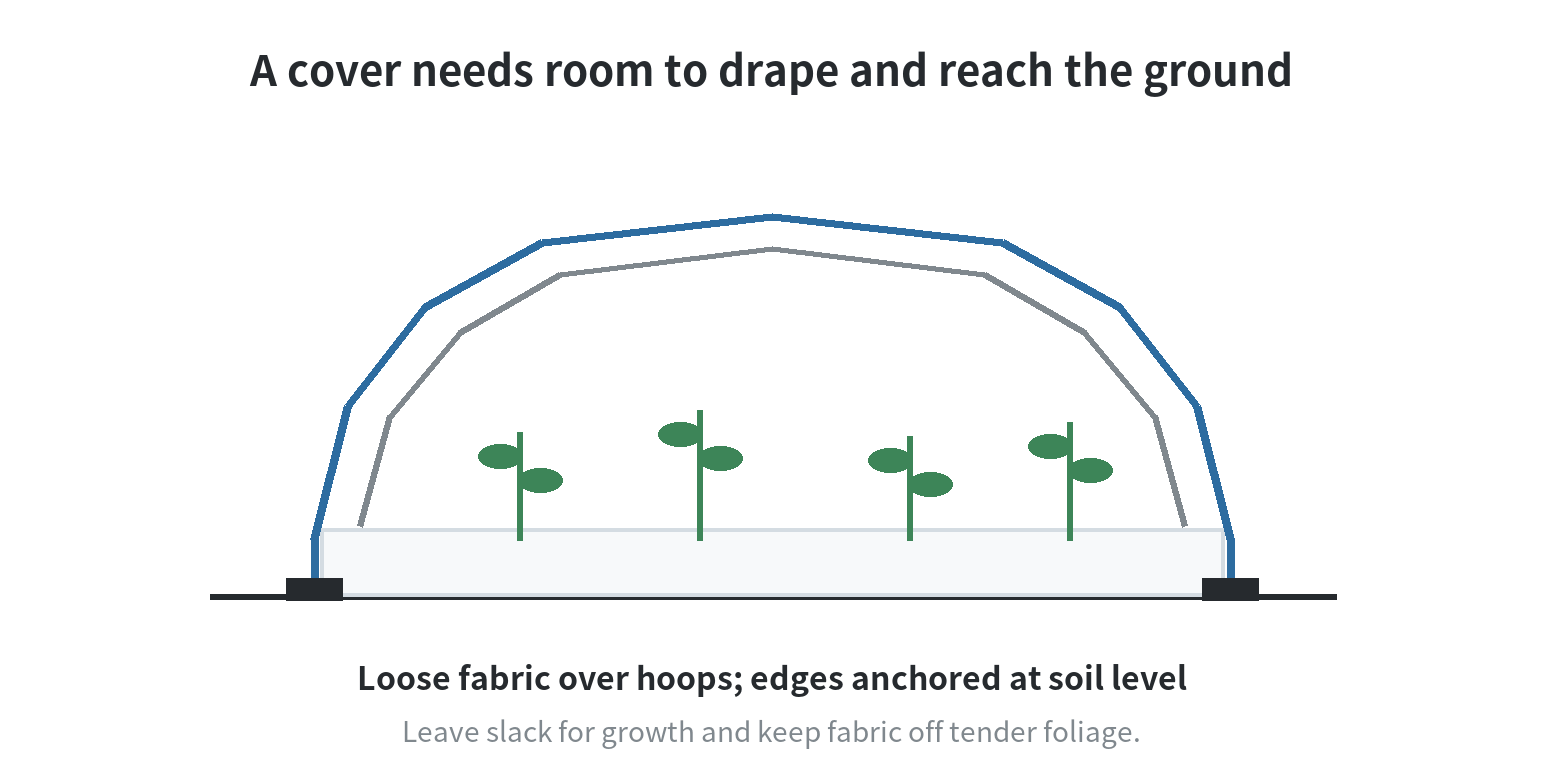
For a small raised bed, estimate the fabric path over the hoops rather than measuring only the flat bed top. A flexible hoop adds height and curve, so allow material to drape down beyond the sides. Leave slack for plant growth; a taut sheet can pull loose when wind catches it or press against leaves.
For an individual container, measure from one side of the pot, over the plant, and down the other side, then leave enough material to secure around the pot or support. Keep the cover from resting heavily on a tall stem. If the pot can be moved to a porch or unheated sheltered space, compare that simpler setup with building a frame around it.
If you are comparing a cover with other garden-bed materials, our notes on seasonal bed fabrics explain why a ground sheet and a breathable plant cover serve different jobs. A small greenhouse setup is a separate option when plants need a more enclosed structure.
Set it up before the cold air arrives
- Water the soil if it is dry and the plants need water. A row cover allows rain through, but a dry spell may leave the bed needing a normal watering before it is covered.
- Place hoops over the bed if the crop is tall, delicate, or likely to rub against fabric. Supported covers keep the material off leaves and reduce wind-driven abrasion.
- Drape the cloth loosely over the row. Leave enough room for growth, and bring the fabric all the way down around the bed.
- Anchor every edge with landscape pins, boards, bricks, or soil. Utah State University Extension notes that cold injury can still occur where fabric touches leaves; a supported frame can help avoid direct contact.
- Check the cover after wind or rain. Re-secure lifted edges and make sure the cloth has not shifted onto tender stems.
UMN Extension recommends laying row-cover fabric over the row after planting, leaving slack, and anchoring all sides. The same setup principle matters before a freeze: a gap at an edge weakens the enclosed pocket of warmer air, while a loose cover can flap against plants.
Finish the setup while the bed is easy to see. Check the far end, the corners, and the places where fabric meets a hoop; those are the spots most likely to lift or leave foliage exposed. If two pieces are needed, overlap them and secure the joined area so a gust cannot open a strip across the row.
Make sure the cloth is the kind intended for plant coverage. A solid plastic sheet can trap more heat and moisture than breathable fabric, so it needs a frame and a way to open it when daytime temperatures rise. Colorado State University Extension describes covers that must be held off plants and vented on sunny days. If you use plastic, follow its instructions rather than applying the fabric-cover routine unchanged.
Plan for the morning after the freeze
Remove or vent the cover when conditions warm, especially if sunlight is strong. A sealed cover can trap daytime heat; Maryland Extension warns that temperatures under row covers can rise 5–15°F above outside air. Check the bed rather than relying only on the overnight forecast.
Pollination also affects how long a cover stays on. UMN Extension advises removing row covers from cucumbers, squash, melons, and pumpkins once they start to bloom so bees can reach the flowers. For a one-night early freeze, put the cover back in place when another cold night is forecast, then open or remove it again as daytime heat builds.
After the cold passes, inspect the fabric for tears, damp folds, or soil caught in the weave. Let it dry before storage, fold it without sharp creases, and keep it away from rodents. Maryland Extension recommends sealed rigid storage or a heavy-duty bag kept indoors to reduce mouse damage.
Before storing it, check seams and edges for small openings that may grow when stretched over a frame. Fold the cloth loosely so the next setup is quick, and keep its package label with it if the temperature rating is printed there. A simple note with the bed dimensions and the crop covered can also make it easier to choose the right piece when cold weather returns.
FAQ
Can frost cloth stay on plants all winter?
It depends on the crop, fabric, and local weather. Heavy material reduces sunlight, and a cover can warm too much on sunny days. Check the crop and fabric during daytime conditions and remove the cover when it no longer serves the bed.
Should the cloth touch leaves?
A light cover can rest on low, flexible crops, but contact may allow cold injury or rubbing damage. Use hoops for tall plants or tender foliage, and leave slack so the fabric does not press tightly against the plant.
Will row cover protect blossoms from a late frost?
It can add a small temperature buffer, but flowers may still be exposed where the fabric touches them or where cold air enters at an edge. Compare the forecast with the crop’s cold tolerance and the cover’s stated rating before relying on it.
Can rain pass through frost cloth?
Many spun or woven row-cover fabrics let rain pass through, as UMN Extension describes. Check the material label; if the cover sheds water or the bed remains dry, uncover it for normal watering and inspection.