You can budget for sports and staying active by setting a monthly ceiling from your actual take-home pay.
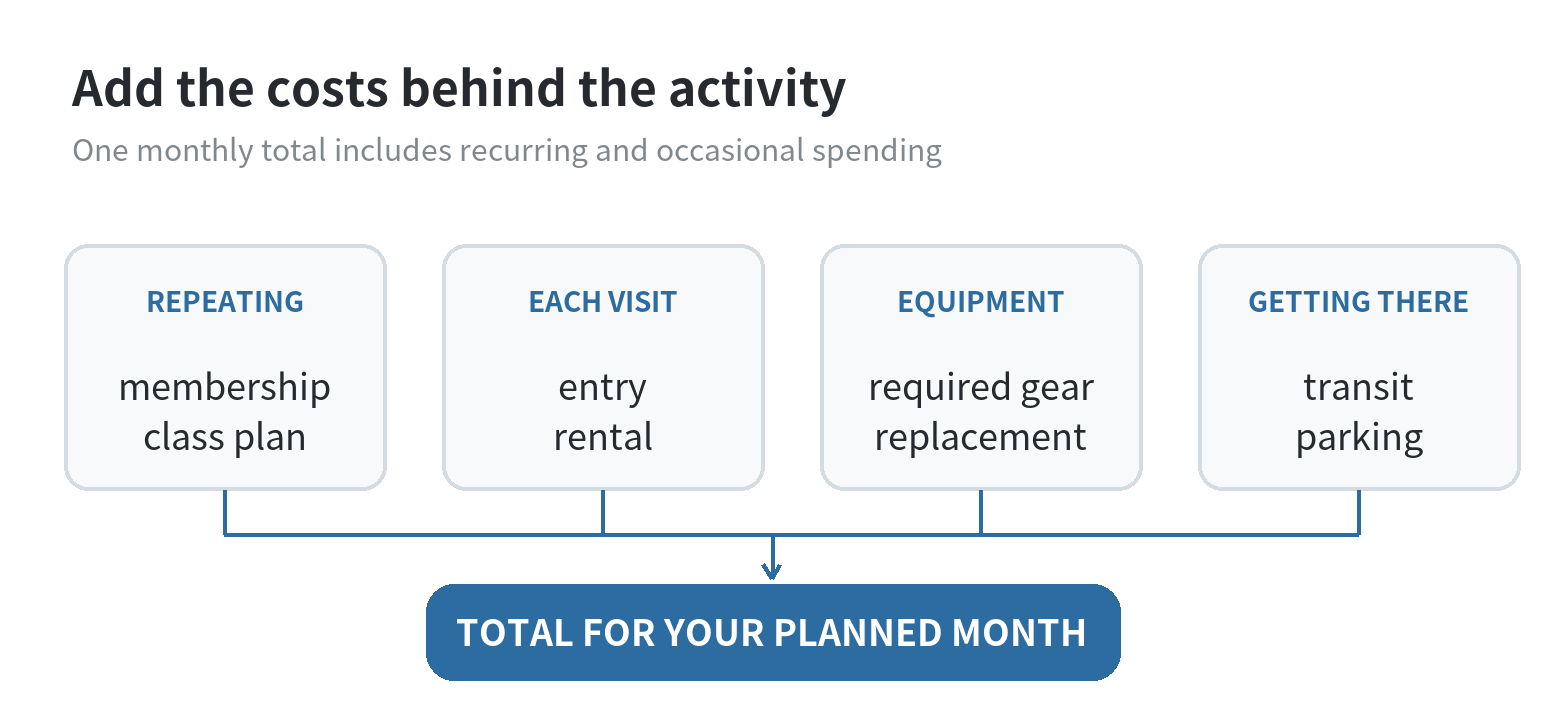
Price the activity you want to do and count every related cost before you commit. Your local facility, schedule, equipment needs,
and transportation determine your number.
Start with an activity you can picture doing next month. Check its full cost,
including charges that may not appear in the headline membership fee.
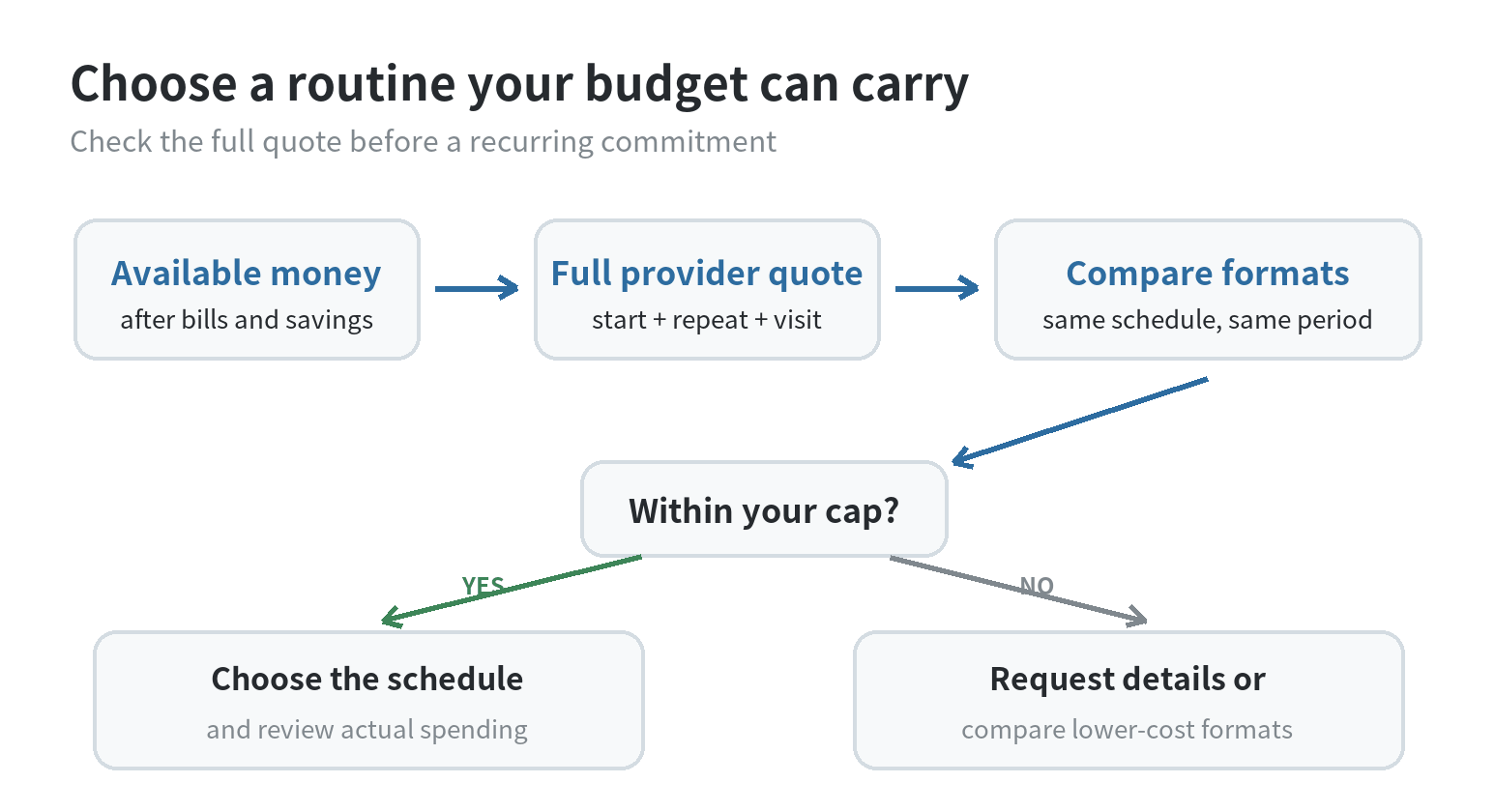
If the total does not fit, change the schedule or format before signing up.
Find the amount your budget can actually spare
Use take-home pay, not gross pay. List housing, utilities, food, transportation, debt payments, savings,
and other regular commitments first.
The Federal Trade Commission’s consumer.gov budget worksheet lists income and expenses,
then subtracts expenses from income (checked September 30, 2026).
For example, imagine that $3,000 reaches your checking account each month. After bills and planned savings,
suppose $140 remains for recreation.
That $140 is a ceiling for all leisure spending, not a suggested sports price. If you reserve $60 for movies or social plans,
$80 remains for an activity.
Replace every figure with your statements and priorities.
The Consumer Financial Protection Bureau’s spending tracker recommends recording expenses before deciding what to adjust (checked September
30, 2026).
Review recent bank and card activity, receipts, and cash spending. Add entry fees, class charges, equipment, and travel to the sports line.
Price the whole routine, not one advertised fee
Ask the provider for a written total for your planned schedule. A monthly membership may not include enrollment, facility access, classes,
equipment rental, or cancellation charges.
A drop-in visit may have a different price from a recurring plan. Verify the fees with the provider; each facility sets its own terms.
For each option, ask what is due at the start, what repeats, and what is charged per visit. Confirm what changes if you pause or cancel.
Ask whether taxes, parking, locker use, or equipment cost extra. Request the total for the first month and for a later month;
one-time charges can make them different.
For a public recreation facility, check the city or county department’s fee page or call. For a private studio or league,
request its schedule and cancellation terms.
Request a quote for your location and planned schedule. It is more useful than a national average that may not describe your provider.
Compare formats using the same calendar
Compare options over the same period and with the same planned visits. Put a facility membership beside drop-in sessions, a community class,
a league, or a home routine. A lower fee per visit may not be cheaper if you attend only once;
an inexpensive session may also require travel or equipment. The point is to compare the total for the routine you will realistically
choose.
Ask whether a facility has fee assistance, a household rate, or a payment schedule.
Confirm eligibility and deadlines before including a discount in your plan.
For a recurring fee, divide the quoted charge by the visits you expect to make. This gives an estimated cost per visit.
Compare that estimate with the provider’s drop-in or class price. Use the same travel and equipment assumptions.
If your schedule may change, calculate a lighter-attendance version too. A plan that only fits with every visit can be hard to keep.
Use a simple worksheet with one row for each option and columns for start-up cost, repeating charge, per-visit charge, travel, equipment,
and cancellation terms. Leave unknown fields blank and ask the provider rather than guessing.
If you expect to attend different numbers of times, calculate a separate total for each schedule.
A city facility and a private class may both fit your activity, but not your calendar. Check the class time, registration window, location,
access rules, and what is included before comparing the totals. If the provider will not explain the charges in writing,
treat the quote as incomplete and do not build it into your budget yet.
Ask whether you can attend an introductory session or pay by visit before choosing a recurring plan.
Compare those terms with the full commitment.
Write down the date a recurring payment starts and the deadline for pausing or canceling. Add those dates beside your other bills.
Save the written quote or fee schedule. If a later charge differs, the record helps you ask the provider what changed. Keep a contact name with it.
Keep gear and transportation from taking over
Before buying gear, make a list of what the activity requires and what you already own.
Ask whether the facility lends or rents essential items, whether used equipment is allowed,
and whether a beginner session has a different requirement from ongoing participation.
Borrowing or renting can help you learn what you will use before you decide what to own.
Put travel in the same calculation. Estimate the round trip from home or work, then account for transit fares, fuel, parking, or rides.
A nearby option with a higher class charge could have a lower total than a distant one once travel is included.
Use your route and current transportation costs rather than assuming distance is free.
Keep optional upgrades separate from essentials. Start with the equipment needed to participate safely under the provider’s instructions;
defer accessories, branded apparel, and duplicate gear until you know they serve a real need.
Check return rules before purchasing and keep receipts with your activity budget.
For a class or league, ask for its required-equipment list before shopping. Separate required items from optional clothing and accessories.
Check local community centers, parks departments, or school recreation offices for activities and access rules. Confirm whether entry,
parking, or equipment has a charge.
Fit the plan to uneven months
Some months have registration fees, seasonal league charges, or replacement gear.
Divide a known upcoming cost across the months before it is due and set that amount aside as a separate line. The CFPB’s Your Money,
Your Goals toolkit includes a spending tracker, bill calendar, and cash-flow budget (checked September 30, 2026);
those tools can help place the payment in the month it will actually leave your account.
If income varies, base the commitment on a lower, dependable month rather than a strong one.
Keep the activity flexible until you know when income arrives and bills are due.
A month with a shortfall is a cue to switch to a lower-cost format or pause the optional expense,
not to put routine recreation on a credit card.
Review the number after the first month
Compare the planned amount with what you actually paid. Include any transit, snacks bought on the way, rental equipment,
or extra class charges connected to the activity. The CFPB recommends checking spending records to see what deserves an adjustment (checked
September 30, 2026). If the total ran higher, identify the line that changed and decide whether to change the schedule, location,
or format for the next month.
Keep the plan visible in your usual budget method. A paper note or spreadsheet can hold the cap and actual charges.
A simple phone budget tracker can record spending.
For app-based tracking, see the site’s budgeting app overview. Choose a tool you can update easily.
Staying active on a budget is a cost-planning exercise: decide what fits, verify the full quote,
and keep a lower-cost option ready for a tight month. That gives you a clear next step—check your own spending, contact the provider,
and compare the complete monthly totals before committing.
FAQ
Can I include sports costs in a weekly budget instead of a monthly one?
Yes. Divide the monthly cap into weekly amounts that match your pay and bill calendar, and record charges in the week they occur.
Keep any one-time registration payment in the week it is due.
What should I ask before joining a sports league?
Ask for the full season charge, what equipment is required, when payments are due, whether games require travel,
and the refund or withdrawal terms. Get answers from the league organizer before comparing it with other options.
How can I budget when the activity has seasonal fees?
Use the organizer’s current fee schedule to identify the due date, then set aside a share in advance across the months before registration.
If the fee schedule is not published, request it before reserving money for the season.
Last updated: 2026-09