Budget babysitting from the hours you actually need and a current quote from the person who will provide care. Put the planned shifts on your calendar, calculate each shift from its quoted hours and rate, then reserve that amount before using the rest of the month’s money.
Start with the hours you need covered
Write down the reason for each shift before asking about rates: a recurring work schedule, an evening appointment, school pickup, or a one-time event. Mark the start and end time, travel time you expect the sitter to cover, and whether the end time can move. A clear schedule keeps the estimate tied to your actual need.
Separate care you expect from care that may come up. Put fixed work shifts in the base plan. Keep date-night coverage, school closures, a late meeting, or a backup sitter in a separate line. If you mix occasional shifts into the regular total, the number can look like a monthly commitment even when the dates are uncertain.
The CFPB’s bill-calendar guidance recommends listing bills, amounts, and due dates, then reviewing the calendar weekly. Use the same idea for care: write down each planned shift and the date payment is due.
Ask for a quote you can actually budget
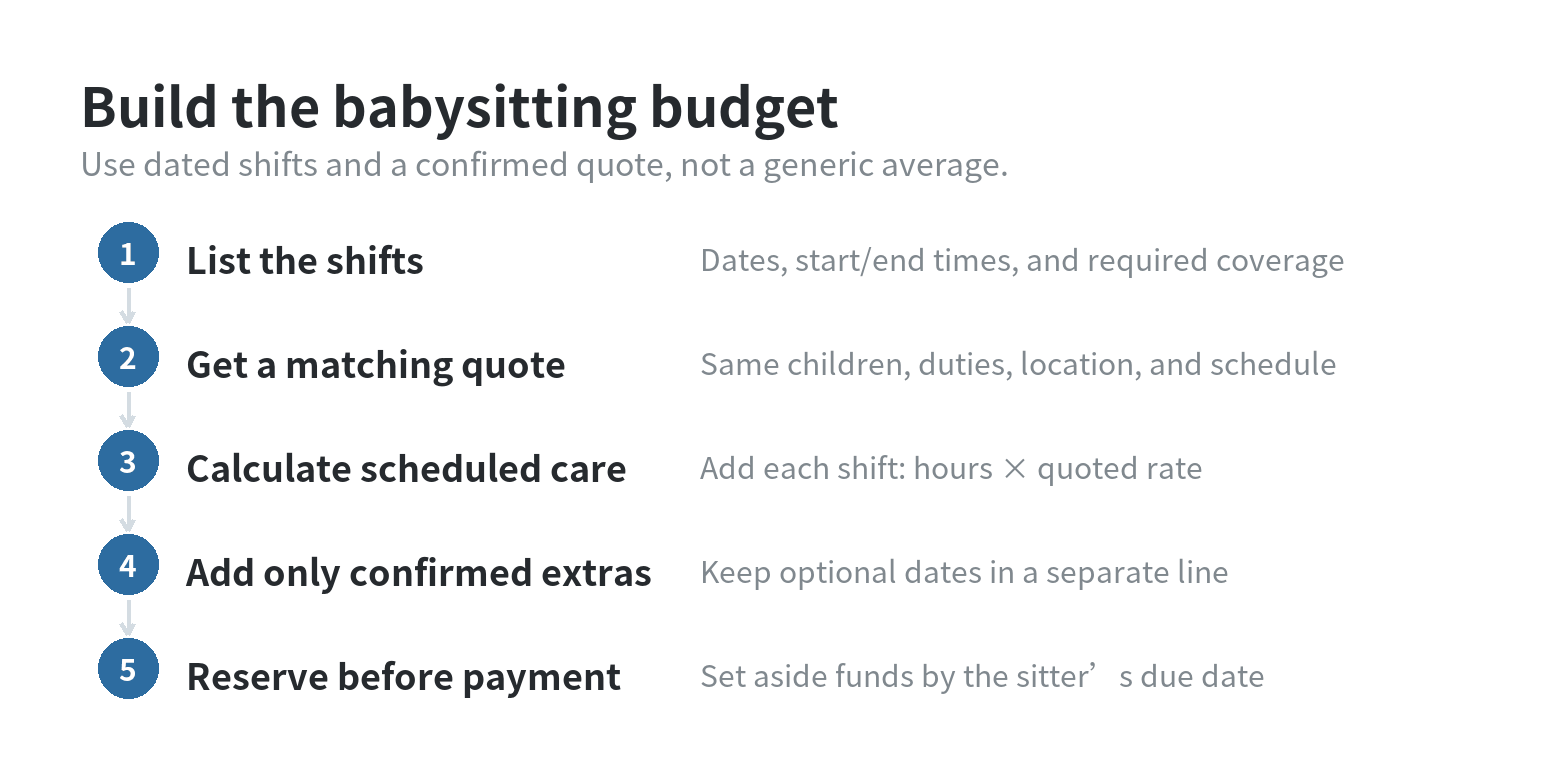
Ask each sitter to price the same schedule. Include the children’s ages and number, the location where care happens, the exact start and end times, and any agreed duties such as school pickup or meal preparation. Ask what changes the total: a minimum booking, extra time, transportation, late hours, or a cancellation rule. Do not compare one quote for one child and a short evening with another quote for several children and pickup duties.
Request the rate and any added charges in writing, along with when payment is due and how extra time is counted. If the sitter cannot quote a monthly amount, ask for the rate per shift or hour and calculate from your own dates. You can also ask a local childcare resource and more than one sitter for current quotes, but keep the conditions identical.
Leave out any cost you have not confirmed. If a family member may cover a shift, count that as a separate plan rather than assuming paid care will be free. If an agency, school, or employer provides a credit or reimbursement, check the written eligibility and payment timing before subtracting it from the amount you need to reserve.
Turn the quote into a monthly number
Use the actual calendar month instead of multiplying a weekly estimate by an assumed number of weeks. Count the shifts that fall in that month, multiply each shift’s hours by its quoted rate, then add confirmed extras. This handles months with an extra scheduled weekday, a vacation, or a holiday without pretending every month has the same pattern.
| Budget line | What to enter | How to calculate it |
|---|---|---|
| Scheduled care | Dates and hours for each agreed shift | Hours × your sitter’s quoted rate |
| Extra time or transport | Only charges confirmed in the quote | Add the quoted amount for the dates it applies |
| Occasional care | Appointments, closures, or backup shifts | Use a separate line until the dates are known |
| Payment reserve | Money set aside before the shift | Scheduled care + confirmed extras |
For example, if your schedule has two evening shifts in a month and each lasts three hours, the planned care is six quoted hours. Multiply six by the rate you receive; enter a different total if one shift runs longer or the sitter charges a confirmed fee. These are sample inputs, not a market-rate estimate.
Keep a small note with the quote date and what it covers. When the schedule or duties change, update the next month’s line with a fresh quote. If you are deciding between a recurring arrangement and occasional shifts, calculate each option from its own dates and quote rather than assuming one is cheaper.
If you prefer to record care costs in a spreadsheet, our budget tracker guide shows a simple date, description, and amount layout you can adapt for shifts and payments.
Match the reserve to your pay dates
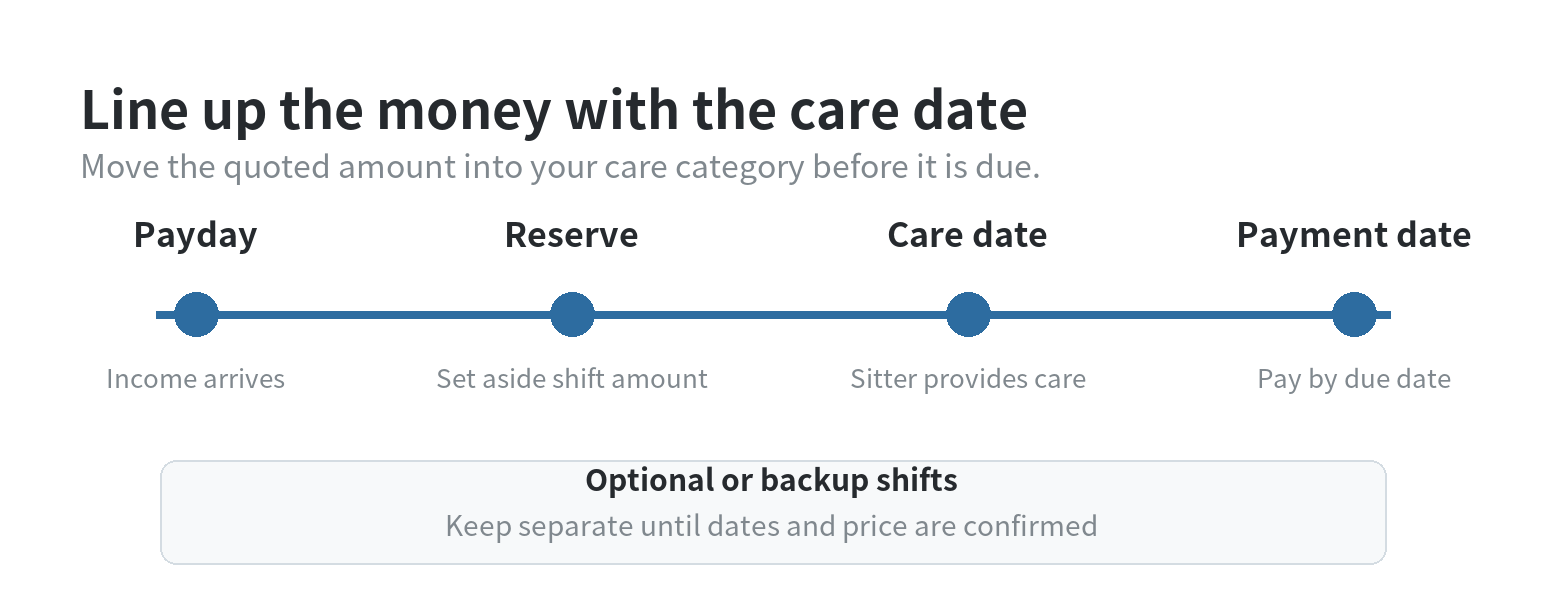
A monthly total can still be hard to manage if the sitter is paid before your next paycheck. Put paydays, shift dates, and payment dates on one calendar. Transfer the amount for an upcoming shift into your care envelope or separate budget category when the money arrives. The CFPB’s bill-calendar method is designed to make amounts and due dates visible together, which helps you spot a timing gap before it becomes a late payment.
For a phone-based way to keep due dates visible, see our guide to tracking bill payments on your phone.
If your pay arrives twice a month, assign each planned shift to the paycheck that comes before its payment date. If income varies, fund the confirmed dates first and wait to commit optional care until the next deposit clears. This is a cash-flow choice, not a change to what the sitter charges.
Keep optional shifts from overrunning the plan
Set a monthly ceiling for paid care after you account for housing, utilities, food, transportation, and other obligations. If your planned shifts exceed that ceiling, change one input at a time: reduce the number of paid hours, move a flexible appointment, ask about a different schedule, or leave optional dates unbooked. Do not set the budget by hoping the final bill will be lower than the quote.
For months with uncertain work hours, use two figures in your own plan: confirmed care and possible care. Treat confirmed care as committed spending. Treat possible care as a request that still needs a date and price. This makes the tradeoff clear when another bill or schedule change arrives.
Decide what “backup” means before you count it. A second sitter may be a contact you can ask, or a paid reservation that holds a specific date; those are different budget lines. Ask whether the sitter charges for a cancellation or a change in end time, and record the answer next to the quote. If a shift changes, update its hours and payment date rather than leaving both the old and new amount in your plan.
For pickup coverage, write down the route and any transportation arrangement you have agreed to. Do not add a mileage or transit allowance by guess. Ask whether transportation is included or billed separately, then enter only the agreed amount. The same rule works for meals, activity fees, and late finishes: keep the main care quote distinct from an extra until you know how it will be handled.
If you need care only during certain work weeks, build the calendar around those dates instead of leaving a full-month recurring block in place. Share the planned dates with anyone who helps make household decisions, so the care reserve is not mistaken for money available for another bill. When an appointment disappears, remove that shift and release the matching amount from the care category.
If the arrangement is recurring in your home, include a check of employment obligations in your planning. The IRS’s Publication 926 explains that control over both the work and how it is done is part of deciding whether a household worker is an employee; it also directs households to check state employment-tax rules. Budget for any obligations that apply only after confirming your situation with the relevant agency or a tax professional.
Review the line when dates change
At the end of the month, compare scheduled hours with hours actually used and payments with the written quote. Move any unused amount to next month’s planned care only if you expect another shift; otherwise, return it to the category it came from. Save the quote and payment record so you can explain a difference without rebuilding the month from memory.
Before agreeing to new recurring hours, redo the calendar and calculate the added shifts. A standing weekly request can create a larger monthly commitment than a few dates on a busy month suggest. Decide using the number of dates in the upcoming calendar and the sitter’s confirmed terms.
FAQ
How do I budget when my babysitting schedule changes from week to week?
Budget confirmed dates first and keep optional shifts in a separate line. Recalculate from the actual month’s calendar when you receive a new work schedule, then request a quote for the dates you plan to book.
Should I use a weekly or monthly babysitter quote?
Use the quote that matches how you will book and pay. If the sitter quotes by the hour or shift, calculate your planned dates; if the sitter offers a recurring schedule, ask which dates and terms the monthly figure includes.
What if I cannot afford every babysitting hour I need?
Separate essential coverage from flexible plans, then price each schedule on its own. You can discuss changed hours or dates with the sitter and check whether a local employer, school, or community resource has a program that fits your circumstances.
Last updated: September 2026.
Last updated: 2026-09