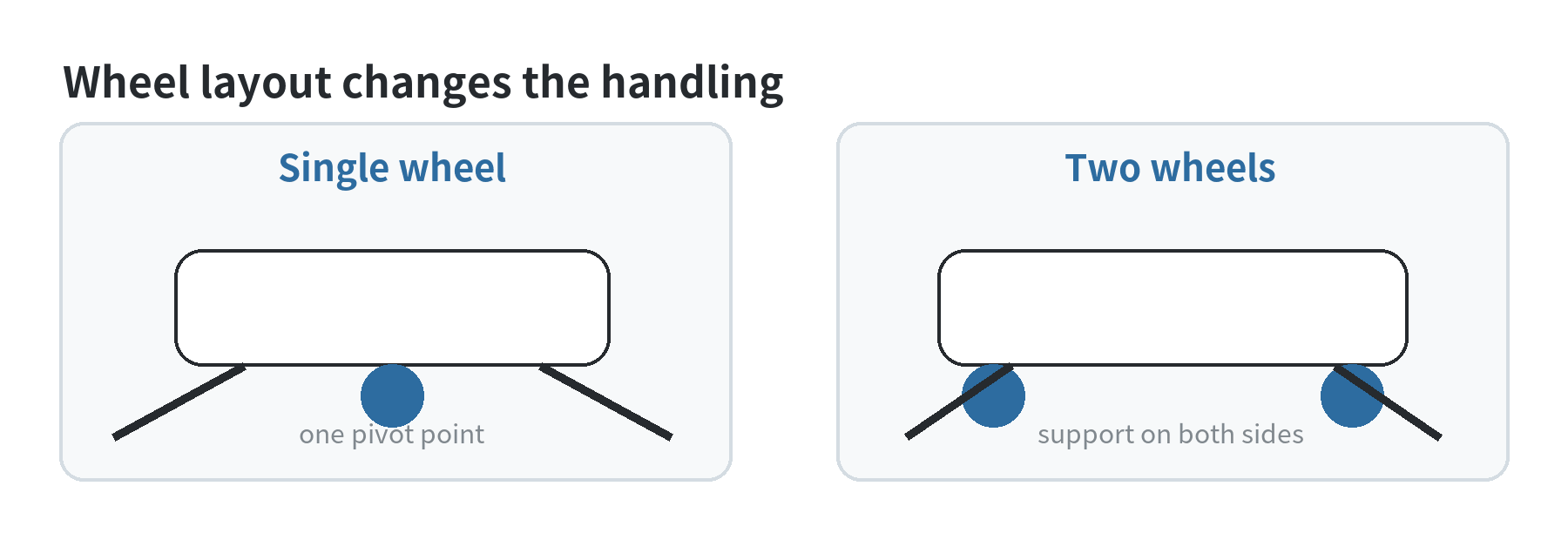
If you move loose soil, leaves, or mulch along a narrow path, start by comparing a single-wheel wheelbarrow with a two-wheel yard cart; then choose a tray material that fits the material you carry. A single wheel turns in a tighter space, while a pair of wheels supports the load on both sides. The maker’s ratings matter more than a broad label such as “heavy duty”: compare each exact model’s volume, weight limit, bed size, and operating style.
Choose the frame around the route
A single-wheel wheelbarrow pivots around one front wheel. You lift the handles to take some of the load, steer by shifting the handles, and can tip the tray forward to empty it. That layout can suit a narrow gate, a curved garden bed, or a path where you need to turn close to a wall. Its tradeoff is that the operator helps balance the load while moving.
A two-wheel yard cart places wheels on either side of the bed. The manufacturer describes one two-wheel cart as balanced hauling; the cart’s stance is intended to resist tipping while it rolls. Check how its handle works: some carts are pushed or pulled by hand, and a dump function can make unloading loose material easier. Wheel count alone does not tell you whether the cart can fit through your gate or turn in your work area.
Walk the route before comparing product labels. Measure the narrowest opening, note tight corners and slopes, and check whether the load must be tipped into a raised bed or spread along a strip. A wider cart may be awkward at a gate even when its listed volume looks appealing. A compact wheelbarrow may fit but require more balancing effort on uneven ground.
Read the two capacity numbers separately
Product listings may show cubic feet and a maximum load in pounds. Cubic feet describe the space inside the bed; pounds describe the stated weight limit. Neither number substitutes for the other. A bed can fill with bulky leaves before reaching its weight limit, while dense soil can become heavy before the bed is full.
For example, a manufacturer lists one poly yard cart at 10 cubic feet and a 600-pound maximum load. Another compact poly cart from the same maker is listed at 4.5 cubic feet and 300 pounds. Those are model-specific ratings, not a rule that all two-wheel carts carry those amounts. A bigger bed also does not mean that every load can safely be piled to the rim.
Estimate the job by asking what you will carry and how often you will unload. A few bags of potting mix and a large pile of light branches make different demands. If you do not know the material’s weight, avoid using volume as a proxy. Keep the load below the model’s printed limit and distribute it across the bed. The cart manual for a steel utility model says its rating assumes an evenly distributed load and instructs users to spread the load over the bed.
| Listing detail | What it tells you | What to check next |
|---|---|---|
| Bed volume | How much space the bed encloses | Whether long or bulky items fit |
| Maximum load | Maker’s stated weight limit | Manual instructions and load distribution |
| Bed dimensions | Length and width available for cargo | Gate clearance and unloading position |
Pick bed material for the cargo
Poly beds are a sensible starting point for wet leaves, soil, and damp mulch because they do not rust. A manufacturer describes its impact-resistant poly bed as easy to clean and rust-resistant. Still, check the actual model: “poly” identifies a broad material family, not a guarantee about thickness, impact rating, or how it handles every load.
Steel trays can make sense when the job calls for a rigid bed or you carry items that press against the sides. They can dent or rust if their finish is damaged and moisture remains on the surface, so look at the tray coating, seams, and drainage details. The frame and bed may use different materials; confirm both rather than assuming the whole cart is steel or poly.
Think about cleanup too. Sticky soil may cling in corners, and small debris can collect around seams or fasteners. A smooth bed with a drain plug is useful when you expect to rinse the tray. If you haul sharp rubble, check the maker’s restrictions and inspect the tray after use; do not assume a material is puncture-proof because a listing calls it durable.
Match the tires and handle to the ground
Pneumatic tires contain air and may need inflation checks; molded or flat-free tires do not need air pressure but still have a particular tread and ride feel. The reviewed cart pages list different wheel types and sizes, so inspect the exact listing rather than assuming all two-wheel carts share the same setup. Turf, gravel, soft soil, and paved paths place different demands on the tires.
On a narrow or sloped route, handle shape and turning clearance matter as much as the bed. Check whether you can keep the load centered and control the tool while starting, stopping, and tipping. A model with a pull handle may travel differently from a wheelbarrow with long lifting handles. If a cart is designed to attach to a lawn tractor or ATV, follow its own manual for towing requirements.
Use this checklist before choosing a model
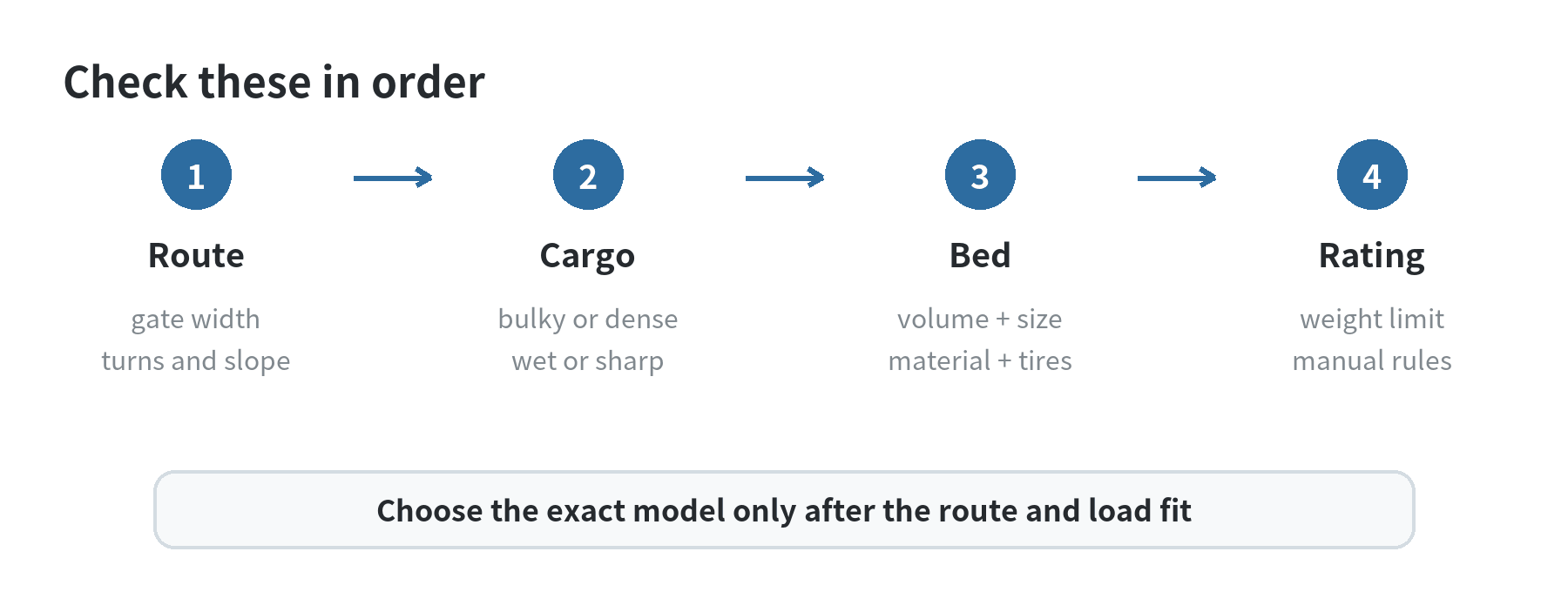
- Measure the route. Record the narrowest gate, the tightest turn, and the destination where you will unload.
- Name the cargo. Separate bulky light debris from dense material such as wet soil or gravel.
- Choose the movement. Decide whether you need a wheelbarrow’s lift-and-tip motion or a cart that rolls on two wheels and may have a dump bed.
- Compare the exact bed. Check volume, interior dimensions, bed material, wheel type, and whether the tray drains.
- Read the manual. Confirm maximum load, how the maker expects cargo to be distributed, and any warnings for slopes, towing, or use.
Suppose your route includes a narrow garden gate and you mostly move small batches of soil. A single-wheel design may be easier to position, but its usable load also depends on what you can balance and control. For recurring trips over an open path, a two-wheel cart may be easier to keep upright while carrying a broad load. Use these as layout questions, not as a substitute for the product’s rating or manual.
Inspect what arrives and what wears
Before the first load, check that the handles, fasteners, axle, tires, and bed are assembled as the manual shows. Look for a bent tray, loose wheel hardware, or a tire that is not seated correctly. Recheck the cart after a hard impact or if it starts pulling to one side. Replace damaged parts with the manufacturer’s specified parts and do not use the cart if a structural part is broken.
Store the tool where the bed and frame can dry. Rinse off soil after use, clear debris from moving parts, and follow the manual for tire pressure or lubrication where applicable. These habits do not increase the maker’s load rating; they help you spot wear before the next job.
For related planning, see our beginner’s guide to lawn and garden tasks and our overview of spring yard cleanup tools. Use the product detail page and manual for the specific cart you are considering; capacity can vary across models that look similar.
FAQ
Can a yard cart carry bags of concrete?
Only if the total load stays within that exact cart’s stated limit and the bed can hold the bags securely. Check the bag weights, add them together, and read the manual’s loading instructions before moving them.
Does a two-wheel cart always have a higher weight rating?
No. Wheel layout does not set the load rating. Compare the number printed for the exact model and confirm it in the manufacturer’s manual or product details.
What should I check if my gate is narrow?
Measure the gate’s clear opening and compare it with the cart’s widest overall dimension, including wheels and handles. Also check turning room on both sides of the gate.