
For a replacement entry door, choose the material only after you know whether the opening needs a prehung unit, how much upkeep you will accept, and whether you want a glazed design. Steel, fiberglass, and wood each solve a different set of problems. The door’s frame, weatherstripping, glass area, and fit also affect how it performs, so compare complete door systems rather than judging a slab by its skin.
Start with the opening, not the catalog
A prehung door arrives attached to its frame; a slab is just the door panel. If the existing jamb is damaged, out of square, or part of a full exterior renovation, a prehung unit may be the relevant format. If the frame is sound and the replacement panel matches its dimensions and hinge preparation, a slab may be enough. Confirm the exact format before comparing materials, because the frame and threshold are part of the fit.
Measure the rough opening when planning a prehung replacement. The published prehung entry door instructions say to remove interior casing to expose the framing, measure width between studs at the top, middle, and bottom, and keep the smallest reading. Measure height from the floor to the underside of the header on both sides, again recording the smaller reading. Do not measure over casing or trim. The finished door size is not the same as the rough-opening size, and the required clearance depends on the selected unit.
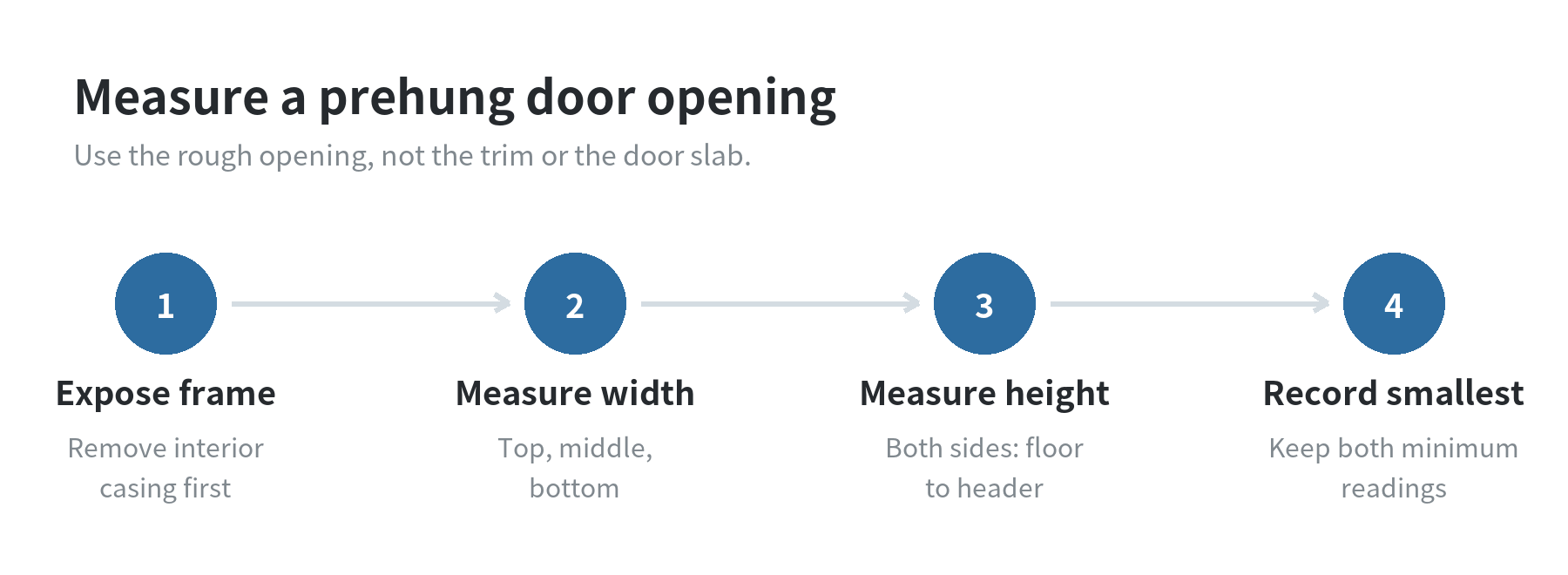
Also note jamb depth, whether the door swings inward or outward, which side carries the hinges when viewed from outside, and whether sidelites or a transom are part of the assembly. Therma-Tru’s entry door ordering sheet asks for these details because the door unit includes more than its nominal width and height. If removing casing or exposing framing is outside your project, ask an installer to measure before selecting a unit.
How steel, fiberglass, and wood differ
| Material | What to weigh | Questions to ask |
|---|---|---|
| Steel | A foam core is used in many models; the face can dent, and the finish needs to suit the exposure. | What is the core, finish, and repair guidance for dents or scratches? |
| Fiberglass | Can carry a molded wood-grain texture or smooth face; inspect the specified finish and care. | Can this model be painted or stained, and what preparation does its maker require? |
| Wood | Offers a natural wood surface; finish condition and exposure are central maintenance questions. | Which species, finish, and inspection or refinishing schedule does the maker specify? |
Steel is worth considering when a painted, relatively low-maintenance face fits the entry. The Home Depot exterior door buying guide describes foam-core construction in many steel models and notes that steel can dent. Treat those as model-level questions, not guarantees: face thickness, core, coating, and warranty differ. Check the manufacturer’s care sheet for how to handle scratches before deciding whether the surface fits a high-traffic entrance.
Fiberglass gives you another route if you want a textured or smooth face and want to compare the look of wood with a different door material. The exterior door buying guide describes fiberglass models with molded grain and notes they can be stained or painted; the specific finish system matters. Read the maker’s instructions for preparation and compatible coatings. Do not assume every fiberglass door accepts the same stain or paint.
Wood is the material to consider when the visible natural grain is central to the design. Its appearance does not remove the need to protect the surface: ask how the selected species and finish should be maintained in your weather exposure. For all three materials, inspect the top, bottom, edges, glass inserts, and threshold details in the product information. Those areas help you understand what arrives finished and what may require follow-up work.
Use ratings to compare the complete door
Material alone does not establish energy performance. ENERGY STAR says the current residential criteria for doors depend on climate zone, NFRC-certified ratings, and glazing level—the amount of glass. A door with a large glass insert is therefore evaluated using a different glazing category from a mostly opaque door. The label is a way to compare a tested product against the program’s applicable criteria; it does not tell you whether the unit fits your opening.
Check the ENERGY STAR and NFRC information for the exact model and glass configuration. The ENERGY STAR product criteria page says certified products are independently tested, certified, and verified through NFRC ratings against EPA guidelines. Compare the U-factor and, where applicable, solar heat gain coefficient (SHGC) with the criteria for your climate zone and glazing level. Avoid comparing two doors on material name alone when their glass area, frame, or configuration differs.
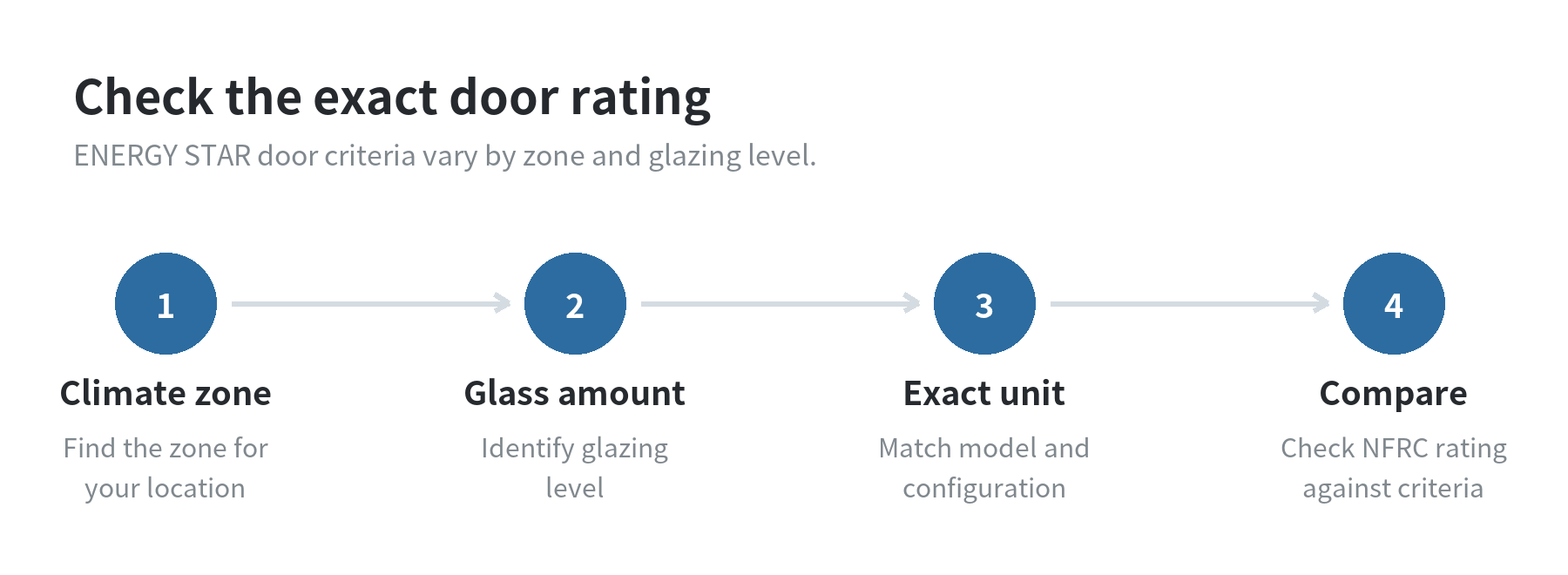
ENERGY STAR’s buying guidance also recommends finding the home’s climate zone and checking the product finder for certified product lines. Keep the label information with the model details you are comparing. Do not use a general claim about insulated cores as a substitute for a rating: the door slab, glazing, frame, seals, and installation all form part of the assembly.
Fit and sealing matter after material choice
A correctly sized door can still leave gaps if it is installed poorly. The U.S. Department of Energy’s Building Science Education resource explains that gaps between the unit and framing can be sites of uncontrolled air leakage, and that the rough opening should be air-sealed with suitable caulk, door-and-window foam, or backer rod. It also says fibrous insulation alone does not block airflow. That makes installation details worth discussing alongside the door selection.
Before finalizing the unit, verify the product’s rough-opening chart, jamb depth, handing, swing, threshold, and weatherstripping. If the opening is uneven, out of square, or has signs of water damage, ask how the installer will address the framing and seal; see our overview of what to clarify about door installation. A larger or more elaborate door configuration may require different measurements than a single door, especially when sidelites or a transom are included.
A short comparison checklist
- Write down the smallest rough-opening width and height, plus jamb depth.
- Record handing, swing, glass area, and any sidelites or transom.
- Compare the complete unit’s rating for the correct climate zone and glazing level.
- Read the maker’s finish and maintenance instructions for the exact material.
- Ask how the threshold and gaps around the frame will be sealed during installation.
For example, a homeowner replacing a dented painted door in a narrow opening might first check whether a steel replacement is available in the measured configuration, then compare its rating, finish care, and warranty with fiberglass alternatives. Someone choosing a stained wood appearance can use the same opening and rating checks, then focus on the maker’s finishing instructions. These are comparison paths, not promises about which material will last longer in a particular home. If new hardware is also on the list, our guide to door lock types and fit details covers that separate decision.
FAQ
Should I measure the old door or the rough opening for a prehung replacement?
Measure the rough opening if you are replacing the complete prehung unit. The published prehung entry door instructions call for exposing the framing and measuring between studs and from floor to header; use the selected product’s chart to match those readings to its unit size.
Does an ENERGY STAR label mean every door with the same material performs alike?
No. ENERGY STAR criteria for doors depend on the climate zone, NFRC ratings, and glazing level. Compare the exact model and glass configuration rather than assuming that all steel, fiberglass, or wood doors share one rating.
What should I record before asking for a door quote?
Bring the rough-opening width and height, jamb depth, swing, handing, and notes about glass, sidelites, and transoms. Therma-Tru’s ordering sheet lists these configuration details, and the final unit should be checked against its own specifications.
Can insulation alone seal the space around a new entry door?
No. The Department of Energy’s Building Science Education resource says fibrous insulation alone does not air-seal a rough opening. Ask how the gap will be sealed with a material intended for that joint and how the threshold will be protected.