
Thousands of People Were Struggling With Money Until They Discovered This One Ancient Secret Hidden in Sound
>>> Unlock It Now <<<

Can a single phone replace a pocket full of notebooks and reminders? This guide shows how to use your phone to track workouts with precision, motivation, and ease. Your smartphone becomes a constant gym buddy, helping you choose what to track, how to review progress, and how to stay consistent.
Built-in Apps That Come with Your Phone
Your phone already has built-in tools that can power your workout tracking from day one. Starting with these apps helps you establish a reliable baseline before you add more features from third party services. They’re designed to be simple, automatic, and deeply integrated with your device’s sensors, maps, and health data.
Google Fit and Apple Health offer streamlined, automatic tracking that captures your daily activity without constant fiddling. On Android and iPhone, these apps summarize steps, distance, active minutes, and basic workout sessions, so you get a clear picture of progress over time. You can enable auto-tracking for activities like walking, running, and cycling, so your workouts are logged even when you forget to press start. The setup process is quick: confirm health data permissions, choose which metrics you want to see, and allow the app to read data from sensors and other connected apps. This foundation is why you should start here before adding more complex trackers or specific sport apps.
As you grow more serious, you can expand by syncing with compatible wearables or GPS services to fill in gaps and provide more precise routes and pace data. Keep in mind the limits: automatic tracking is usually broad and may miss short bursts or very precise GPS details. But for most runners and walkers, it delivers a consistent baseline. If you want to check how to maximize accuracy and privacy, see Google Fit’s official setup guides and privacy settings to tailor what gets tracked and saved. For quick reference, you can explore these official resources:
Thousands of People Were Struggling With Money Until They Discovered This One Ancient Secret Hidden in Sound
>>> Unlock It Now <<<
- How automatic tracking works with your Google Fit data. https://support.google.com/fit/answer/10066680?hl=en&co=GENIE.Platform%3DAndroid
- Google Fit: Activity Tracking – Apps on Google Play. https://play.google.com/store/apps/details?id=com.google.android.apps.fitness&hl=en_US
- How location tracking works with your Google Fit data. https://support.google.com/fit/answer/10066791?hl=en&co=GENIE.Platform%3DAndroid
Apple Health behaves similarly on iOS, pulling in data from the Health app, Apple Watch, and other compatible devices. It keeps a tidy, centralized feed of workouts, steps, and heart rate, which you can review in one place. The setup is straightforward: enable Health data sharing, specify which apps may write to Health, and decide what shows up in your daily totals. If you use an iPhone, this is your first stop for a cohesive view of activity, before you dive into sport specific apps or GPS trackers. For Apple Health users, the focus is on privacy controls and data portability; you can export health data or limit what gets shared with third party apps.
Third party apps can help you tailor tracking to your activities, but starting with built-in apps ensures you don’t overwhelm your device or your routine. They set the pace for how you’ll collect data, what you’ll monitor, and how you’ll interpret progress across weeks and months.
Suggested starter steps:
- Open Google Fit or Apple Health and complete the setup.
- Enable auto-tracking for common activities.
- Review your daily totals for a week to identify gaps.
For readers who want a fast start, begin with the built-in apps and then add specialized tools only as you notice the need for more detail or social features. This approach keeps things simple, reduces data fragmentation, and gives you a reliable baseline to compare more advanced options against.
Third party apps for more features
You’ll reach for third party apps when you want precision, social motivation, or sport specific guidance. Strava stands out for GPS accuracy and community features, while Nike guided workouts provide structured training plans right on your phone. These apps add layers that the built-in options usually don’t offer, but they also introduce tradeoffs.
Strava is especially strong for outdoor workouts. Its GPS tracking is generally precise, and the social feed adds accountability through friends’ activity and challenges. That social aspect can be a real motivator if you enjoy competition or camaraderie. On the downside, Strava’s free tier shows ads and prompts you to upgrade for advanced statistics or training plans. If you mainly run, cycle, or hike outdoors, Strava can be a compelling choice that complements the basic metrics from your phone.
Nike training and Nike run clubs offer guided workouts and structured programs that can take your routine to the next level. The benefits include clear directions, pacing cues, and progress tracking tied to specific training goals. A potential drawback is that some workouts rely on premium content or require consistent device syncing, which may be less convenient during travel or busy days. If you train with guided routines or want a social element around workouts, Nike options are worth considering.
When choosing between these apps, consider your primary workout type and how you prefer to view data. If you mostly run or cycle outdoors, a GPS driven app with social features is a strong fit. If you value curated workouts and coaching, look at Nike guided programs. For gym workouts or cross training, you might prefer apps that emphasize strength tracking and routine building.
Key takeaways:
- GPS accuracy matters most for outdoor workouts.
- Social features can boost consistency but may come with ads or upgrade prompts.
- Pick one app for a specific workout type to avoid data fragmentation.
For quick start links and guidance:
- Strava official behind the scenes on GPS accuracy and features. https://www.strava.com/
- Nike training and Nike run clubs overview with workout guidance. https://www.nike.com/ntc-app
- General guidance on choosing workout apps and features. https://www.runnersworld.com/
In short, built in apps give you a solid, integrated base with minimal setup. Third party apps unlock deeper features when you know what you want to track, and they can be added gradually as your needs evolve. The combo of a stable foundation plus selective add ons keeps your data clean, your motivation high, and your phone ready for every workout.
Set Up Your Phone for Spot-On Workout Tracking
Setting up your phone for precise workout tracking is all about a clean foundation. Start with your profile, then pair the right devices and fine tune sensors. A well-configured setup reduces data gaps and makes it easier to review progress later. Think of it as laying the rails for accurate data to ride on.
Build Your Profile and Smart Goals
Your first step is to input basic details that improve tracking accuracy, like age, height, weight, and sex. These data points influence calorie estimates and pace calculations, so keep them up to date. Next, set weekly targets that reflect your current routine and aspirations. A simple approach works best: aim for a realistic number of active days, total active minutes, or distance per week.
Define SMART goals to keep motivation steady
- Specific: clearly state what you want to achieve (for example, “run 15 km per week”).
- Measurable: choose a metric you can track (distance, time, steps).
- Achievable: set a target that challenges but doesn’t overwhelm.
- Relevant: align goals with your overall fitness plan.
- Time-bound: assign a weekly cadence or end date.
Start with a quick setup in Google Fit or Apple Health by filling in height, weight, and your weekly target. After a week, review what worked and adjust. This foundation helps you compare progress across apps and sensors later on. For quick reference on setting up goals, see Google Fit’s profile and goals guide and Apple Health’s data sharing options.
- Google Fit profile and goals: https://support.google.com/fit/answer/6075110/update-your-profile-amp-goals-android
- Google Fit goals overview: https://www.cnet.com/tech/mobile/the-complete-guide-to-google-fit/
- Update your profile on iPhone and iPad: https://support.google.com/fit/answer/6075110?hl=en-Au&co=GENIE.Platform%3DiOS
Photo by Ketut Subiyanto
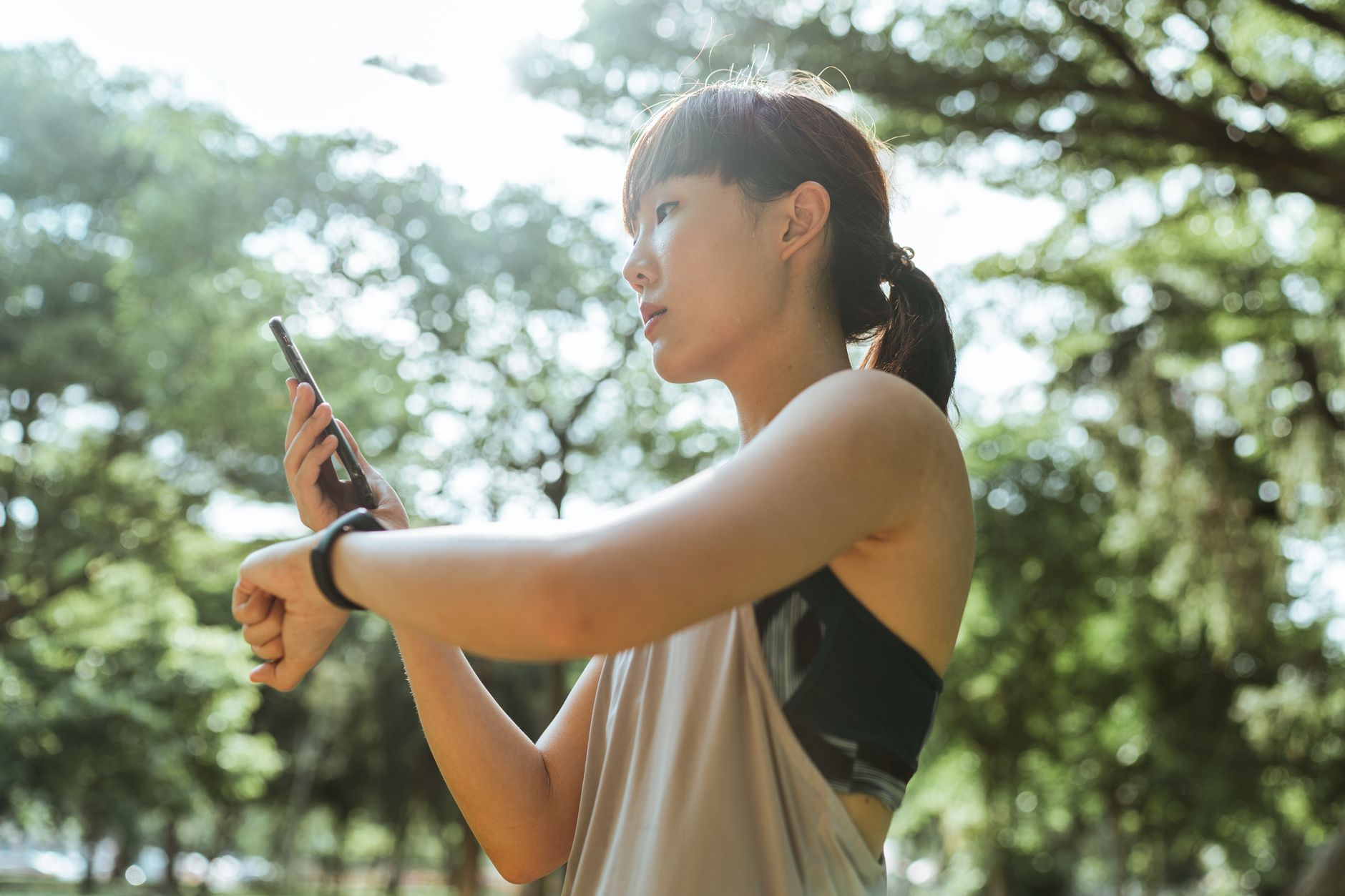 Photo credit: Ketut Subiyanto
Link Devices and Fine-Tune Sensors
If you own a smartwatch or wireless earbuds, connect them to your phone now. A reliable connection ensures heartrate data, distance, and pace are captured consistently. Start with the basics: pair your device, grant the necessary permissions, and test an easy workout to confirm data flow.
GPS accuracy matters most for outdoor workouts. Do a quick outdoor test by walking or running a short route around your block. Check the route on the map, note any drifts, and adjust settings if needed. If you notice lag or jumps in pace, re-sync the device, update the firmware, or re-calibrate the sensor. For privacy, review what data your devices share with each app and disable anything you don’t want tracked. If you want deeper guidance on GPS and sensor calibration, see Strava’s GPS accuracy notes and Nike’s training app overview.
- Strava GPS and features: https://www.strava.com/
- Nike training and Nike run clubs: https://www.nike.com/ntc-app
- General guidance on app choices and features for workouts: https://www.runnersworld.com/
When you’re ready, mix in third party options only as needed to fill gaps. For example, if you run in areas with weak GPS, a wearable provides more reliable pace data. If you mainly train indoors, a chest strap heart rate monitor can improve accuracy over wrist-based sensors. A simple rule: keep one primary tracking hub (Google Fit or Apple Health) and add external devices to fill missing data streams.
Photo by Ketut Subiyanto
Photo credit: Ketut Subiyanto
- Build a reliable routine: set a weekly review to verify data consistency, then adjust device connections or permissions as needed.
- Keep firmware up to date: check for updates to your watch, earbuds, and the phone OS.
- Limit data fragmentation: choose one primary app to centralize most metrics, and use others only for specialized data if necessary.
For a quick reference, start with the built-in apps, add a GPS-focused third party if you run outdoors, and keep your setup simple enough to maintain daily consistency. This approach gives you clarity and momentum as you accumulate more data over weeks and months.
Track Cardio Workouts with Phone GPS Power
Your phone can be a powerhouse for cardio tracking, turning everyday routes into precise data paths. With the right setup, GPS, pace alerts, and voice cues keep you tuned in while you move. Add weather updates and you’ll adapt on the fly, staying safe and consistent. This section covers quick wins for running, walking, and cycling, showing how to map routes, stay on pace, and log miles with minimal friction. Think of your phone as a portable training partner that never tires.
Run or Walk Anywhere with Ease
Map your routes in seconds and let your phone guide you with real-time pace alerts and gentle voice cues. Start by choosing a mapping app that suits your style and familiarity, then enable live distance updates and audible cues to match your preferred tempo. Weather integration ideas are practical too: check rain alerts before you head out, or pair a weather widget with your route so you know when to expect wind shifts or a sudden chill mid‑loop. If you’re exploring new neighborhoods or parks, a turn‑by‑turn navigation option keeps you moving without staring at the screen. For reference, Map My Run provides reliable GPS tracking for distances and pace, while RunGo offers route discovery with voice navigation that can boost confidence on unfamiliar terrain. These tools help you stay steady and motivated again and again.
She Pressed Play on a Strange Audio Track and Within Days Her Financial Reality Started Shifting in Ways She Could Not Explain
>>> See How It Works <<<

Cycle Safely and Log Miles Fast
Mounting your phone securely unlocks fast logging of speed, distance, and elevation gain while you ride. A stable handlebar mount reduces shake and keeps the screen readable, so you can glance at pace updates without taking your hands off the bars. Pair a heart rate monitor if you want to watch effort more precisely, especially on hilly routes. Elevation data adds context for training load, helping you quantify climbs and the effort involved. Safety first means keeping valuables secure, choosing well-lit routes, and using voice prompts to avoid fiddling with your device while cornering. For GPS reliability and route tracking on the bike, Map My Run is a solid choice, and RunGo adds helpful route guidance for road and trail cycles. If you ride in areas with spotty GPS, rely on a secondary device or a chest strap for steadier data and quicker updates. Handy links for reference include Strava’s GPS notes for accuracy and the RunGo route guidance page.
Thousands of People Were Struggling With Money Until They Discovered This One Ancient Secret Hidden in Sound
>>> Unlock It Now <<<
Track Your Workouts with Your Phone: Log Strength Training and Other Sessions Smoothly
When you train with weights or mix in yoga, HIIT, or home workouts, your phone should be your reliable data hub. It can track sets, reps, rest intervals, and even progress photos without slowing you down. A smooth tracking flow means you spend more time training and less time fiddling with screens. Below are two focused sections that help you log strength sessions and non-gym workouts efficiently, while keeping data clean and actionable.
 Photo by ThisIsEngineering
Record Gym Weights and Reps Accurately
Strong data is the backbone of progress. Start by logging core lifts with exact weights, sets, and reps, then fill in auxiliary work like supersets and accessory movements. A practical approach is to create a simple template for each lift: exercise name, weight, reps, and whether it was a superset or straight set. For supersets, record each pair as a single entry and note the rest interval between rounds. If you add progress photos, store a quick snapshot at the end of a training block to visualize gains over time.
Smartphones excel at capturing details with minimal friction. Use one primary app to log workouts and another for quick notes or photos if needed. This prevents data from scattering across several tools. For strength training, look for features like weight tracking, rep max estimations, and a built-in timer for rest periods. If you prefer a guided approach, apps such as Strong or Hevy offer intuitive templates for gym workouts and automatic progress tracking. These resources can provide inspiration, while your chosen hub keeps the core data centralized.
For practical setup, follow these steps:
- Create a dedicated workout template for your main lifts (squat, bench, deadlift, overhead press).
- Log every set with the exact weight and reps; flag sets that were rep PRs.
- Note whether a set was part of a superset and include the rest interval.
- Add progress photos at the end of each 4–6 week block to visualize change.
Consistency matters more than complexity. Start with a single app as your primary log, then layer in specialty features as you get comfortable. If you need ideas for templates or inspirations, check out Strava’s gym logging notes and the Strong app’s strength templates for reference.
External references:
- Strava GPS and features for outdoors workouts. https://www.strava.com/
- Strong – a popular gym log and planner app. https://www.strong.app/
- General guidance on choosing workout apps and features. https://www.runnersworld.com/
Handle Yoga, HIIT, or Home Workouts
Not every session goes under heavy weights. Yoga flows, HIIT circuits, and home workouts benefit from a flexible yet precise log. Use short notes for each session: focus area, duration, calories if you track them, and any scales you used (e.g., altered poses or modified reps). Video guides can accompany your logging for quick reference, while a flow timer helps you keep moving without constant glancing at the screen. If you’re on a no-equipment day, record bodyweight circuits or mobility work to keep your streak intact.
Calorie estimates and energy expenditure can be useful if you’re balancing daily activity with training. Many apps estimate calories from heart rate or activity type, but treat these as approximate. The goal is to capture consistency and variety, not perfect numbers every time. For guided workouts, consider Nike training or Nike run clubs that provide structured routines and progress tracking. Pairing these with your main log keeps you aligned with your broader plan.
Implementation tips:
- Use a timer or on-screen prompts to keep transitions between moves efficient.
- Attach short video clips or notes for tricky poses or complex intervals.
- Add a brief reflection after each session: what felt easy, what challenged you, and what to adjust next time.
- For home workouts, map your routine to days in your calendar to maintain balance and recovery.
Helpful resources:
- Nike training and Nike run clubs overview with workout guidance. https://www.nike.com/ntc-app
- RunGo route guidance and voice navigation for outdoor sessions. https://www.runGo.com
- General guidance on choosing workout apps and features. https://www.runnersworld.com/
This section helps you keep a unified view of all training types. By logging weights with precision and pairing that with flexible, no-equipment days, you build a complete picture of your progress. The right setup reduces guesswork and keeps motivation high as weeks accumulate.
Dig into Data and Boost Your Progress
Tracking your workouts isn’t just about logging moves. It’s about turning data into clear insights that push you forward. This section helps you spot patterns, understand what your stats are really telling you, and use that knowledge to lift your training week after week. You’ll learn how to read simple charts, track key metrics, and keep your momentum with practical habits that fit into a busy life.
Spot Trends in Your Workout Stats
Understanding trends starts with the right metrics and a steady logging routine. Focus on three core ideas: calories burned, distance gains, and heart rate zones. A simple chart can show how your weekly distance climbs over time, how your resting heart rate shifts with training load, and how many minutes you spend in each heart rate zone during workouts. When you see a trend like “distance increasing while calories per minute stay steady,” you can investigate what changes in pace or route might be driving the improvement. Use your phone’s built‑in data or a trusted app to export a weekly view, then compare month over month to confirm progress.
To keep this practical, set a small, recurring review. Every Sunday, glance at last week’s numbers and mark one takeaway you’ll apply next week. For example, if pace improved on long runs, schedule one tempo session to build that endurance without adding volume. If you want guided insights, Google Fit and Apple Health provide a cohesive feed of activity data that you can review alongside GPS apps like Strava or RunGo. See where you’re strongest and where you might need a gentler pull on recovery.
Images can illustrate your data journey.
Photo by ThisIsEngineering on Pexels
Tweak Goals and Celebrate Wins
Goal setting keeps workouts focused and reframes effort as evidence of progress. Start with small, measurable targets and scale up as you build consistency. Milestones act like stepping stones; they break a big goal into bite‑sized wins you can celebrate along the way. Share achievements with friends or a training group to boost accountability, but also plan quiet wins for personal motivation. Short reminders—“log every workout this week,” “hit two strength sessions,” or “run 8 km without stopping”—keep you moving even when motivation dips.
Structured tracking helps you see which goals are worth pursuing. Use SMART goals to keep things clear: Specific, Measurable, Achievable, Relevant, Time‑bound. For example, “Run 20 km total this week in under 60 minutes average pace” gives you a precise target and a clear deadline. Review your goals after each month to prune or expand them. If you’re using Google Fit or Apple Health, you can keep a weekly target in sight and compare this week to last week to gauge consistency.
- Milestones create momentum: celebrate small wins to sustain long runs of consistency.
- Reminders reduce friction: a quick nudge can be the difference between a workout and a skipped day.
- Social sharing adds accountability: a post or story can make you show up.
If you want inspiration on how others set and reach targets, check out Strava and Nike training programs for examples of goal frameworks and progress tracking.
- Strava GPS and features for outdoors workouts. https://www.strava.com/
- Nike training and Nike run clubs overview with workout guidance. https://www.nike.com/ntc-app
This approach keeps your training meaningful rather than merely procedural. You’ll see how small adjustments compound into bigger gains, and you’ll know when it’s time to push harder or ease off.
Images can illustrate motivation and progress.
Photo by Ketut Subiyanto on Pexels
Conclusion
Using your phone to track workouts is a simple, reliable way to stay consistent and see real progress. Start with the built-in apps to establish a solid base, then add targeted third party tools only when you need more detail or motivation. The key is to keep data centralized so you can spot trends without chasing scattered metrics.
Quick wins to start today
- Enable automatic tracking for walking, running, and cycling in Google Fit or Apple Health.
- Pick one primary log for strength workouts and use a simple template for sets and reps.
- Do a short GPS test on a familiar route to check accuracy and fix any drift.
- Set a SMART goal for the week and review it on Sunday.
Next reads and gear add-ons
- Explore GPS focused apps like Strava or RunGo if you run outdoors often.
- Look at a basic heart rate monitor or a chest strap for better effort data during hard work.
- Consider a lightweight mount for secure phone placement on a bike or during runs.
- Check weather and route planning tools to boost safety and planning.
A few final tips
- Review weekly data to identify a single change that yields results.
- Keep one hub on your phone as the main data source and add extras only when needed.
- Share a small win with friends to boost accountability.
Your training can grow organized and enjoyable. Start with simple steps, build your setup, and let small wins compound into bigger gains. Your next workouts will feel smoother, more purposeful, and easier to stick with.
Thousands of People Were Struggling With Money Until They Discovered This One Ancient Secret Hidden in Sound
>>> Unlock It Now <<<